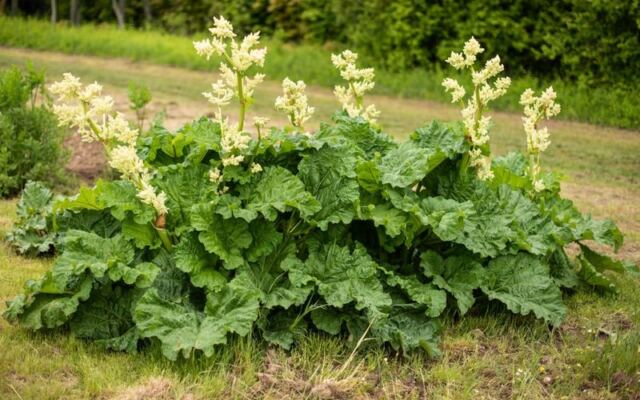
That tall, thick spike rising from your rhubarb clump is most likely a flower stalk, and it is a normal part of the plant’s life. If you grow rhubarb for pie and sauce, the usual move is to cut it off close to the crown.
It is not a sign that your plant is sick or dying. Here is what the spike means and what to do next.
What is that tall stalk?
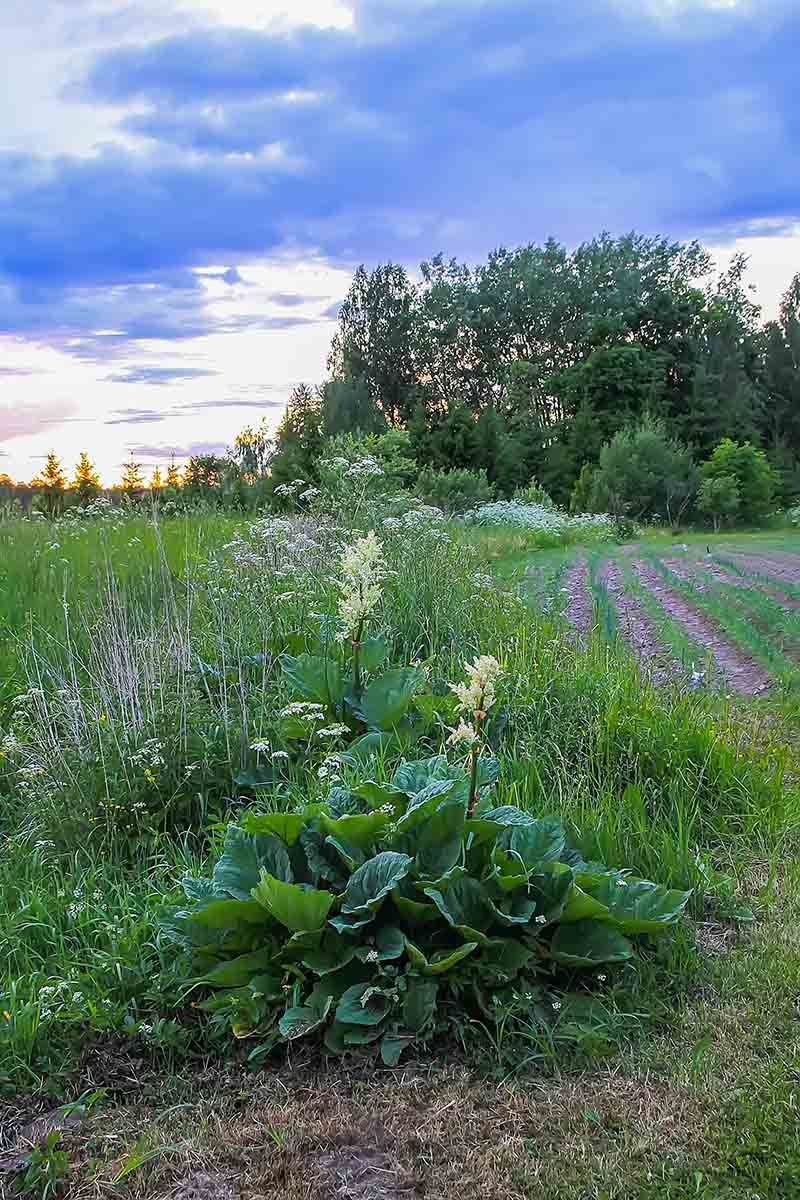
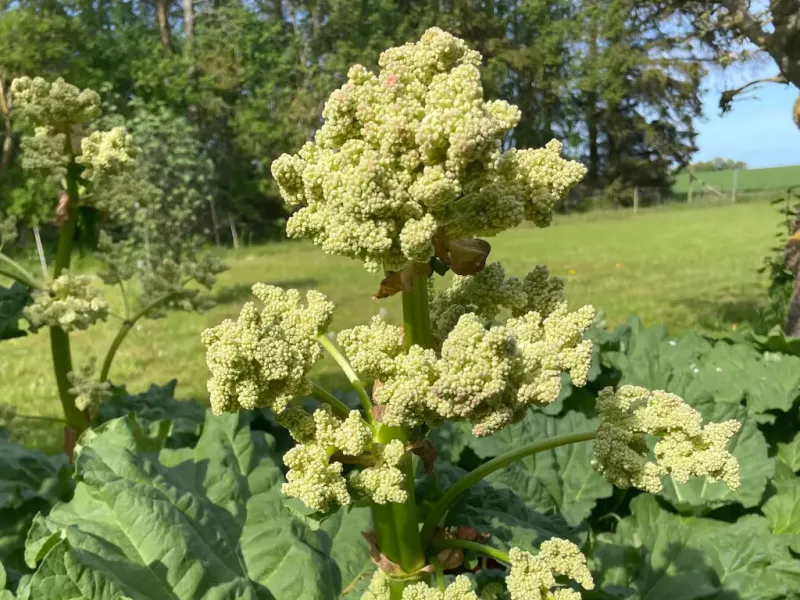
Most likely, the giant spike is your rhubarb’s flower or seed stalk. Gardeners often call this “bolting.” It shoots up from the center of the clump, grows thicker and taller than the leafstalks you harvest, and ends in a bumpy cluster of buds that open into creamy blooms.
The familiar leafstalks, the ones you cook with, grow outward from the crown and carry a big leaf on top. The flower stalk looks different.
It is rounder and sturdier, and it does not end in a broad leaf. Once you spot that difference, it is easy to tell the two apart.
Flowering is a normal reproductive stage, not proof that the plant is diseased or dying. Plenty of healthy clumps send up a spike now and then.
Purdue Extension treats it as an ordinary event rather than an emergency.
There is one catch worth knowing. Utah State Extension notes that flowering can reduce plant vigor and leafstalk production.
That is why many growers remove the stalk. Maine Extension says leaving it is a matter of preference, especially if you like the blooms or want seed.
Why rhubarb sends up a flower spike
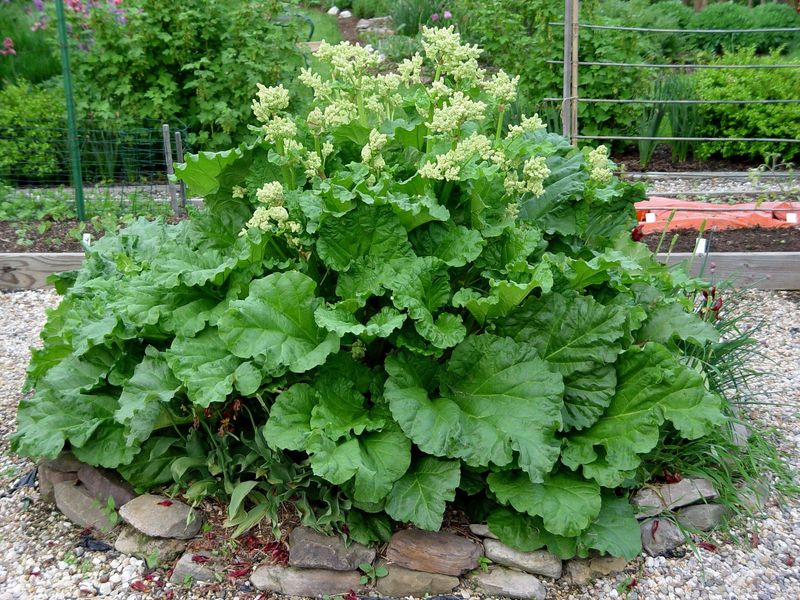
No single cause explains a rhubarb spike. Extension sources point to several possible factors, and the spike alone cannot tell you which one is at work in your yard.
Plant age and variety are on the list. Some varieties simply flower more readily than others, and older clumps often produce more stalks.
Iowa State Extension covers this question in its rhubarb advice.
Stress can also play a part. Purdue Extension mentions heat, drought, and poor nutrition, and Illinois Extension adds crowding as another possibility.
A hot, dry stretch in a Massachusetts July might be a clue, but it is only a clue.
Not every plant reacts the same way. Two neighboring clumps can face the same weather, and one may flower while the other stays leafy.
So think of the spike as a prompt to look around the bed, not as a diagnosis.
Ask a few easy questions. Is the clump packed tightly?
Has it gone thirsty lately? Is it an older plant that has been in the same spot for years?
Your answers will help guide later decisions without forcing any big change right away.
For an edible patch, cut the stalk close to the crown
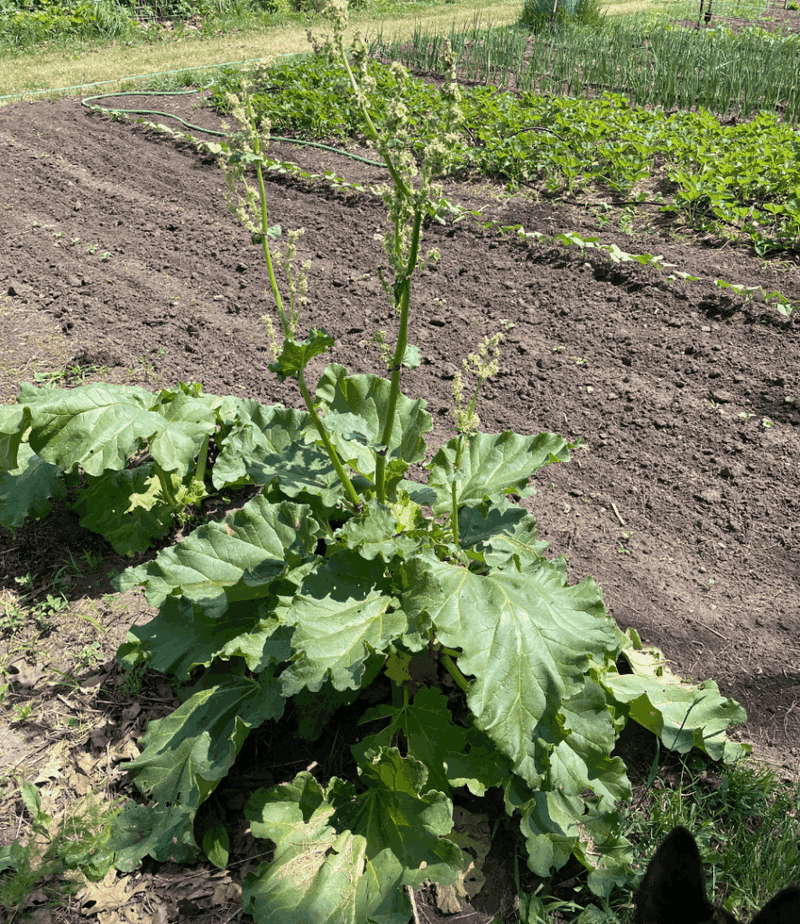
If your rhubarb is there to feed your kitchen, take the flower stalk off. The New England Vegetable Management Guide, which comes out of UMass Extension, recommends cutting flower stalks close to the crown when they appear.
Illinois Extension gives similar advice, saying to cut seed stalks from the plant’s base.
Use clean, sharp pruners or a knife and remove the whole stalk rather than snipping off just the bloom. Cut down low, near where the stalk meets the clump.
Be careful not to nick the neighboring leafstalks.
The reasoning is simple. A plant that is making flowers and seed is spending energy on that job.
Growers often remove the stalk to favor the plant’s vigor and its edible leafstalks.
Keep your expectations realistic, though. Cutting the spike does not promise a dramatically bigger crop this year.
It is a sensible bit of upkeep, not a magic fix.
You also have a choice. Maine Extension describes leaving the stalk as a matter of preference.
Some gardeners enjoy the big, feathery blooms or want to collect seed, and that is fine if harvest is not your top goal.
Toss the cut stalk into the trash or a compost system you trust rather than serving it up as food.
One cut may not be the last
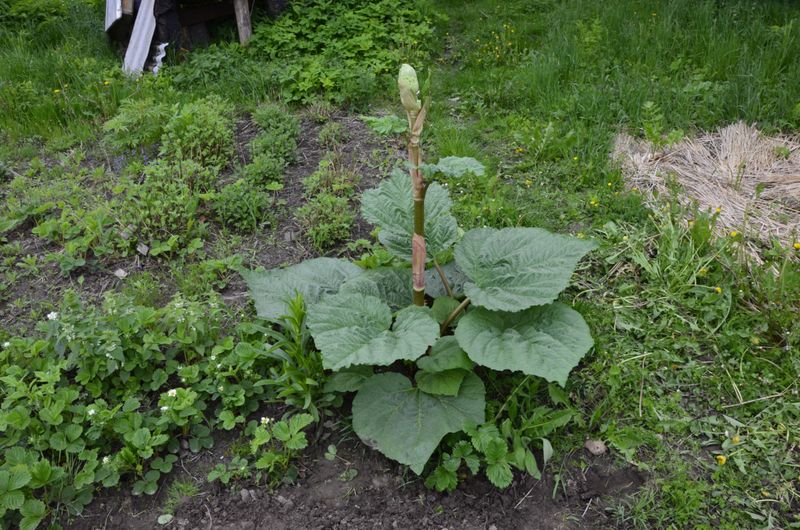
Rhubarb can be stubborn about flowering. After you remove one stalk, the plant may send up another, so a quick check of the clump now and then is a good habit.
Purdue Extension points out that this can happen. If your goal is plenty of edible leafstalks, simply remove any later stalks as they show up.
A practical routine helps. Each time you harvest, glance at the center of the clump.
A new flower stalk looks thick and rounded, often with a swollen bud tucked at the top, and it stands out against the flatter, leafy stalks around it.
Catching these early makes the job quick. Younger spikes are easier to cut, and you will spend less time hunting through big leaves.
Do not read a second stalk as a sign that you did something wrong. It does not mean the first cut failed, and it does not mean the plant is in trouble.
It is just how some clumps behave, especially in seasons that feel stressful for them.
Flowering does not make the usual leafstalks poisonous
Many people worry that a flowering plant is no longer safe to eat. Purdue Extension says flowering does not make the ordinary leafstalks poisonous, and the sources we reviewed do not suggest they turn bitter or unusable just because a spike appeared.
You can keep harvesting those stalks as usual. Read more in Purdue’s guidance.
It helps to sort the parts of the plant. The leafstalks are the edible part.
The large leaves are not edible, so trim them off, as South Dakota State Extension explains. The flower stalk is not the usual rhubarb crop either, so remove it and discard it.
Notice that this is a practical step. The sources do not establish that the flower stalk is toxic.
It just is not what you grow rhubarb for.
Frost is a separate matter and has nothing to do with flowering. Extension advice differs.
UConn Extension warns against eating stalks exposed to freezing conditions, while Purdue’s plant diagnostic lab says evidence for stalks turning toxic after a freeze is limited and uncertain, though hard-frozen stalks may go mushy.
Illinois Extension advises against eating stalks damaged by a severe freeze. A cautious rule works well here: if stalks look visibly damaged after a hard freeze, discard them.
Check the growing conditions before making bigger changes
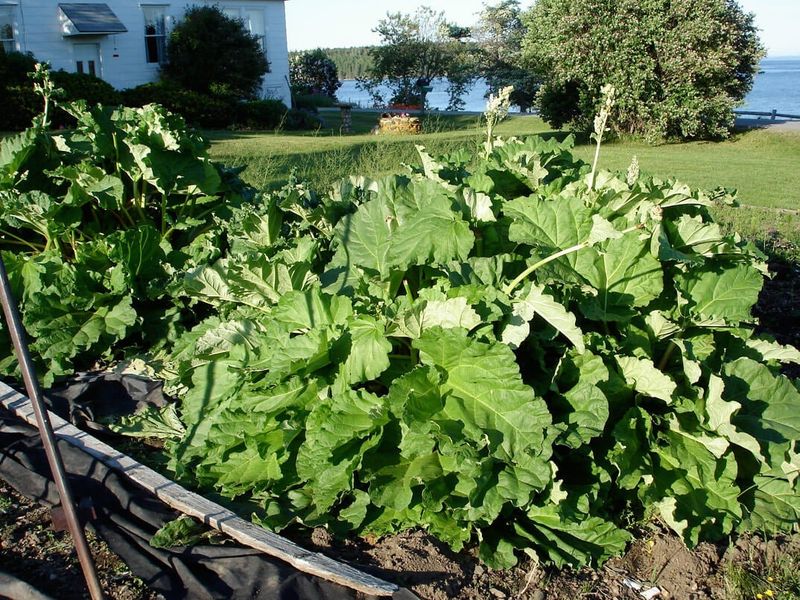
Here is the short version of what to do. Remove the flower stalk if you want rhubarb for eating, look the clump over for crowding or signs of heat and drought stress, and keep an eye out for another spike.
One stalk is not a reason to reach for the fertilizer bag or a shovel. Save fertilizer decisions for soil-test guidance, and check with Maine Extension or the New England Vegetable Management Guide for regional advice.
Division is not automatic either. Illinois Extension notes that older or crowded plants may benefit, but advice varies and flowering can also come from variety or stress.
Rhubarb has a way of shrugging off a lot. A spike is a little message, not an alarm bell.
Share this story