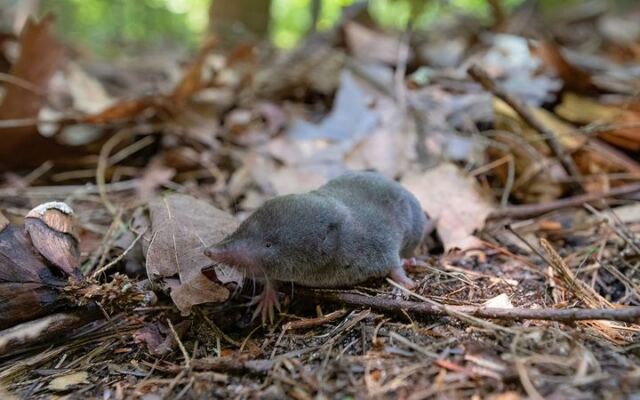
A shrew small enough to vanish in your palm can still carry toxin in its saliva. Virginia has more than one short-tailed shrew, and the stories about them often get tangled together.
Size, venom, and winter habits are all easy to exaggerate. Here is what the sources actually say, and which animal each claim belongs to.
Which short-tailed shrews occur in Virginia?
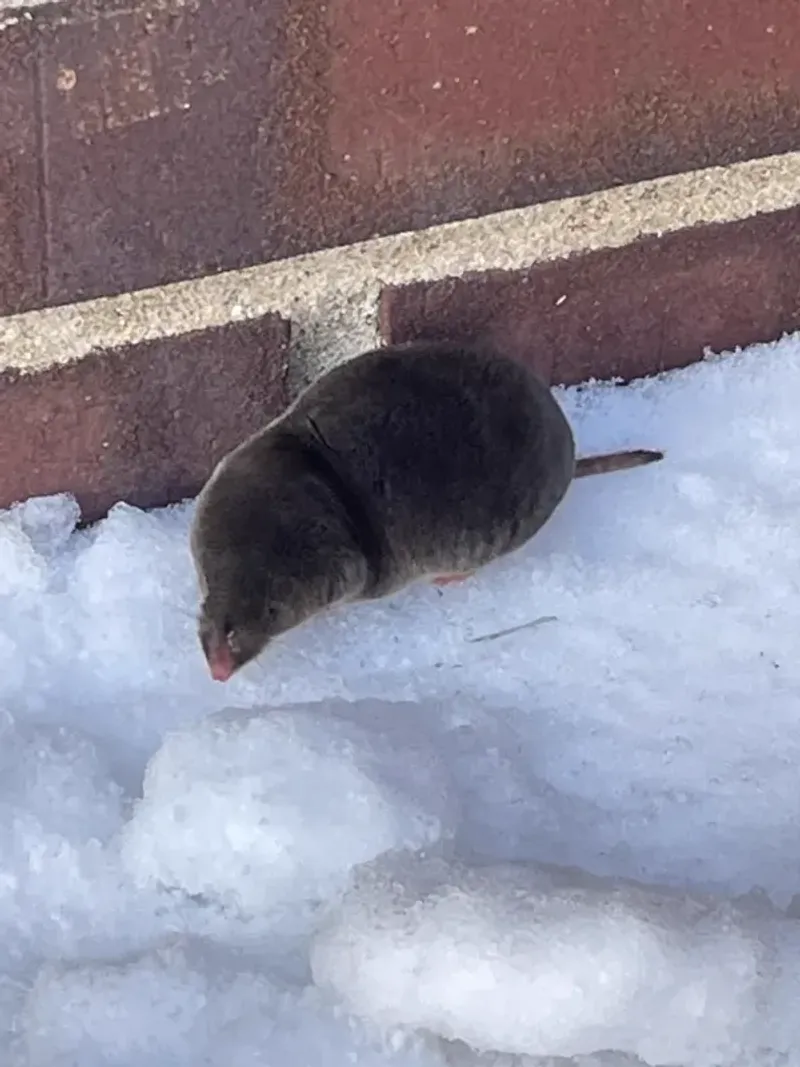
Start with a simple rule: “Virginia short-tailed shrew” does not name one animal. The northern short-tailed shrew (Blarina brevicauda) does live in the state, and Virginia Cooperative Extension’s list of mammals includes it.
The same list separates northern and southern short-tailed shrews, so the state holds more than one kind.
The northern species also turns up in protected places. The National Park Service mammal list for the Blue Ridge Parkway records it along the Virginia stretch of that road.
That gives you a real, checkable spot where the species is known to occur.
Why does this matter? Facts about one short-tailed shrew do not automatically apply to another.
A weight, a winter habit, or a behavior described for one animal may not fit its cousin down the road or across a mountain range.
This article keeps that boundary firm. When a claim is about the northern short-tailed shrew, it says so.
When a source describes a different short-tailed shrew, the article names that animal instead of quietly swapping in the northern one. Keeping the names straight is the best defense against the shrew tall tales that spread online.
The northern short-tailed shrew outweighs a nickel
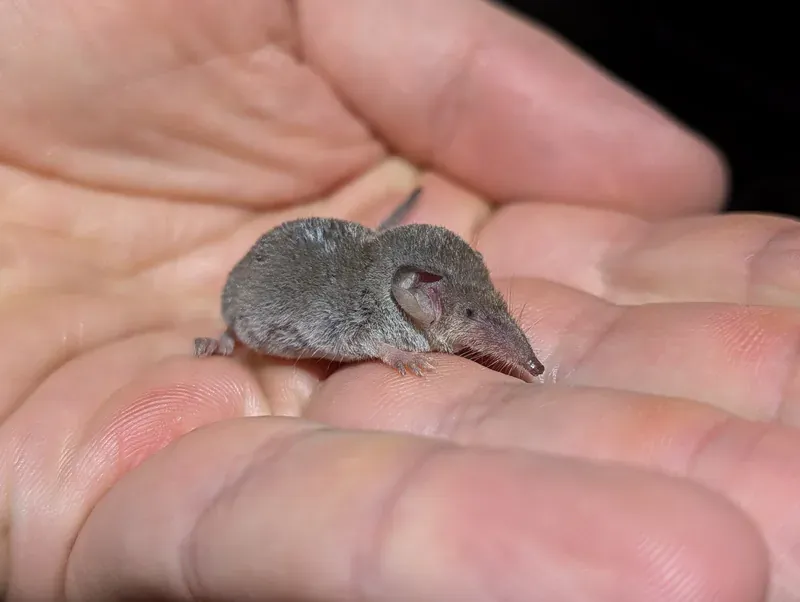
Here is the correction the popular headline needs. Purdue Extension gives the northern short-tailed shrew a weight of 11 to 26 grams.
That range describes the northern species specifically.
Now compare it with the coin in your pocket. The U.S.
Mint lists a nickel at 5 grams. Even the lightest northern short-tailed shrew in that range weighs more than twice as much as a nickel, and the heaviest is a bit over five nickels.
Picture it another way. Five nickels in a stack feel like almost nothing in your hand.
A shrew at the top of the range would feel like a small stack of them, packed into a compact, muscular body.
None of this makes the animal large. It is still a tiny mammal with a short tail, a pointed snout, and dense dark fur.
Calling it small is accurate. Saying it weighs less than a nickel is not.
One more caution: this range is for the northern short-tailed shrew only. Other Virginia short-tailed shrews may have different measurements, so do not borrow these numbers for them.
Its bite delivers toxin that helps subdue prey
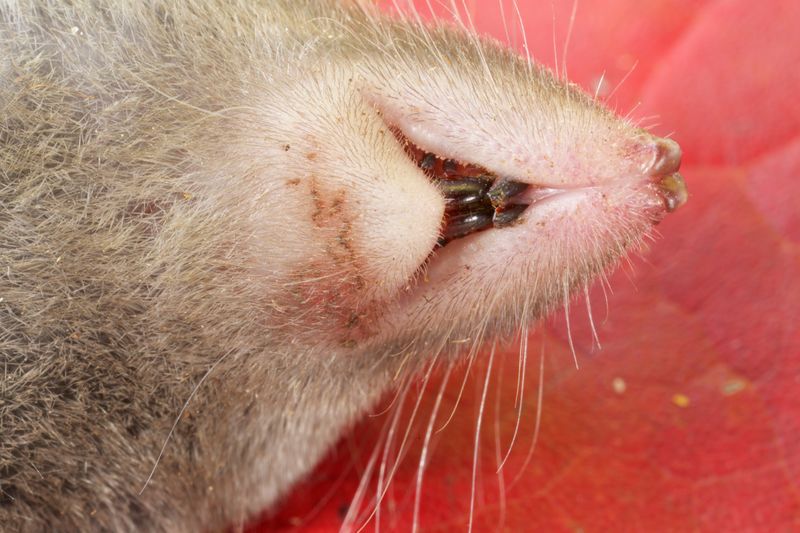
Shrews eat fast, and some of them have a chemical advantage. The northern short-tailed shrew has a toxin in its saliva, which is why people call it venomous.
A peer-reviewed study titled on Blarina toxin isolated and described a toxin from Blarina brevicauda.
The toxin’s main job is to help the shrew subdue prey. Think of a tiny predator tackling animals that may be nearly its own size.
A bite that slows or disables the meal makes the hunt safer and more efficient.
The same study also looked at how the toxin affects other mammals, and the results show it is potent in that setting. Those findings tell us about the toxin’s chemistry and its effect on laboratory animals.
They do not tell us how dangerous a bite is to a person.
On humans, the study offers only limited bite accounts. The reported symptoms were local, including burning and swelling at the bite site.
That is a small set of stories, not a large medical record.
So the word “venomous” fits when you mean toxin delivered through a bite. The leap from “strong on small prey” to “deadly to people” is a leap the sources do not make.
The winter-tunnel account concerns Kirtland’s short-tailed shrew
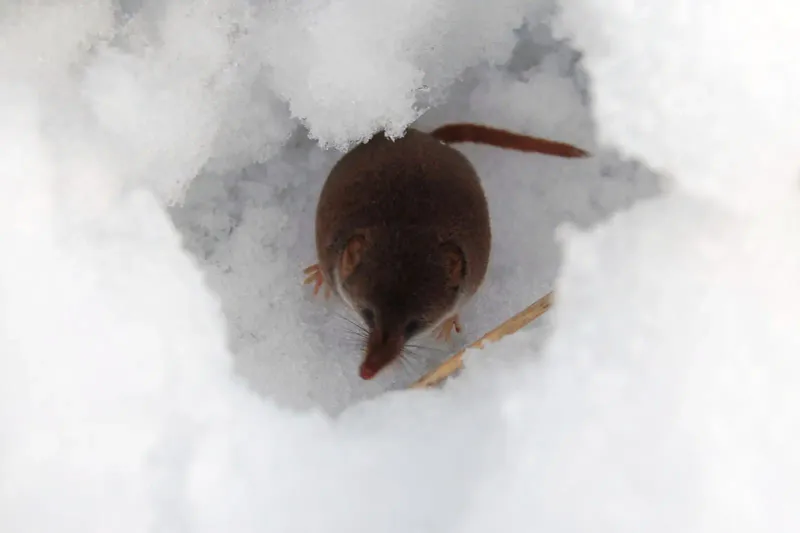
The snow-tunnel story comes from a specific source. The Virginia Department of Wildlife Resources page on Kirtland’s short-tailed shrew says that animal is active all year.
It also says it builds tunnels in the ground or snow and uses tunnels made by other animals.
Notice the name on that page. It is Kirtland’s short-tailed shrew, not the northern short-tailed shrew.
The page does not claim the northern species does the same thing, so that detail should stay with Kirtland’s.
What can we fairly say for Kirtland’s shrew? Winter does not shut it down, and snow cover gives it a place to move and possibly forage.
That supports careful wording like “can travel and may forage beneath snow.”
It does not support “hunts beneath your snow” as a promise. A shrew in a given yard may be in a burrow, under leaves, or nowhere nearby.
The account also does not cover every short-tailed shrew in Virginia.
If you want to look for signs of winter shrew life, think small. Thin tunnels or tiny openings in snow might be clues, but many animals leave similar marks, so a track alone is rarely proof of which species made it.
A bite calls for care, not panic
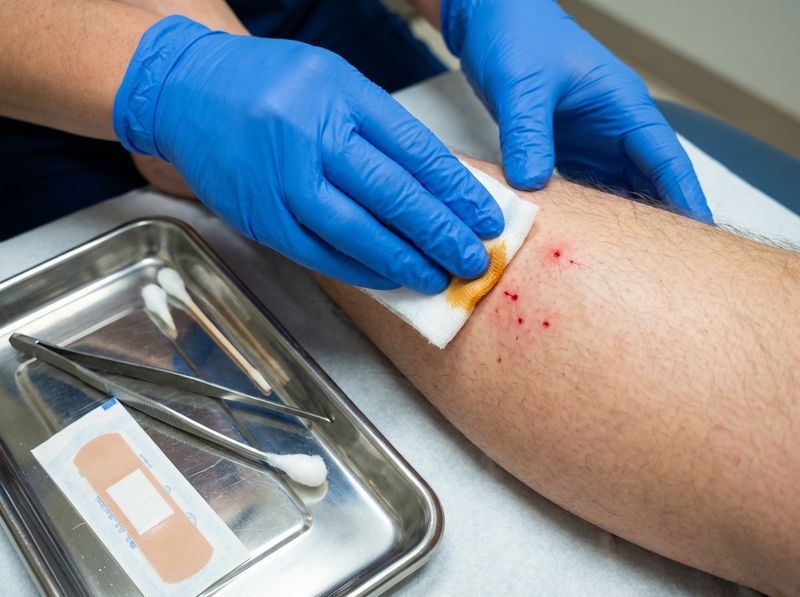
Hearing “venomous” can make a tiny animal sound frightening. The reality is calmer.
The peer-reviewed study mentioned earlier reports a few human bite accounts that describe local burning and swelling.
Agency summaries are in the same range. Maryland’s Department of Natural Resources says the northern short-tailed shrew is not dangerous to people or domestic animals, though it can bite if handled.
Those are summaries, not a promise that every bite goes the same way.
The easiest way to avoid a bite is to leave the animal alone. Do not try to catch, pick up, or test a shrew.
If a cat brings one in, keep children and pets away and let the animal go outside on its own if it is still alive.
If you are bitten by any wild animal, act quickly. CDC guidance says to wash the wound promptly with warm, soapy water and to seek medical advice when appropriate.
A healthcare or public-health professional can also assess rabies-related concerns. Call them rather than guessing, especially if the bite broke the skin or the animal’s behavior seemed unusual.
What the evidence does—and does not—show
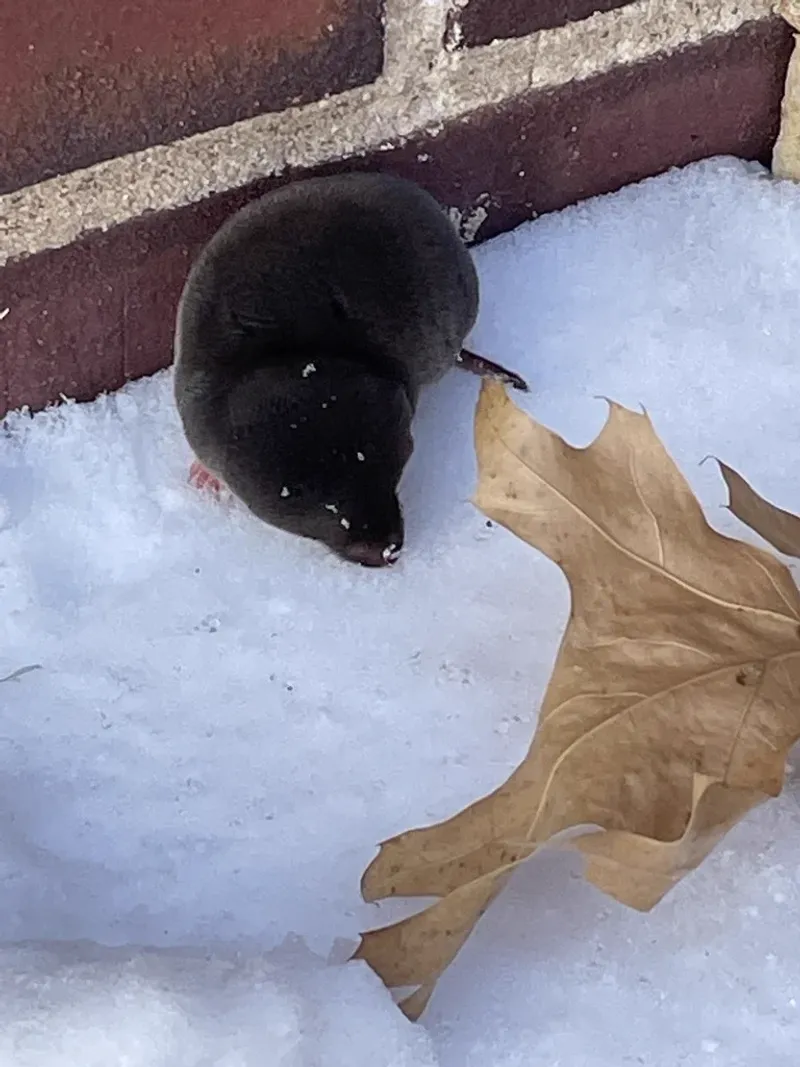
The numbers are clear: Purdue’s 11 to 26 grams for the northern short-tailed shrew beats a 5-gram nickel by a wide margin. Its toxin helps it subdue prey, and the human accounts are limited.
The snow tunnels belong to Kirtland’s short-tailed shrew.
Small, toxic, and busy through the cold months is still a remarkable way to live.
Share this story