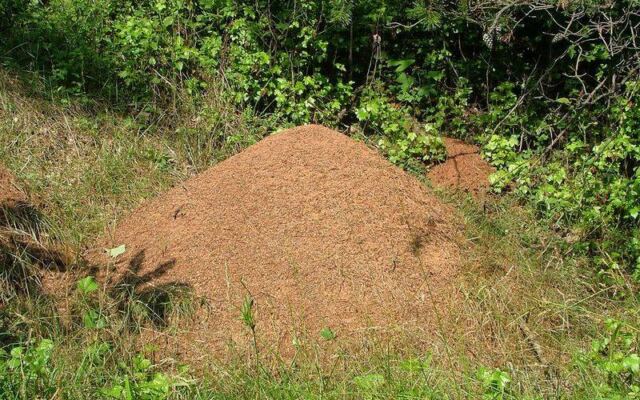
Those fresh little piles of loose soil in your Maryland lawn are often the work of ants digging a nest, and they tell you about the ants, not about the rain. A mound that shows up after a storm can look like a message, but the timing alone does not say why it appeared.
It also does not say your grass is in trouble. Here is how to read the mounds, tell them apart from other soil piles, and decide whether you need to do anything at all.
What a fresh mound can show
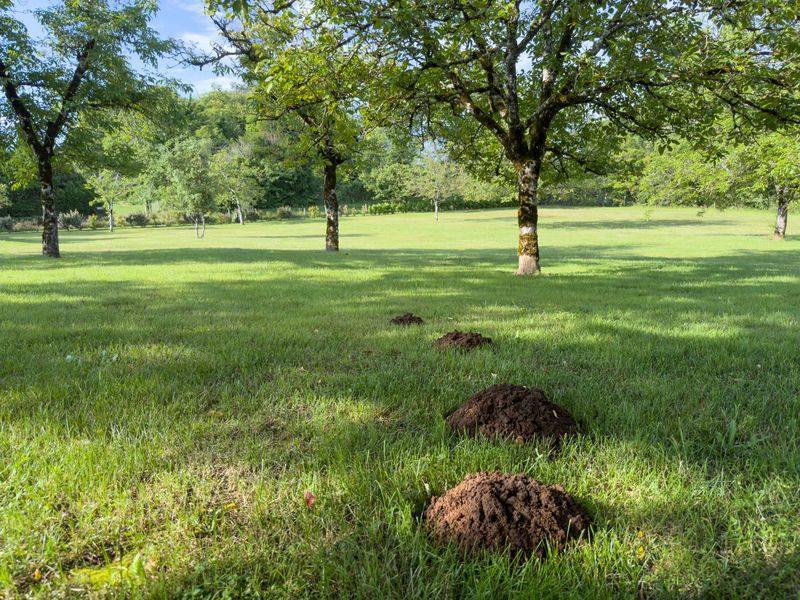
Several kinds of ants nest in soil, and some of them pile loose dirt around the entrance as they dig. According to University of Maryland Extension, those small crater-shaped piles are a normal sign of nesting.
So when ants are present, a fresh mound usually marks excavation or a nest entrance.
Notice the wording, though. Some ants build loose-soil mounds at their nest entrances, but not every pile of dirt is an ant nest, and not every ant species makes a visible mound at all.
Many nests are tucked underground with only a tiny hole showing.
What the mound can tell you is limited and fairly simple. It tells you that something is digging there, and if you see ants moving in and out, that a colony lives beneath that spot.
That is the whole message.
What it does not tell you is how healthy your lawn is. A mound by itself says nothing about whether the grass is thriving or struggling, and the same goes for the soil beneath it.
A lush yard can have plenty of mounds, and a thin one can have none.
Where mounds do become more noticeable is on sparse turf, or when there are lots of them clustered together. Bare soil around a thin patch makes each pile stand out, and a dozen mounds look like a bigger issue than two.
In a thick, well-kept lawn, the same number of nests may barely register.
Timing is the other thing a mound cannot explain. A pile that appears the morning after a storm is interesting, but seeing it then does not show what triggered it.
The next section looks at that question directly.
Rain and mound-building do not prove cause or forecast
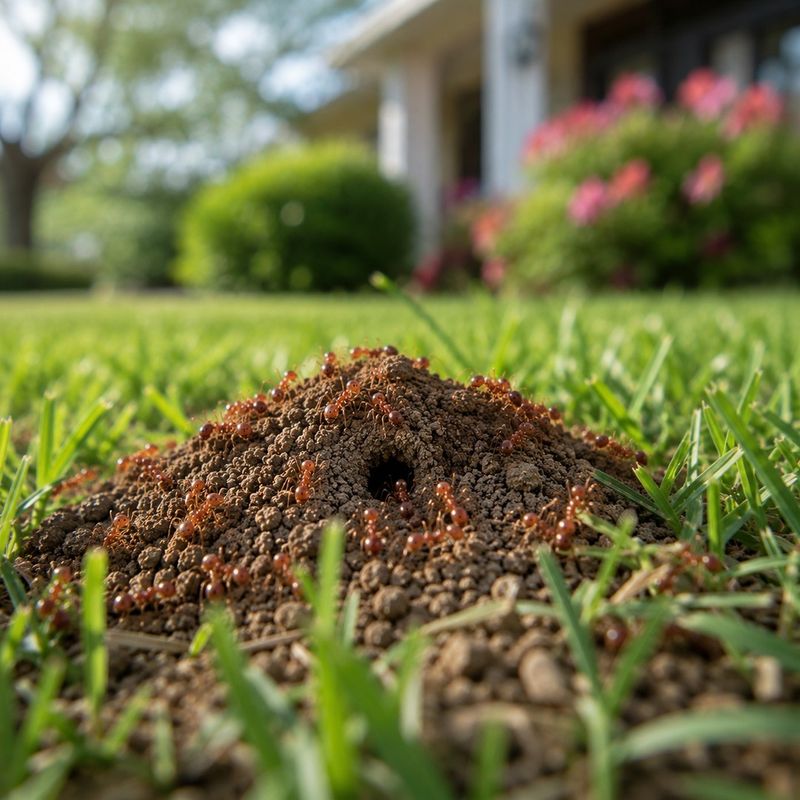
Seeing new mounds after rain feels like cause and effect, but a mound appearing after rain is not proof that rain made the ants build it. Maryland Extension notes that saturated soil can push various lawn invertebrates to the surface.
That is a different idea from ants deliberately building in response to a storm.
Wet soil also changes what you can see. Loose dirt may be easier to spot against dark, damp ground, and a mound that was there yesterday may only catch your eye today.
Rain can also soften and rearrange soil that was already piled up.
There is real research on ants building after rain, but it comes from far away. A study of five ant species in a South American floodplain found they built earthen barriers around nest entrances after heavy rain, and four of those barriers held up in experimental shallow flooding.
That is behavior by particular species in a particular flood-prone habitat. It is not a general explanation for the mounds in a Maryland yard.
The same caution applies to the old idea that ants predict rain. One controlled study found that a single leaf-cutter ant species changed its foraging when air pressure was falling.
That is a finding about one species’ foraging, and it does not show that the ants in your lawn can reliably forecast weather.
A practical way to use this: treat the timing as a clue to look closer, not as an answer. Check the mound for ants, and check the weather app for the forecast.
Other animals can leave soil mounds
Before blaming ants, take a second look at the pile. A soil mound in a soggy yard is not automatically an ant hill.
Maryland Extension notes that crayfish can build muddy chimneys in lawns near wetlands or where the water table is high.
Those chimneys are usually made of wet clay pellets and have a wider hole in the middle. If your yard sits low, backs up to a stream, or stays boggy, that is a good reason to suspect a crayfish.
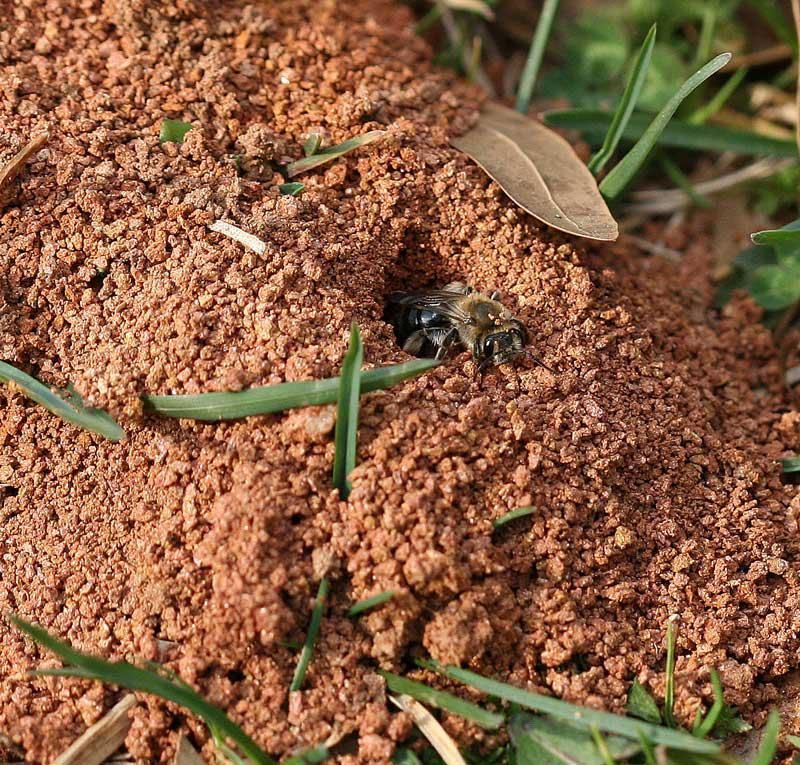
Ground-nesting bees and wasps also move soil, leaving small piles around their burrow openings.
A simple check helps. Watch the hole for a few minutes on a warm day and see what comes and goes.
Ants walk in lines, while bees and wasps fly in and out.
Color adds another puzzle. Plenty of people see reddish ants and worry about imported fire ants.
But reddish color alone does not identify an imported fire ant. Maryland Extension says the state has more than 100 ant species, including other reddish ones, and that imported fire ants show up only as occasional introductions rather than an established population.
If you think you have found imported fire ants, report them to the Maryland Department of Agriculture rather than guessing. Avoid poking at the nest in the meantime, since fire ants sting.
A quick photo from a safe distance can help the people who respond.
Most lawn ant mounds cause limited harm

For most yards, ants are more nuisance than menace. Penn State Extension describes lawn ant damage as generally limited.
A few scattered mounds seldom threaten a healthy lawn.
That does not mean the mounds are always harmless. Digging can loosen the soil under grass roots, and University of Minnesota Extension notes that large mounds can interfere with mowing or damage small areas of turf.
Picture a mower blade scalping the top of a tall pile, or a small patch of grass thinning out over a busy nest.
Those outcomes are possible, but they are not guaranteed. Plenty of mounds sit in the grass all season without hurting anything.
The size, number, and location of the mounds matter more than the fact that they exist.
Ants also play a role in the yard. Maryland Extension points out that ants prey on other insects, so a colony may be quietly working in your favor.
Wiping out every nest is not always a win.
If you are worried, you do not have to choose between panic and ignoring the problem. Look at what the mounds are actually doing.
Are they in the way, harming the grass, or putting someone at risk? The answers decide whether any action makes sense.
Decide whether the mound needs attention
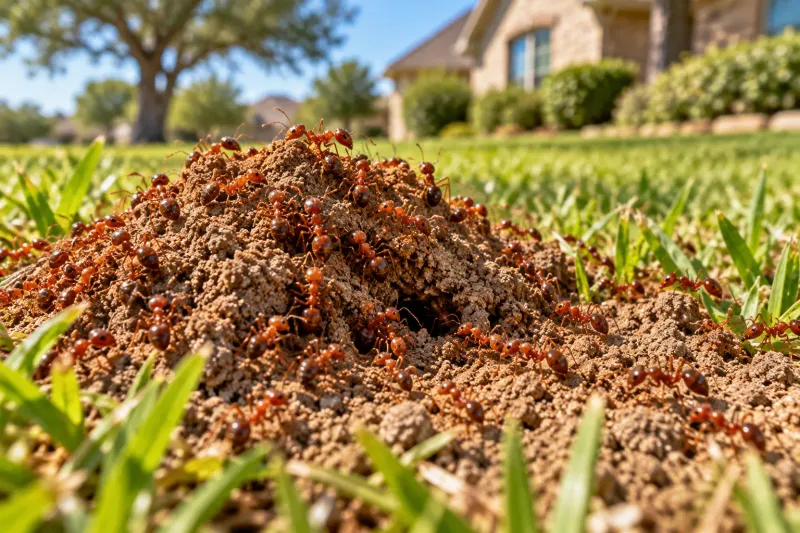
Start with the simplest step: get down and look. Make sure ants are actually at the mound, moving in and out of an opening.
If you see bees, wasps, or something muddy and wet instead, you are dealing with a different animal and a different question.
Once ants are confirmed, ask what the mounds are doing. Is the soil merely visible, or is it causing trouble?
Penn State Extension suggests considering control when mounds are numerous or disruptive, turf is being harmed, or people are at risk of bites or stings.
A handy way to sort it out is to picture three situations. In the first, a few mounds sit in thick grass and bother only your sense of tidiness.
In the second, mounds keep catching the mower or killing small patches of turf. In the third, ants are biting or stinging kids, pets, or anyone using the yard.
The first is cosmetic and rarely a reason to intervene. The second and third are real problems worth a response.
Matching the response to the situation keeps you from overreacting.
Resist the urge to use the mound’s timing or look as a stand-in for a diagnosis. A pile that appeared after rain or has a reddish tint does not tell you which pest you have or how serious the problem is.
Identify what made the mound first, then judge the damage you can actually see.
Start with low-impact options

When the ants are confirmed and the mound is mostly a cosmetic annoyance, tolerating it is a perfectly reasonable choice. If the loose soil bothers you, level it.
Iowa State Extension describes raking or washing mounds that rise above the grass until they are flat.
Lawn care can quietly shrink the problem too. Maryland Extension says that high mowing and dense turf maintained through overseeding make visible mounds less of an issue.
Thick grass simply hides more of the soil.
Some situations do call for control, such as numerous or disruptive mounds, harmed turf, or a bite or sting risk. In that case, identify the pest first.
Then use only a product labeled for that site and that pest, and follow the directions on the label.
Read the label’s precautions for children and pets and keep them away as directed. The EPA’s pesticide safety tips also advise using nonchemical measures where practical and avoiding outdoor spraying on rainy or windy days.
Rain can wash product away, and wind can carry it where it does not belong.
The through line is simple: figure out who made the mound, and respond to the nuisance, damage, or safety concern you can actually see. The mound is a small pile of dirt, and the ants beneath it are rarely in a hurry.
Share this story