Get the latest garden guides in your inbox →
Gardening Latest
  • General Gardening
  • Lawn Care
  • Plant Care
  • Composting
  • Soil Health
  • Backyard
  • Garden Muse Magazine
  • General Gardening
  • Lawn Care
  • Plant Care
  • Composting
  • Soil Health
  • Backyard
  • Garden Muse Magazine
  • News
  • Gardening Calendar
  • Garden Structures
  • Vegetable Garden
  • Vertical Garden
  • Raised Beds
  • Hydroponics
  • General Equipment
  • Community Gardens
Garden Themes
  • Spiritual Garden
  • Hydroseeding
  • Seeding and Laying Sod
  • Artificial Grass
  • Lawn Care Equipment
  • Plants
  • Trees
  • Planting Tools
  • Composting Basics
  • Fertilizer
  • Alternative Growing Mediums
  • Front Yard
  • Backyard Activities
  • Landscaping
Gardening Latest

Explore by state

Which state is your garden in?

Currently viewing Delaware

All states

Northeast

  • Connecticut —
  • Delaware 37
  • Maine —
  • Maryland 23
  • Massachusetts 39
  • New Hampshire —
  • New Jersey 23
  • New York 32
  • Pennsylvania 32
  • Rhode Island —
  • Vermont —

Southeast

  • Alabama 22
  • Arkansas —
  • Florida 23
  • Georgia 23
  • Kentucky 37
  • Louisiana 22
  • Mississippi —
  • North Carolina 21
  • South Carolina 36
  • Tennessee 19
  • Virginia 22
  • West Virginia —

Midwest

  • Illinois 22
  • Indiana 24
  • Iowa 36
  • Kansas —
  • Michigan 23
  • Minnesota 21
  • Missouri 21
  • Nebraska —
  • North Dakota —
  • Ohio 23
  • South Dakota —
  • Wisconsin 37

Southwest

  • Arizona 22
  • Colorado —
  • Nevada —
  • New Mexico —
  • Oklahoma —
  • Texas 21
  • Utah —

West

  • Alaska —
  • California 22
  • Hawaii —
  • Idaho —
  • Montana —
  • Oregon —
  • Washington —
  • Wyoming —

No state matches that search.

Site menu

Gardening Latest
  • General Gardening
    • News
    • Gardening Calendar
    • Garden Structures
    • Vegetable Garden
    • Vertical Garden
    • Raised Beds
    • Hydroponics
    • General Equipment
    • Community Gardens
    Garden Themes
    • Spiritual Garden
  • Lawn Care
    • Hydroseeding
    • Seeding and Laying Sod
    • Artificial Grass
    • Lawn Care Equipment
  • Plant Care
    • Plants
    • Trees
    • Planting Tools
  • Composting
    • Composting Basics
  • Soil Health
    • Fertilizer
    • Alternative Growing Mediums
  • Backyard
    • Front Yard
    • Backyard Activities
    • Landscaping
  • Garden Muse Magazine

Explore

  • About GardeningLatest.com
  • Contact Us

Get the latest from the garden

New guides on lawn care, plants and backyard projects, sent when they go up.

Subscribe →

Follow

  • Facebook
  • X
  • Pinterest
  • YouTube
Delaware Gardening

Those Fox Screams You Hear Near Your Delaware Home After Dark Actually Have a Message

Those eerie screams in the night are foxes talking, and they are communicating with each other.

OP

By Owen Pruitt

November 27, 2026 · 6 min read

Those Fox Screams You Hear Near Your Delaware Home After Dark Actually Have a Message

Those eerie screams in the night are foxes talking, and they are communicating with each other. Red foxes use different calls in different situations, so one sound can carry more than one possible meaning.

Delaware has two kinds of foxes, which makes it hard to know who is calling from sound alone. Here is what the sources say, what you cannot tell from your porch, and how to stay safe.

At a glance

Where
Delaware Gardening
Hardiness zone
7 0 to 10°F
Read
6 minutes
Published
November 27, 2026

What a fox call can tell you

What a fox call can tell you
© World Atlas

Foxes are talking to each other when they call at night. Red foxes make a range of sounds, and University of Maryland Extension describes calls used to signal danger and calls used when one fox meets another.

So the message depends on the situation, and red foxes have more than one reason to call.

That is the part we can say with some confidence. What we cannot do is turn a single scream into a precise message, like a sentence you could translate.

The same kind of sound may come up in different circumstances, and you are hearing it from a distance without seeing what the animal is reacting to.

It also helps to treat “fox scream” as an informal nickname, not a reliable identification. DNREC notes that Delaware has two fox species, the red fox and the gray fox.

A sound heard in the dark cannot tell you which one made it, and the call contexts described for red foxes should not be assumed for every fox-like noise.

So the useful way to think about it is simple. Documented red fox behavior tells us what calls can be used for.

An unseen, unidentified sound outside your window only tells you that some animal, possibly a fox, is out there making noise. Anything beyond that is a guess, and the guess is often wrong.

Foxes are active after dark

Foxes are active after dark
© Rutgers Cooperative Extension

Evening is when the neighborhood quiets down and fox activity picks up. According to DNREC, both of Delaware’s fox species are mostly active at night and around dusk and dawn.

Hearing a call after dark fits that normal routine.

Red foxes are the more common of the two statewide, which might tempt you to assume the caller is a red fox. That is only a probability, though.

DNREC advises removing or securing trash, outdoor cat food, and food scraps to discourage foxes from lingering.

Gray foxes also live in Delaware, and a voice heard from inside your house gives you no way to separate them.

A practical clue is what you can actually observe. If you happen to see the animal in a porch light or a car’s headlights, its coloring and shape can tell you more than any sound can.

If you only hear it, simply note that a fox may be passing through and leave it at that.

Night activity also explains why many people hear these sounds without ever seeing the animal. The caller is doing ordinary fox things, such as moving through yards, fields, and wood edges, while most of us are indoors.

Red foxes call in different situations

Red foxes call in different situations
© MyConstructor

Sources describe a handful of settings where red foxes use their voices. University of Maryland Extension says red foxes have calls to signal danger and calls they use upon encountering another fox.

Those are fox-to-fox forms of communication, not a message aimed at people.

The high-pitched wails many people call screams are a separate piece. The Natural History Museum associates those wails mainly with breeding-season communication.

Mainly is the key word, since it does not mean every scream is a mating call.

Nothing here says a call is a warning to homeowners or a sign that an attack is coming. It also does not say that a fox is in pain when it wails.

Those ideas show up in popular retellings, but the sources do not back them.

For a listener, the takeaway is modest. Red foxes can call in several contexts, and a single sound does not let you confidently assign one meaning to it.

The documented contexts also belong to red foxes, so they should not be stretched to gray foxes without supporting evidence.

Breeding season is only one piece of the picture
Breeding season is only one piece of the picture
© YouTube

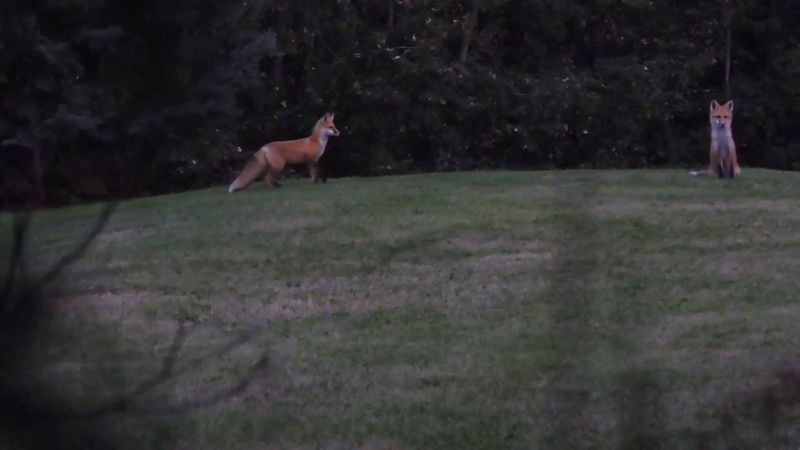
Late winter and early spring are when many people notice the loudest fox sounds. Breeding can help explain some red fox wails, but it is not a catch-all answer for every noise after dark.

A call in summer or fall, or one that sounds like a bark, may have nothing to do with it.

Even the dates vary by source. DNREC lists March and April as the red fox breeding season in Delaware.

Maryland Extension gives January through March for Maryland.

Treat both as regional guidance, not a precise calendar for each fox or each call. Individual animals and local conditions differ.

The Natural History Museum links high-pitched wails mainly to breeding-season communication, which fits as one piece of context and nothing more.

Secure food that can attract foxes
Secure food that can attract foxes
© PetHelpful

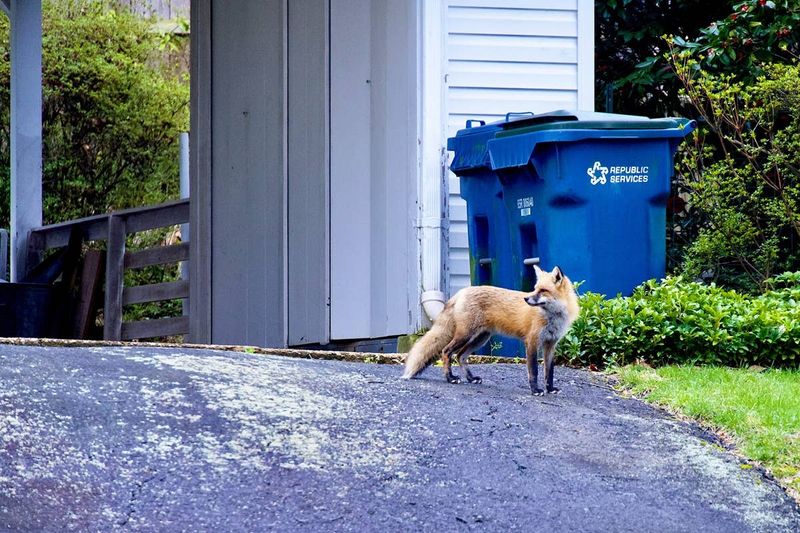
Food is the easiest thing around your home to change. DNREC advises removing or securing trash, outdoor cat food, and food scraps to discourage foxes from lingering.

Fewer easy meals means fewer reasons to hang around.

Start with the trash. Use cans with tight lids, and put bins out the morning of pickup instead of the night before.

Pick up fallen birdseed, fruit, and scraps from the yard, and keep compost covered.

Pets matter too. Delaware Public Health advises feeding pets indoors, keeping garbage secured, and not feeding or touching wildlife.

That includes leaving out food on purpose for a fox you enjoy watching.

These steps limit attractants. They do not guarantee that a fox will leave, since the animal may still pass through for other reasons.

Still, a yard with nothing to eat gives it little cause to settle in.

Keep your distance and know whom to call

Keep your distance and know whom to call
© Delaware News – Delaware.gov

Watch a fox from a distance and leave it alone. Do not approach, feed, touch, capture, or handle it, even to get a better look.

Delaware Public Health advises against touching wildlife and says to avoid an animal that appears unwell.

Seeing a fox in daylight can be alarming, but it is not proof of illness. Virginia’s wildlife agency says in its fox guidance that foxes can be active in the daytime and that a daytime sighting alone is not a sign of rabies.

That is Virginia’s advice, while Delaware’s focus is on staying away from any animal that looks sick.

If you are bitten or scratched, wash the wound and call the Division of Public Health at 888-295-5156 for guidance. Delaware’s Office of Animal Welfare also covers rabies exposure.

Do not try to catch the animal yourself.

For a sick or injured wild animal, contact the DNREC Wildlife Section at 302-739-9912. Describe where the animal is and what you see, then keep people and pets back until you get direction.

Listen without guessing at the message
Listen without guessing at the message
© Reddit

Red foxes call for different reasons, as Maryland Extension describes, but a scream heard in the dark cannot tell you the exact meaning or even the species, since Delaware has two. Keep your distance and keep food out of reach.

The night is simply fox business, and you are overhearing it.

Share this story
OP

Written by

Owen Pruitt

More from Owen Pruitt →

About Gardening Latest

Gardening Latest provides in-depth guides to maintaining and enhancing your garden and backyard. Learn how to make the most of the space you have and create a beautiful garden.

More about us →

Latest stories

  • Illinois GardeningIf You Find A Yellow Jacket Nest Near Your Illinois Home, Here’s What To Do Right Away

    If You Find A Yellow Jacket Nest Near Your Illinois Home, Here’s What To Do Right Away

    4 min ago
  • Louisiana GardeningFire Ants Rebuild Their Mounds Fast After a Louisiana Downpour, and It Says a Lot About Your Yard

    Fire Ants Rebuild Their Mounds Fast After a Louisiana Downpour, and It Says a Lot About Your Yard

    10 min ago
  • South Carolina GardeningThose Slow, Fuzzy Black-and-Orange Caterpillars Crossing Your South Carolina Driveway Right Now Are Looking for a Winter Bed

    Those Slow, Fuzzy Black-and-Orange Caterpillars Crossing Your South Carolina Driveway Right Now Are Looking for a Winter Bed

    24 min ago
  • Kentucky GardeningKentucky Law Says Who Pays When Your Neighbor’s Dead Tree Falls on Your House This Winter

    Kentucky Law Says Who Pays When Your Neighbor’s Dead Tree Falls on Your House This Winter

    30 min ago
  • Florida GardeningFlorida’s Winter Cold Snaps Push Opossums Toward Your Home, and Here’s What to Do

    Florida’s Winter Cold Snaps Push Opossums Toward Your Home, and Here’s What to Do

    36 min ago

Gardening by state

Stories for your state, and the hardiness zone most of it gardens in.

Keep exploring

Read next

All Delaware Gardening →
Delaware GardeningDelaware Yards Hide More Venomous Critters Than You’d Guess, And Late Fall Gives Them Away
Delaware Gardening

Delaware Yards Hide More Venomous Critters Than You’d Guess, And Late Fall Gives Them Away

2 hr ago
Delaware GardeningThat Green Caterpillar With a Brown Saddle Stings Hard in Delaware Gardens, and Here’s What to Do First
Delaware Gardening

That Green Caterpillar With a Brown Saddle Stings Hard in Delaware Gardens, and Here’s What to Do First

6 hr ago
Delaware GardeningDelawareans Are Eating Celery Every Day, And Here’s What It’s Doing To Their Bodies
Delaware Gardening

Delawareans Are Eating Celery Every Day, And Here’s What It’s Doing To Their Bodies

9 hr ago

More from Delaware Gardening

  • Just Found A Yellow Jacket Nest By Your Delaware Home? Here’s How To Handle It Safely

    Nov 25
  • Delaware Has 7 Totally Harmless Critters That Look Venomous Enough to Make You Jump

    Nov 24
Back to top

Leave a response Cancel

Your email address stays private. Required fields are marked with an asterisk.

Gardening Latest

In-depth guides to maintaining and enhancing your garden and backyard: how to make the most of the space you have, and how to make it beautiful.

  • Facebook
  • X
  • Pinterest
  • YouTube

We may earn a portion of sales from products or services that are purchased through our site as part of our affiliate partnerships with retailers.

Explore

  • About GardeningLatest.com
  • Contact Us
  • Terms and Conditions
  • Privacy
  • Editorial Note:
  • FTC Disclosure

Newsletter

New garden guides and seasonal tips, straight to your inbox.

We’ll email you a link to confirm. Unsubscribe any time.

Almost there! Check your inbox and tap the link to confirm.

© 2026 Gardening Latest. All rights reserved.

Back to top