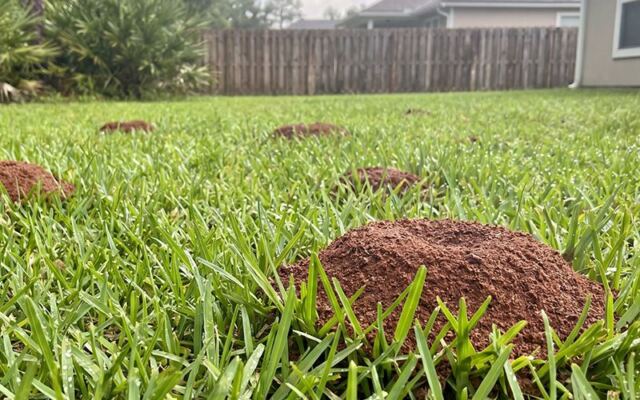
After a big Louisiana downpour, fire ant mounds can seem to pop up or grow almost overnight. Ants really do change their visible mounds fast when water floods their tunnels.
But a sudden mound usually means a colony that was already there has become easier to see. Knowing the difference can save you from rushed choices and painful stings.
What a newly visible mound can tell you
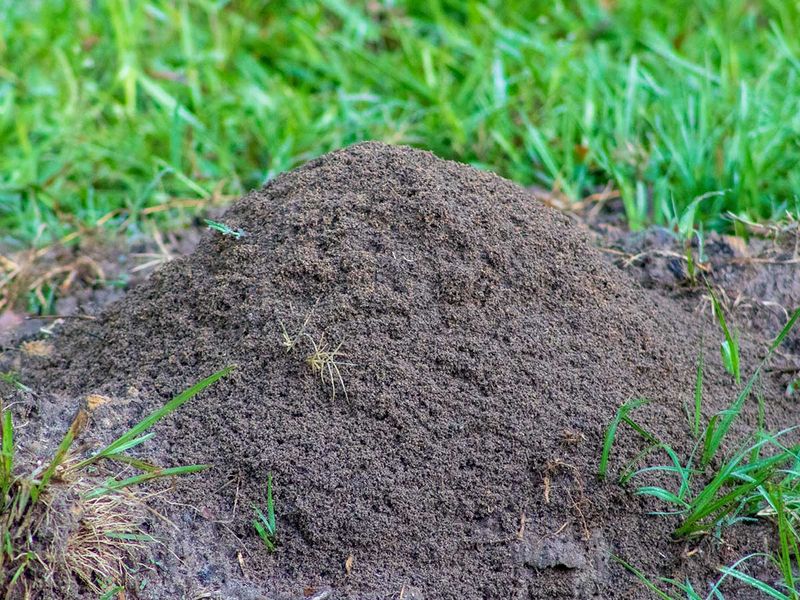
Heavy or prolonged rain can make fire ant mounds appear or change quickly in a Louisiana yard. An existing colony may push up fresh soil or surface in a new spot.
But a mound that shows up overnight does not prove a new colony formed, and it does not prove your yard’s fire ant population suddenly jumped.
The key is to separate what you can see from what is going on below ground. A mound is the part of the nest that sits above the surface.
Colony numbers are a different matter, and a bigger crop of mounds after a storm tells you mostly that nest activity or visibility changed.
Louisiana guidance notes that mounds can start underground and stay unseen for months, then show up faster after rain. So the mound you spotted this morning may belong to a colony that has been in your lawn for a while.
Mississippi State Extension describes similar events. According to its newsletter on post-rain mounds, heavy or prolonged rain can prompt near-overnight mound appearances as ants move away from flooded underground brood galleries.
Think of a new mound as a clue. It may be a raised mound, a newly visible one, or a sign that a colony shifted location.
Treat it as a reason to look more carefully, not as proof of an invasion.
A colony can be there before its mound appears

Picture a colony working quietly beneath a lawn for weeks. The ants dig tunnels and chambers, and the soil they move has to go somewhere.
In many yards, nothing shows on top for a long time.
The Louisiana home lawn guide for red imported fire ants explains that mound construction begins underground. The visible mound may take months to appear.
It also says mounds show up more quickly after rainfall.
That timing explains why a yard can seem to change in a single night. Wet soil is soft and easy to push up, and ants may bring soil to the surface as they respond to damp conditions below.
The colony was already present. The rain simply helped reveal it.
Here is a practical way to think about it. If you walk your lawn after a storm and see three mounds where you saw none last week, ask what was likely there before.
Some of those colonies may have been growing out of sight for a long while.
Rain does not create a colony. It can change how obvious one is.
Keeping that in mind helps you judge a sudden mound calmly instead of assuming the worst.
Flooded underground spaces can change where mounds show up
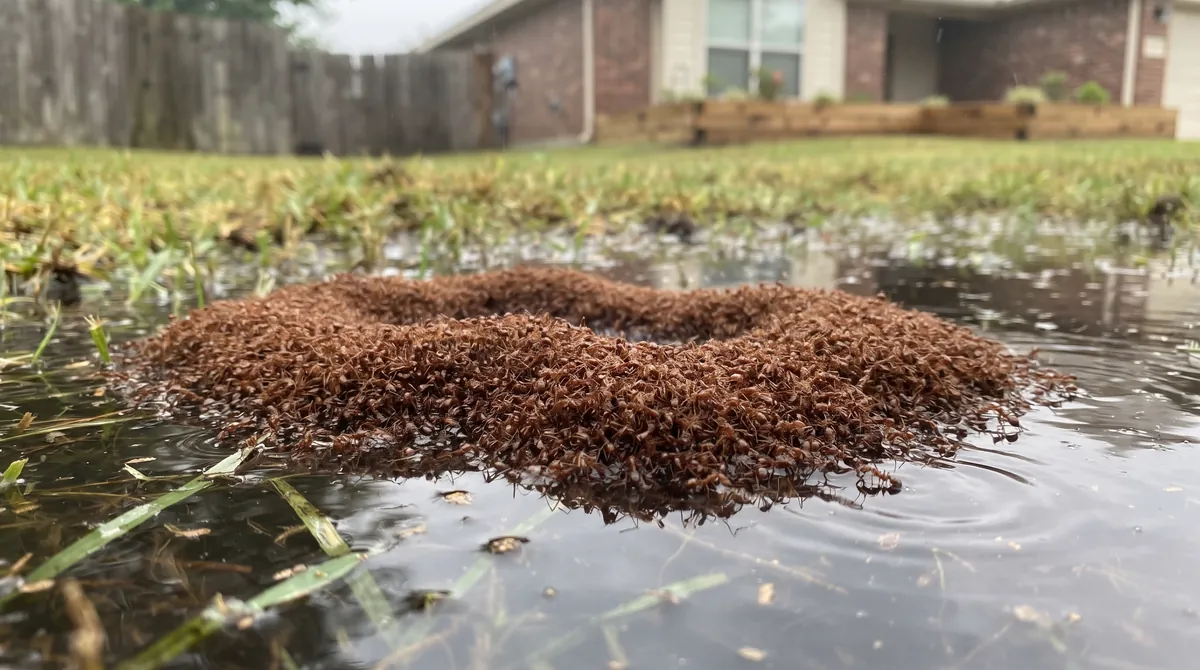
Deep in the nest, fire ants keep their young in chambers called brood galleries. When heavy or prolonged rain floods those spaces, the ants move.
Mississippi State Extension says colonies may raise mounds after heavy or prolonged rain as ants move away from flooded areas below.
Texas A&M describes another response. Colonies can move and set up a mound somewhere else, sometimes quickly.
So a mound in a new spot may be a relocated colony, not a brand-new one.
These are rapid changes to visible mound structures. They are not proof that ants rebuilt an entire underground nest overnight.
You may also have heard that fire ants float. Texas A&M’s fire ant biology page describes floating as a flood-survival behavior, where a colony leaves its mound and floats to reach land.
That is a response to flooding, not something every colony does in ordinary rain.
Flooding can have varied effects on colonies. Some may move, some may stay put, and some may suffer losses.
A regular summer downpour will not trigger the same behavior in every yard.
Rain research offers context, not a Louisiana prediction

Scientists in South China looked at how rainfall affects fire ant nesting. Their paper, published in Sociobiology, recorded prompt nest repairs after rain and higher mounds afterward.
That fits the pattern many Louisiana homeowners notice. Ants respond to wet conditions by working on the part of the nest that sits above ground.
Still, the study was done in South China, not Louisiana. It offers supporting context.
It cannot tell you what happened in a particular Louisiana yard, and it does not show how fast an entire colony rebuilt below the surface.
Soil type, rainfall amount, drainage, and the age of a colony can all differ from place to place. A sandy yard that drains quickly may behave differently than a heavy clay yard that holds water for days.
The useful takeaway is simple. Rain can reveal or alter visible nest structures.
Use the research to understand the general pattern, then let what you see in your own yard guide your next steps.
More visible mounds do not prove a population boom

Counting mounds after a storm feels like taking a census, but it is not one. Mississippi State Extension cautions that an apparent jump can simply reflect greater visibility.
In its So Many Fire Ant Mounds newsletter, the point is that mound counts alone cannot establish a population increase.
Here is why. A single colony can build more than one visible mound, and a colony that was hidden can suddenly show itself.
Louisiana guidance says colonies can live underground for months before a mound appears. So a bumper crop of mounds can come from colonies that were already there.
A better approach is to watch the yard over time. Note where mounds sit, whether they stay, and whether ants are active as the soil dries.
A few days of observation tell you far more than one wet morning.
Try not to make control decisions only because the lawn looks different after rain. A changed yard is not the same as a bigger problem.
Give conditions time to settle, then decide what the yard truly needs.
Choose control based on conditions and the product label

If you decide to act, timing matters. LSU AgCenter recommends applying bait when ants are actively foraging, and it advises avoiding application when rain is expected soon or the soil is saturated.
It also says not to disturb mounds before baiting. Its article on a two-step approach to fire ant control lays out these steps.
That means treating right after a downpour is not good blanket advice. Wet bait can break down or wash away, and ants may not forage well in soggy soil.
Waiting for drier conditions is often the smarter move.
For prevention or broader yard control, use only a bait labeled for your site, and apply it according to the label. Timing and rain restrictions vary by product.
The label decides where you can use it, when, and how much.
For a few urgent nuisance mounds, such as one beside a play area or a walkway, spot treatment may be an option. LSU describes bait followed by mound spot treatments as a two-step approach.
Baits and contact treatments work at different speeds, so read what each one promises.
Again, the product must be labeled for the location, and you should use it exactly as directed. When the label and a general tip disagree, follow the label.
Keep your distance from active mounds
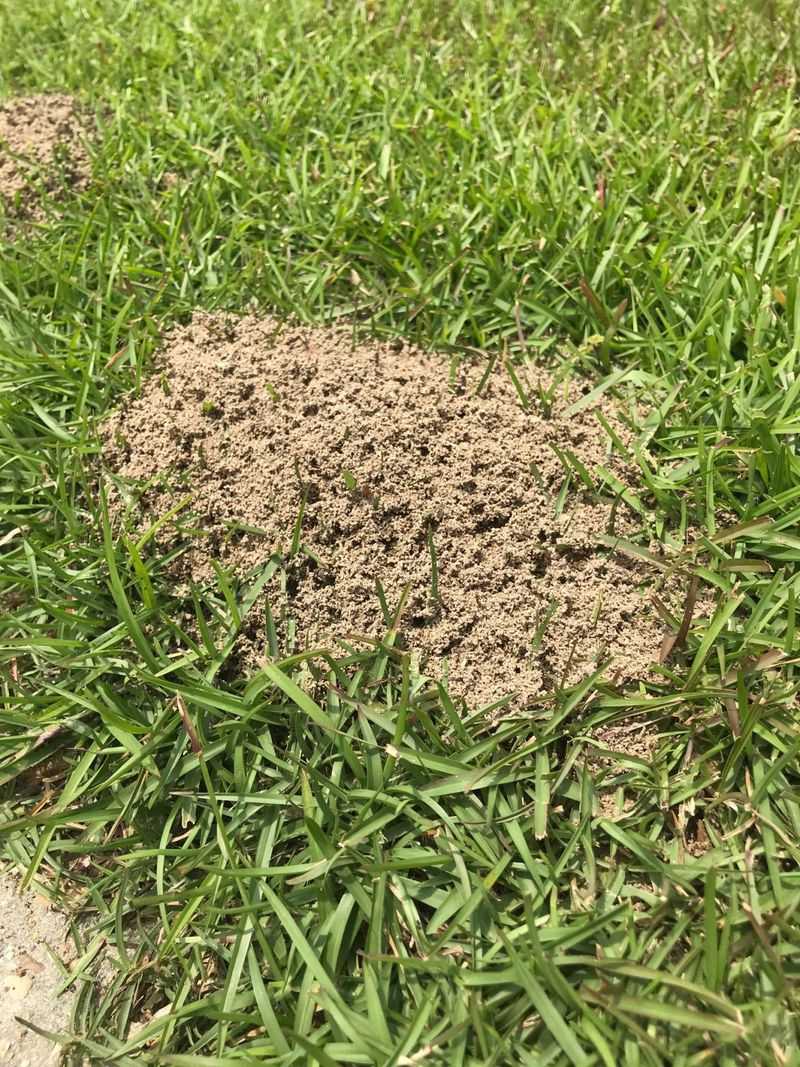
Fire ants defend their nests fast. Louisiana guidance warns that disturbing the soil can trigger defensive swarming and stings.
Do not poke, kick, or dig into a mound to test whether it is active or to watch it rebuild.
Not every sting is an emergency. Most cause local pain and small blisters.
But if a sting is followed by breathing difficulty, chest pain, nausea, or other serious symptoms, the National Pesticide Information Center advises getting emergency medical care.
Keep children and pets away from fresh mounds, and wear closed shoes when you work in the yard after rain.
A mound that appears overnight is a puzzle, not a crisis. Let it sit, and let the ants show you what they plan to do.
Share this story