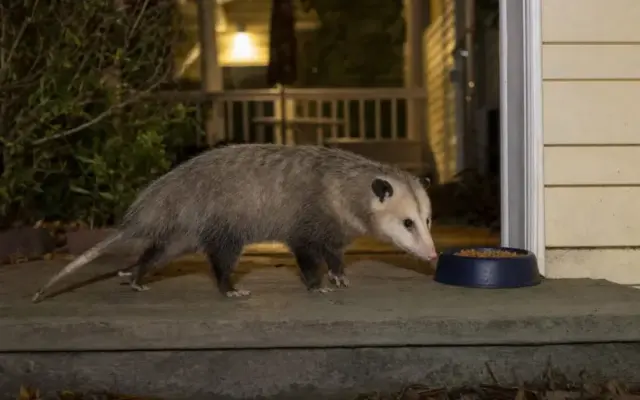
When a chilly night hits Florida, opossums may look for a warm, sheltered spot, and that spot can be close to your house. Food left in the yard can draw them in too.
Knowing what attracts them and how to respond can keep you, your pets, and the animals safe. Here is a calm, practical plan for what to do.
Opossums may seek shelter near homes
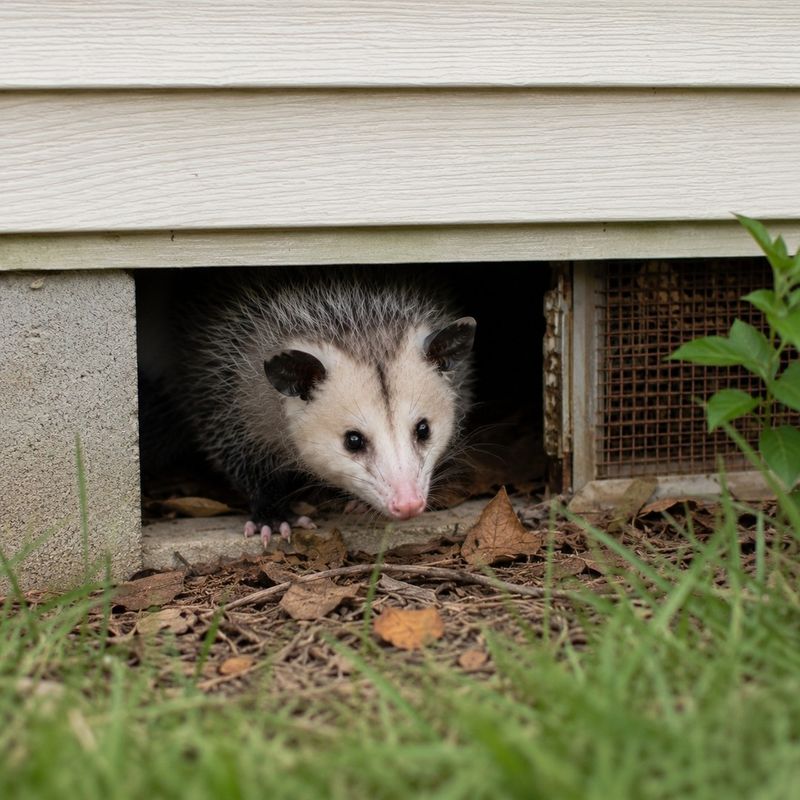
On a very cold night, an opossum may stay tucked inside a den instead of roaming. Sheltered spaces around buildings, such as gaps under porches or sheds, can offer that kind of cover.
A wildlife guide from South Carolina’s wildlife agency says opossums do not hibernate, but they may stay in dens during very cold spells and may forage by day, especially in cold weather.
That is possible behavior, not a rule. Nothing in the guidance shows that Florida cold snaps broadly push opossums into houses, and no reliable temperature cutoff exists for when one might seek out a building.
So if you see one near your home after a chilly night, it does not automatically mean something is wrong.
Some of the strongest cold-refuge language comes from Massachusetts wildlife guidance, which says buildings can serve as cold refuges there. Massachusetts sits near the northern edge of the species’ range, and its notes on frostbite to exposed body parts belong to that colder setting.
Those details should stay in Massachusetts rather than be applied to Florida.
What Florida homeowners can take from this is simple. Opossums are adaptable animals that use whatever shelter is handy, and a quiet, protected nook near your house may look appealing on a cold night.
The rest of this article covers what draws them, where they may settle, and how to respond safely.
Food can bring opossums into residential yards
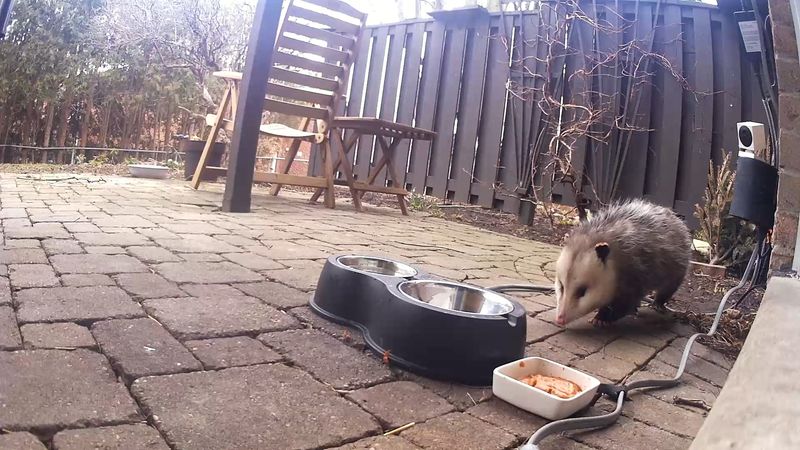
Food is the better-supported reason an opossum shows up in a yard. The Virginia opossum is native to Florida, and according to Florida Fish and Wildlife Conservation Commission (FWC), it is common in urban areas.
FWC lists garbage, pet food, and cultivated fruits and vegetables as things that attract them.
Think about what a typical yard offers after dark. An unsecured trash can, a bowl of kibble left on the porch, ripe fruit on the ground, or a garden full of produce can all look like an easy meal.
An opossum that finds one reliable food spot may keep coming back.
It helps to keep two ideas apart. Food attraction is well documented.
The idea that cold weather causes opossums to move into houses across Florida is not something the reviewed sources show. A cold night might change when or how an opossum moves around, but a food source is what gives it a reason to visit your property in the first place.
That is good news, because food is something you control. Cleaning up a few habits can make your yard far less interesting to wildlife without any contact with the animals at all.
The prevention steps below start with exactly those changes.
Where opossums may settle around a house
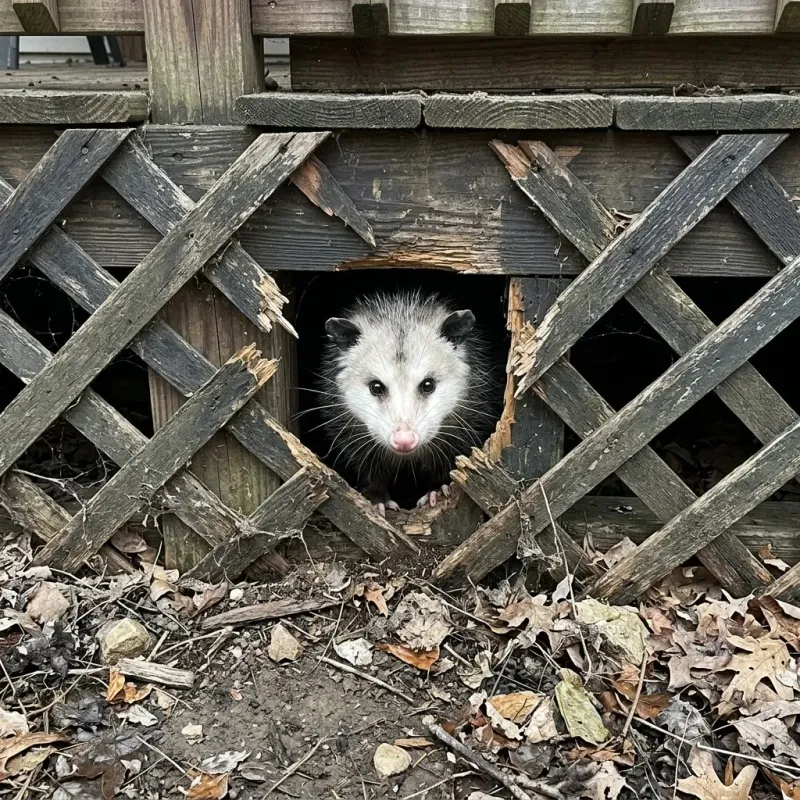
Opossums are not picky about den sites. The South Carolina guide notes they may den under homes, in attics, or in garages, along with more natural spots.
Brush piles, hollow logs, and dense vegetation also fit the bill.
The same guide says opossums typically use existing openings rather than creating them. That points to the places worth checking on your own property: gaps beneath porches or decks, loose vent covers, damaged soffits, holes in crawl space screens, and garage doors that do not close fully.
A small, forgotten opening can be all an animal needs.
A sighting alone does not mean one is living in your house. An opossum crossing the lawn at night is often just passing through, looking for food.
Signs that point to a den are more specific, such as repeated activity at one opening or sounds coming from a particular space over several nights.
If you want to look around, a simple walk around the outside of the house in daylight is enough. Note any gaps and damaged screens, and make a plan to repair them later.
Before closing anything, read the next sections, because timing matters.
Remove easy food sources from your yard
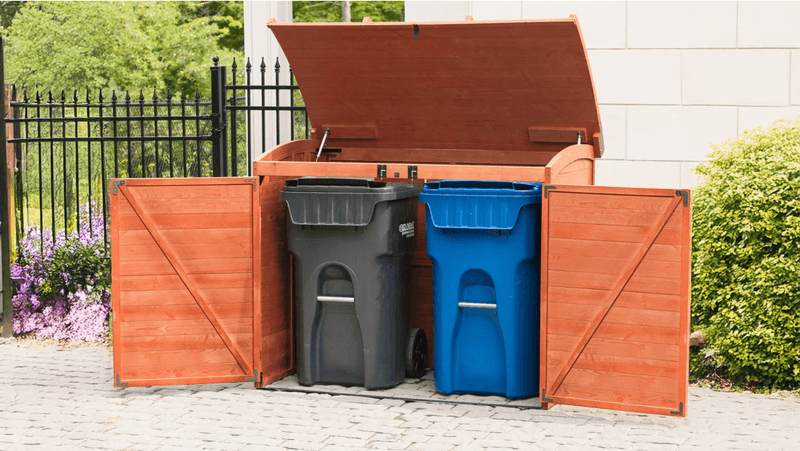
Cutting off easy meals is the most practical thing you can do, and it works for many kinds of wildlife. FWC specifically recommends securing garbage cans and bringing pet food indoors at night.
Both steps take only a few minutes.
Start with the trash. Use cans with tight, latching lids, and keep them in a garage or shed until collection day if you can.
For pets that eat outside, feed them during the day and take the bowl in before dark.
The South Carolina guide also supports managing other food sources. In practice, that means a few extra habits:
- Secure or enclose compost piles so scraps are not open to visitors.
- Sweep up fallen birdseed under feeders, or pause feeding if it keeps piling up.
- Pick up fallen fruit from trees and gardens.
- Keep outdoor grills and picnic areas free of crumbs and grease.
Give changes a little time. An animal that has been visiting a reliable food source may keep checking for a few nights before it moves on.
Stay patient, keep the yard tidy, and avoid leaving out food to coax it away. Feeding wildlife only keeps it coming back.
Check for animals and young before closing an entry
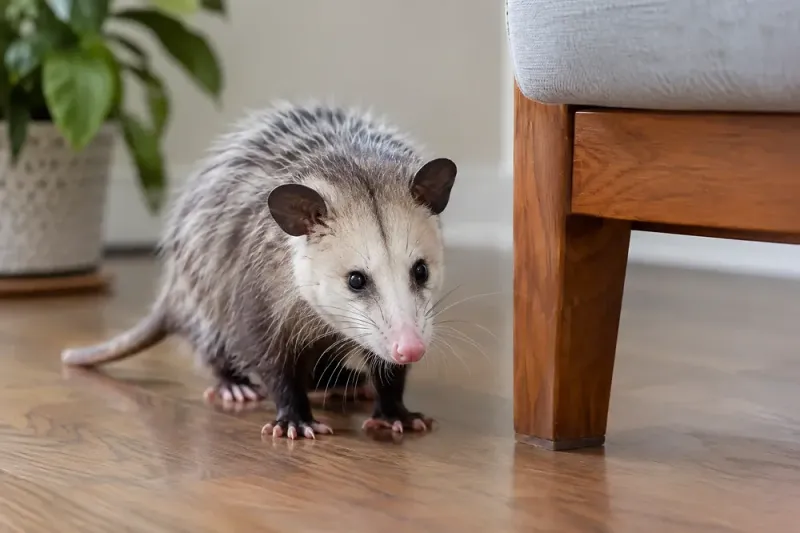
Once you suspect an opossum is using a space in or under your house, resist the urge to plug the hole right away. Sealing an opening while an animal is inside can trap it, and it can separate young from their mother.
Confirm that the animal and any dependent young are out before you close an entry.
A state wildlife agency in Maine describes how to evict animals from buildings, and it presents one-way exclusion as an option. That approach only works when you correctly identify the entry and exit points and check for young.
It is easy to get wrong, which is why this guide skips step-by-step instructions.
If you are unsure, get help before you act. Rules apply to some wildlife removal activities in Florida, and FWC’s nuisance wildlife FAQs recommend seeking assistance before removal.
Rules can change, so check current FWC guidance or call a wildlife-control professional.
Casual trapping and moving an animal somewhere else is not a simple fix either. FWC notes that relocating wildlife can harm the animal and create other problems.
A qualified professional can handle the situation legally and with the animals’ welfare in mind.
In the meantime, wait to make permanent repairs until you know the space is empty. Keep pets and family members away from the area, and make a note of when you hear or see activity so you can describe it accurately.
A daytime sighting does not prove an opossum is sick
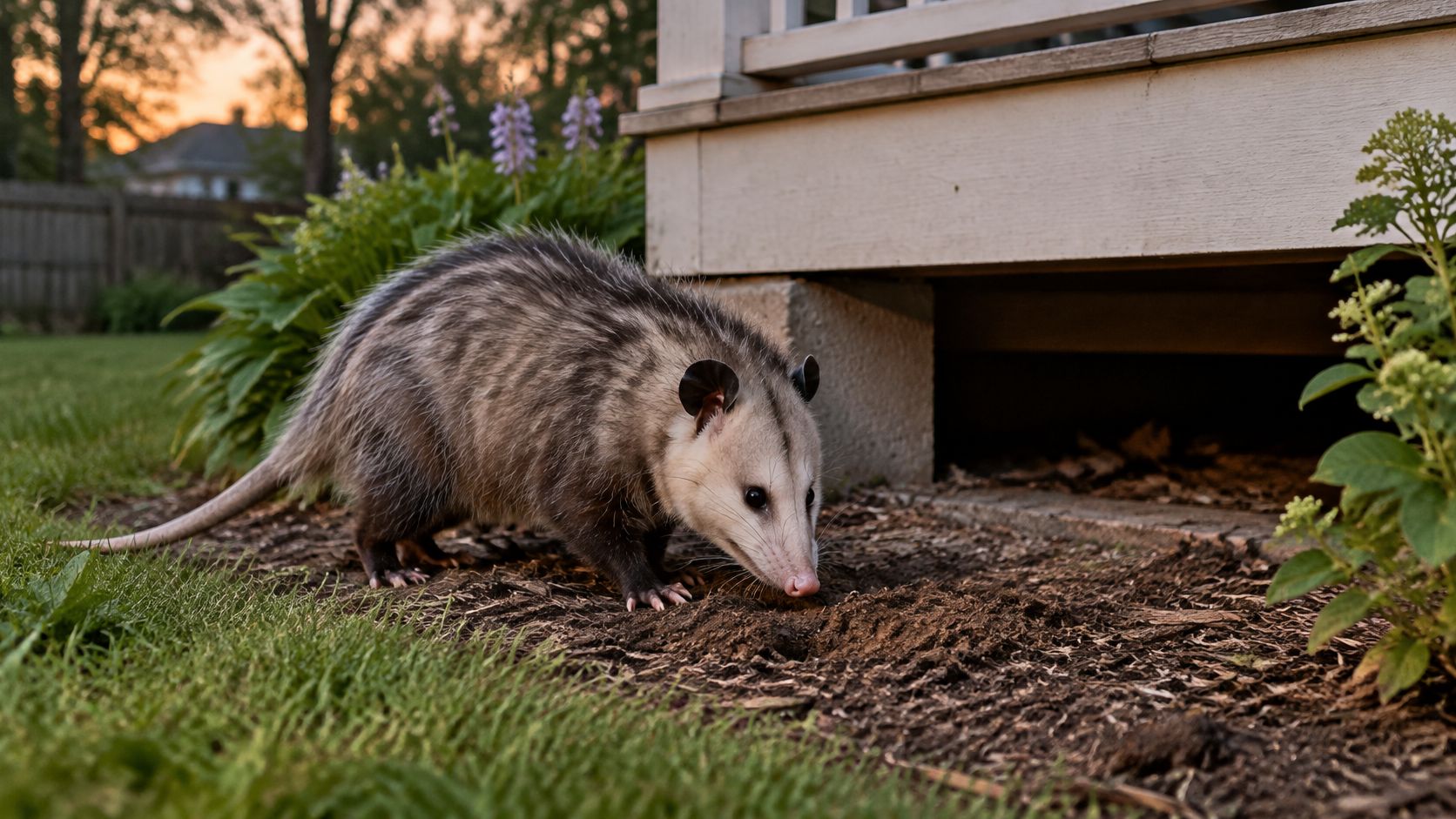
Seeing an opossum in broad daylight can be startling, but the clock alone tells you very little. The South Carolina guide says opossums may forage during the day, especially in cold weather.
A cold morning might simply send one out to look for food when it is a bit warmer.
So a daytime sighting does not show that an animal is sick, and it does not mean the animal needs to be trapped. What matters more is its condition.
Watch from a distance and notice whether it is moving normally and going about its business, or whether it seems hurt or unable to move well.
If an opossum appears injured or orphaned, leave it alone where possible. The University of Florida’s wildlife guidance advises contacting a licensed wildlife rehabilitator or an FWC regional office.
They can tell you what to do next.
Do not try to pick up the animal, feed it, or move it yourself. Keep children and pets indoors or well away while you make the call.
In most cases, a healthy opossum will wander off on its own once it has found what it was looking for.
Keep your distance and get help when needed
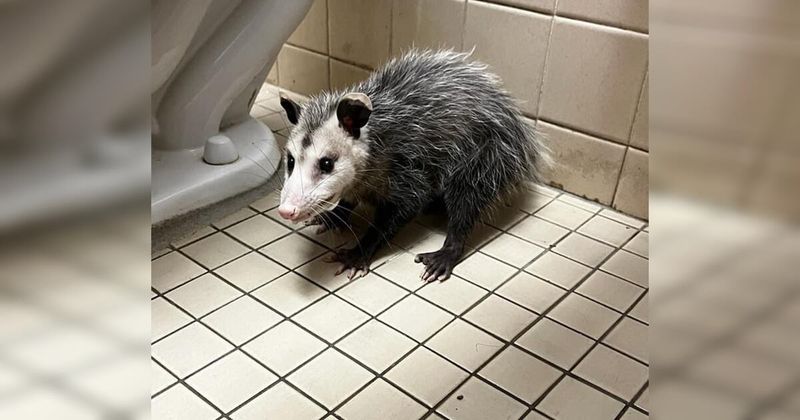
Opossums are best enjoyed from a distance. Keep people and pets away from wild animals, and never feed or handle them, a point CDC wildlife guidance backs up.
Remove food attractants, and call for help if an animal is in a structure or looks injured or orphaned, as the UF wildlife page suggests.
Opossums are not immune to rabies. If you are bitten or scratched by a wild animal, wash the wound and seek medical or public-health guidance, as CDC rabies advice explains.
A tidy yard and a little patience usually let a passing opossum move along on its own.
Share this story