Get the latest garden guides in your inbox →
Gardening Latest
  • General Gardening
  • Lawn Care
  • Plant Care
  • Composting
  • Soil Health
  • Backyard
  • Garden Muse Magazine
  • General Gardening
  • Lawn Care
  • Plant Care
  • Composting
  • Soil Health
  • Backyard
  • Garden Muse Magazine
  • News
  • Gardening Calendar
  • Garden Structures
  • Vegetable Garden
  • Vertical Garden
  • Raised Beds
  • Hydroponics
  • General Equipment
  • Community Gardens
Garden Themes
  • Spiritual Garden
  • Hydroseeding
  • Seeding and Laying Sod
  • Artificial Grass
  • Lawn Care Equipment
  • Plants
  • Trees
  • Planting Tools
  • Composting Basics
  • Fertilizer
  • Alternative Growing Mediums
  • Front Yard
  • Backyard Activities
  • Landscaping
Gardening Latest

Explore by state

Which state is your garden in?

Currently viewing New York

All states

Northeast

  • Connecticut —
  • Delaware 40
  • Maine —
  • Maryland 26
  • Massachusetts 43
  • New Hampshire —
  • New Jersey 26
  • New York 36
  • Pennsylvania 36
  • Rhode Island —
  • Vermont —

Southeast

  • Alabama 26
  • Arkansas —
  • Florida 26
  • Georgia 27
  • Kentucky 40
  • Louisiana 25
  • Mississippi —
  • North Carolina 24
  • South Carolina 39
  • Tennessee 23
  • Virginia 25
  • West Virginia —

Midwest

  • Illinois 25
  • Indiana 28
  • Iowa 39
  • Kansas —
  • Michigan 27
  • Minnesota 25
  • Missouri 25
  • Nebraska —
  • North Dakota —
  • Ohio 27
  • South Dakota —
  • Wisconsin 41

Southwest

  • Arizona 26
  • Colorado —
  • Nevada —
  • New Mexico —
  • Oklahoma —
  • Texas 25
  • Utah —

West

  • Alaska —
  • California 26
  • Hawaii —
  • Idaho —
  • Montana —
  • Oregon —
  • Washington —
  • Wyoming —

No state matches that search.

Site menu

Gardening Latest
  • General Gardening
    • News
    • Gardening Calendar
    • Garden Structures
    • Vegetable Garden
    • Vertical Garden
    • Raised Beds
    • Hydroponics
    • General Equipment
    • Community Gardens
    Garden Themes
    • Spiritual Garden
  • Lawn Care
    • Hydroseeding
    • Seeding and Laying Sod
    • Artificial Grass
    • Lawn Care Equipment
  • Plant Care
    • Plants
    • Trees
    • Planting Tools
  • Composting
    • Composting Basics
  • Soil Health
    • Fertilizer
    • Alternative Growing Mediums
  • Backyard
    • Front Yard
    • Backyard Activities
    • Landscaping
  • Garden Muse Magazine

Explore

  • About GardeningLatest.com
  • Contact Us

Get the latest from the garden

New guides on lawn care, plants and backyard projects, sent when they go up.

Subscribe →

Follow

  • Facebook
  • X
  • Pinterest
  • YouTube
New York Gardening

Picked Up a Hickory Tussock Caterpillar While Raking Leaves in New York? Here’s What to Do Right Away

If you touched a fuzzy white-and-black caterpillar in your yard, grab some sticky tape and lift the tiny hairs…

E

By Elyanna

November 27, 2026 · 5 min read

Picked Up a Hickory Tussock Caterpillar While Raking Leaves in New York? Here’s What to Do Right Away
Picked Up a Hickory Tussock Caterpillar While Raking Leaves in New York? Here's What to Do Right Away

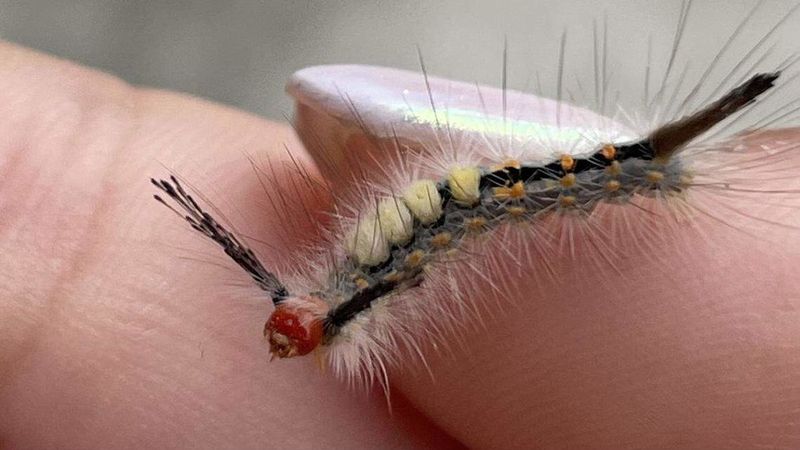
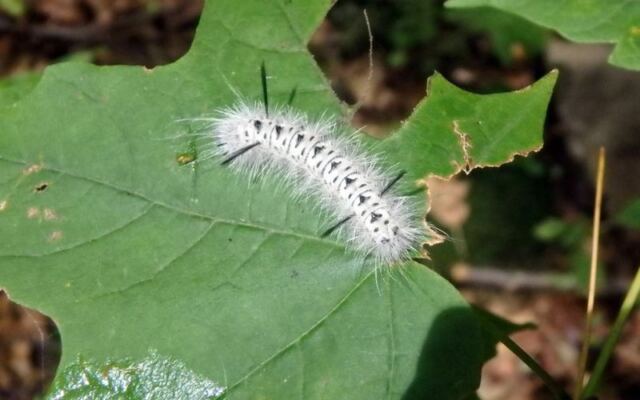
If you touched a fuzzy white-and-black caterpillar in your yard, grab some sticky tape and lift the tiny hairs off your skin, then wash the spot with soap and water. Hickory tussock caterpillars live in New York, and their hairs can leave an itchy, burning rash.

Acting quickly keeps the hairs from staying on your skin and clothes. Here is what to do, what to watch for, and when to call for help.

At a glance

Where
New York Gardening
Hardiness zone
7 0 to 10°F
Read
5 minutes
Published
November 27, 2026

What to do right after contact

What to do right after contact
© Yahoo Health

Start by keeping your bare hands off the caterpillar. If one is still on you or your tools, flick it away with a stick or lift it with a folded piece of paper or a gloved hand.

Next, treat the skin as though loose hairs may be on it. Gently press a piece of sticky tape onto the area, then lift it straight off.

Use fresh tape each time and repeat a few times, as Poison Control advice describes. Pressing and lifting matters, because wiping or rubbing can push the barbed hairs deeper.

Once the tape has lifted what it can, wash the area gently with soap and water. Pat it dry instead of scrubbing.

MedlinePlus gives similar first-aid steps for caterpillar contact.

The hairs on a hickory tussock caterpillar are detachable and barbed, so they can irritate skin even when the caterpillar is no longer there, according to Penn State Extension. That is why the tape step comes before washing.

If you have questions about your own exposure, call Poison Control at 1-800-222-1222. Cooling the skin and caring for clothing come next, in the following section.

Cool the skin and handle contaminated clothing

Cool the skin and handle contaminated clothing
© Poison Control

After the hairs are off and the skin is washed, a little cooling can take the edge off the burn and itch. Use a cool compress, or wrap ice in a clean cloth.

MedlinePlus suggests applying the wrapped ice for 10 minutes, then taking it off for 10 minutes. Never place ice directly on the skin, since that can cause its own injury.

Poison Control lists hydrocortisone as an option for itch, as described in its caterpillar article.

Clothing deserves attention too. Shirts, sleeves, gloves, and pants that touched the caterpillar may carry loose hairs.

Take them off, handle them with care, and launder them thoroughly.

Try to resist the urge to rub or scratch. As DermNet explains, scratching can make irritation worse and may spread hairs around.

Think of these steps as a second stage. Tape and washing remove the hairs, while cooling and clean clothes help keep you comfortable and prevent fresh contact.

The usual reaction stays near the contact site
The usual reaction stays near the contact site
© Reddit

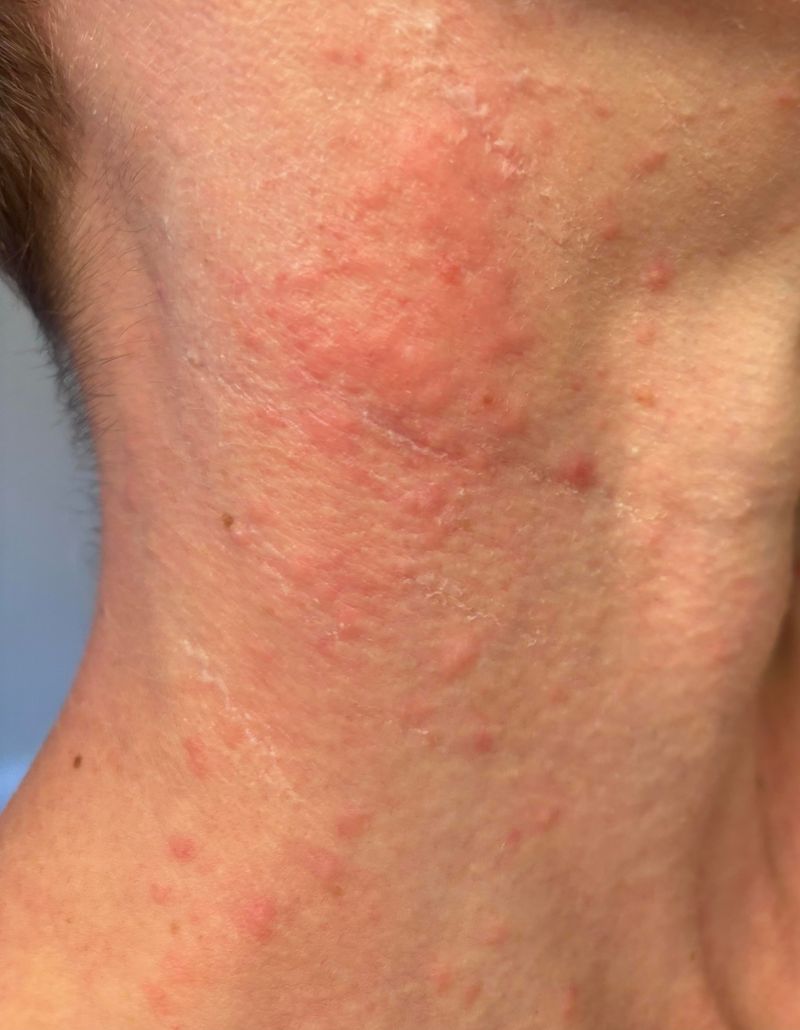
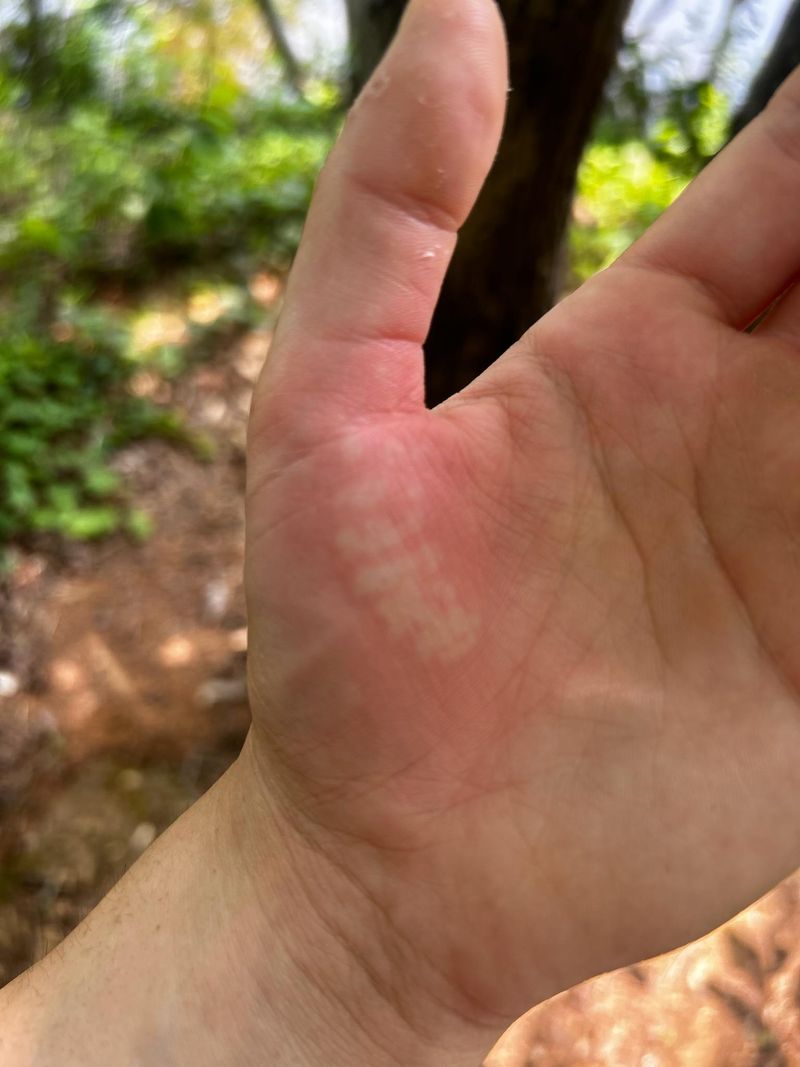
Most reactions to hickory tussock hairs stay close to where the hairs touched. Penn State Extension describes localized redness, itching, burning, and sometimes swelling or welts.

Blisters are also possible.

Penn State Extension says many reactions get better with minimal care, often within about 48 hours. Treat that as a general expectation, not a promise.

Some people take longer to settle down, and DermNet notes that caterpillar-related skin reactions in general can last longer.

It also helps to know what a rash cannot tell you. Redness and itching after yard work may be consistent with hickory tussock exposure, but other hairy caterpillars and other skin problems can look much the same.

A rash alone does not prove which caterpillar, if any, was the cause.

If you are unsure, call Poison Control at 1-800-222-1222 and describe what happened. Their caterpillar guidance covers the basics, and the specialists can advise on your specific exposure.

Know when to get urgent help
Know when to get urgent help

Serious problems are not what to expect from this caterpillar, but a few situations call for quick action.

If hairs get in an eye, rinse the eye with water and arrange urgent medical care. If someone swallowed hairs or the caterpillar itself, get urgent help as well.

Poison Control and MedlinePlus both list these exposures as reasons to seek care. If you breathed in hairs, get medical advice.

Emergency signs are different. Call 911 for difficulty breathing or swallowing, fainting, or swelling of the lips, face, or tongue.

These are signs of a possible severe allergic reaction, which MedlinePlus describes as needing prompt care.

These outcomes are not typical after touching a hickory tussock caterpillar. Still, knowing the warning signs ahead of time means you can act without hesitation if one ever appears.

Keep treatment for lingering itch simple

Keep treatment for lingering itch simple
© YouTube

If itching hangs around after cleaning and cooling, keep the plan modest. Poison Control lists hydrocortisone as an option for itch, as described in its caterpillar article.

Penn State Extension also mentions that topical steroids or antihistamines may be used for localized symptoms. You can read more in its hickory tussock overview.

These are options the sources mention, not requirements. Follow the directions on any product you choose.

If you are not sure which one fits, ask a pharmacist or clinician.

That advice matters even more for a child, since dosing and product choice can differ. Keep medicine questions separate from the emergency signs covered earlier, and avoid scratching while the skin settles.

It may have been another hairy caterpillar
It may have been another hairy caterpillar
© Farm and Dairy

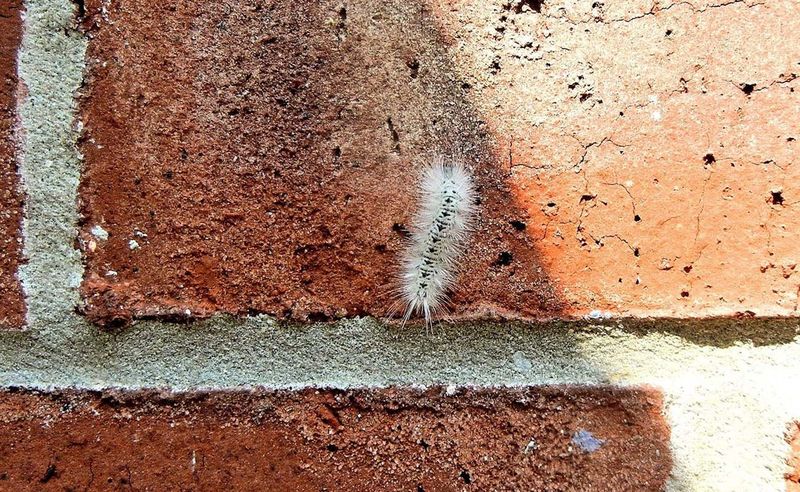
Hickory tussock caterpillars do occur in New York. They are white and black and covered in bristles, which makes them easy to spot.

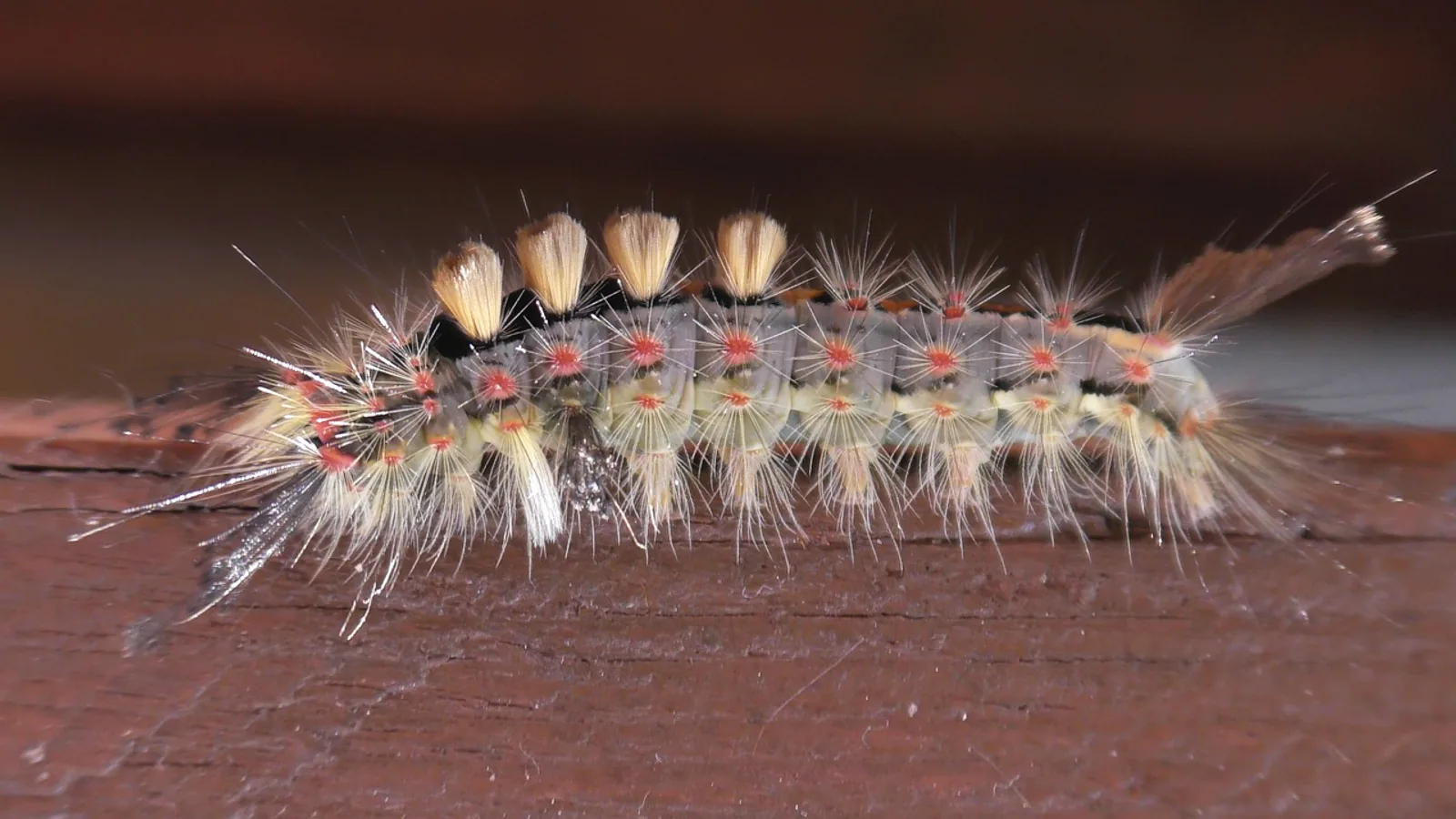
Even so, looks and timing are clues rather than proof, because other hairy caterpillars live in the state too, as noted by UMass Extension.

Season ranges vary by source. Erie County’s field guide reports caterpillars from July through October.

UMass Extension gives July through September for mature larvae and says they may wander through fall. That points to late-summer and fall encounters, not to caterpillars being present during every autumn leaf-raking session.

Cocoons are another thing to keep in mind. According to Penn State Extension, the caterpillar’s hairs are worked into its cocoon, so cocoons can retain irritating hairs.

Do not handle one as if it were harmless.

Not every rash after yard work comes from this species. If you have a photo or the caterpillar itself, that helps with identification.

If the rash is stubborn or puzzling, a clinician can help sort out the cause.

Remove, wash, cool, and monitor
Remove, wash, cool, and monitor
© Zubair Khalid

Lift possible hairs with fresh pieces of tape, wash the skin gently, then cool it with a wrapped ice pack or cool compress. After that, keep an eye out for warning signs.

For advice about your own exposure, call Poison Control at 1-800-222-1222, and see their guidance or MedlinePlus for the basics. Serious symptoms need urgent help.

A few minutes of tape and soap is usually the best head start.

Share this story
E

Written by

Elyanna

More from Elyanna →

A passion for lavender! From a young age, Elyanna has had a passion for lavender. It began at the age of two when her mother walked her through fields of lavender in Norfolk England. This ignited her interest; she has grown harvested and learned about this beautiful herb.

About Gardening Latest

Gardening Latest provides in-depth guides to maintaining and enhancing your garden and backyard. Learn how to make the most of the space you have and create a beautiful garden.

More about us →

Latest stories

  • Michigan GardeningSpot a Brown Recluse Look-Alike in Your Michigan Basement This Winter? Here’s What It Really Is

    Spot a Brown Recluse Look-Alike in Your Michigan Basement This Winter? Here’s What It Really Is

    4 min ago
  • Massachusetts GardeningA Porcupine Gnawing on Your Massachusetts Trees This Winter Leaves Damage You Can Still Save

    A Porcupine Gnawing on Your Massachusetts Trees This Winter Leaves Damage You Can Still Save

    9 min ago
  • California GardeningCalifornia Gardeners Back Away From These 7 Critters That Look Venomous but Pose No Real Threat

    California Gardeners Back Away From These 7 Critters That Look Venomous but Pose No Real Threat

    14 min ago
  • New York GardeningThe Late Fall Chill Gives Away The Venomous Critters Living In Your New York Yard

    The Late Fall Chill Gives Away The Venomous Critters Living In Your New York Yard

    19 min ago
  • Ohio GardeningNeighbor’s Branches Hanging Over Your Ohio Yard? You’re Allowed to Trim Them Back to the Property Line

    Neighbor’s Branches Hanging Over Your Ohio Yard? You’re Allowed to Trim Them Back to the Property Line

    25 min ago

Gardening by state

Stories for your state, and the hardiness zone most of it gardens in.

Keep exploring

Read next

All New York Gardening →
New York GardeningThe Late Fall Chill Gives Away The Venomous Critters Living In Your New York Yard
New York Gardening

The Late Fall Chill Gives Away The Venomous Critters Living In Your New York Yard

19 min ago
New York GardeningYes, New York Has Venomous Snakes And Spiders, And Here’s How To Spot Each One
New York Gardening

Yes, New York Has Venomous Snakes And Spiders, And Here’s How To Spot Each One

2 hr ago
New York GardeningCoyotes Howling Late at Night Near Your New York Home Have a Seasonal Message for You
New York Gardening

Coyotes Howling Late at Night Near Your New York Home Have a Seasonal Message for You

9 hr ago

More from New York Gardening

  • 8 Things In New York Backyards That Towns Are Starting To Crack Down On

    Nov 26
  • This Tiny Shrew In New York Yards Has A Venomous Bite, And It’s Active All Winter

    Nov 25
Back to top

Leave a response Cancel

Your email address stays private. Required fields are marked with an asterisk.

Gardening Latest

In-depth guides to maintaining and enhancing your garden and backyard: how to make the most of the space you have, and how to make it beautiful.

  • Facebook
  • X
  • Pinterest
  • YouTube

We may earn a portion of sales from products or services that are purchased through our site as part of our affiliate partnerships with retailers.

Explore

  • About GardeningLatest.com
  • Contact Us
  • Terms and Conditions
  • Privacy
  • Editorial Note:
  • FTC Disclosure

Newsletter

New garden guides and seasonal tips, straight to your inbox.

We’ll email you a link to confirm. Unsubscribe any time.

Almost there! Check your inbox and tap the link to confirm.

© 2026 Gardening Latest. All rights reserved.

Back to top