Yes, in Ohio you can generally trim the part of a neighbor’s branches that hangs over your yard, as long as you stop at the property line. That simple rule comes from long-standing court decisions, but it comes with some real limits.
Where the trunk stands, where the boundary runs, and how careful you are with the cut all matter. Knowing the rules before you pick up the saw can save you from a costly fight.
Ohio recognizes a right to trim encroaching branches
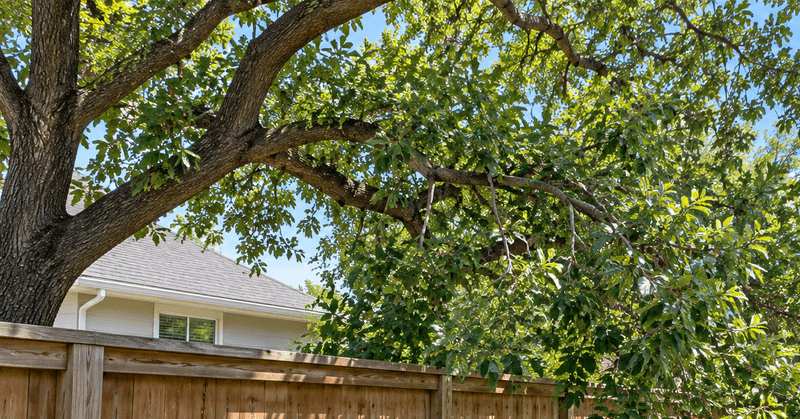
Ohio common law recognizes a landowner’s right to remove branches that reach over onto their property. An Ohio appellate decision in ALH Properties v.
ProCare recognized this privilege to cut back encroaching limbs. Lawyers call it self-help, because you can act without asking a judge first.
The right is about the overhanging portion only. It does not give you a free hand over the tree itself, which still belongs to your neighbor.
Think of it as permission to deal with the part that is over your land, nothing more.
Courts also expect care. In Brewer v.
Dick Lavy Farms, the appellate court described the privilege as limited by reasonable care not to injure the neighboring property. So a cut that is sloppy, excessive, or likely to kill the tree can bring trouble even when the branch really did hang over your yard.
Ohio State University Extension has also described the right as trimming straight up from your side of the boundary, an image that helps. The extension article on overhanging branches offers a plain-language look at the same idea.
Treat this as a general rule, not a guarantee. Whether any particular cut is lawful depends on the facts, including where the line runs and how the work is done.
The property line sets the limit
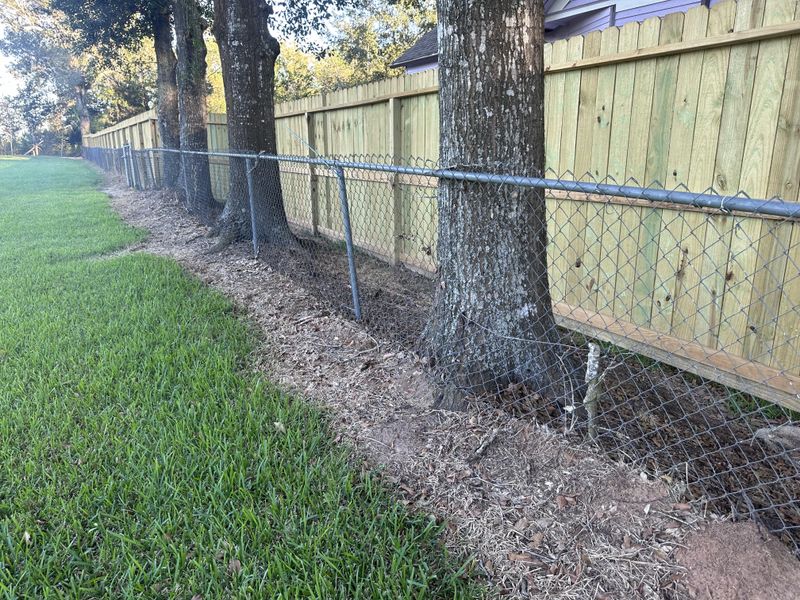
Picture the property line as a wall that rises straight up from the ground. You may remove only the part of a branch that passes through that wall onto your side.
Anything on the other side of it still belongs to your neighbor.
This is why cutting back to the trunk can be a mistake. If the trunk stands on your neighbor’s land, a cut at the trunk would remove wood that sits over their yard.
Ohio State Bar Association guidance cautions against trimming beyond the line, and it also stresses that you should not enter the neighbor’s property or leave debris there.
Plan the job so you stay on your own side the whole time. Keep your ladder, your feet, and your tools on your land.
Make sure the cut branches fall into your yard, and clean them up yourself.
Do not assume a fence tells you where the legal boundary is. Fences are often built a little off the line, sometimes by several feet.
A survey, a plat map, or marked corner pins give a far better answer.
If you are not sure where the line runs, sort that out first. Ohio Farm Bureau legal guidance recommends talking with your neighbor and getting expert help when needed.
A friendly conversation costs far less than a dispute.
A tree on the boundary is a different case
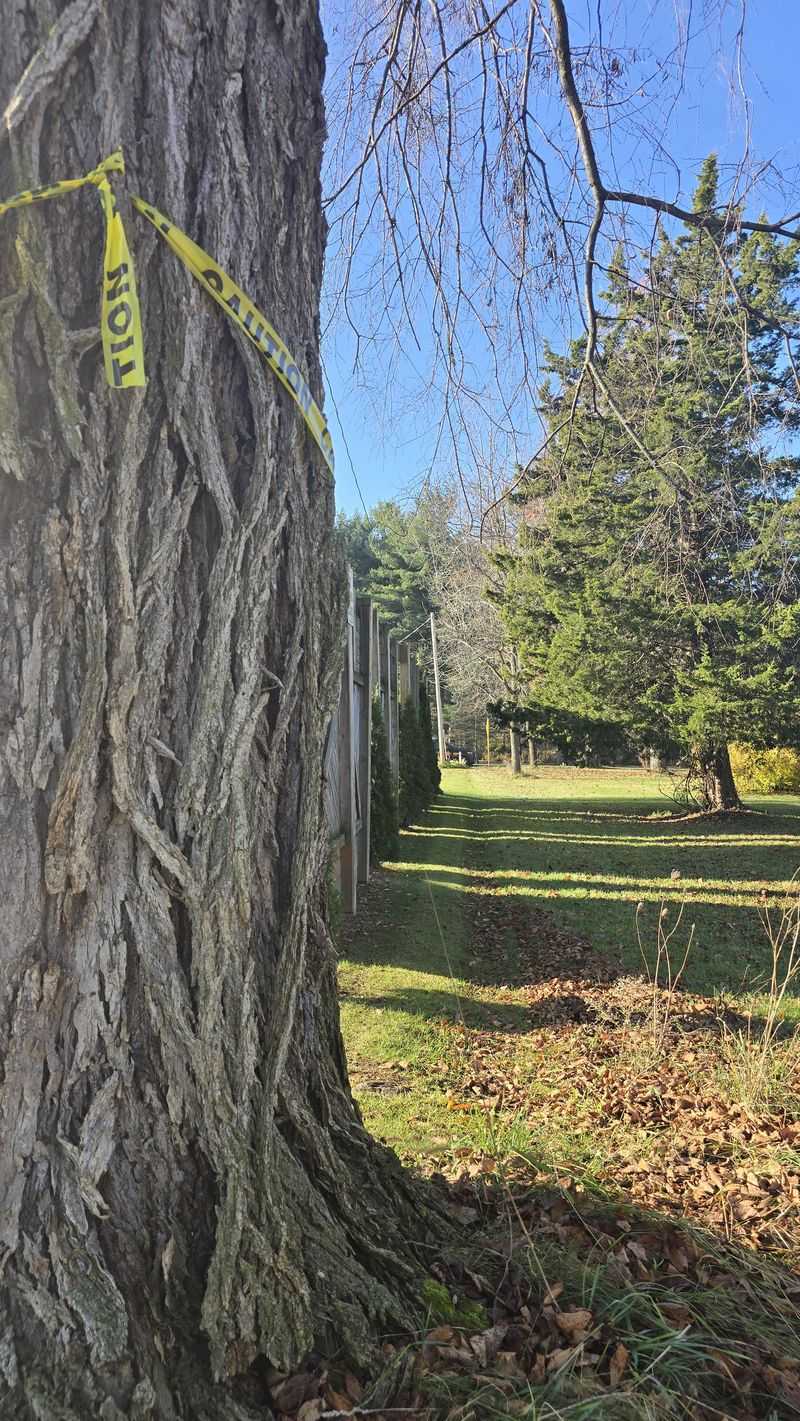
Everything above applies to a tree that stands wholly on your neighbor’s land. A tree whose trunk sits on the property line is another matter.
Branches or roots that simply cross the line do not give you ownership, but a trunk on the line changes the picture.
In Long v. Meier, an Ohio appellate court treated boundary-line trees as jointly owned, as tenants in common.
The court upheld liability where one owner recklessly removed such a tree without the other owner’s consent.
So the usual overhang rule is the wrong tool here. You cannot treat a boundary tree as if it were only your neighbor’s, and you cannot treat it as only yours either.
Each owner has a stake in it.
Look at the base of the tree. If the trunk straddles the line or you cannot tell which side it grows on, stop before cutting anything.
The safer path is to talk with the neighbor and agree on a plan in writing if you can. If that fails, or the work is large, get professional advice from a surveyor, an arborist, or an attorney before altering the tree.
Careless pruning can create legal risk
Courts talk about reasonable care, and Ohio law also has a statute that covers harm to trees. Ohio Revised Code section 901.51 bars recklessly cutting down, destroying, girdling, or otherwise injuring a tree on another person’s land without privilege.
A violation carries treble damages for the injury caused.
The key word is recklessly. The statute does not turn every pruning mistake into a triple-damages case.
The facts matter, including how the work was done and whether you had a right to do it.
The connection to the court decisions is simple. The right to trim overhanging branches is a privilege, and the Brewer decision discusses that privilege alongside reasonable care.
Cutting beyond the line, or cutting so heavily that the tree is hurt, puts you outside the safe zone.
Examples of risky work include stripping a tree’s branches on one side, topping it, or cutting branches that are over your neighbor’s land. These can lead to claims even if your intentions were good.
If a cut is big, high up, or something you cannot make responsibly, do not attempt it. Choose a smaller, careful trim, or bring in someone qualified.
Know when to call a tree professional
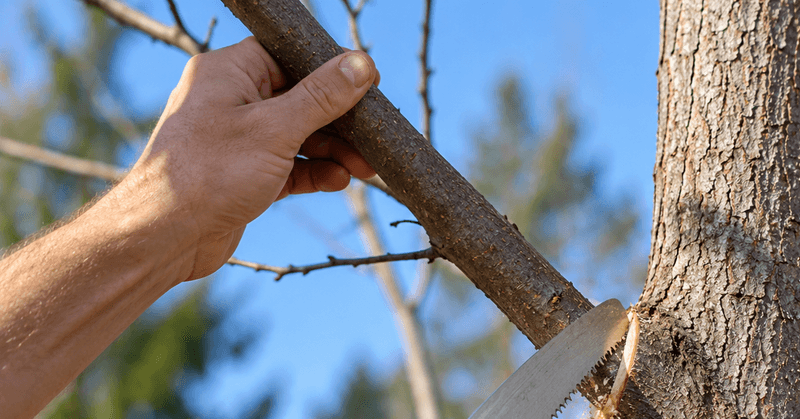
Ordinary pruning has well-known best practices. Iowa State University Extension advises a three-cut method for branches larger than 1½ inches.
This is general arboricultural guidance, not an Ohio legal requirement.
First, make a shallow undercut a short distance out from the trunk. Second, cut from the top a little farther out so the branch drops without tearing the bark.
Third, make the final cut just outside the branch collar and branch-bark ridge, the slightly swollen area where the branch joins the trunk.
That final cut matters because it lets the tree seal the wound. Cutting flush with the trunk or leaving a long stub can cause problems.
Remember that you may be limited to an overhanging portion, which can make a perfect final cut impossible. If the right cut would fall on your neighbor’s side of the line, that is a reason to talk with them or hire help.
Call a professional for large limbs, work high off the ground, or any case where you are unsure whether the cut will hurt the tree. Ohio Farm Bureau recommends consulting an expert when tree work goes beyond your knowledge.
A qualified arborist can also help with the boundary question.
Leave branches near power lines to the utility
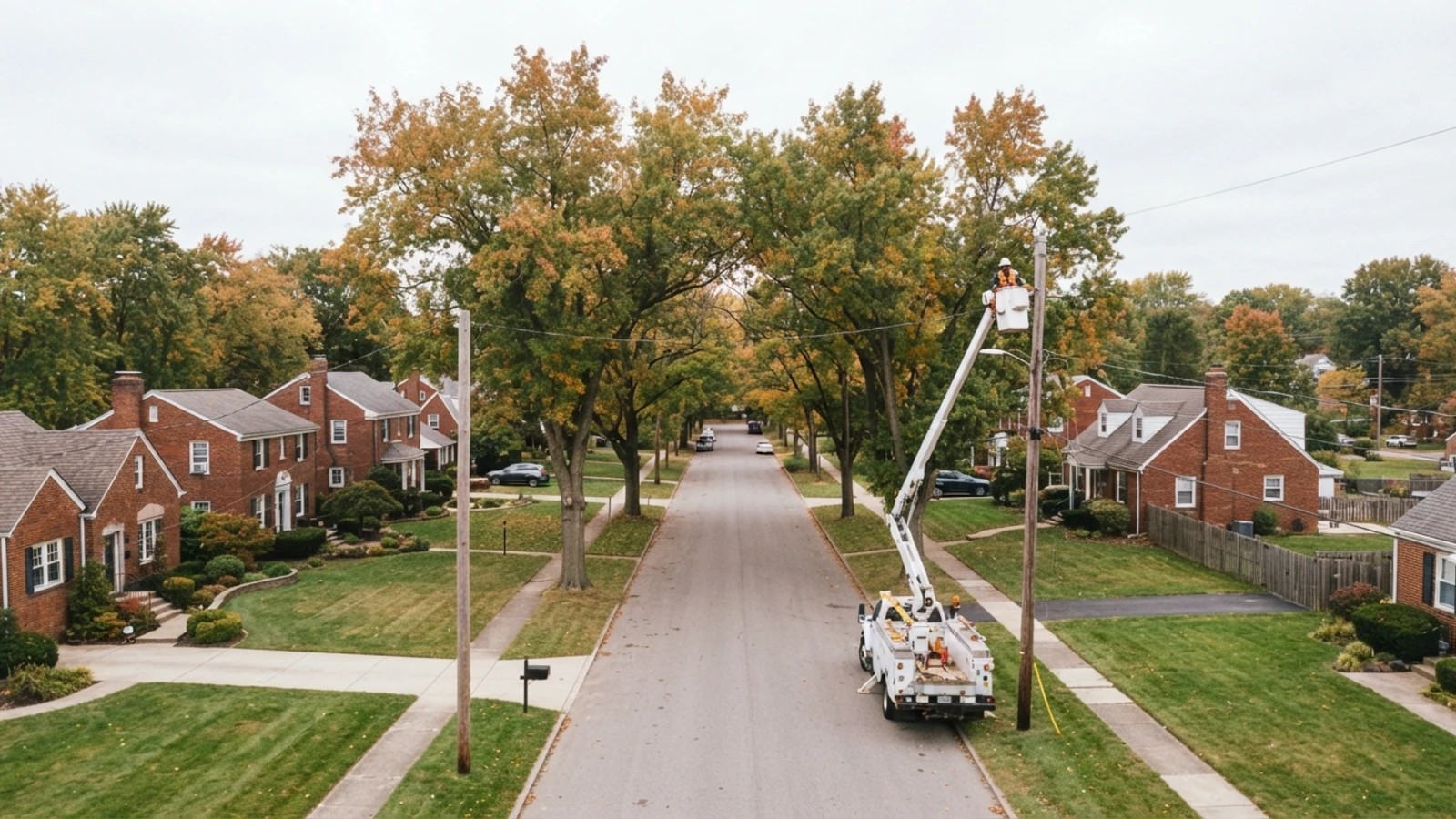
Power lines are a separate matter from regular yard pruning. Do not prune near them yourself, even if a branch does not seem to touch the wires.
Branches can conduct electricity, and the danger is not always easy to see.
The Ohio Consumers’ Counsel fact sheet on line clearing explains the hazard and notes that utilities may have easement rights to inspect or trim vegetation. That means the utility may have its own authority over trees near its lines, whoever owns the tree.
AEP Ohio warns that cutting trees near power lines can cause serious injury or death. The company directs customers to contact the utility about line hazards instead of handling them alone.
If you see a limb close to a line, call your utility and describe where it is. Stay well back, keep children and pets away, and let trained crews do the work.
Also keep in mind that some trees are public trees, such as those in a street right-of-way, and local rules may affect who controls the work. Before acting in those areas, check with the utility or your local authority.
Check the boundary and the tree before you act
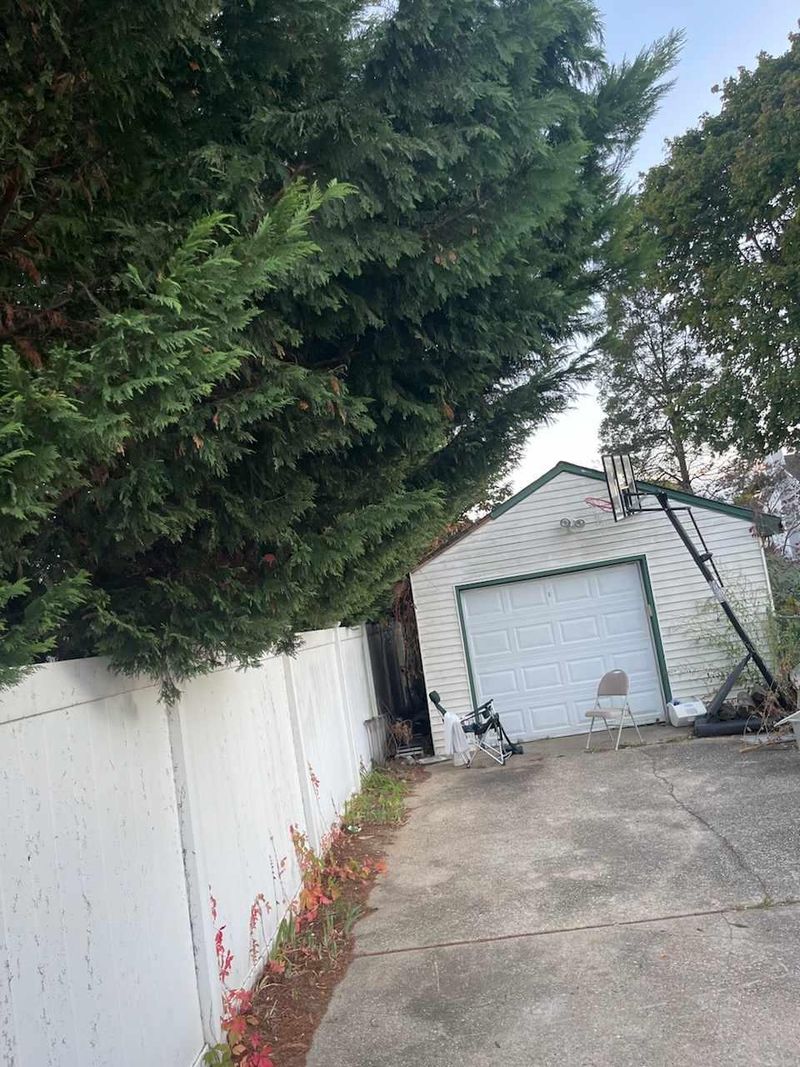
A short checklist can keep a simple trim from becoming a dispute. Confirm the legal boundary with a survey or recorded plat, not by the fence.
Check whether the trunk sits on the line, since a boundary tree is a different case.
Plan the work so you and every cut branch stay on your own property. If the cut is substantial, or anything is near utility lines, stop and get help.
The Ohio State Bar guidance backs these limits.
When ownership, boundaries, or safe pruning are unclear, talk first. Ohio Farm Bureau encourages communication with the neighbor and expert advice.
A branch is easy to cut and impossible to put back.
Share this story