Stop, step back, and leave the nest alone for now. The safest first move is to keep people and pets away, figure out what insect you are dealing with, and check where the nest sits.
Many nests in out-of-the-way spots can simply be avoided, while others near doors, kids, or pets need more help. A little patience can save you a lot of painful stings.
What to do first
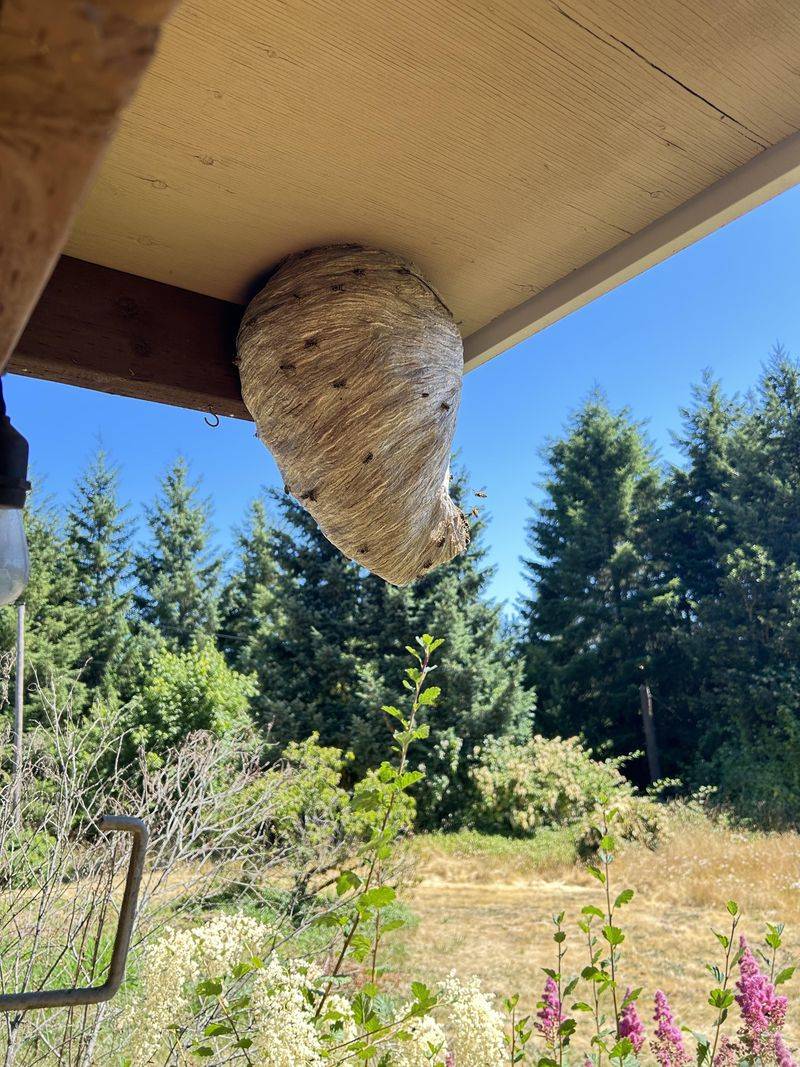
Distance is your best tool right now. If you spot a suspected nest, back away calmly and keep kids, pets, and neighbors from going near it.
Tell everyone in the household where it is so nobody wanders into it by accident.
Yellowjackets defend their nest hard, and they can sting more than once. According to Michigan State University Extension, a nest that poses no immediate hazard can often be left alone, so there is no need to rush into treatment.
Vibrations matter too. Mowers, string trimmers, and other lawn tools can set off a defensive response, especially if the nest is hidden in the ground or in a bank of soil.
If you already have a nest you know about, skip the yard work in that spot until you have a plan.
If you accidentally disturb a nest, do not stop to look or swat. Leave the area right away, and get indoors or well away from the spot.
Wasps may follow for a short distance, so keep moving rather than standing still.
Once everyone is safe, take notes from afar. Write down where the nest is, how close it is to doors and paths, and how busy the traffic seems.
University of Minnesota Extension also stresses that people who are allergic to stings should avoid dealing with nests themselves. Pausing gives you time to choose a safe next step.
Yellow-and-black does not guarantee a yellowjacket
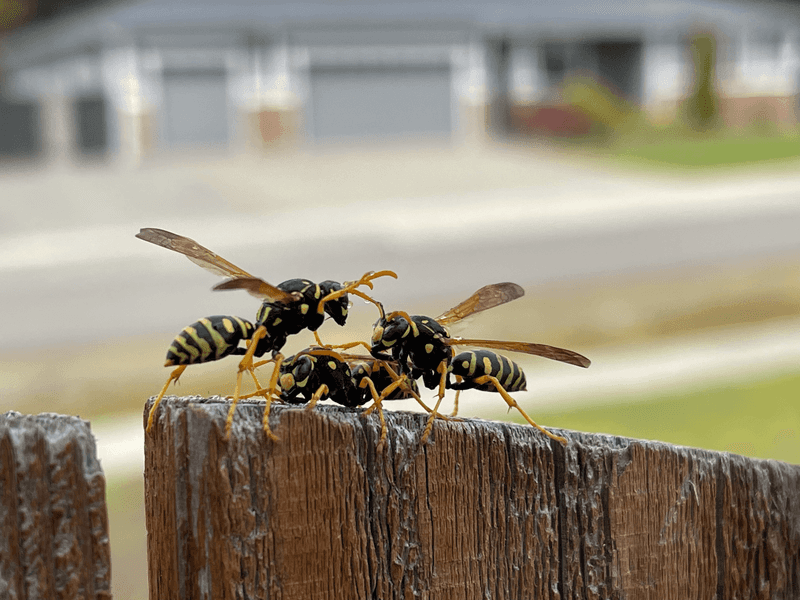
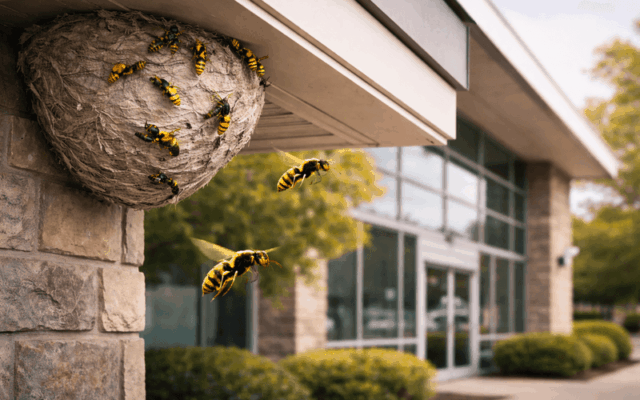
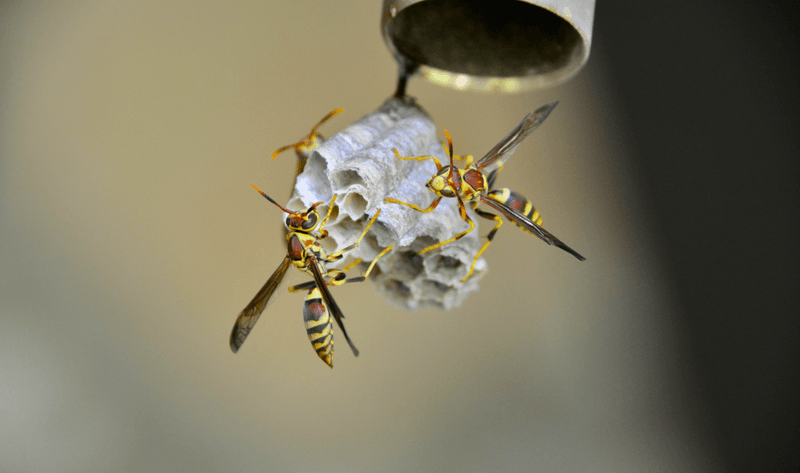
Plenty of stinging insects wear yellow and black. Honey bees, bumble bees, paper wasps, and hornets can all look similar from a distance, so color alone will not tell you what you have.
Guessing wrong can lead to a poor choice, like panicking over a harmless bee or underestimating a real threat.
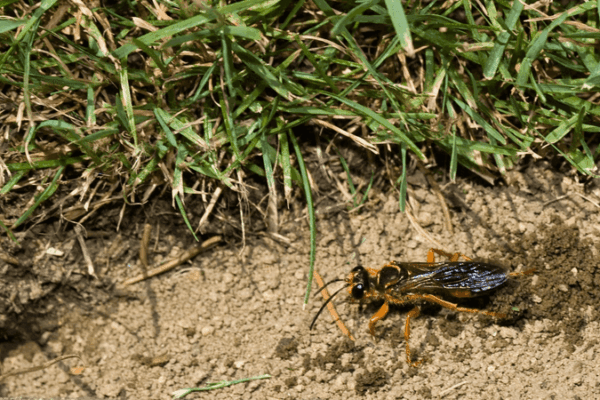
Where the insects live gives clues, too. Yellowjackets often nest underground, in old rodent burrows, or inside wall voids and other cavities, so you may only see a steady stream of workers coming and going from a small hole.
Their nests are not always the hanging, open paper type that people expect.
Watch from far away instead of walking up for a closer look. Binoculars or a phone camera with zoom can capture the insects’ shape and behavior without putting you at risk.
MSU Extension accepts photos for identification, which makes it easy to get an expert opinion safely.
For background on the insect itself, MSU’s yellowjacket resource is a helpful place to compare what you see with known features.
Knowing what you are dealing with helps you decide what to do next. It does not replace caution, though.
Keep your distance until you know the nest is not a danger.
The nest’s location sets the risk
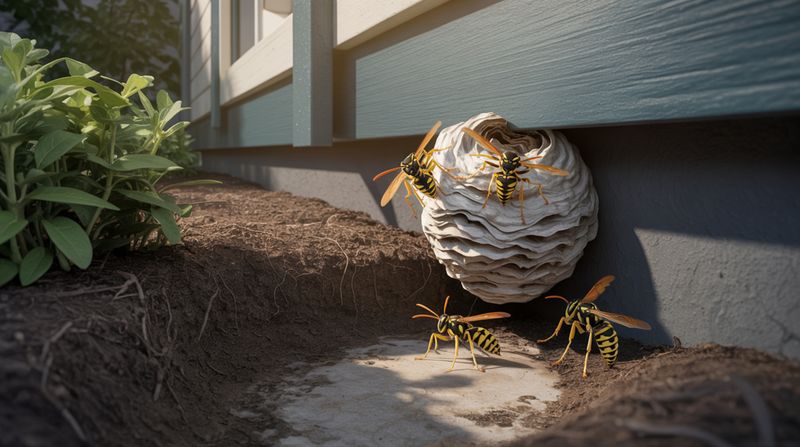
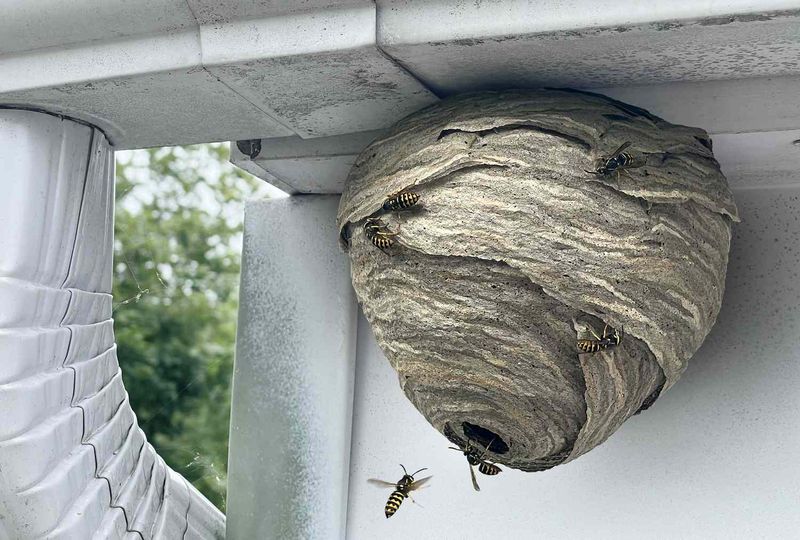
Ask one simple question: can people and pets easily stay away from it? A nest tucked behind a shed, along a far fence line, or in a quiet corner of the yard might never bother anyone.
In those cases, MSU Extension says nests that pose no immediate hazard can be left alone.
Things change when the nest sits close to where life happens. A nest beside a front door, along a walkway, near a deck, or by a play area gives wasps plenty of reasons to defend themselves.
Pets and livestock that roam freely add another layer of risk, since animals cannot be told to steer clear.
According to MSU Extension, nests near people, pets, or livestock may call for professional removal. That does not mean every nest needs it, only that closeness raises the stakes.
Think about daily routines. Do you mow near the spot, carry groceries past it, or let the dog out in that area?
A quick walk around the property, staying well back, can show you how often people pass by.
Oregon State University Extension also points out that nest removal decisions should weigh the risk to people against the benefits of leaving the colony be. If you can avoid the nest easily, leaving it alone is often reasonable.
If you cannot, it is time to think about calling for help.
Waiting may make sense in Michigan
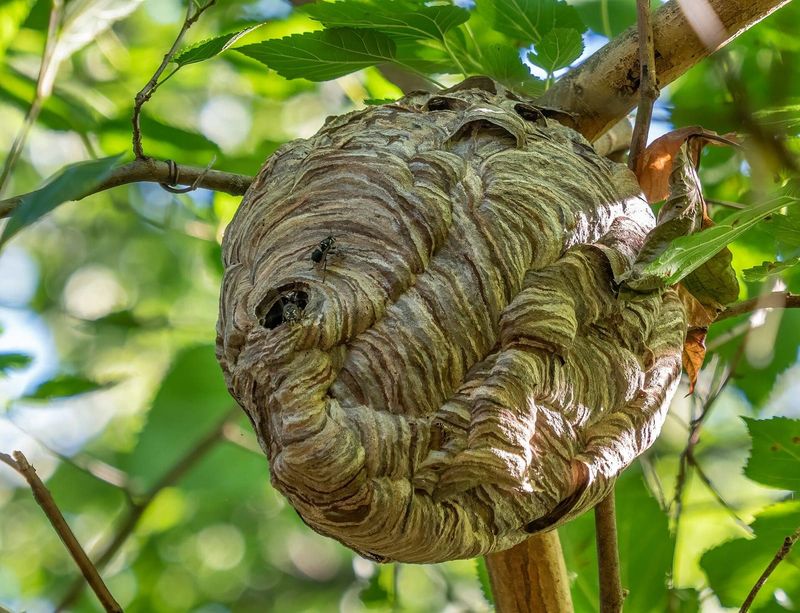
Michigan’s seasons work in your favor. Yellowjacket colonies do not last through the winter, and the workers usually die out by early November.
MSU says a couple of hard frosts should leave wasp nests inactive.
That means a low-risk nest, one far from foot traffic and easy to avoid, can sometimes be left until the colony dies naturally. Marking the area and keeping everyone clear may be all you need to do for a few weeks.
This approach is quiet, free, and avoids a risky confrontation.
Details matter here. The MSU Extension guidance explains that old nests are not reused.
Mated queens overwinter somewhere else and start fresh in spring.
That said, a spot that suited one colony may appeal to another. A sheltered hollow, an old burrow, or a protected wall gap can attract a new nest in a later year.
Once the nest is inactive and cold weather has arrived, you can think about filling or sealing the site if that makes sense.
Yellowjackets also have a useful side. As noted by MSU Plant and Pest Diagnostics, they prey on other insects, which is one reason to avoid unnecessary treatment.
Still, waiting only works when the nest is not a hazard. If people or pets keep running into trouble, tolerance is not a safe plan.
Why concealed nests are different
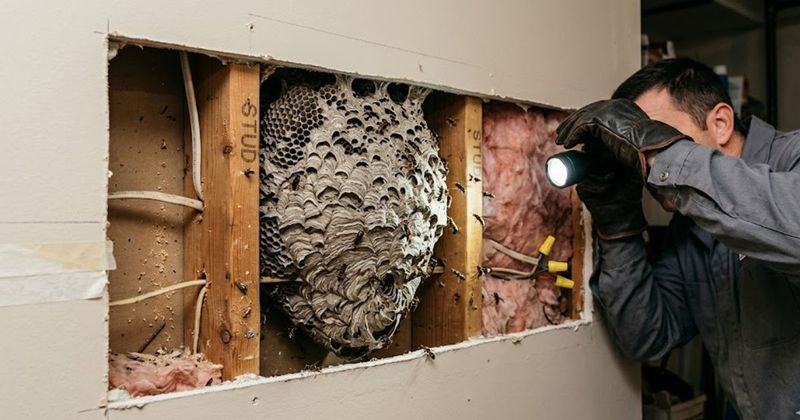
Some nests hide where you cannot see them. When wasps come and go through a crack in siding, a gap near a window, or a hole in a foundation, the nest may be inside a wall void or another cavity.
You cannot judge its size, and you cannot easily reach it.
These are the cases where professional help is the safer recommendation, and the same goes for a large enclosed nest. Both MSU Extension and University of Minnesota Extension advise professional control for difficult structural nests.
It is tempting to plug the hole and be done. Please don’t plug an active opening.
Wasps that are blocked in may chew through another route, which can lead them into your living space instead of outside.
Spraying into the opening can fail too. The product may never reach the nest, and agitated wasps may come looking for the source.
Minnesota Extension warns against sealing an active entrance for this reason.
A trained pest control operator has the right gear, knows the product label, and can reach the nest from the proper angle. Until they arrive, keep people and pets away from that wall and avoid leaning ladders or tools near it.
Once the colony is gone, a repair can close the gap for good.
Use pesticides only as the label directs
A pesticide label is not a suggestion. Any product you use must be labeled for the intended use and applied according to its directions.
The EPA states that using a registered pesticide in a way that is inconsistent with its labeling violates federal law.
Read the whole label before you buy and again before you use it. Check that it lists wasps or yellowjackets, follow the safety and protective equipment instructions, and watch for limits on where it can be used.
Nothing here replaces those directions, so this article will not give step-by-step spray instructions.
You may have heard that spraying at night means you cannot get stung. That is not true.
University of Minnesota Extension notes that nighttime may lower activity, but active nests can still sting defensively, and it advises people who are allergic to stings not to treat nests themselves.
Darkness also makes it harder to see where you are stepping and what is around you. A stumble near a nest can turn a plan into an emergency.
If you are allergic, if the nest is concealed, or if it is hard to reach, MSU Extension points toward professional help as the safer option. Not every nest needs a professional, but these situations usually do.
Food cleanup and traps have limited roles
Picnics bring wasps. Yellowjackets forage for sugar and protein, so open soda cans, meat scraps, and overflowing trash cans draw them in.
Covering garbage, wiping up food and drink spills, and picking up fallen fruit can cut down on the number of wasps buzzing around your yard.
Treat this as nuisance control, not nest removal. Cleaning up removes food sources, but the colony keeps living where it is.
University of Minnesota Extension lists these habits as ways to reduce foraging wasps around people.
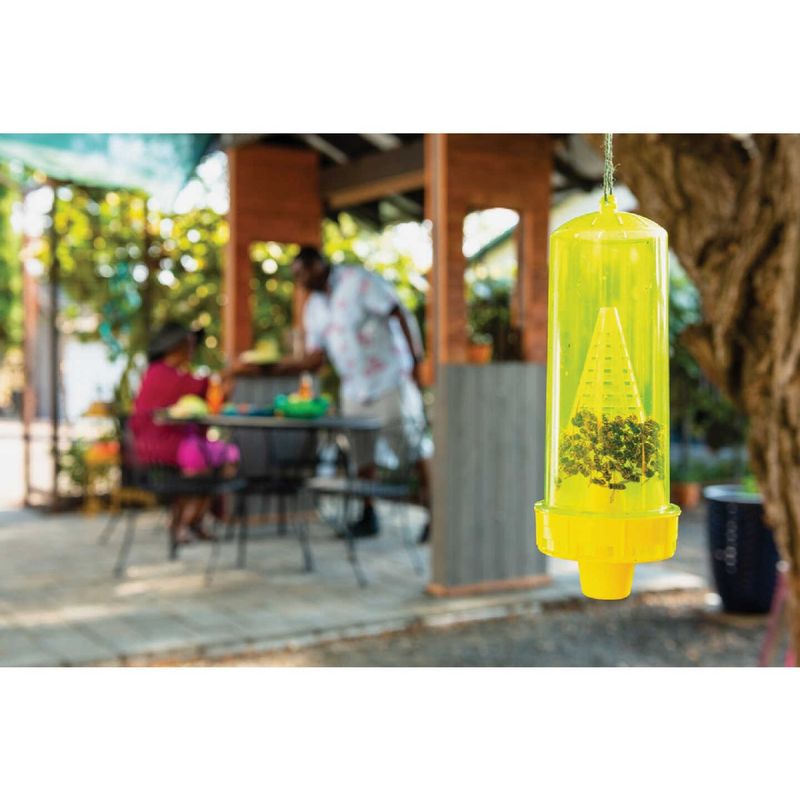
Traps are a similar story. They may catch some foraging workers, which can take the edge off during a cookout.
But a trap is not a reliable way to eliminate a colony or solve a large yellowjacket problem.
As Oregon State University Extension explains, trapping alone usually will not remove the nest. The UC Statewide IPM Program offers a similar view of traps as limited tools.
If you place a trap, put it away from where people gather so it does not pull more wasps toward your seating area. Use cleanup and traps as helpers, and keep your plan for the nest itself separate.
Choose the least risky workable option
Keep clear first. Confirm what the insect is without approaching, then judge whether people and pets can safely stay away from the nest.
If they can, leave a low-risk nest alone or wait for seasonal inactivity, as MSU Extension describes. If a nest is hazardous or hidden, call a professional.
The wisest move is often the quietest one: respect the nest, and let distance do the work.
Share this story