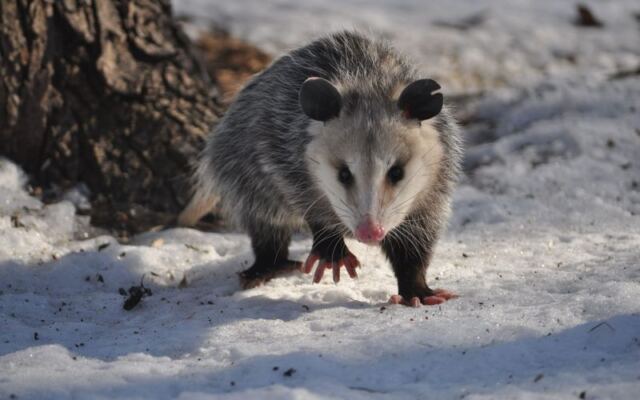
An opossum near your Michigan home in winter is most likely after an easy meal or a sheltered place to wait out the cold, not a way into your house. These animals stay active all winter, so seeing one is usually less alarming than it feels.
Knowing what draws them in helps you make your yard less inviting without harming anyone. Here is how to read the situation and what to do next.
A winter sighting can be ordinary opossum behavior
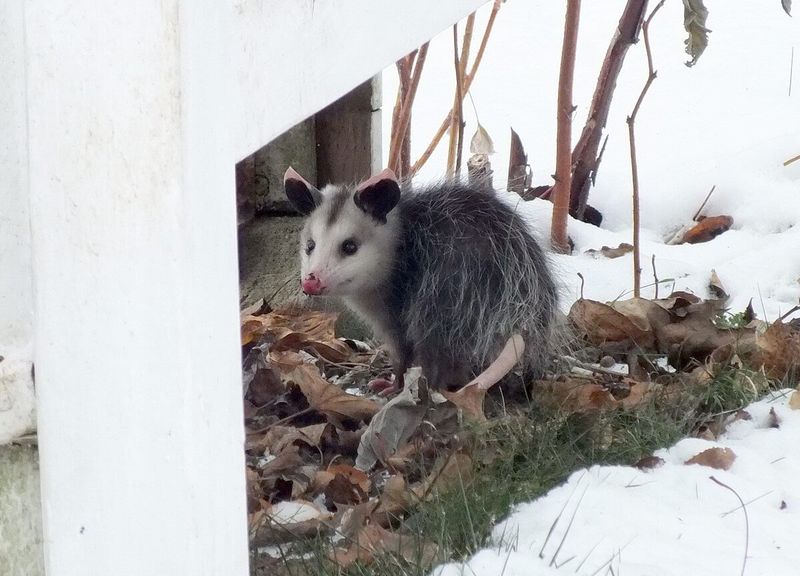
Seeing an opossum on a snowy night can feel strange, but it is normal. Opossums do not hibernate.
According to Pennsylvania Game Commission information, they stay active through winter, and they may rest in a den during very cold or snowy stretches.
Think of it as a temporary shelter stay, not a long winter sleep. When the weather eases, the animal comes out to look for food again.
That is why you might see one on a mild evening after several days of nothing.
Wildlife staff at a U.S. Fish and Wildlife Service refuge describe the same pattern: opossums shelter when conditions are harsh and forage when they can.
Winter is hard on them, so they may move around in daylight when they are hungry or trying to warm up.
A winter or daytime sighting by itself does not show that an opossum is sick. It also does not mean the animal is living inside your home.
Many simply pass through a yard on the way to somewhere else.
So instead of asking whether the animal wants to get to you or into your house, ask what your property offers. Food that is easy to reach and a protected spot to rest are the common reasons an opossum lingers.
They are possible explanations, not guarantees, and the next sections show how to check for them.
Food and sheltered spaces may draw an opossum to a yard
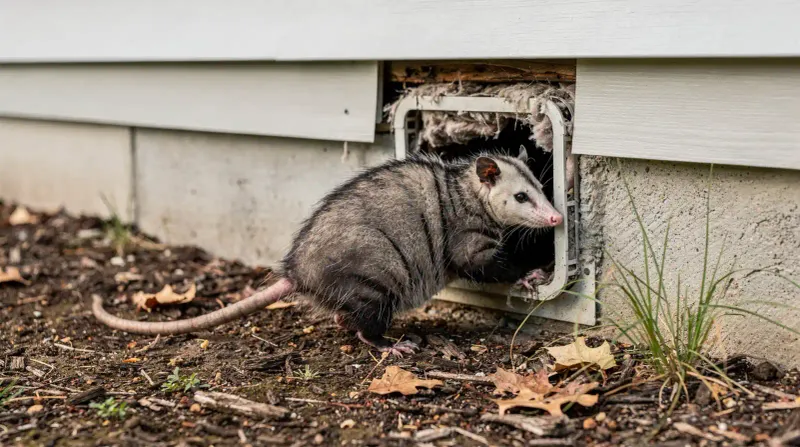
Opossums eat almost anything, which makes a yard full of options very appealing. Michigan DNR says the best way to reduce conflicts is to remove accessible food and shelter.
A walk around your property can show what might be on the menu.
Common food opportunities include outdoor pet food, spilled bird seed, food scraps, compost, unsecured garbage, fallen fruit, and poultry feed. Any one of these can explain a visit.
None of them proves what drew a particular animal, since an opossum may simply be passing by.
Shelter matters too, especially in cold weather. Holes leading into buildings, crawl spaces, sheds, and the dark gap under a deck can all offer protection from wind and snow.
The UC Statewide IPM Program lists similar food and shelter sources.
You may hear that opossums are handy tick hunters, so one in the yard is a bonus. A 2021 study checked the stomachs of 32 wild Virginia opossums and found no ticks or tick parts.
It also reviewed 23 diet studies with no reported ticks, so do not count on an opossum for tick control.
Make a short list as you look around. Note any open food, any gaps near the foundation, and any sheltered spots.
That list becomes your plan.
Remove easy food sources first
Taking away the free meals is the simplest and kindest fix. Bring pet food indoors at night, and store bird seed and poultry feed in sealed containers.
Pick up fallen fruit and spilled seed under feeders each evening.
Secure your garbage with tight lids, and keep food scraps in a closed bin rather than loose in the yard. If you compost, avoid adding meat, dairy, or cooked leftovers, and keep the pile covered.
These steps follow the approach Michigan DNR recommends for reducing conflicts.
Next, check for ways in. Look around the foundation, porch, shed, and garage for holes or loose boards.
Note them for now, but wait to close anything until you are sure no animal is inside. The next section explains how to do that safely.
You may be tempted to buy a repellent and call it done. Deterrents often work only for a short time, and UC IPM cautions that chemical products have not shown significant results for opossums.
Spend your effort on food and access instead.
Putting out a trap is not the first answer either. Rules in Michigan limit what can be done with wild animals, so check current state and local requirements, or call a nuisance animal control company, before trying to catch or move one.
If the food disappears, most opossums move on by themselves.
Keep dogs on a leash or supervised at night when you let them out. A pet that chases or corners a wild animal can get hurt.
Let an opossum leave before closing an entry
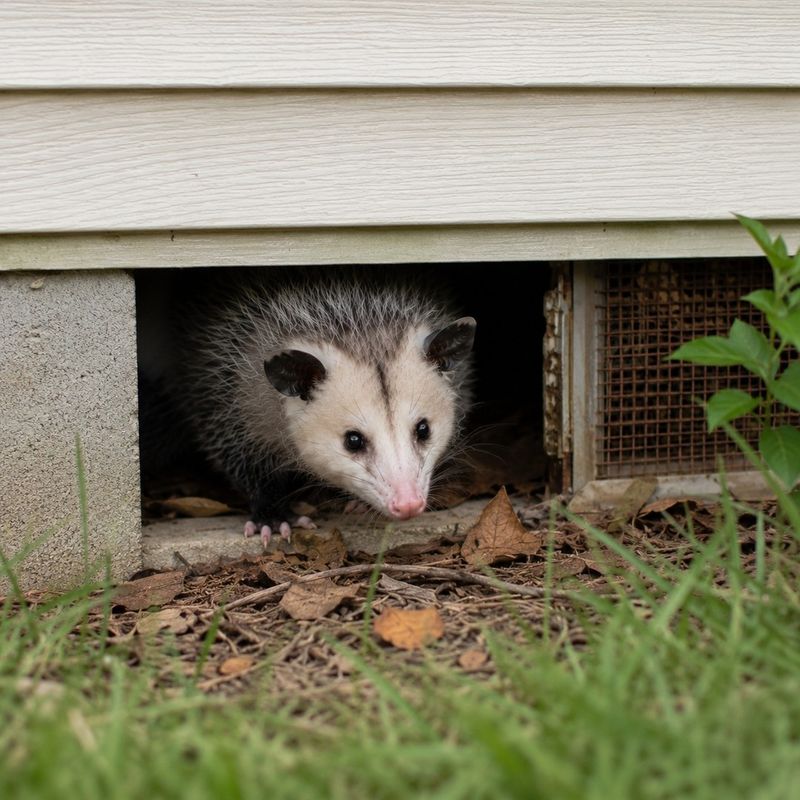
Sealing a hole feels productive, yet doing it too soon can trap an animal inside. If an opossum may be using a space under a deck, in a shed, or in an attic, hold off on closing the opening.
A trapped animal can suffer, damage the building, or leave you with a bigger problem.
Michigan DNR suggests using noise to encourage an opossum to leave an attic or similar space. A radio playing talk programming nearby can help.
Once the animal has gone, close the entry.
Durable materials such as hardware cloth or metal flashing hold up better than flimsy covers. Guidance like the Oregon Department of Fish and Wildlife urban wildlife guide also stresses making sure animals are out before you shut them out.
How can you tell the space is empty? Watch it for several evenings and look for fresh tracks or signs of activity.
If you cannot confirm it is clear, stop and call a wildlife professional.
Call a professional right away if you suspect young are present. Babies left behind inside a sealed space will not survive, and a mother may try to break back in.
A trained person can handle the situation more safely for everyone.
Choices about removal must follow Michigan and local requirements. Avoid trying to trap or relocate the animal on your own.
Instead, ask a licensed nuisance animal control company what is allowed in your area.
You cannot tell whether an opossum has rabies by looking
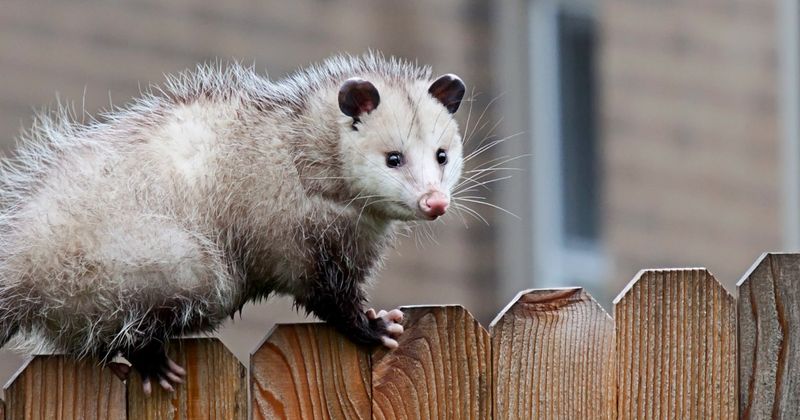
Most opossum sightings are routine, but it helps to know where the real risks lie. According to Michigan health guidance, any mammal can get rabies.
Opossums are not immune, and a rumor that they cannot catch it is not true.
The same guidance says an animal’s appearance cannot establish whether it has rabies. A calm opossum is not proven safe, and a hissing, drooling one is not proven infected.
Opossums often open their mouths and bare their teeth when frightened, which looks scary but is a common defensive display.
That is why watching from a distance is the wise approach. Do not try to touch, feed, pick up, or move a wild opossum, even if it seems tame or hurt.
Keep children and pets back, and bring pets indoors until the animal leaves.
Remember that a winter or daytime sighting alone does not mean the animal is sick. You do not need to panic over every opossum in the yard.
You do need to avoid contact and let it move along.
If someone or a pet has been bitten or scratched, or may have had contact with saliva, treat it as a possible exposure. The next section explains the steps to take.
Get professional help for an injured animal or possible exposure
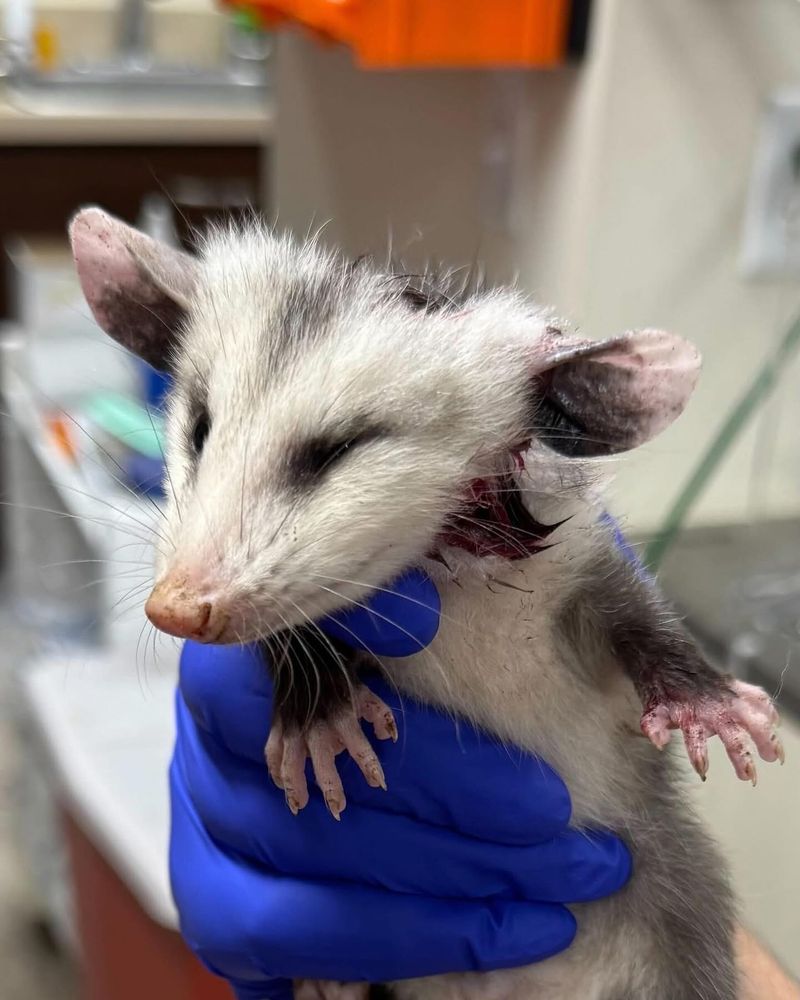
Some situations go beyond a simple sighting. If you find an opossum that is injured or looks orphaned, do not pick it up.
Contact a licensed Michigan wildlife rehabilitator first, since Michigan DNR says only licensed rehabilitators may possess abandoned or injured wildlife.
A rehabilitator can tell you whether the animal truly needs help and how to keep it safe in the meantime. Please do not attempt to capture, relocate, or put down a wild animal yourself.
Follow current Michigan and local rules, and call a nuisance animal control company if you need removal help.
If a person is bitten or scratched, wash the wound well with soap and water right away. Then get prompt medical advice.
Michigan health officials say exposures should be evaluated by a healthcare provider or your local health department.
The CDC’s guidance on when to seek care also advises getting medical attention after a bite or possible contact with a wild animal. Do not wait to see whether symptoms appear.
If a pet is bitten or fights with an opossum, call your veterinarian promptly. Wear gloves if you must touch the pet, since saliva may be on its fur.
Keeping your pets’ rabies vaccinations current is one of the best protections you can give them.
Most winter opossums are just hungry travelers. Clear away the easy meals, give them time to leave, and they will likely pass through on their own.
Share this story