Get the latest garden guides in your inbox →
Gardening Latest
  • General Gardening
  • Lawn Care
  • Plant Care
  • Composting
  • Soil Health
  • Backyard
  • Garden Muse Magazine
  • General Gardening
  • Lawn Care
  • Plant Care
  • Composting
  • Soil Health
  • Backyard
  • Garden Muse Magazine
  • News
  • Gardening Calendar
  • Garden Structures
  • Vegetable Garden
  • Vertical Garden
  • Raised Beds
  • Hydroponics
  • General Equipment
  • Community Gardens
Garden Themes
  • Spiritual Garden
  • Hydroseeding
  • Seeding and Laying Sod
  • Artificial Grass
  • Lawn Care Equipment
  • Plants
  • Trees
  • Planting Tools
  • Composting Basics
  • Fertilizer
  • Alternative Growing Mediums
  • Front Yard
  • Backyard Activities
  • Landscaping
Gardening Latest

Explore by state

Which state is your garden in?

Currently viewing Illinois

All states

Northeast

  • Connecticut —
  • Delaware 40
  • Maine —
  • Maryland 26
  • Massachusetts 42
  • New Hampshire —
  • New Jersey 26
  • New York 35
  • Pennsylvania 35
  • Rhode Island —
  • Vermont —

Southeast

  • Alabama 26
  • Arkansas —
  • Florida 26
  • Georgia 26
  • Kentucky 40
  • Louisiana 25
  • Mississippi —
  • North Carolina 24
  • South Carolina 39
  • Tennessee 23
  • Virginia 25
  • West Virginia —

Midwest

  • Illinois 25
  • Indiana 27
  • Iowa 39
  • Kansas —
  • Michigan 26
  • Minnesota 25
  • Missouri 25
  • Nebraska —
  • North Dakota —
  • Ohio 26
  • South Dakota —
  • Wisconsin 41

Southwest

  • Arizona 25
  • Colorado —
  • Nevada —
  • New Mexico —
  • Oklahoma —
  • Texas 24
  • Utah —

West

  • Alaska —
  • California 25
  • Hawaii —
  • Idaho —
  • Montana —
  • Oregon —
  • Washington —
  • Wyoming —

No state matches that search.

Site menu

Gardening Latest
  • General Gardening
    • News
    • Gardening Calendar
    • Garden Structures
    • Vegetable Garden
    • Vertical Garden
    • Raised Beds
    • Hydroponics
    • General Equipment
    • Community Gardens
    Garden Themes
    • Spiritual Garden
  • Lawn Care
    • Hydroseeding
    • Seeding and Laying Sod
    • Artificial Grass
    • Lawn Care Equipment
  • Plant Care
    • Plants
    • Trees
    • Planting Tools
  • Composting
    • Composting Basics
  • Soil Health
    • Fertilizer
    • Alternative Growing Mediums
  • Backyard
    • Front Yard
    • Backyard Activities
    • Landscaping
  • Garden Muse Magazine

Explore

  • About GardeningLatest.com
  • Contact Us

Get the latest from the garden

New guides on lawn care, plants and backyard projects, sent when they go up.

Subscribe →

Follow

  • Facebook
  • X
  • Pinterest
  • YouTube
Illinois Gardening

If You Hear Coyotes Howling Near Your Illinois Home at Night, Here’s What They’re Saying

Coyote howls and yips are a way for coyotes to talk to each other.

WN

By Walter Novak

November 27, 2026 · 6 min read

If You Hear Coyotes Howling Near Your Illinois Home at Night, Here’s What They’re Saying
If You Hear Coyotes Howling Near Your Illinois Home at Night, Here's What They're Saying

Coyote howls and yips are a way for coyotes to talk to each other. They can help one coyote find another, or let neighbors know a home range is taken, and other coyotes may answer back.

That eerie chorus outside your window can feel unsettling, but it is a normal part of life with wildlife in Illinois. Here is what the sounds can tell you, what they cannot, and how to keep your family and pets safe.

At a glance

Where
Illinois Gardening
Hardiness zone
6 −10 to 0°F
Read
6 minutes
Published
November 27, 2026

Coyote calls communicate, but they are not a translation
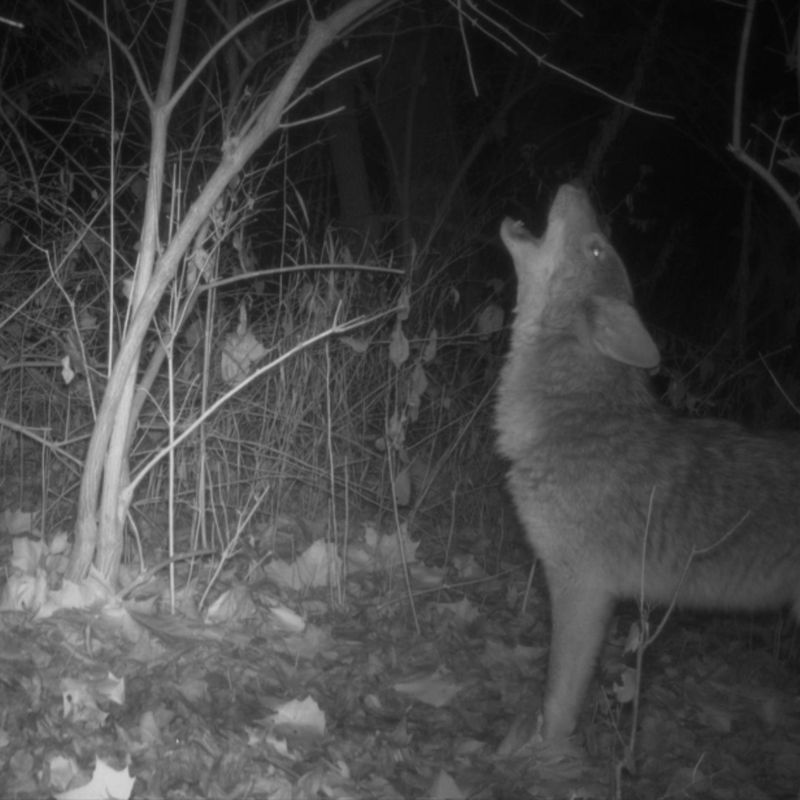
Coyote calls communicate, but they are not a translation
© fpdcc

Coyotes live all over Illinois, from downtown Chicago neighborhoods to quiet farm country, and they are usually most active between dusk and dawn. So a howl after dark fits right into their normal routine.

According to Wildlife Illinois, these animals are common in both urban and suburban areas.

Howls, yips, and barks are all forms of communication. The Illinois Trapper Education Manual describes them that way, and USDA information adds that a howl can help a coyote locate others or signal an occupied home range.

Other coyotes may answer, which is why one call can turn into a whole round of voices.

Those broad jobs are as far as the science goes. Listening from your porch, you cannot decode what one particular bout means.

A burst of yips is not a sentence you can translate, and it is not a warning aimed at you.

That is good news for anyone feeling uneasy. A coyote calling in the dark is mostly doing coyote business, such as keeping in touch with other coyotes nearby.

The sound itself tells you very little about danger.

Illinois coyote seasons put a November howl in context
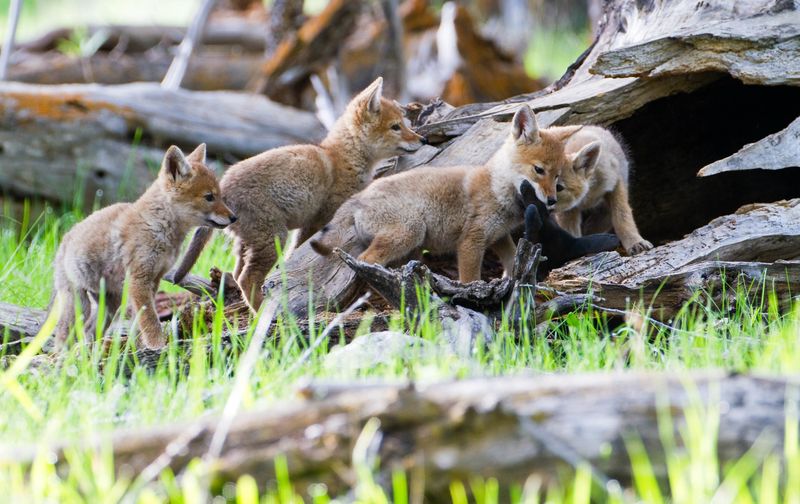
Illinois coyote seasons put a November howl in context
© Forest Service Research and Development – USDA

Coyotes follow a yearly rhythm, and knowing it helps you put a late-November howl in perspective. In Illinois, breeding peaks in late February or early March.

Pups are usually born in late April or May, according to Wildlife Illinois.

Coyotes follow food, so the best thing you can do for your yard is make it boring to them.

Young coyotes start exploring outside the den at around three to four weeks old. Many disperse in late summer or fall to find their own space.

Some stay with their parents into the next breeding season, and coyotes may live in pairs or family groups, as the Illinois Trapper Education Manual explains.

Those are general patterns for the species. They do not turn a single howl on a November night into a mating call, a pup-rearing call, or a family check-in.

Late fall is simply not the time of year when breeding or newborn pups are happening.

If you hear voices tonight, the safest way to think about it is plain: coyotes are out and communicating. The calendar tells you what coyotes are doing across the year, not what one howl means.

A chorus is a poor way to count coyotes
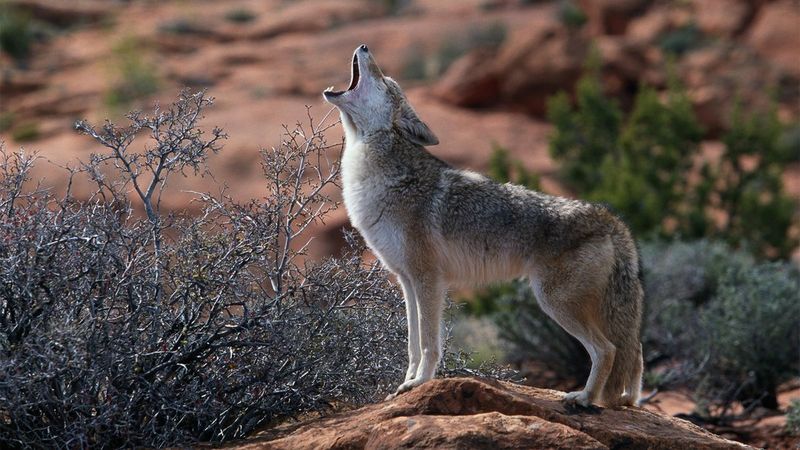
A chorus is a poor way to count coyotes
© Animals | HowStuffWorks

Ever heard a wall of yips and figured a huge pack must be out there? Your ears can fool you.

In a study published in Human-Wildlife Interactions, 427 listeners heard recordings of one to four coyotes, and on average they overestimated the number by nearly twofold.

Coyote voices overlap, rise, and fall quickly, so a small group can sound much bigger. That is why guessing a headcount from a chorus is a shaky habit.

A few animals may be making all that noise.

That result is a caution, not a formula. It came from recordings of one to four coyotes, and it is an average.

You cannot simply cut your guess in half and call it accurate for the chorus outside your house.

A better approach is to let go of counting. If the sound worries you, use the time to check that trash is secured and pets are inside, which helps no matter how many coyotes are out there.

Give a coyote room if you see one
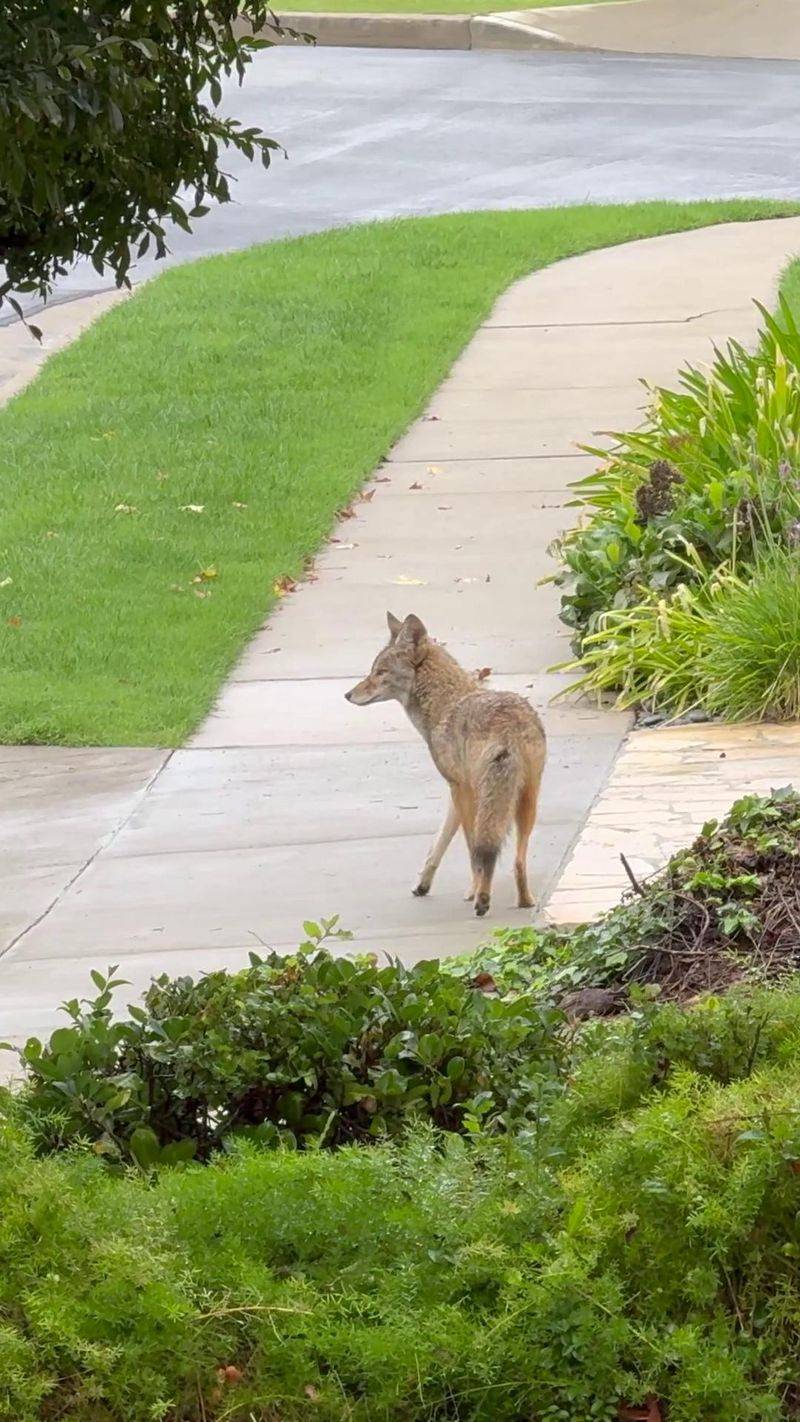
Give a coyote room if you see one
© cityofmorenovalley

Howling by itself does not mean a coyote is heading your way or planning anything. Coyotes generally pose little threat to people when given space, and a distant voice after dark is not a sign of an imminent attack.

Seeing one is a different moment, though, and it helps to know what to do.

If a coyote approaches, do not run. University of Illinois Extension advises standing tall, yelling, and waving your arms to encourage it to leave.

Keep dogs leashed, and give coyotes extra room, especially near a den or young, as Wildlife Illinois notes.

Hazing like this is an option that may encourage a coyote to move on, but it will not always work. In an experiment described by USDA researchers, captive coyotes were tested, and their responses varied.

Never feed, approach, corner, or try to trap a coyote. Backing away and giving it a clear path out is the calmer, safer choice for everyone.

Make the yard less rewarding
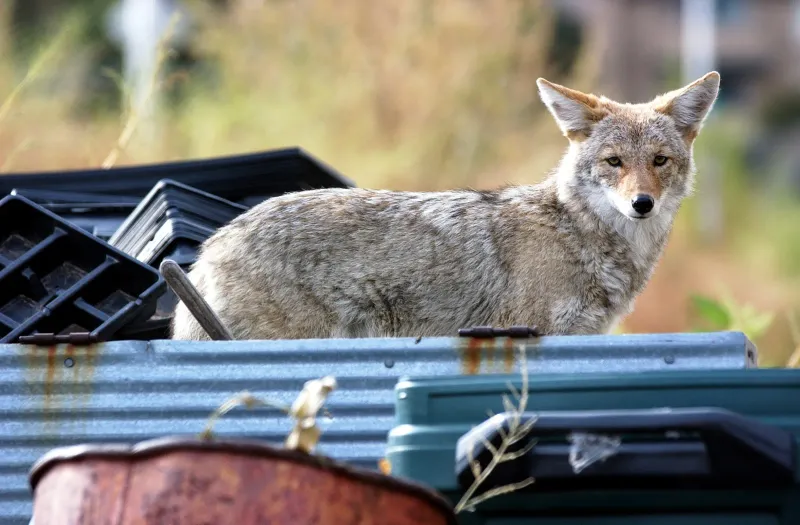
Make the yard less rewarding
© Smithsonian Magazine

Coyotes follow food, so the best thing you can do for your yard is make it boring to them. Never feed coyotes, even by accident.

Handouts teach them that people mean snacks, and that can lead to bolder behavior.

Start with the usual suspects. Keep garbage in sealed containers, bring pet food indoors, and sweep up spilled birdseed, which can draw in rodents and the animals that hunt them.

Wildlife Illinois recommends these steps to reduce attractants.

Pets deserve extra attention after dark. Stay outside with small dogs and cats, especially at night, and keep dogs on a leash on walks.

A quick porch-light check before letting a pet out is an easy habit.

The goal is not to get rid of local coyotes, which is not realistic. It is to remove reasons for them to linger and to keep your animals close.

A yard with nothing to eat is simply a place coyotes pass through.

Know when to seek local wildlife guidance
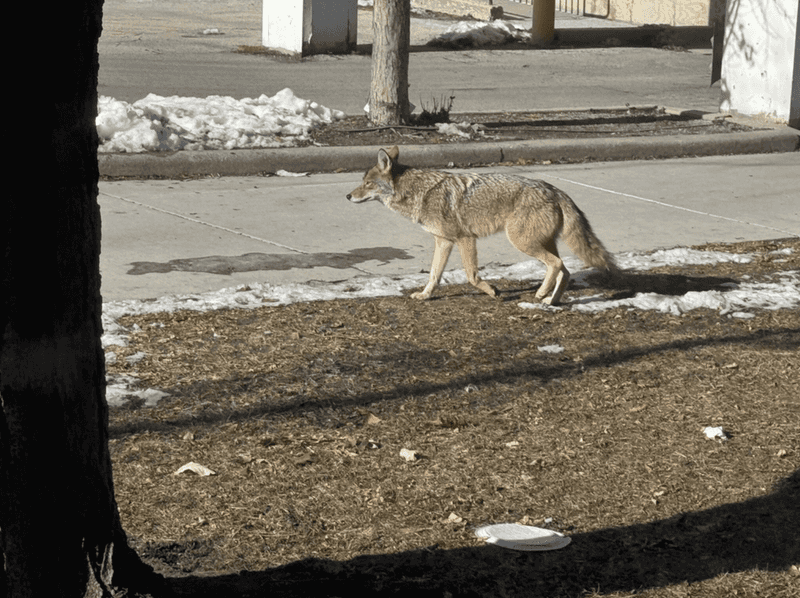
Know when to seek local wildlife guidance
© Outdoor Illinois Journal – Wildlife Illinois

Most coyote encounters need nothing more than distance. A nighttime howl is ordinary, and so is a coyote trotting through at dawn.

A daytime sighting alone does not mean the animal is ill, since coyotes do move around in daylight.

Some signs deserve a call. If a coyote looks sick, acts unusually bold, or behaves aggressively, report it to the appropriate local authorities or an Illinois Department of Natural Resources wildlife biologist.

University of Illinois Extension and Wildlife Illinois both point residents toward local wildlife guidance in those situations.

While you wait for help, keep your distance. Do not approach, handle, or try to catch the animal, and bring pets and children inside.

Note where you saw it and what it was doing so you can describe it clearly when you call.

Listen for communication, not a precise message
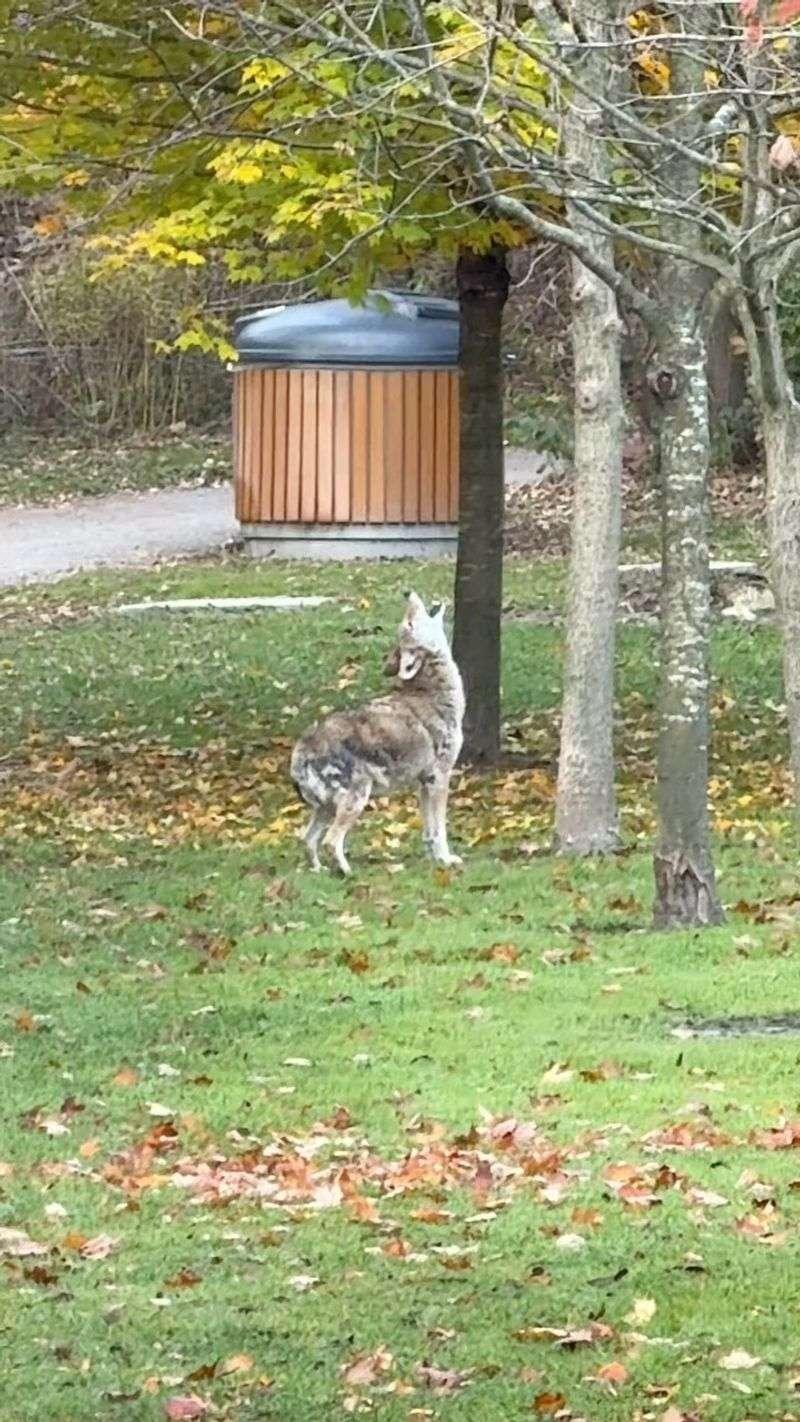
Listen for communication, not a precise message
© stevewilsonlive

Next time the yips drift through your window, you can treat them as what they are: coyotes keeping in touch. You cannot translate a single bout or count the animals by sound, and one howl is not evidence of danger.

Wildlife Illinois offers more on living alongside them.

Give coyotes space and keep pets close, and the rest can stay a pleasant mystery. The night song of the neighborhood is, in the end, a message meant for other coyotes.

Share this story
WN

Written by

Walter Novak

More from Walter Novak →

About Gardening Latest

Gardening Latest provides in-depth guides to maintaining and enhancing your garden and backyard. Learn how to make the most of the space you have and create a beautiful garden.

More about us →

Latest stories

  • Wisconsin GardeningWisconsin Winters Don’t Kill Your Brown Recluse Worries, Because Hobo and Yellow Sac Spiders Move Indoors Now

    Wisconsin Winters Don’t Kill Your Brown Recluse Worries, Because Hobo and Yellow Sac Spiders Move Indoors Now

    3 min ago
  • Missouri GardeningYour Frozen Missouri Lawn Isn’t Empty: A Tiny Mammal With a Venomous Bite Hunts Below All Winter

    Your Frozen Missouri Lawn Isn’t Empty: A Tiny Mammal With a Venomous Bite Hunts Below All Winter

    9 min ago
  • Tennessee GardeningThose Big Brown Spiders Showing Up Inside Tennessee Homes After the First Cold Snap Are Wolf Spiders, and Here’s Why They Came In

    Those Big Brown Spiders Showing Up Inside Tennessee Homes After the First Cold Snap Are Wolf Spiders, and Here’s Why They Came In

    15 min ago
  • Alabama GardeningHearing Great Horned Owls Hoot Outside Your Alabama Home at Night? Here’s What It Means

    Hearing Great Horned Owls Hoot Outside Your Alabama Home at Night? Here’s What It Means

    21 min ago
  • Minnesota GardeningMinnesota Homeowners Keep Yanking This Invasive Tree, and It Keeps Taking Over Their Yards

    Minnesota Homeowners Keep Yanking This Invasive Tree, and It Keeps Taking Over Their Yards

    27 min ago

Gardening by state

Stories for your state, and the hardiness zone most of it gardens in.

Keep exploring

Read next

All Illinois Gardening →
Illinois GardeningOpossums Come Looking for Shelter Around Illinois Homes Every Winter, and Here’s What You Should Do
Illinois Gardening

Opossums Come Looking for Shelter Around Illinois Homes Every Winter, and Here’s What You Should Do

33 min ago
Illinois GardeningNot Every Snake Or Spider In Your Illinois Garden Is Harmless, So Here’s How To Spot The Venomous Ones
Illinois Gardening

Not Every Snake Or Spider In Your Illinois Garden Is Harmless, So Here’s How To Spot The Venomous Ones

7 hr ago
Illinois GardeningIf You Find A Yellow Jacket Nest Near Your Illinois Home, Here’s What To Do Right Away
Illinois Gardening

If You Find A Yellow Jacket Nest Near Your Illinois Home, Here’s What To Do Right Away

22 hr ago

More from Illinois Gardening

  • If Your Illinois Rhubarb Just Sent Up a Giant Flower Stalk, Here’s Why and Whether It Should Go

    Nov 25
  • Your Neighbor’s Tree Crashed Into Your Illinois Yard, and Here’s Who Actually Pays for It

    Nov 25
Back to top

Leave a response Cancel

Your email address stays private. Required fields are marked with an asterisk.

Gardening Latest

In-depth guides to maintaining and enhancing your garden and backyard: how to make the most of the space you have, and how to make it beautiful.

  • Facebook
  • X
  • Pinterest
  • YouTube

We may earn a portion of sales from products or services that are purchased through our site as part of our affiliate partnerships with retailers.

Explore

  • About GardeningLatest.com
  • Contact Us
  • Terms and Conditions
  • Privacy
  • Editorial Note:
  • FTC Disclosure

Newsletter

New garden guides and seasonal tips, straight to your inbox.

We’ll email you a link to confirm. Unsubscribe any time.

Almost there! Check your inbox and tap the link to confirm.

© 2026 Gardening Latest. All rights reserved.

Back to top