Before you do anything else, keep yourself, your family, and your pets away from the spot where you think yellowjackets are living. Then think about where the nest might be and whether anyone at home has a known sting allergy.
Some nests can safely be left alone, while others call for a professional. A few calm steps now can keep a small problem from turning into a painful one.
Keep People and Pets Away
Stay back. The first move is to keep every person and pet away from the spot where the yellowjackets seem to be coming and going.
Do not walk over to confirm where the nest is, and do not poke, spray, or watch from close range.
The reason is simple. Yellowjackets defend their nest, and they can sting more than once while doing it.
UMass Amherst advice is to avoid nests where possible and to consult a professional if removal is needed.
Make that safety decision before you try to identify or treat anything. Curiosity is what usually leads to stings, so skip the close look.
A few practical steps help right away. Walk children and pets to another part of the yard, or bring them indoors.
Keep mowers, trimmers, and leaf blowers away from the area, since vibration and noise can set off a colony.
If you can, mark the general zone from a distance with a note in your head, such as near the back fence or beside the shed. Tell everyone in the household to steer clear of it.
Once everyone is safe, you can work through the next questions without pressure.
Know When a Sting Needs Immediate Care
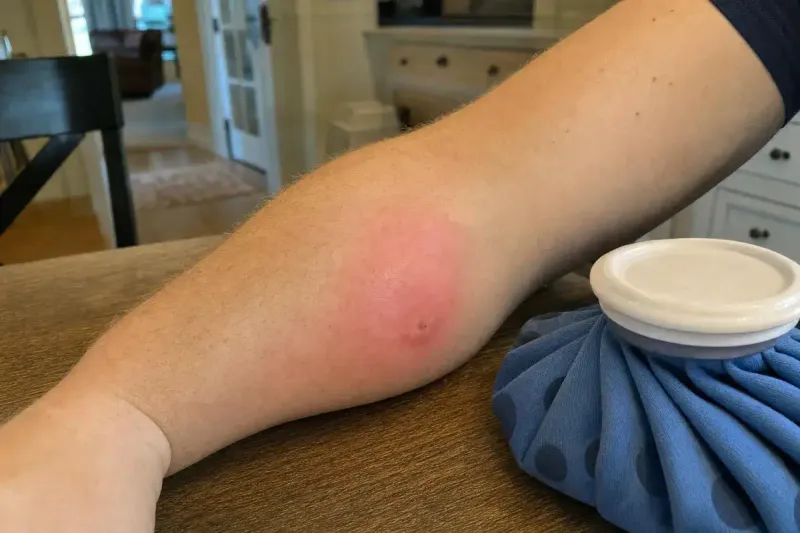
Most stings hurt for a while and then fade, but some reactions are emergencies. Trouble breathing, swelling of the throat or tongue, or collapse after a sting can be signs of a severe allergic reaction.
MedlinePlus guidance says these symptoms need immediate medical attention.
If you see any of them, call 911 right away. Do not wait to see whether the symptoms pass.
If someone in your home has a known sting allergy, talk with their clinician ahead of time. Follow that clinician’s advice about carrying and using prescribed epinephrine.
Make sure the person, and the adults around them, know where it is kept and what the plan is.
This matters most when yellowjackets are active near your home. A written plan, shared with family, takes away guesswork if a sting happens.
A Few Yellowjackets Don’t Prove There’s a Nest
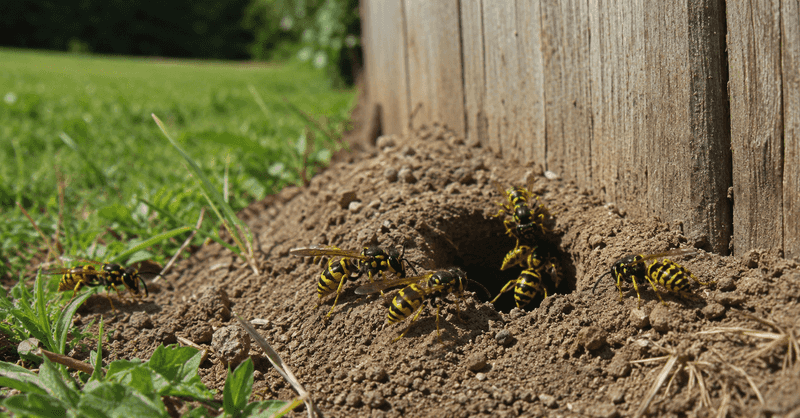
Seeing yellowjackets at your cookout feels like proof of a nest nearby, but it is not. Yellowjackets are foragers, hunting for protein and sugar, and Virginia Cooperative Extension notes they can travel a substantial distance from their colony.
The wasps at your table may live well beyond your property line.
Look for patterns instead of hunting for a nest. A steady stream of wasps flying to and from the same low spot, like a hole in the ground or a gap in a wall, is more telling than a few visitors at a soda can.
Watch from a distance, such as through a window or from across the yard.
Do not walk around searching for the nest. Searching is how people end up too close.
It also helps to remember that yellowjackets are not only pests. They prey on other insects, which is useful in a garden.
That does not make them harmless near people, so keep your distance, but it explains why a few wasps alone are not a reason to panic.
Use Nest Clues, Not Color Alone
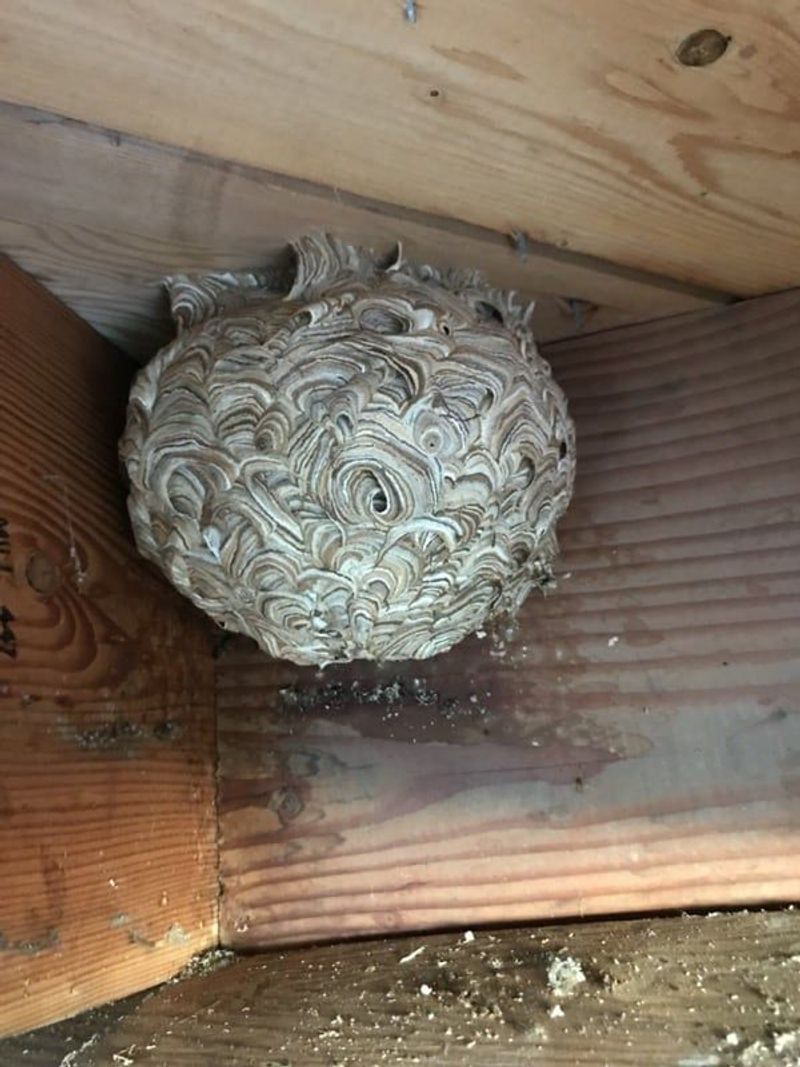
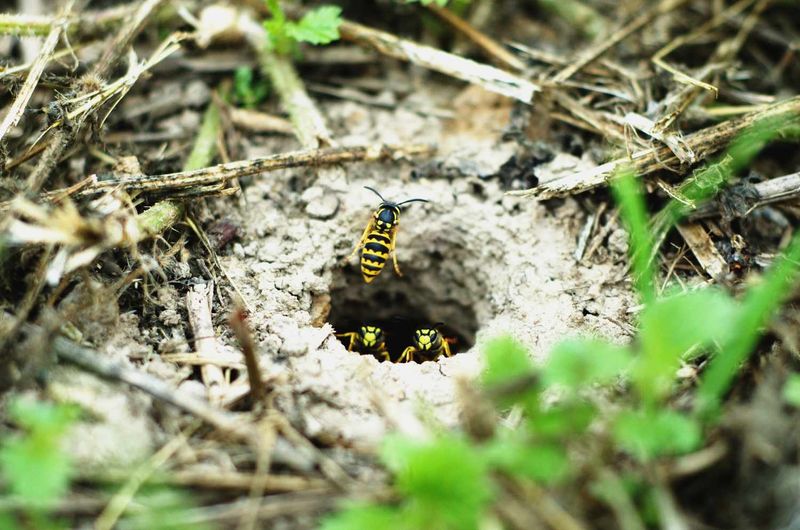
Location and nest shape can offer hints, as long as you read them from far away. Many yellowjackets nest underground or inside building voids, so you may only see a small entrance hole with traffic going in and out.
Aerial yellowjackets, by contrast, can build nests above ground.
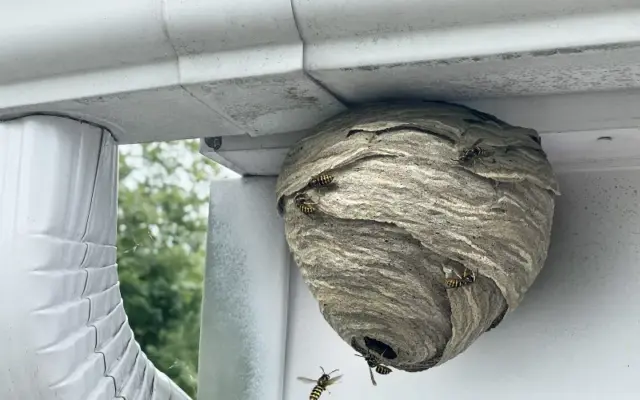
Paper wasps are often mixed up with yellowjackets. They commonly make exposed, open-comb nests under eaves, where you can see the cells.
Cornell IPM describes paper wasps and helps show why they differ in form.
Yellow-and-black coloring alone cannot tell you what you are looking at. Many wasps and even some bees share those colors.
Body shape and nest style matter too, and they are hard to judge safely.
Do not move closer to inspect a nest or snap a photo up close. Zoom from far away if you want a picture for a professional.
Keep in mind what Virginia Cooperative Extension says about nesting sites inside voids and underground, because you may never see the nest at all. If you are unsure what is living there, leave identification and treatment to a professional.
Decide Whether to Leave It or Call for Help
Not every nest has to go. UMass Amherst advises leaving a colony alone if it is in an area people can avoid.
A nest at the far edge of a property, away from paths and play areas, may be fine if everyone stays clear.
Other situations call for a pest management professional. Seek help if the nest is near a doorway, walkway, or other busy area, since people will keep running into the colony.
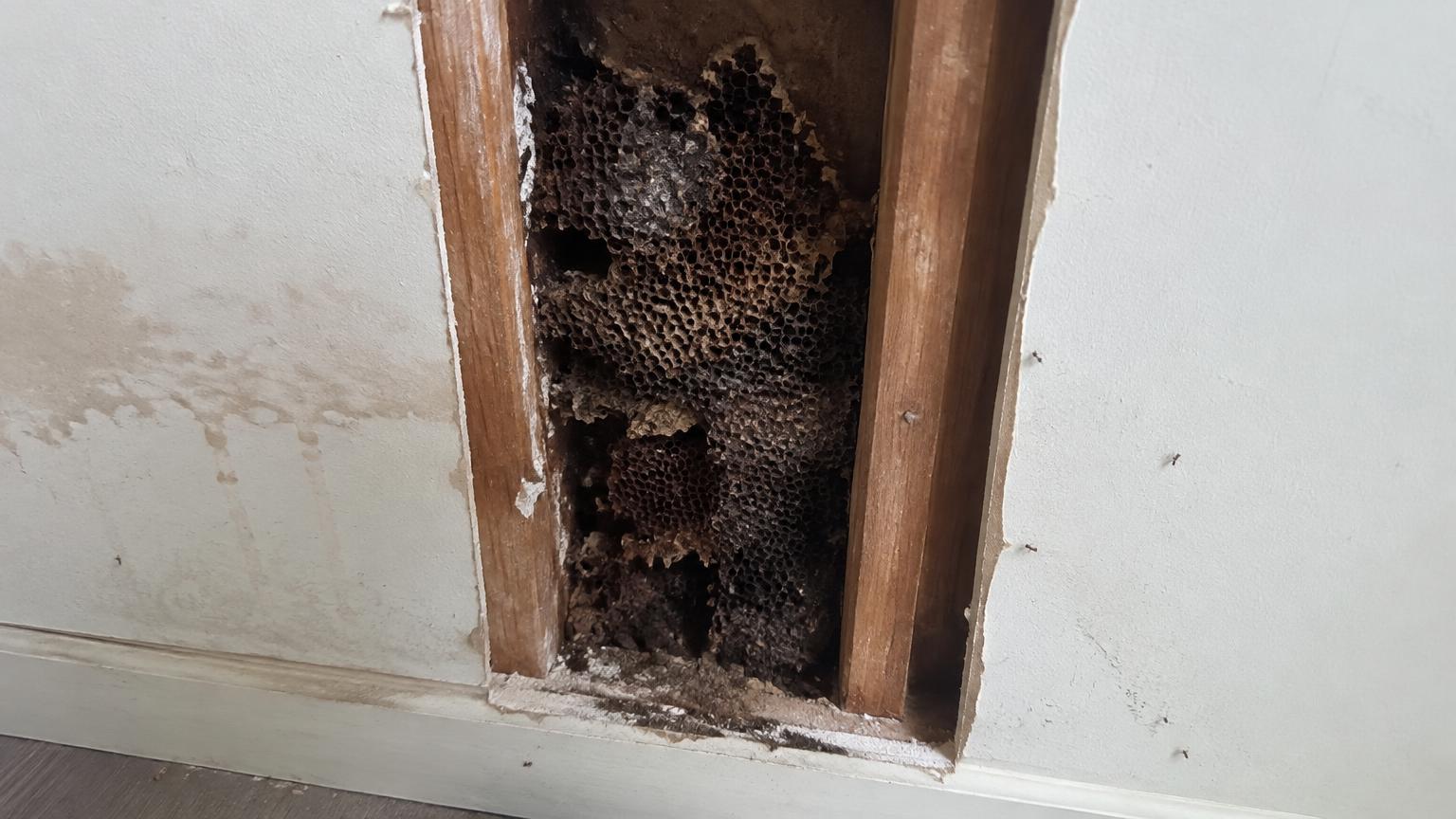
Seek help too if the nest is inside a wall or building, where wasps can find their way indoors.
A known sting allergy in the household is another strong reason to call. When avoiding the nest is not safe, the risk is not worth testing.
Here is a quick check. Ask whether anyone walks, mows, or plays within a few steps of the nest.
If so, call. If the spot is truly out of the way, it may be enough to warn everyone and keep clear.
When you call, describe where the activity is and how long you have seen it. Do not offer to look closer first.
Reduce Food Attractants, Not the Nest Yourself
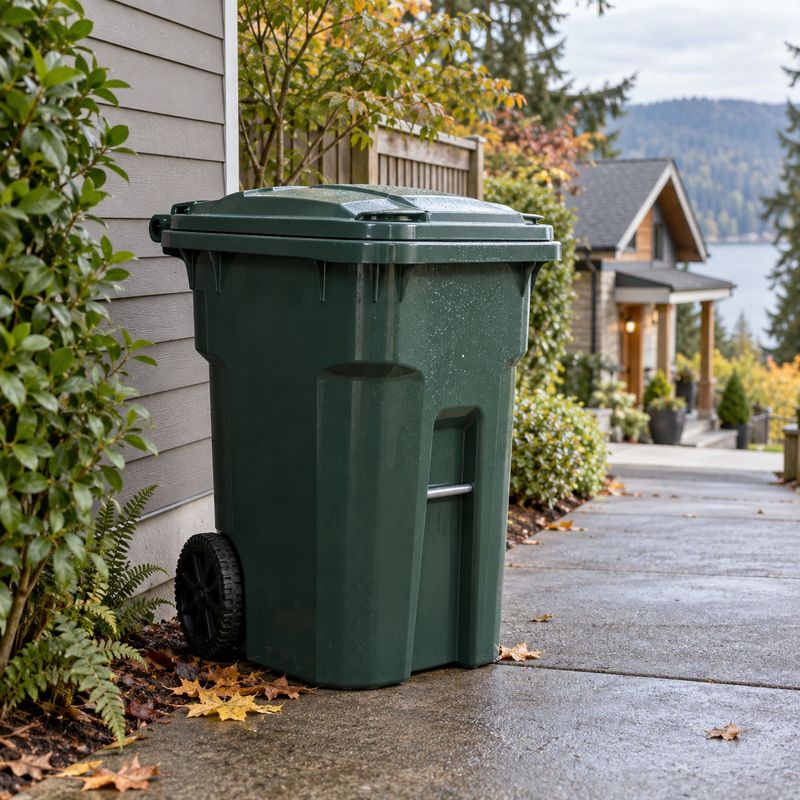
While you decide on a plan, make your yard less tempting. Cover food and drinks outdoors, put leftovers away promptly, and use trash containers with tight-fitting lids.
UMass Amherst notes these steps matter in late summer and fall, when wasps often become a nuisance around food.
Rinse cans and bottles before recycling, and wipe sticky spills. Keep pet food indoors when possible.
Traps may catch some foraging wasps, but they are not a reliable way to eliminate a colony. University of Minnesota Extension says traps catch only a very small number of wasps.
Some home fixes make things worse. Do not plug the entrance of a nest in a wall or building while the colony may still be active.
Virginia Tech warns that workers may chew a new route into your living space.
Skip gasoline, burning, smoking out, and burying a nest as well. These methods are dangerous to you and the property, and they can leave angry wasps behind.
Check a Massachusetts Applicator’s License

If you decide to hire someone for pesticide work, check credentials before they start. The state says commercial pesticide applicators in Massachusetts must hold a valid MDAR license, and consumers can check an applicator’s license.
The MDAR consumer bulletin covers this for indoor applications.
Ask the company for the applicator’s name and license information, then verify it through the state before work begins. It only takes a few minutes and can be done by phone or email.
A license shows the person is authorized to apply pesticides commercially. It does not guarantee the quality of the work, so it is still wise to ask questions and compare quotes.
Wasps do not read calendars, but they do read noise and vibration. Whatever you decide, keep the nest area clear until the job is done.
The safest nest plan is usually the one made from a distance.
Share this story