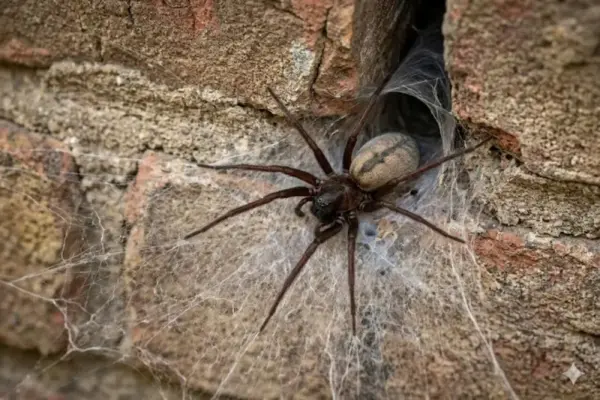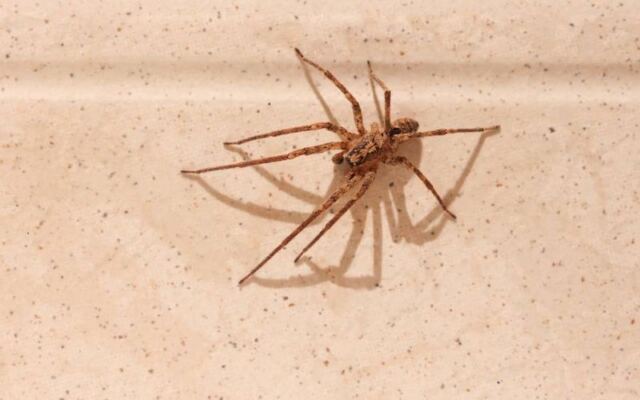
A big brown spider on the bedroom floor can make anyone jump, and wolf spiders are a common explanation for these fall visitors. They are hunters that roam at night, and they sometimes wander indoors before winter.
Still, a few clues matter, because Tennessee also has brown recluses. Here is how to think about what you found and what to do next.
What a fall spider sighting can tell you
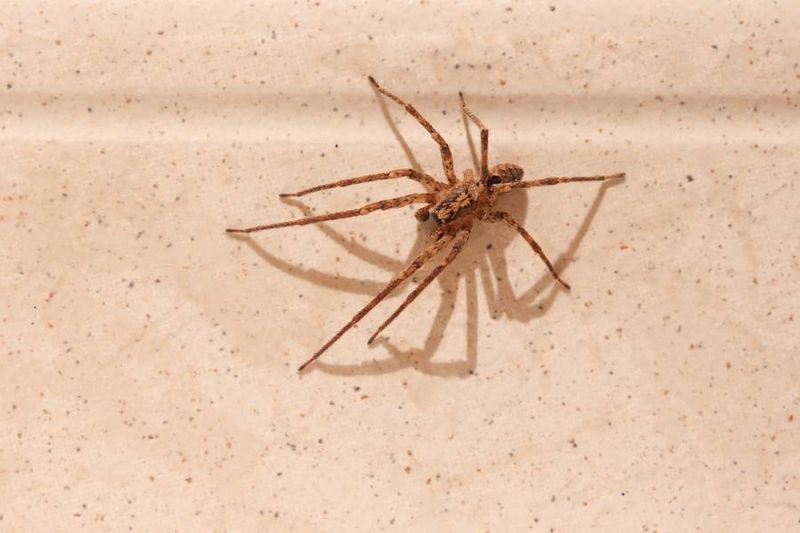
Fall is the season when many people spot a big brown spider indoors. Clemson Extension says wolf spiders may wander into homes before winter, and other outdoor hunting spiders can also end up inside by accident, especially in fall.
That gives you a reasonable starting point, but it is only a starting point. A spider’s color, size, location, and the time of year do not tell you its species.
They also do not explain why that one spider came inside. A cold snap may have nothing to do with it.
Tennessee adds one more reason to be careful. University of Tennessee Extension reports that brown recluses are common in Middle and West Tennessee and less common in the east.
That is useful background about the state, but it cannot tell you what is crawling across your floor. A large brown spider could be a wolf spider, a recluse, or something else entirely.
Look closely at what you can see, such as leg banding and body shape. As Virginia Tech Extension explains, lookalikes are common, so even careful observation has limits.
The sections below cover which clues help, where they fall short, and how to respond safely without touching a spider you cannot identify.
Why some spiders wander indoors in fall
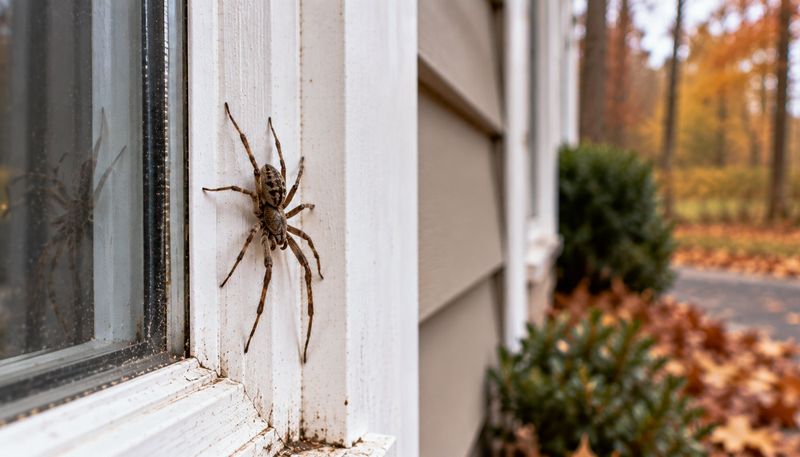
Spiders that hunt instead of building webs cover a lot of ground. University of Minnesota Extension notes that hunting spiders, including wolf spiders, may enter homes accidentally, particularly in fall.
They tend not to thrive or reproduce indoors, so a visitor is usually just passing through.
Clemson’s wolf spider guidance says the same thing in simple terms: they may wander into homes before winter. Wandering is the key word.
It describes a spider roaming, not a spider making a plan.
You may have heard that spiders come inside to escape the cold. That general claim is disputed.
The Burke Museum points out that many fall sightings involve spiders that already live indoors or males roaming in search of mates, not outdoor spiders looking for warmth.
So a spider on your wall in November does not prove a cold snap pushed it in. Nobody can say that weather caused one particular sighting, and there is no basis for claiming a statewide surge across Tennessee.
What you can say is that fall is a time when spiders are on the move, and some of them cross into houses.
Clues that may point to a wolf spider
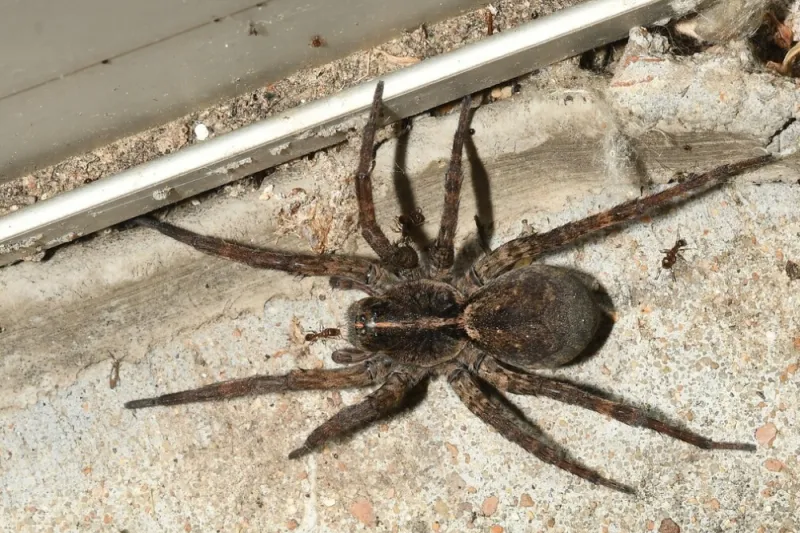
Wolf spiders live by hunting. Instead of waiting in a web, they chase down insects on the ground, which is why you often see them running across a floor or garage.
University of Minnesota Extension describes them as often dark brown, somewhat hairy, and quick-moving.
They are also not considered aggressive. A wolf spider that bolts for cover is doing what it normally does, which is avoiding trouble.
Most people who see one are startled, not threatened.
Treat those traits as clues, not proof. Plenty of brown spiders move fast, and many look hairy at a glance.
If you only saw the spider for a second, or from across the room, your description may fit several kinds of spiders.
The best habit is to watch without touching. Note where it is, how it moves, and whether you can see markings on the legs or body.
If it stays still for a moment, a quick photo from a safe distance can help someone else look at it later.
Once you have those observations, you can compare them against a brown recluse more carefully, which is where the details become more useful.
How to compare a brown recluse and a wolf spider
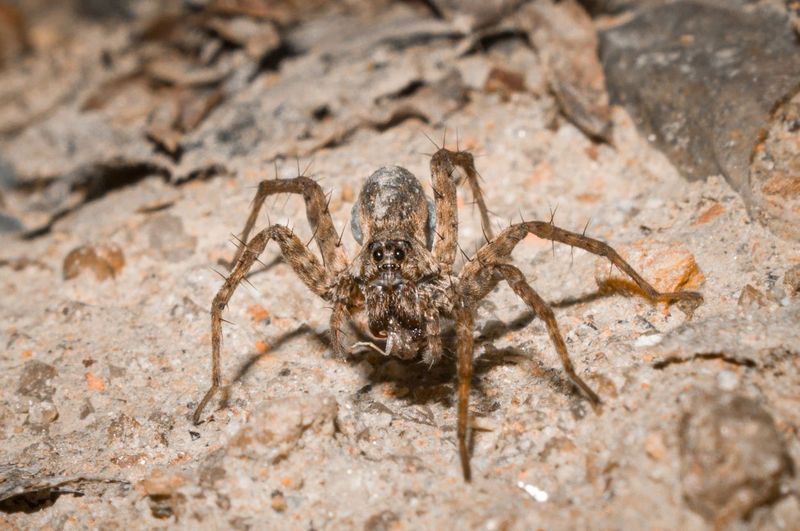
Some features separate these two spiders, but none is a quick test. According to Virginia Tech Extension, brown recluses have generally uniform tan-to-brown coloring and no stripes or bands on their legs.
Wolf spiders are typically more robust and hairy, and they may have leg stripes or bands.
The eyes are another clue. A brown recluse has six eyes arranged in three pairs.
Most spiders have eight, but checking an eye pattern usually takes magnification, which is not something to attempt on a live spider in your hallway.
The famous violin mark can mislead. A violin-shaped marking alone does not prove a spider is a brown recluse, and wolf spiders and others are often mistaken for recluses.
Overall body features and eye arrangement matter more than one mark.
Location in the state adds context, not an answer. University of Tennessee Extension says brown recluses are common in Middle and West Tennessee and less common in the east.
That means recluses are a real possibility in much of the state, but it does not mean any given spider is one. It also does not mean a spider in East Tennessee is automatically something else.
If you cannot confidently identify a spider, do not handle it. When the answer matters, contact your county extension office or another qualified expert, and take a clear photo or keep the spider in a sealed container for them to examine.
How to remove one safely
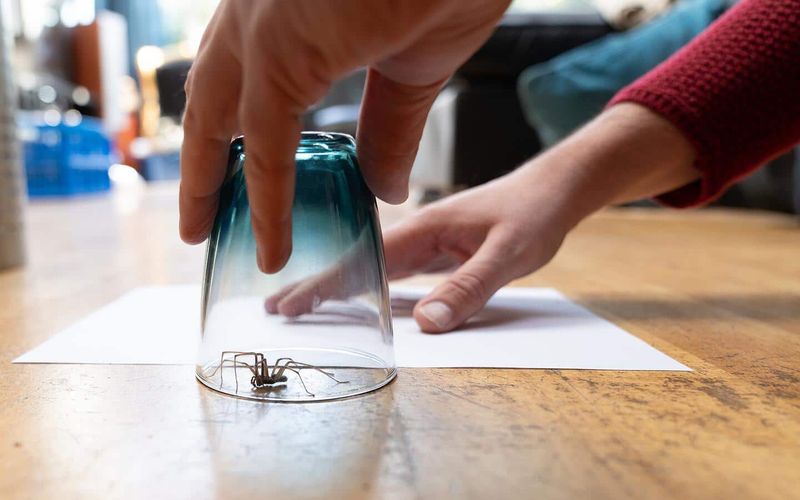
One spider in the house is not an emergency. A calm, low-risk plan works well for a single sighting, and it keeps your hands away from the spider.
If the spider is clearly not a suspected recluse and it is safe to do so, Clemson Extension suggests capturing it with a container and releasing it outside. Set a cup or jar over it, slide stiff paper underneath, and carry it out.
Keep your fingers well clear of the opening.
If you are unsure what the spider is, or you suspect a recluse, skip the capture and remove it without touching it. A vacuum hose or a broom and dustpan can do the job.
Empty the vacuum bag or canister outdoors afterward.
Never pick up an unidentified spider with bare hands, even a small one. Gloves are not a substitute for distance.
Think about what happens next, too. University of Minnesota Extension notes that hunting spiders do not thrive indoors, so a lone visitor is rarely a sign of an infestation.
If you keep seeing spiders week after week, the better response is prevention and monitoring, not alarm over one spider.
Keep spiders from finding easy entry and hiding places
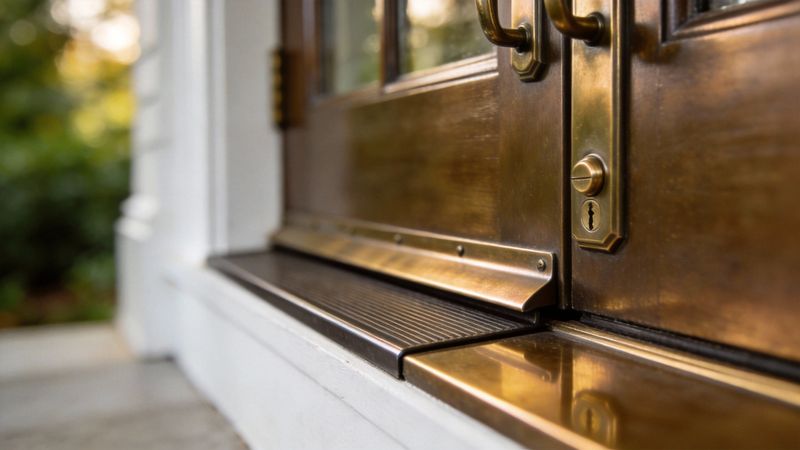
Prevention starts at the edges of your home. University of Missouri Extension recommends keeping screens in good repair and sealing gaps around doors, windows, and other openings.
A torn screen or a worn door sweep is an open invitation for any wandering spider.
Inside, cut down on places to hide. Clear clutter from closets, garages, and basements, move boxes off the floor when you can, and sweep away webs.
Fewer hiding spots mean fewer spiders settling in.
Sticky traps are a handy way to find out what is going on. Placed along walls and in corners, they show where spiders are traveling and whether activity is steady or occasional, according to University of Minnesota Extension.
If you find a trap with a spider you cannot identify, do not pull it off by hand.
Keep the response proportionate. One spider does not call for spraying the house.
If you decide to use a pesticide, pick a product labeled for the intended use, follow the directions on the label, and aim at likely hiding places instead of spraying large open areas. Sealing and tidying usually do more than a can of spray.
When a suspected bite needs medical attention

Spider bites are hard to confirm. Nobody can reliably diagnose one, or name the spider, just by looking at a skin lesion.
The CDC notes that many alleged spider bites turn out to be other wounds or infections.
That is why guessing from appearance is a poor plan. A sore that looks like a bite could have another cause, and treating it as a spider problem can delay the right care.
The same Virginia Tech guidance on brown recluse bite caveats makes this point, too.
If you have a concerning wound, or other illness symptoms after a suspected recluse bite, get medical attention. Tell the clinician what you saw and when.
If you safely captured the spider in a sealed container, bring it or a clear photo.
Until then, keep it simple: watch, do not guess, do not handle a spider you cannot identify, and ask qualified people for help when identification or symptoms call for it.
A spider you leave alone rarely causes trouble, and a careful look is always better than a confident guess.
Share this story