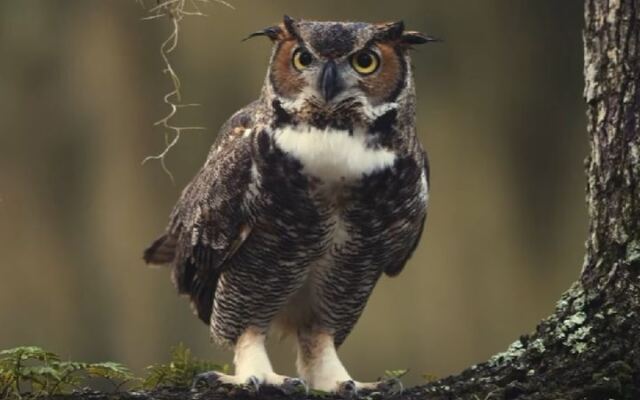
Great Horned Owls keep hooting after dark because hooting is how they talk to each other, and in Louisiana the cooler months bring plenty of reasons to talk. Those deep calls are part of everyday owl life, not a sign that something is wrong.
Knowing what the sound means, and what it cannot tell you, makes those late-night hoots much easier to live with. Here is what to listen for and what to do about it.
Start with the sound
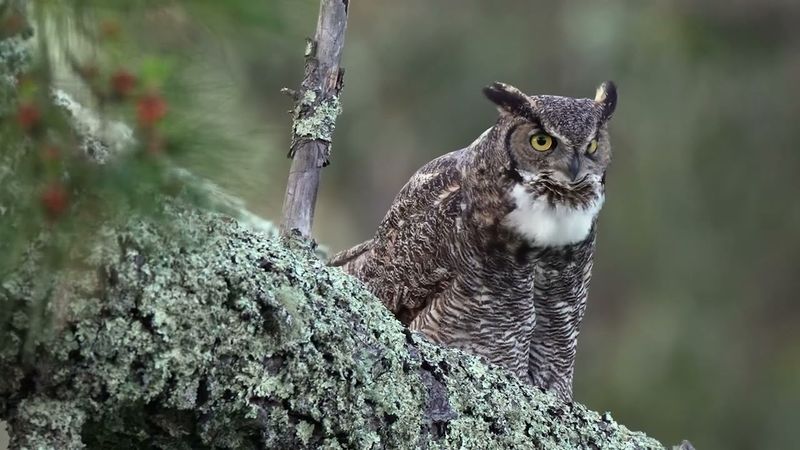
Late at night, a deep and steady hooting can make you wonder who is out there. Listening closely is a good first step, though it only gets you part of the way to an answer.
A familiar owl sound can help narrow down the species, but it does not confirm it.
Cornell describes Great Horned Owl territorial calls as deep, stuttering hoots, often given in a short series. Louisiana also has the Barred Owl, which is known for a call that sounds like “who-cooks-for-you.” If you hear that rhythm, you are probably listening to a Barred Owl instead.
Wildlife agencies such as Washington’s fish and wildlife department list different call patterns for the two species.
Not every owl sound is a hoot, either. Young Great Horned Owls can give piercing begging calls, and adults may use other sounds when they feel threatened.
So the sound and the setting both matter, and neither one is proof by itself.
What Great Horned Owl hoots communicate
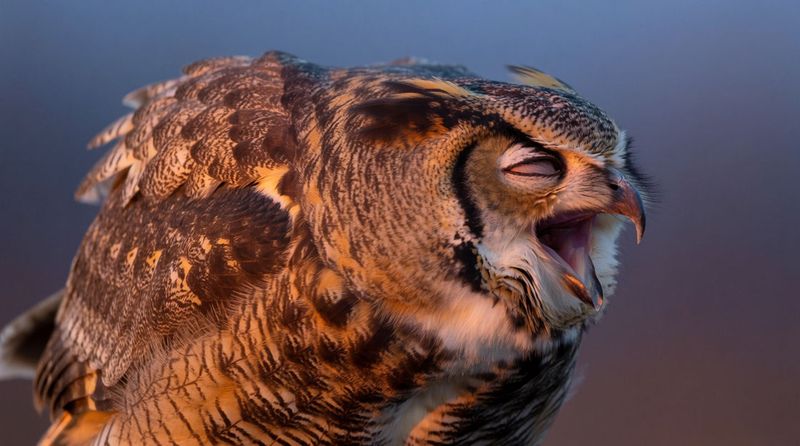
Hoots are a message system. Great Horned Owls use territorial hoots to advertise that an area is taken and to defend it from other owls.
Cornell’s life history notes describe this kind of calling as a normal part of how the species holds a territory.
Breeding pairs may also call back and forth in duets. If you hear two owls trading hoots, that is a known pattern for a pair, and it often sounds like a conversation with slightly different pitches.
Cornell’s sound guide describes these exchanges between mates.
Knowing the purpose of hooting in general does not tell you why one owl is calling near one house. It also does not show that the bird is reacting to you, your lights, your voices, or anything else going on at home.
Those are things nobody can read from the sound alone.
Ordinary calling is also different from defensive behavior. An owl defending a nest may act very differently, such as swooping or approaching to drive off a perceived threat.
A bird that simply sits and hoots from a treetop is doing something much more routine.
Why calls are common after dark in cooler months
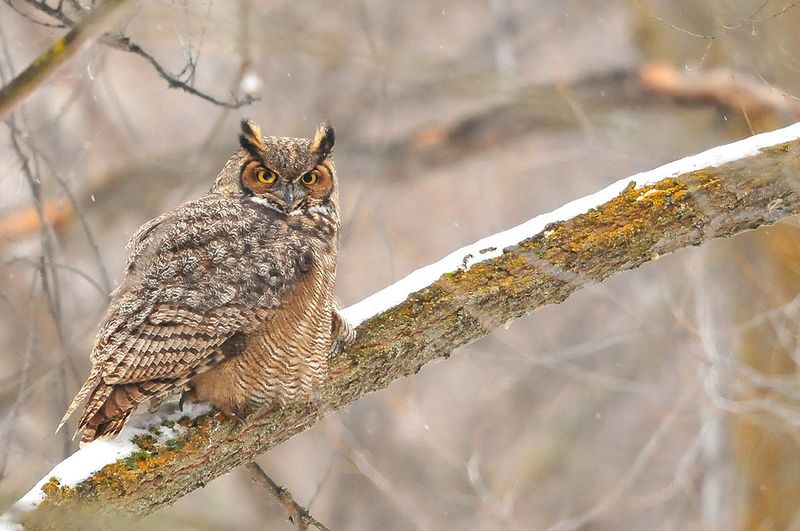
Great Horned Owls are active mostly at night, with extra activity around dusk and just before dawn. That alone explains why you tend to hear them after the sun goes down.
Their daytime hours are usually spent resting out of sight.
Calling is also especially noticeable in fall and winter. According to Cornell’s life history information, territorial hoots are often prominent in winter before egg-laying begins.
Louisiana adds another piece. A Loyola University resource on Louisiana breeding birds indicates that nesting can begin as early as December.
So winter hoots may overlap with courtship or nesting activity.
These are patterns, not a calendar. Timing varies from place to place, and there is no single statewide hooting season.
Calling may change as the breeding cycle moves along, but sources do not predict when any particular owl will go quiet, so no end date can be promised.
If the hooting seems to go on night after night, that fits the pattern of an owl that lives in the area and uses it year-round.
How much a call tells you about a nest
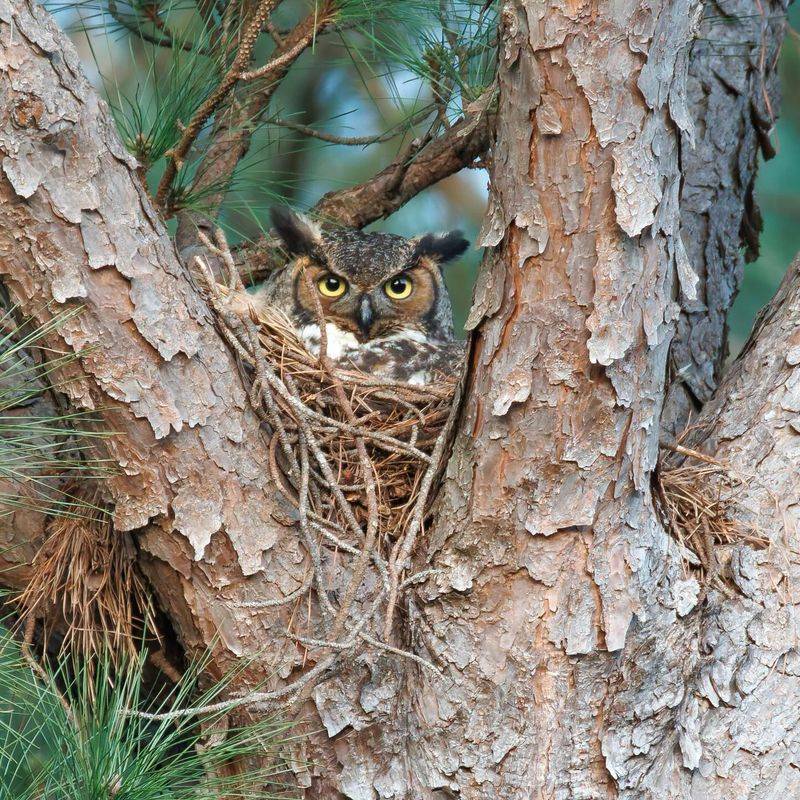
Your ears can tell you that an owl is nearby. They cannot tell you much more than that.
Hooting alone does not confirm that a nest is in your yard, that the owl is in distress, or that it poses a threat to people or pets.
Pairs can also stay in their territory outside the breeding season. A bird that calls often in your area may simply be a resident, with no eggs or chicks involved at all.
Cornell’s life history page notes this year-round presence.
Great Horned Owls can defend their nests, and North Carolina wildlife officials advise caution around them. Defending a nest is a separate behavior from ordinary territorial calling, though.
A hoot from a distant treetop does not by itself show that this is happening.
If you think there may be a nest on your property, do not walk up to look for it. Watch from a distance, such as through a window or with binoculars from across the yard, and keep your distance.
Give the owl space and supervise small pets
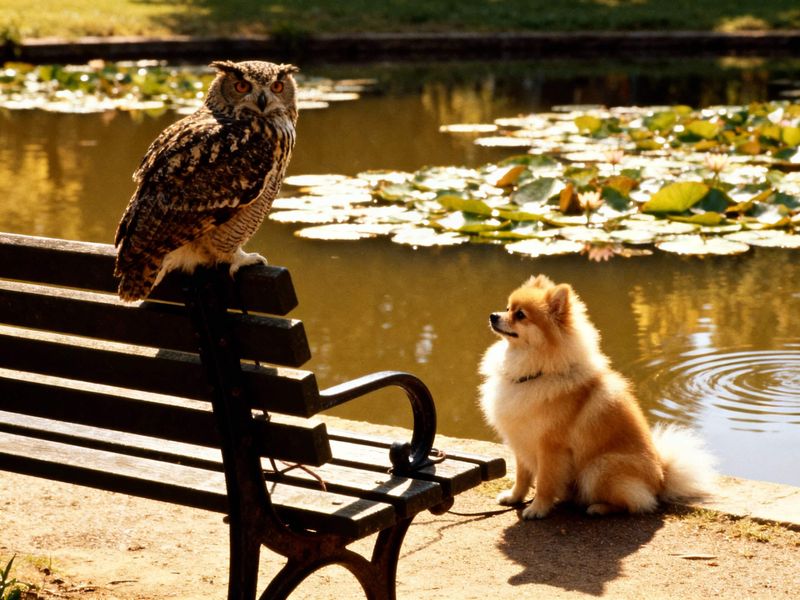
If an owl is calling or perched nearby, the simplest response is to leave it alone. Trying to move it or chase it away usually does more harm than good.
North Carolina wildlife guidance supports giving the bird room.
Give any suspected nest or young birds extra space. If an owl swoops or acts defensively, calmly walk away from the immediate area.
That usually settles things quickly.
Pets deserve a little planning. Keep small pets supervised outdoors, especially at night and around dawn or dusk.
Florida wildlife officials note that Great Horned Owls may consider small unattended pets as prey.
Carrying a pet away is unlikely, so there is no need to panic. A leash, a short trip outside with you, or a covered run is enough for most households.
Think of it as the same kind of care you would use around any outdoor wildlife after dark.
Leave grounded young owls alone
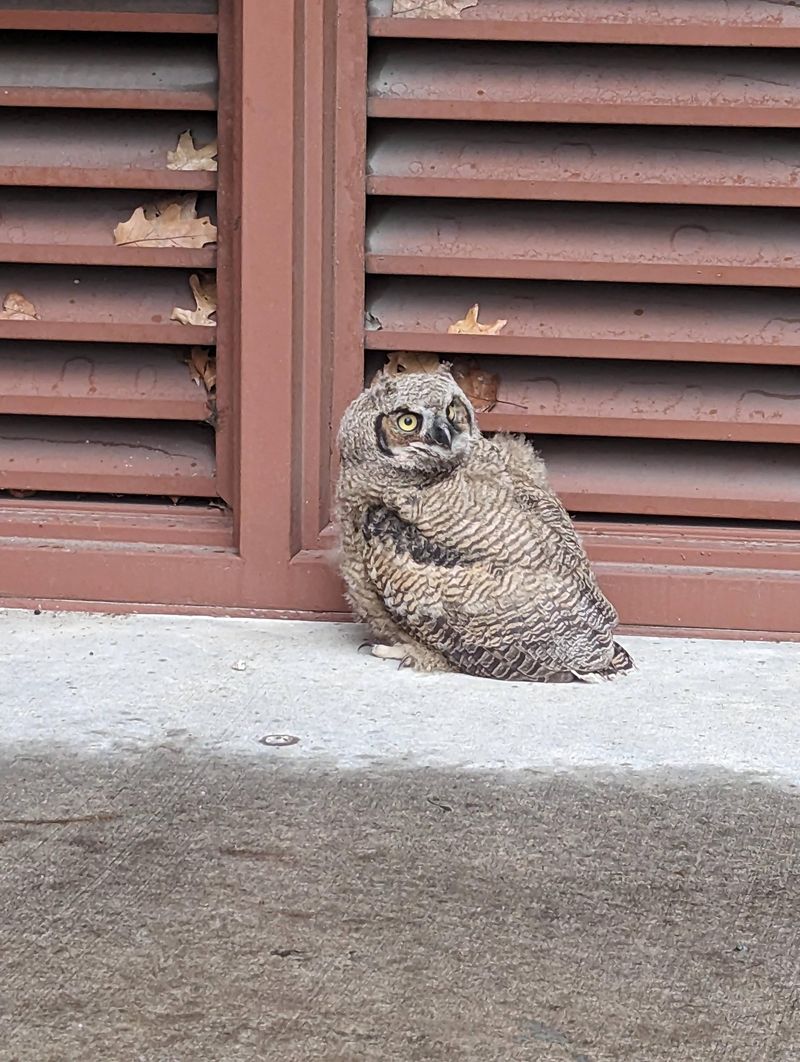
Finding a young owl on the ground can feel alarming. In many cases, though, it is a fledgling that is learning to fly while its parents stay close.
Young owls often leave the nest before they can fly well and spend time on the ground or low branches.
Do not pick it up just because it is on the ground. North Carolina wildlife officials note that parents remain nearby, so a bird that looks abandoned usually is not.
A visibly injured bird is different. Signs might include a drooping wing, bleeding, or an obvious inability to move.
In that case, contact a licensed wildlife rehabilitator for advice instead of trying to give care yourself.
Keep pets and children back while you wait. Watching from a distance is safest for you and for the bird.
Check before doing anything about a nest
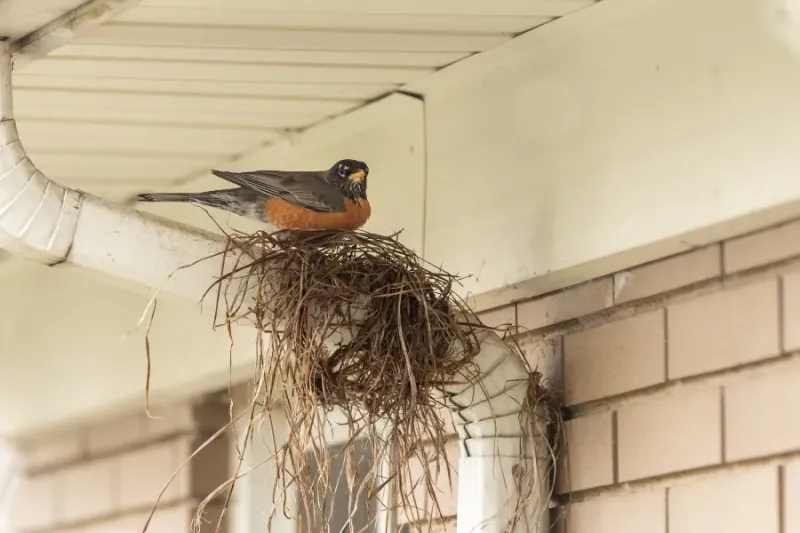
Great Horned Owls are protected under the Migratory Bird Treaty Act. That matters if you are thinking about a nest in a tree, on a building, or anywhere near your home.
The list of covered species is published in a 2023 U.S. Fish and Wildlife Service notice.
Federal guidance in a 2025 agency memorandum on nests says authorization is required to destroy an in-use migratory-bird nest or to relocate a nest. The rules separate in-use nests from inactive ones, so not every empty nest is protected in the same way.
Other laws may apply too, and this article is not legal advice. If a nest is causing a real problem, contact the U.S.
Fish and Wildlife Service or your state wildlife agency before acting.
Until you have clear answers, do not disturb a nest yourself. That means no knocking it down, moving it, or poking at it.
Observe, rather than intervene
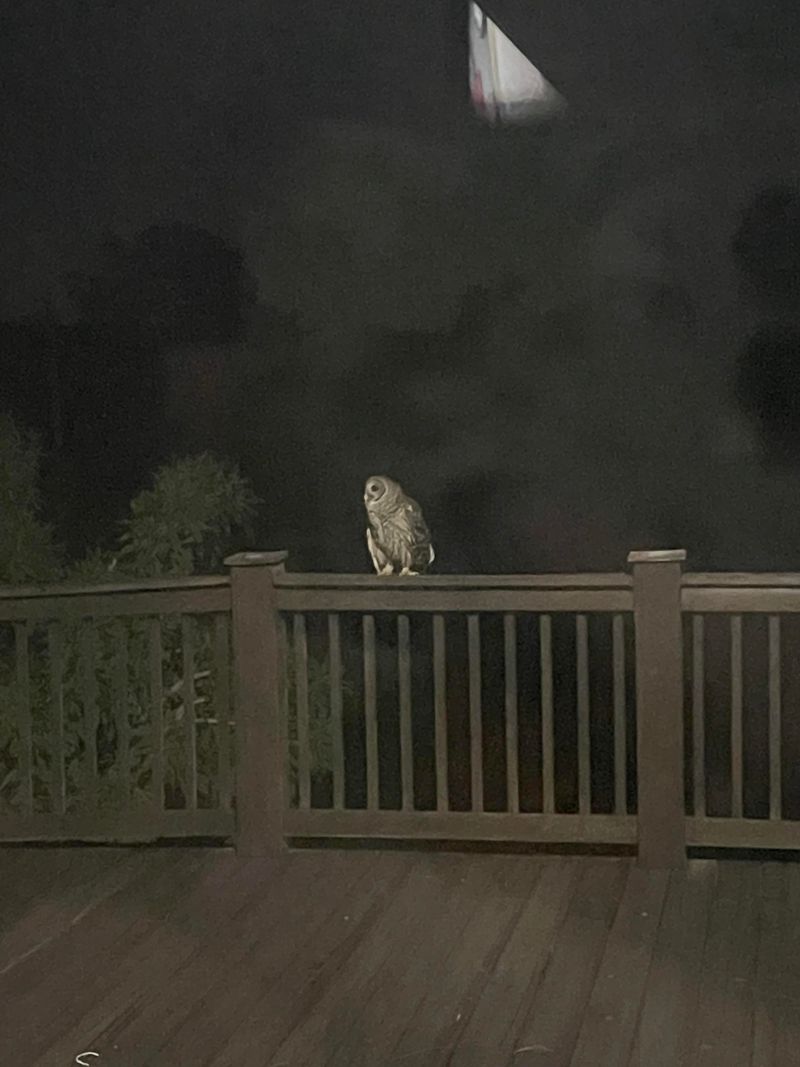
Repeated hooting fits what is known about the species: nighttime activity, territorial calling, and winter courtship and nesting. Even so, those patterns cannot reveal one owl’s reasons or predict when it will quiet down.
Cornell’s life history information and North Carolina wildlife guidance both point toward giving the bird room and keeping small pets supervised.
Listen, enjoy, and keep your distance. A hooting owl is a neighbor going about its night.
Share this story