Get the latest garden guides in your inbox →
Gardening Latest
  • General Gardening
  • Lawn Care
  • Plant Care
  • Composting
  • Soil Health
  • Backyard
  • Garden Muse Magazine
  • General Gardening
  • Lawn Care
  • Plant Care
  • Composting
  • Soil Health
  • Backyard
  • Garden Muse Magazine
  • News
  • Gardening Calendar
  • Garden Structures
  • Vegetable Garden
  • Vertical Garden
  • Raised Beds
  • Hydroponics
  • General Equipment
  • Community Gardens
Garden Themes
  • Spiritual Garden
  • Hydroseeding
  • Seeding and Laying Sod
  • Artificial Grass
  • Lawn Care Equipment
  • Plants
  • Trees
  • Planting Tools
  • Composting Basics
  • Fertilizer
  • Alternative Growing Mediums
  • Front Yard
  • Backyard Activities
  • Landscaping
Gardening Latest

Explore by state

Which state is your garden in?

Currently viewing Louisiana

All states

Northeast

  • Connecticut —
  • Delaware 33
  • Maine —
  • Maryland 19
  • Massachusetts 35
  • New Hampshire —
  • New Jersey 19
  • New York 28
  • Pennsylvania 28
  • Rhode Island —
  • Vermont —

Southeast

  • Alabama 19
  • Arkansas —
  • Florida 19
  • Georgia 19
  • Kentucky 33
  • Louisiana 18
  • Mississippi —
  • North Carolina 17
  • South Carolina 32
  • Tennessee 16
  • Virginia 18
  • West Virginia —

Midwest

  • Illinois 18
  • Indiana 20
  • Iowa 32
  • Kansas —
  • Michigan 19
  • Minnesota 18
  • Missouri 18
  • Nebraska —
  • North Dakota —
  • Ohio 19
  • South Dakota —
  • Wisconsin 34

Southwest

  • Arizona 19
  • Colorado —
  • Nevada —
  • New Mexico —
  • Oklahoma —
  • Texas 18
  • Utah —

West

  • Alaska —
  • California 19
  • Hawaii —
  • Idaho —
  • Montana —
  • Oregon —
  • Washington —
  • Wyoming —

No state matches that search.

Site menu

Gardening Latest
  • General Gardening
    • News
    • Gardening Calendar
    • Garden Structures
    • Vegetable Garden
    • Vertical Garden
    • Raised Beds
    • Hydroponics
    • General Equipment
    • Community Gardens
    Garden Themes
    • Spiritual Garden
  • Lawn Care
    • Hydroseeding
    • Seeding and Laying Sod
    • Artificial Grass
    • Lawn Care Equipment
  • Plant Care
    • Plants
    • Trees
    • Planting Tools
  • Composting
    • Composting Basics
  • Soil Health
    • Fertilizer
    • Alternative Growing Mediums
  • Backyard
    • Front Yard
    • Backyard Activities
    • Landscaping
  • Garden Muse Magazine

Explore

  • About GardeningLatest.com
  • Contact Us

Get the latest from the garden

New guides on lawn care, plants and backyard projects, sent when they go up.

Subscribe →

Follow

  • Facebook
  • X
  • Pinterest
  • YouTube
Louisiana Gardening

Spotted a Giant Flower Stalk Rising From Your Louisiana Palm? Here’s Why, and Whether to Cut It Off

That big stalk shooting out of your palm is most likely a flower cluster, and that is a normal part of how…

CB

By Celeste Boudreaux

November 25, 2026 · 6 min read

Spotted a Giant Flower Stalk Rising From Your Louisiana Palm? Here’s Why, and Whether to Cut It Off
Spotted a Giant Flower Stalk Rising From Your Louisiana Palm? Here's Why, and Whether to Cut It Off

That big stalk shooting out of your palm is most likely a flower cluster, and that is a normal part of how many palms reproduce. It does not mean your palm is sick or dying.

You can usually leave it alone or cut it off, depending on what bothers you. Here is how to decide, and how to do it without hurting the palm.

At a glance

Where
Louisiana Gardening
Hardiness zone
9 20 to 30°F
Read
6 minutes
Published
November 25, 2026

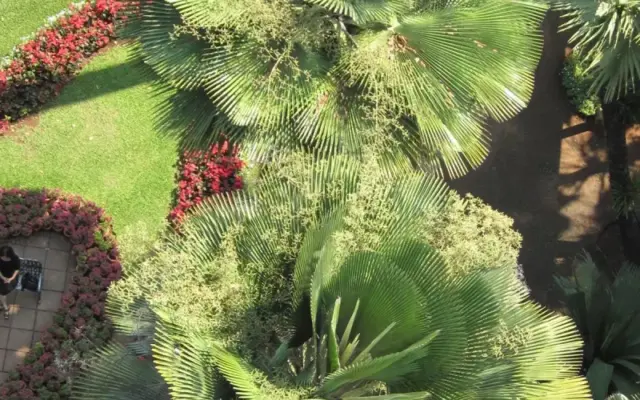
A dramatic stalk is usually part of the palm’s reproductive cycle
A dramatic stalk is usually part of the palm’s reproductive cycle
© Tropics @Home

Palms are flowering plants, even though we rarely think of them that way. So when a tall, branching stalk pushes out of the crown, the likeliest explanation is an inflorescence, which is simply the palm’s flower cluster.

It can look surprisingly big and strange the first time you see one.

Flowering and fruiting are normal for many palms grown across the state. LSU AgCenter’s palm guide describes several palms that bloom and then set fruit in Louisiana landscapes.

A stalk like this is not, by itself, a sign of trouble.

Still, it helps to be careful about what a stalk can tell you. Calling it a flower cluster is a reasonable first guess, not a confirmed identification.

Without a clear look at the whole palm, the stalk alone cannot prove which species you have.

It also cannot tell you whether the palm is healthy. Flowering does not prove the palm is doing well, and it does not prove the palm is struggling.

Health shows up in other clues, like the color and firmness of new fronds, the condition of the trunk, and how the crown looks overall.

A few palms do die after they flower, and that is a species-specific exception. UF/IFAS palm anatomy guidance notes these are only a handful of types.

Seeing a stalk is no reason to assume yours is one of them.

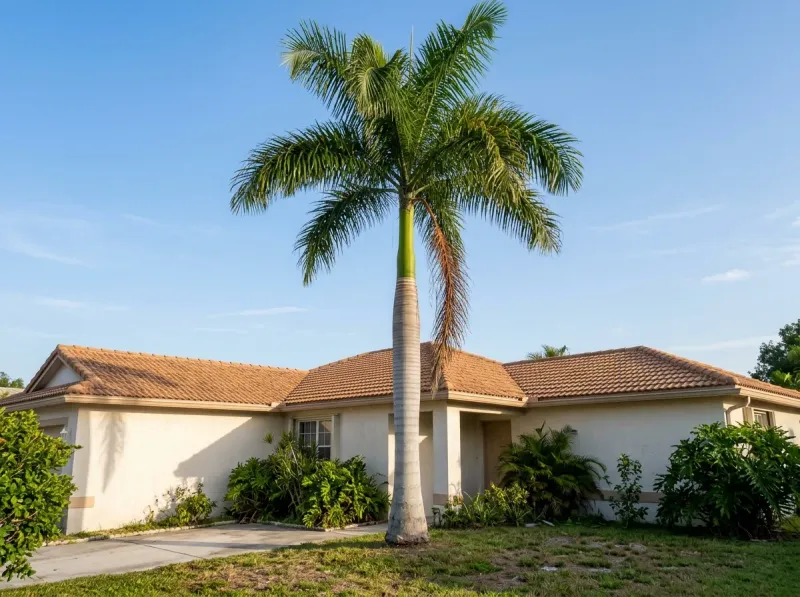
The stalk’s position and what follows depend on the palm
The stalk’s position and what follows depend on the palm
© Pompano Beach Tree Care: Tree Removal, Trimming & Palm Tree Service

Where the stalk appears depends on the kind of palm. On some, flower clusters emerge among the leaves.

On palms with a crownshaft, the smooth, tight column of leaf bases at the top of the trunk, the cluster usually comes out just below it, as UF/IFAS explains.

If you like the idea of helping pollinators, leave the stalk in place while its flowers are open.

Position is a handy clue, but it is not a verdict. Many palms share similar habits, and the stalk alone will not tell you the exact species.

Think of it as one piece of a larger puzzle.

What comes next also varies. Flowers may later turn into fruit, and the fruit can be small and clustered or larger and heavy.

LSU AgCenter describes flowers followed by fruit on several palms grown in Louisiana, so you may see berries or dates form where blooms once were.

Some palms drop that fruit in great numbers, which can mean a sticky or messy patio. Others hold it quietly for months.

How much of a nuisance it becomes depends on your palm and where it grows.

As mentioned, a very small number of palms die after flowering. That is a rare, species-specific pattern, and a stalk alone does not mean it is happening.

If you are curious, a photo of the whole palm taken to your parish extension office can help sort out what you have.

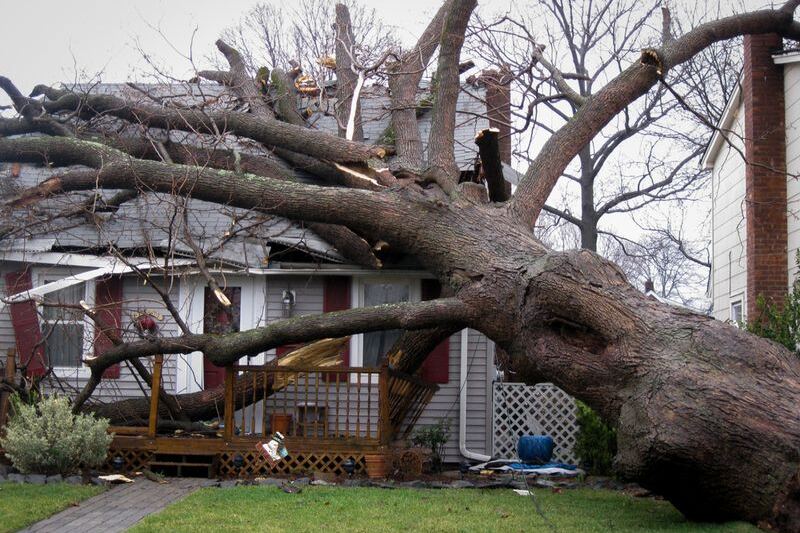
Should you leave the stalk or remove it?
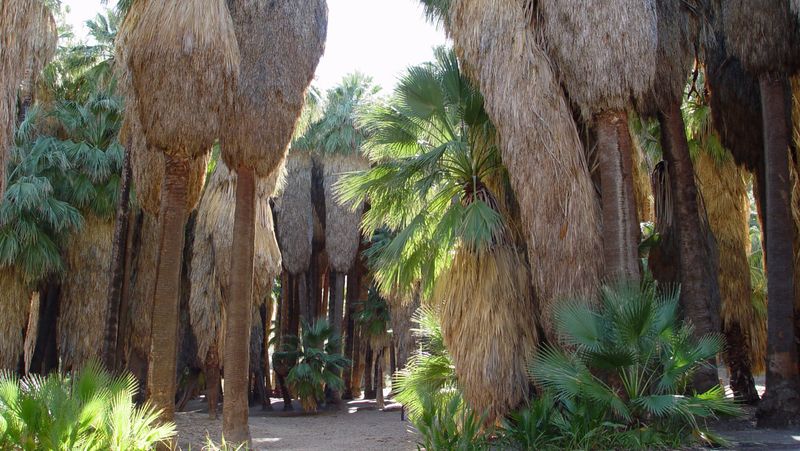
Should you leave the stalk or remove it?
© The Atlanta Journal-Constitution

You have a real choice here. If the stalk is not causing any trouble, leaving it is perfectly reasonable.

Many people simply enjoy the show.

Removal makes sense when the stalk becomes a nuisance. Cutting it off early can keep fruit from forming, which may mean less fruit dropping on walkways and cars.

LSU AgCenter says stalks may be pruned and recommends removal where falling fruit could cause a problem.

Seedlings are another reason. Palms that drop lots of fruit can sprout little palms in flower beds, gutters, and lawns, and UF/IFAS Extension Manatee County covers how pesky that can get.

Skipping the fruit means skipping the weeding.

Looks and cleanup count too. You do not need a health reason to remove a stalk you simply find unsightly.

Just know the palm does not need the pruning to stay well.

Taking off a living flower or fruit stalk is not shown to harm the palm, according to UF/IFAS pruning guidance. That is a very different job from cutting into the trunk or removing the crown, which can seriously injure a palm.

Choose timing based on blooms or fruit cleanup
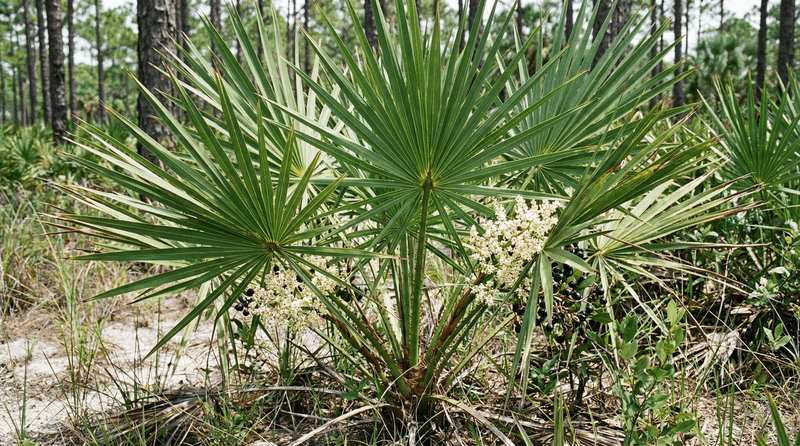
Choose timing based on blooms or fruit cleanup
© Permaculture Plants

There is no single best moment to cut a palm stalk. The right time depends on what you want out of it.

Two goals pull in different directions.

If you like the idea of helping pollinators, leave the stalk in place while its flowers are open. Bees and other insects can visit the blooms during that stretch.

Once flowering ends, you can remove the stalk if you wish, and UF/IFAS suggests waiting until the blooms have dropped and fruit growth has begun.

Keep in mind that the benefit to pollinators comes from the open flowers only. Fruit growing afterward does not help them, so waiting longer than the bloom period gains nothing on that front.

If fruit cleanup is your top concern, the plan changes. UC Cooperative Extension advises pruning a fully expanded flower stalk before the fruit ripens and falls.

That timing can cut down on litter.

So the two choices are separate. Cutting before ripening is for tidiness.

Leaving flowers while they are open is for pollinators. Pick the one that matters most for your yard, and enjoy the quieter palm afterward.

Keep cuts away from the trunk and leave high work to a professional
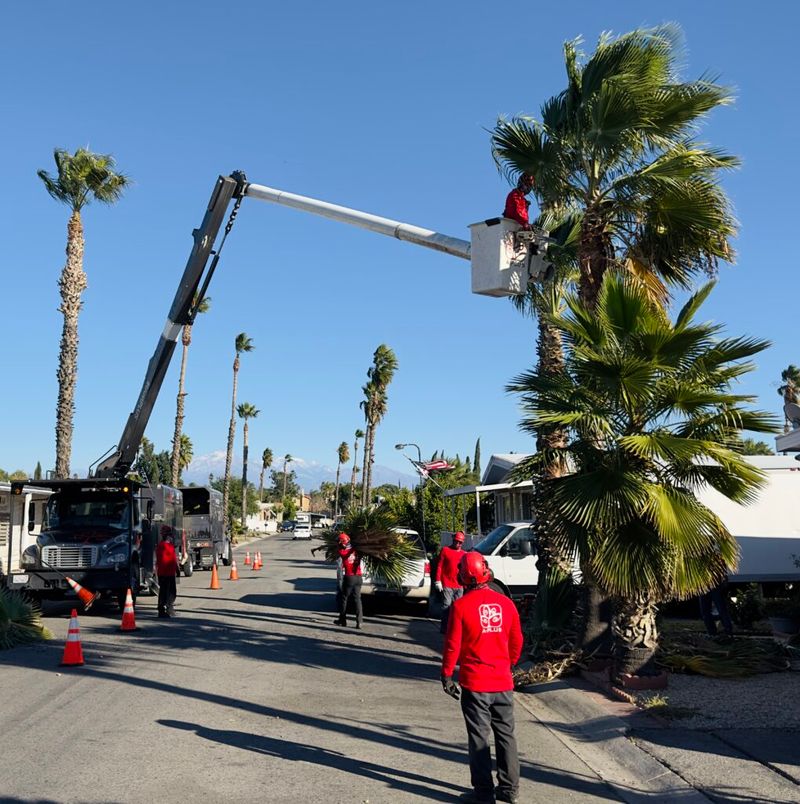
Keep cuts away from the trunk and leave high work to a professional
© A Plus Tree

If you decide to remove the stalk, aim only at the stalk. Palm wounds do not seal over the way many woody tree wounds do, so nicks in the trunk stay put.

UF/IFAS pruning advice warns against damaging the trunk during pruning.

Height is the next question. Do not climb the palm, and do not use climbing spikes to reach a high stalk.

UF/IFAS says spikes can damage palms and suggests considering a certified arborist.

For a tall or awkward stalk, hiring a qualified professional is the safer path. They have the equipment and training to do the job without hurting the palm or themselves.

A ladder-and-saw improvisation is not worth the risk.

None of this means ordinary stalk removal is harmful. Taking off a flower stalk is not the same as cutting off the crown.

LSU AgCenter warns that cutting the crown to reduce a palm’s height will kill it.

It is also unlike a severe frond trim, such as the so-called hurricane cut that strips most leaves. Stalk removal is a small, targeted job.

Keep it that way.

Make a practical choice, not a diagnosis
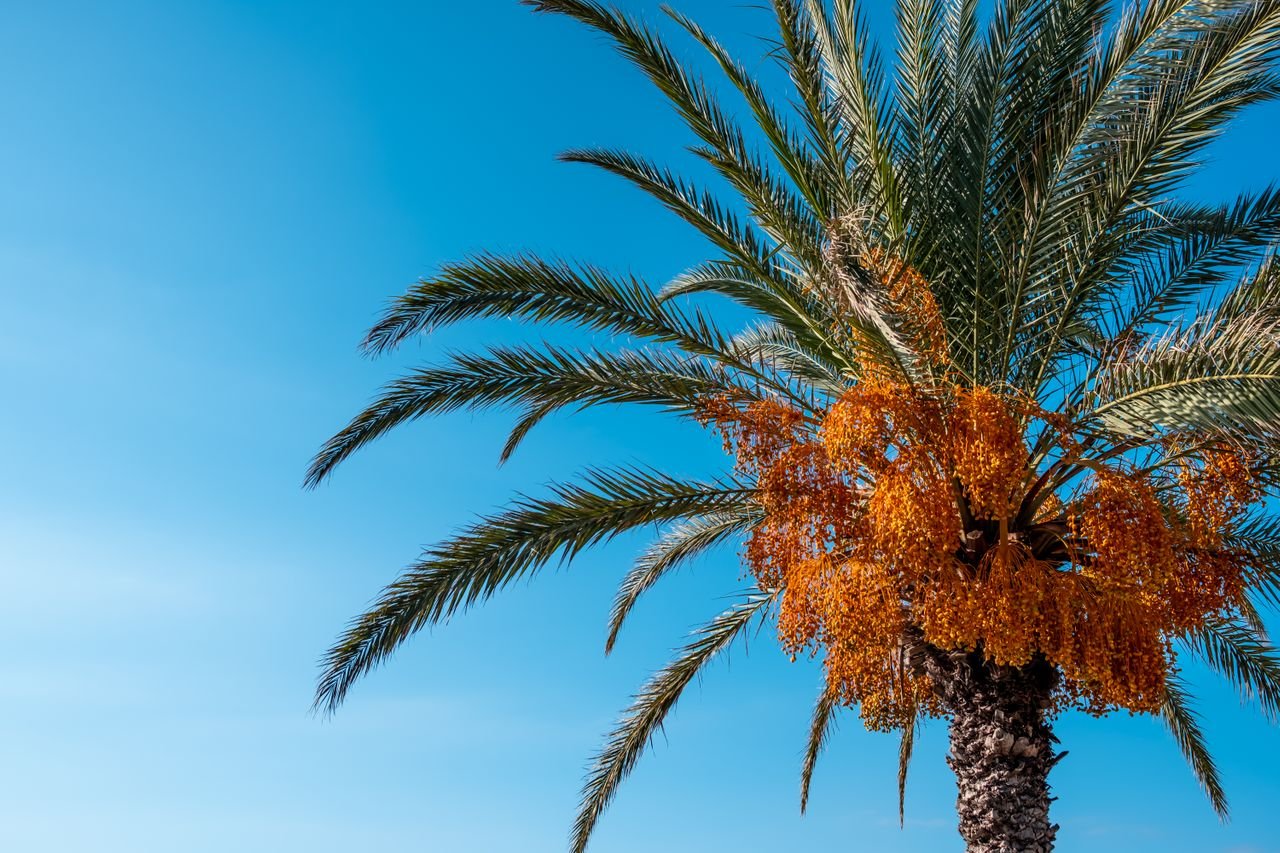
Make a practical choice, not a diagnosis
© Plantcarehacks.com –

That towering stalk is most likely a flower cluster, and UF/IFAS treats flowering as part of normal palm life. Leave it if it suits you, or remove it if fruit, seedlings, or looks bother you.

The stalk alone cannot tell you the palm’s species or health.

If it is high up, let a professional handle it, and skip the climbing. UF/IFAS pruning guidance backs that approach.

A palm that flowers is simply doing what palms do, so you get to decide what happens next.

Share this story
CB

Written by

Celeste Boudreaux

More from Celeste Boudreaux →

About Gardening Latest

Gardening Latest provides in-depth guides to maintaining and enhancing your garden and backyard. Learn how to make the most of the space you have and create a beautiful garden.

More about us →

Latest stories

  • California GardeningIf a Gray Fox Keeps Trotting Through Your California Yard This Winter, Here’s What It’s After

    If a Gray Fox Keeps Trotting Through Your California Yard This Winter, Here’s What It’s After

    11 hr ago
  • Arizona GardeningWhen a Gray Fox Trots Through Your Arizona Yard This Winter, It’s on a Mission

    When a Gray Fox Trots Through Your Arizona Yard This Winter, It’s on a Mission

    12 hr ago
  • Texas GardeningNeighbor Vines Crossing Into Your Texas Yard: Texas Tree-Branch Guidance Is Clear, but the Answer for Vines Is Less Settled

    Neighbor Vines Crossing Into Your Texas Yard: Texas Tree-Branch Guidance Is Clear, but the Answer for Vines Is Less Settled

    12 hr ago
  • Wisconsin GardeningWisconsin Neighbors Fight Over Snow Piled on Their Property, and Here’s What the Law Actually Says

    Wisconsin Neighbors Fight Over Snow Piled on Their Property, and Here’s What the Law Actually Says

    12 hr ago
  • Missouri GardeningYellow Jackets Nesting Near Your Missouri Home? This Is What You Should Do First

    Yellow Jackets Nesting Near Your Missouri Home? This Is What You Should Do First

    12 hr ago

Gardening by state

Stories for your state, and the hardiness zone most of it gardens in.

Keep exploring

Read next

All Louisiana Gardening →
Louisiana GardeningWhy Pulling Seedlings Won’t Stop the Invasive Tree Spreading Across Louisiana Neighborhoods
Louisiana Gardening

Why Pulling Seedlings Won’t Stop the Invasive Tree Spreading Across Louisiana Neighborhoods

13 hr ago
Louisiana GardeningA Hurricane Just Dropped Your Neighbor’s Tree in Your Louisiana Yard, So Who Actually Pays?
Louisiana Gardening

A Hurricane Just Dropped Your Neighbor’s Tree in Your Louisiana Yard, So Who Actually Pays?

19 hr ago
Louisiana GardeningWhy Coyotes Howl Near Louisiana Homes at Night and What Each Call Really Means
Louisiana Gardening

Why Coyotes Howl Near Louisiana Homes at Night and What Each Call Really Means

22 hr ago

More from Louisiana Gardening

  • From Cottonmouths To Brown Recluses, Here’s How To Identify The Venomous Creatures In Louisiana Yards

    Nov 24
  • Those Coyote Howls Echoing Across Your Louisiana Yard at Night Have a Seasonal Explanation

    Nov 23
Back to top

Leave a response Cancel

Your email address stays private. Required fields are marked with an asterisk.

Gardening Latest

In-depth guides to maintaining and enhancing your garden and backyard: how to make the most of the space you have, and how to make it beautiful.

  • Facebook
  • X
  • Pinterest
  • YouTube

We may earn a portion of sales from products or services that are purchased through our site as part of our affiliate partnerships with retailers.

Explore

  • About GardeningLatest.com
  • Contact Us
  • Terms and Conditions
  • Privacy
  • Editorial Note:
  • FTC Disclosure

Newsletter

New garden guides and seasonal tips, straight to your inbox.

We’ll email you a link to confirm. Unsubscribe any time.

Almost there! Check your inbox and tap the link to confirm.

© 2026 Gardening Latest. All rights reserved.

Back to top