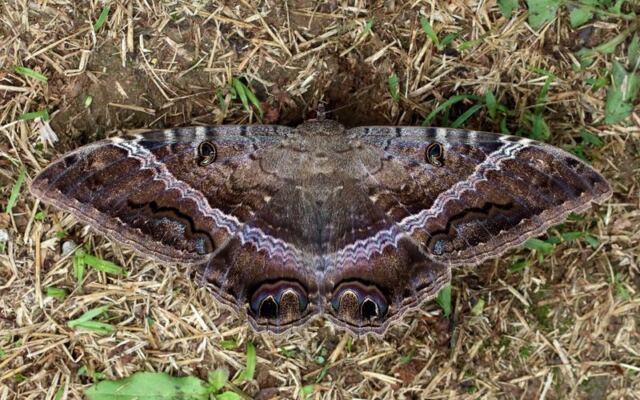
That huge, dark moth on your porch light could be a Black Witch, a tropical moth that sometimes wanders into Illinois. It could also be one of our own giant native moths, which look surprisingly similar at a glance.
Knowing which is which turns a startling moment into a neat bit of backyard science. Here is how to tell, what to do, and why you can relax.
A Black Witch is possible in Illinois, but uncommon
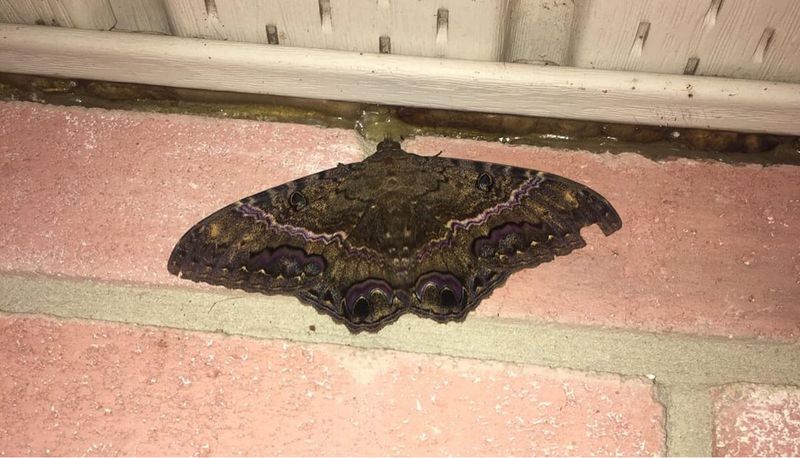
Yes, a Black Witch (Ascalapha odorata) can turn up in Illinois, but it is an uncommon visitor. A big, dark moth on your porch does not prove that is what you are looking at.
Size, color, and the spot where you found it are not enough to confirm the identification.
The species lives in tropical and subtropical parts of the Americas. Every so often, individuals stray far north of their home range.
Wisconsin Extension’s insect lab describes them as occasional visitors to the Midwest, often linked to storms and strong winds that carry them along.
Illinois has at least one documented sighting. A BugGuide observation from Niles, in Cook County, was recorded on July 3, 2024.
That tells us a Black Witch can show up in the state, which is useful to know.
It does not tell us how often it happens. One photo from one place is a single observation, not a survey of how many Black Witches live in or pass through Illinois.
Think of it as proof that the door is open a crack, not that moths are streaming through.
So the honest answer for most homeowners is this: maybe, but check before you decide. Plenty of other large, dark moths share your porch light, and the next few sections show you how to sort them out with a good look and a clear photo.
Look at the whole wing pattern
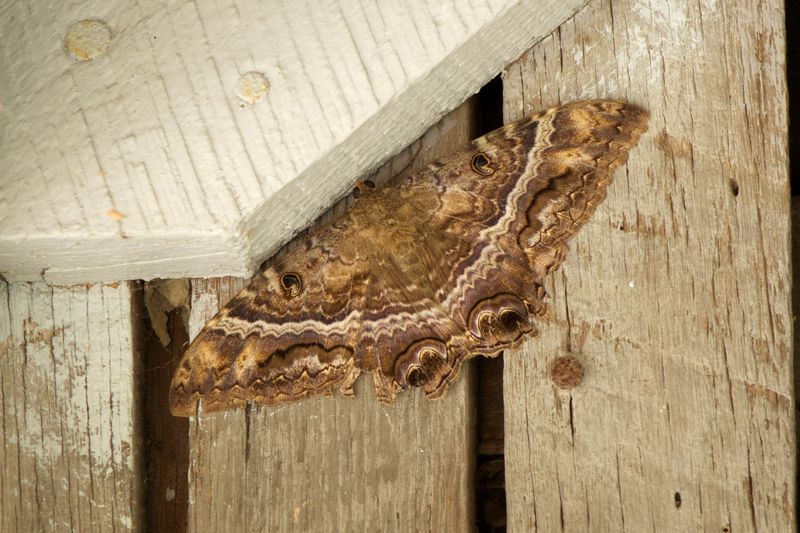
Forget the word black for a moment. A Black Witch is usually mottled dark brown, with lighter wavy bands and speckles scattered across the wings.
Looking only at overall darkness can send you down the wrong path.
Size helps a little. According to Moths of North Carolina, the wingspan runs about 11 to 15 centimeters, or roughly 4.3 to 5.9 inches.
That is wider than most people’s palm.
A useful clue is a curved, comma-like marking on the forewing. Look near the middle of the front wing for that little hook or crescent shape.
It is a handy detail, though it is one clue among several.
The best tool is your phone. Take a photo from directly above or behind, with the wings open and the whole upper pattern in view.
Place a coin, ruler, or dollar bill beside the moth so size is easy to judge later.
Move slowly and avoid touching it. Photos taken from a gentle distance usually work fine, and a second shot from the side can add detail.
Even then, a pattern check can point you in a direction without guaranteeing the answer. If you share your photo with a local extension office or a nature-sharing site, someone with more experience can confirm what you found.
Illinois has native giant moths, too
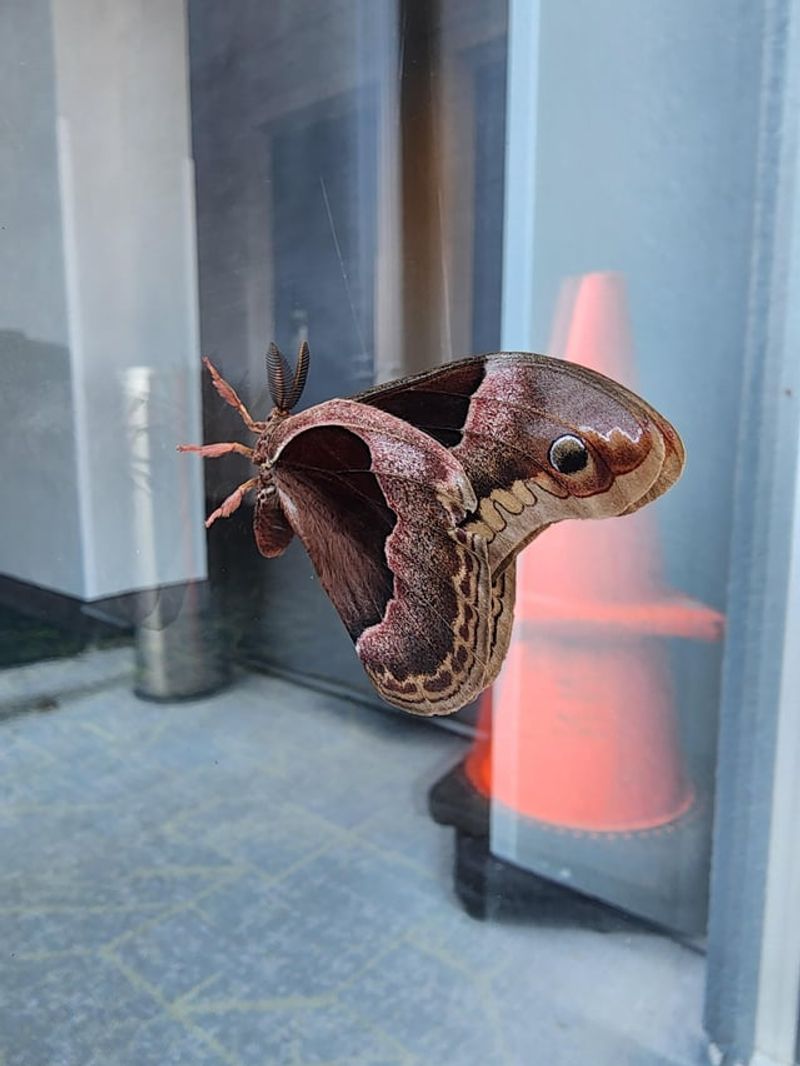
Some of the biggest moths you will meet in Illinois were here long before any tropical stray. One of them is the Cecropia moth.
Illinois DNR lists it as common statewide, with a wingspan of 5 to 6 inches.
Its wings are dark brown, but they carry bold pale, red, and white markings. If you see crisp bands of red and white, you are probably looking at a Cecropia, not a Black Witch with its muted, speckled look.
Another native giant is the Polyphemus moth. Illinois DNR describes it as yellow-brown to red-brown, with an eyespot on each wing.
Those big round spots are hard to miss once you know to look for them.
Compare what you can see. Is the moth tan or reddish rather than dark?
Are there round eyespots? Are there vivid red and white bands?
Each answer points toward a native species.
The sources here do not say which of these moths is most likely to land on a particular porch, so avoid guessing based on odds. Let the markings do the talking, and use your photo to check them one by one.
A porch light does not identify the moth
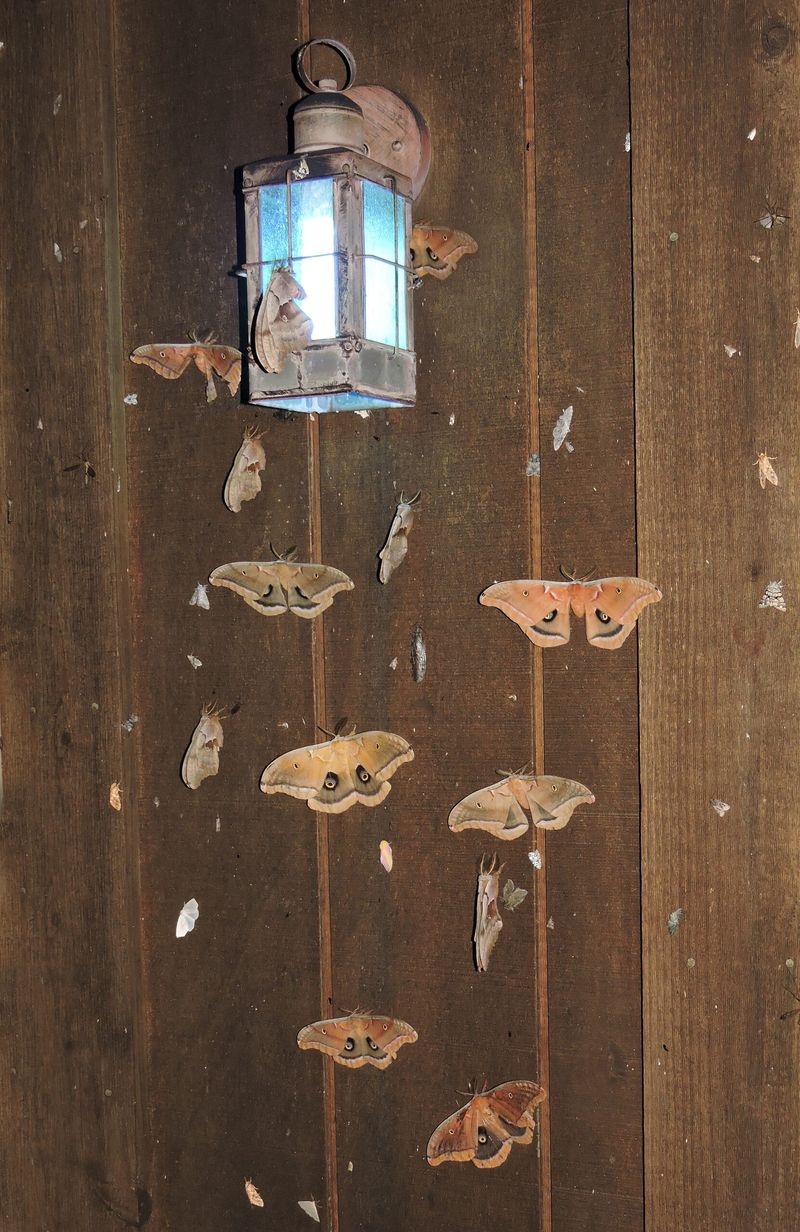
Finding a moth at a lamp feels like a clue, but it is not. Many kinds of night-flying insects end up near lights, so the location says very little about which species you have.
It also does not show that the moth flew a long way to reach you. The idea that lights pull moths in from far away is popular, but it overstates what researchers have seen.
In 2024, scientists tracked flying insects near artificial lights and published their findings in Nature Communications. They found that insects close to a light often tilted so their backs faced the source.
That posture seems to throw off their steering, and the insects became disoriented.
The authors cautioned that lights may trap nearby insects rather than draw them in from a distance. In plain terms, a lamp can scramble the flight of a moth already close by.
So a moth clinging to your porch light may simply have been passing through and got confused. Its perch tells you about the lamp, not about its species or its travels.
Skip the porch-light clue and go back to the wings. Pattern, color bands, eyespots, and size give far better answers than where the moth happened to land.
Leave the adult moth alone
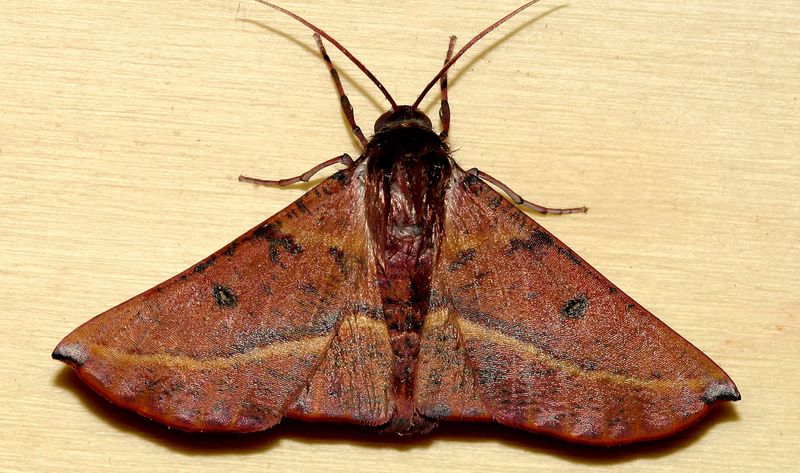
Good news for anyone with a fast-beating heart: the adult Black Witch is described as harmless to people. Texas Parks and Wildlife says the moth is harmless and not considered a pest.
Its spooky name and dark look say nothing about danger.
If the moth is outside, simply watch it and take photos. There is no sound reason to kill it or spray pesticide over one visitor.
By morning it will likely have moved on.
If one gets indoors, you can move it without much contact. Set a clear container gently over the moth, slide a piece of stiff paper underneath, and carry it outside.
Release it somewhere sheltered, such as a shrub or tree trunk.
Keep the reassurance limited to the adult moth, though. It does not cover every moth or caterpillar.
Some hairy or spiny caterpillars can irritate skin, as noted in University of Kentucky entomology guidance.
If you spot an unfamiliar caterpillar in your yard, look without touching. Photograph it from a few inches away and wash your hands if you accidentally brush against it.
Black Witch folklore varies by region
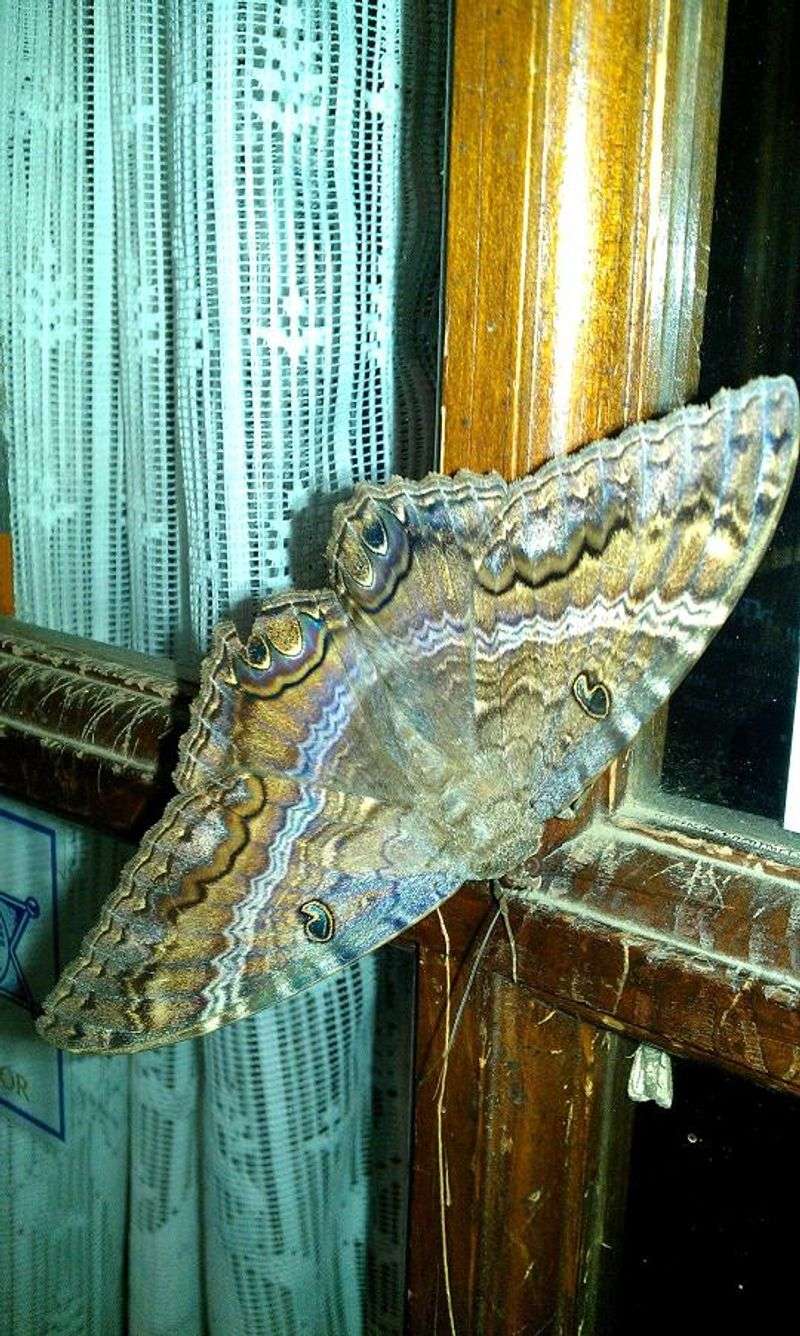
Few moths have collected as many stories as the Black Witch. The tales are fun to read, but they come from particular places and are not one shared tradition.
Some beliefs link the moth with death. Texas Parks and Wildlife records that kind of superstition.
In a separate belief, it notes the moth is tied to lottery luck.
A curator at the Santa Barbara Museum of Natural History describes similar differences. In an Ask A Curator answer, death-related beliefs are mentioned for Mexico, while a Money Moth tradition appears in parts of the Caribbean.
Notice that these stories point in opposite directions. That alone suggests they are cultural tales rather than facts about the insect.
None of this makes an Illinois belief, and none of it predicts anything about you or your home. The moth is simply a large insect that got a long way from where it usually lives.
It does not explain why it flew where it did.
Enjoy the folklore as a story from other communities, then get back to the useful part: looking closely at the wings and taking a clear photo.
Use a clear photo, not a confident guess
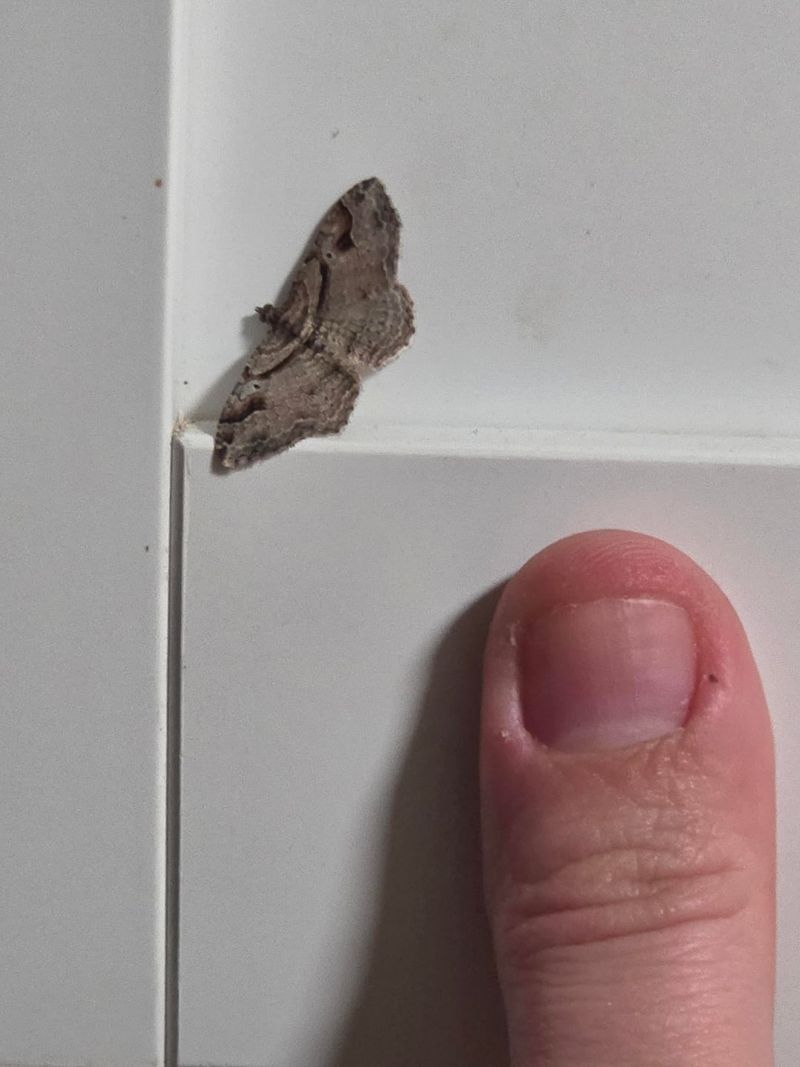
Next time a big dark moth lands by your door, grab your phone before you make up your mind. Capture the whole upper-wing pattern with a ruler or coin nearby, then compare the markings with a Black Witch reference page and the native giants.
A Black Witch is possible in Illinois, as regional reports suggest, but it cannot be confirmed from a quick description alone. If it is outdoors, let the adult moth rest and go on its way.
Sometimes the best discovery is the question itself: what exactly is that, and how do I find out?
Share this story