Get the latest garden guides in your inbox →
Gardening Latest
  • General Gardening
  • Lawn Care
  • Plant Care
  • Composting
  • Soil Health
  • Backyard
  • Garden Muse Magazine
  • General Gardening
  • Lawn Care
  • Plant Care
  • Composting
  • Soil Health
  • Backyard
  • Garden Muse Magazine
  • News
  • Gardening Calendar
  • Garden Structures
  • Vegetable Garden
  • Vertical Garden
  • Raised Beds
  • Hydroponics
  • General Equipment
  • Community Gardens
Garden Themes
  • Spiritual Garden
  • Hydroseeding
  • Seeding and Laying Sod
  • Artificial Grass
  • Lawn Care Equipment
  • Plants
  • Trees
  • Planting Tools
  • Composting Basics
  • Fertilizer
  • Alternative Growing Mediums
  • Front Yard
  • Backyard Activities
  • Landscaping
Gardening Latest

Explore by state

Which state is your garden in?

Currently viewing California

All states

Northeast

  • Connecticut —
  • Delaware 45
  • Maine —
  • Maryland 31
  • Massachusetts 47
  • New Hampshire —
  • New Jersey 31
  • New York 40
  • Pennsylvania 40
  • Rhode Island —
  • Vermont —

Southeast

  • Alabama 31
  • Arkansas —
  • Florida 31
  • Georgia 31
  • Kentucky 45
  • Louisiana 30
  • Mississippi —
  • North Carolina 29
  • South Carolina 44
  • Tennessee 28
  • Virginia 30
  • West Virginia —

Midwest

  • Illinois 30
  • Indiana 32
  • Iowa 44
  • Kansas —
  • Michigan 31
  • Minnesota 30
  • Missouri 30
  • Nebraska —
  • North Dakota —
  • Ohio 31
  • South Dakota —
  • Wisconsin 45

Southwest

  • Arizona 30
  • Colorado —
  • Nevada —
  • New Mexico —
  • Oklahoma —
  • Texas 29
  • Utah —

West

  • Alaska —
  • California 30
  • Hawaii —
  • Idaho —
  • Montana —
  • Oregon —
  • Washington —
  • Wyoming —

No state matches that search.

Site menu

Gardening Latest
  • General Gardening
    • News
    • Gardening Calendar
    • Garden Structures
    • Vegetable Garden
    • Vertical Garden
    • Raised Beds
    • Hydroponics
    • General Equipment
    • Community Gardens
    Garden Themes
    • Spiritual Garden
  • Lawn Care
    • Hydroseeding
    • Seeding and Laying Sod
    • Artificial Grass
    • Lawn Care Equipment
  • Plant Care
    • Plants
    • Trees
    • Planting Tools
  • Composting
    • Composting Basics
  • Soil Health
    • Fertilizer
    • Alternative Growing Mediums
  • Backyard
    • Front Yard
    • Backyard Activities
    • Landscaping
  • Garden Muse Magazine

Explore

  • About GardeningLatest.com
  • Contact Us

Get the latest from the garden

New guides on lawn care, plants and backyard projects, sent when they go up.

Subscribe →

Follow

  • Facebook
  • X
  • Pinterest
  • YouTube
California Gardening

Those Deep Nighttime Hoots Near Your California Home Mean a Great Horned Owl Is Claiming Its Turf

Deep, steady hoots drifting through a California evening often come from a Great Horned Owl announcing its turf.

JN

By Julia Navarro

November 28, 2026 · 6 min read

Those Deep Nighttime Hoots Near Your California Home Mean a Great Horned Owl Is Claiming Its Turf

Deep, steady hoots drifting through a California evening often come from a Great Horned Owl announcing its turf. That call is one of the most familiar sounds of the wild night, and it tells a small story about how owls live and talk to each other.

The details matter, because the same sound can carry different messages, and it says less about your yard than you might think. Here is how to listen like a curious neighbor.

At a glance

Where
California Gardening
Hardiness zone
9 20 to 30°F
Read
6 minutes
Published
November 28, 2026

Could those hoots be a Great Horned Owl?

Could those hoots be a Great Horned Owl?
© sarah2883795

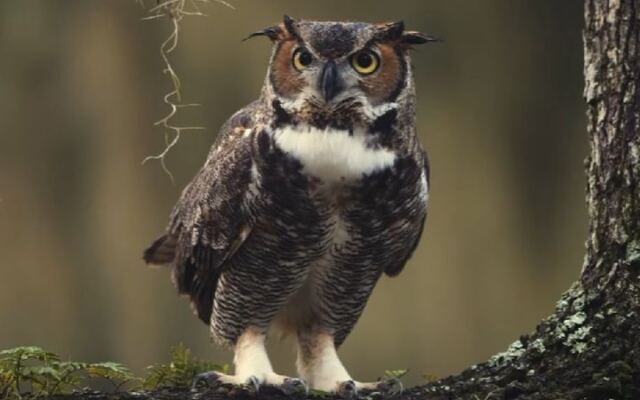
Few night sounds are as recognizable as the Great Horned Owl’s song. Its familiar call is a series of deep, soft, stuttering hoots, and the species is widespread across California, so it is a reasonable first guess for what you hear.

California’s wildlife agency species account describes the owl as living throughout the state.

Listen for rhythm. A typical phrase has a few low notes, often with a pause and then a short run of hoots.

Sometimes two owls trade calls back and forth, a breeding pair that alternates in a duet. The female’s voice is higher than the male’s, so a higher hooter answering a lower one is a clue that a pair may be talking.

Not every owl noise is that hoot, though. Cornell Lab of Ornithology’s sound guide notes that young birds make piercing, scream-like begging calls when they want food.

Adults can also bark, shriek, or hiss, which sounds nothing like a soft hoot.

Even so, a description of a sound is only a clue. Without a recording or a sighting, you can say the hoots are consistent with a Great Horned Owl, but you cannot be sure.

A recording you can compare with reference calls, or a glimpse of ear tufts at dusk, turns a good guess into a stronger one.

Territorial calling is only part of the message

Territorial calling is only part of the message
© BirdsBuzz | Bird Guides, Behavior & Backyard Birding

Hooting does real work for these owls. It can advertise a territory to other owls or help maintain one that is already held.

That is the territorial job most people have heard about, and it is a genuine part of the picture.

Playback can pull a bird out of its routine and make it spend energy on a rival that does not exist.

It is not the whole picture, though. The same hoots can be part of courtship, and they can help a pair keep in touch with each other.

When you hear two voices trading calls, you may be hearing a couple talking rather than one bird warning off a rival.

Audubon California describes males establishing territories and calling for mates in autumn. That is a useful snapshot of one busy stretch of the year.

It does not mean autumn is the only time owls hoot, and it does not mean every call has the same purpose.

Year-round residents have reasons to call at many times. The California Department of Fish and Wildlife account says hooting helps maintain territory, which fits an owl that stays put through the seasons.

Timing is flexible too. You might catch calls at dusk, as the light fades, as well as deep in the night.

If you hear hooting while there is still a glow in the sky, you are not imagining things.

A call cannot map a new territory
A call cannot map a new territory
© California Today

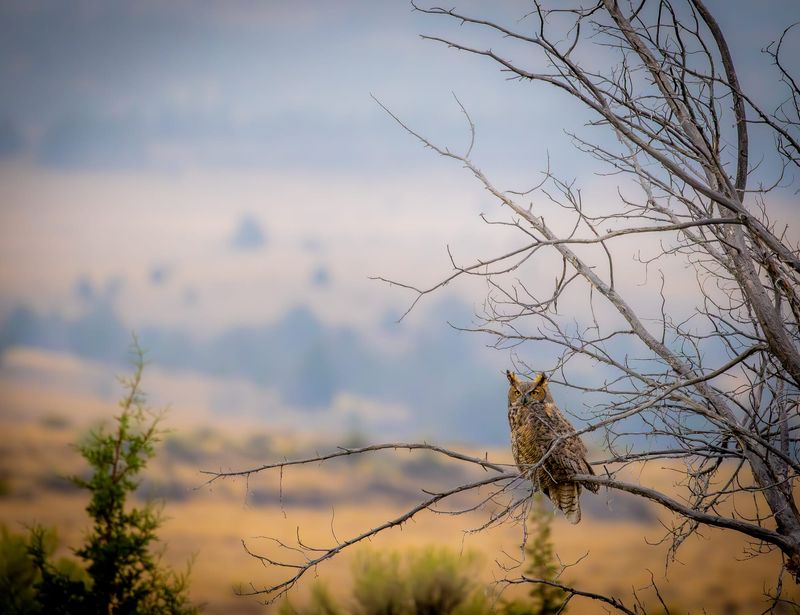
Picture an owl pair that has lived in the same patch of oaks and canyon edges for years. According to California’s species account, established pairs can occupy the same territory year-round.

If they hoot tonight, nothing says they just arrived or just took over.

A new sound in your ears may simply be an old routine that you finally noticed. Maybe a window was open, the wind changed, or the evening was quiet enough to carry the call.

There are other things a hoot cannot tell you. Owl voices travel far, and sound bounces off hills and buildings, so you cannot work out exactly where the bird sits.

You also cannot tell where a nest is, and you cannot draw a line where its territory begins and ends.

Finally, an owl’s territory is not the same thing as your property. Lot lines mean nothing to a bird.

The hoot is a clue about an owl in the area, not a claim on your yard.

Why early breeding matters for yardwork
Why early breeding matters for yardwork
© Kings River Conservation District

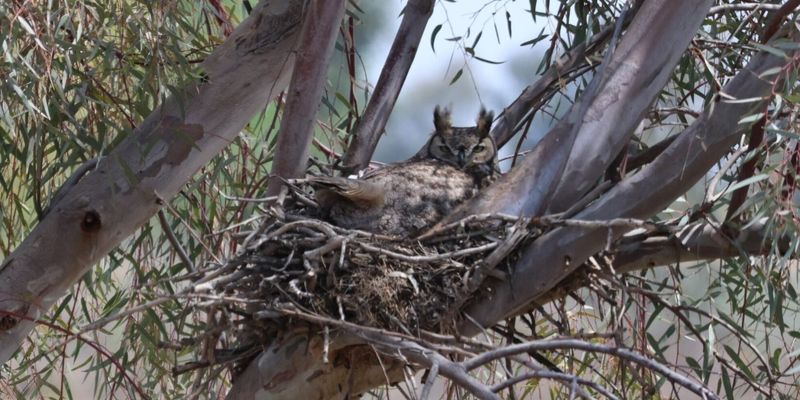
Great Horned Owls get started early. The California Department of Fish and Wildlife species account reports that they breed primarily from January through March.

That is the middle of winter for many yards, long before most people think of birds nesting.

This is why a one-size-fits-all yardwork calendar can mislead. You may have heard that late winter to early fall is the time to be careful around nesting birds.

But CDFW’s nesting bird guidance says nesting seasons vary by species and location, and some birds nest year-round.

For a Great Horned Owl, that means a general date range cannot show that work near a suspected nest is safe. A pair might already have eggs or young while the calendar says everything is fine.

So the practical move is to treat timing as uncertain rather than look for a magic date. If a tree, a thick canopy, or an old nest platform near you might hold owls, the next step is to ask someone who knows, not to guess from the month.

Enjoy the calls without calling back
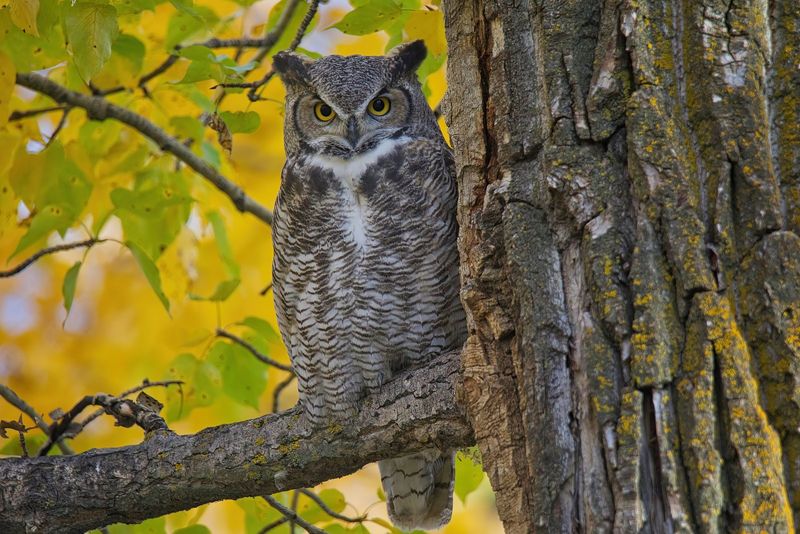
Enjoy the calls without calling back
© Better With Birds

The kindest way to enjoy a hooting owl is to simply listen. Step outside at dusk, stand still, and let the calls come to you.

You can learn a lot from rhythm, pauses, and whether a second voice answers.

Resist the urge to hoot back or play a recording. Audubon’s ethical bird photography guide advises against using bird-call playback.

Playback can pull a bird out of its routine and make it spend energy on a rival that does not exist.

The same goes for a suspected nest. Keep your distance, and do not walk up to a tree to look for one.

CDFW warns that disturbance can cause nesting birds to abandon nests or young.

If you want a closer look, use binoculars from far away. A quiet recording of the calls from your own porch also works nicely.

That way you keep the evening magic, and the owl keeps its privacy.

When work could affect a nest, get guidance
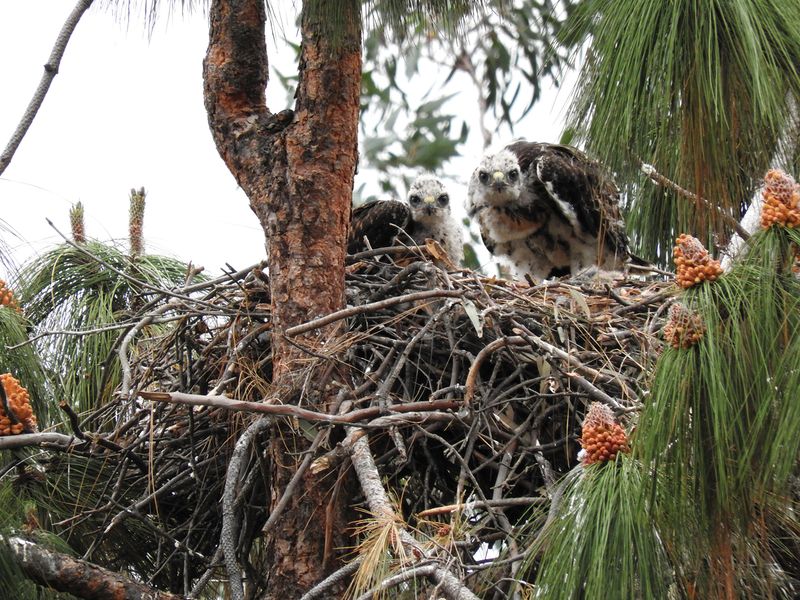
When work could affect a nest, get guidance
© Friends of Griffith Park |

Planning to trim a big tree or clear brush where owls might be nesting? Pause first.

California law protects birds of prey and their nests and eggs, and that includes owls.

CDFW identifies Fish and Game Code section 3503.5 as covering unlawful take, possession, or destruction of birds of prey or their nests or eggs. That is the scope it describes, and it is a good reason to be careful rather than a reason to panic.

If you must do work near a suspected nest, do not rely on a date on a calendar. Contact CDFW or a qualified biologist who can look at your specific situation, the trees involved, and the timing.

Also leave the nest alone yourself. Do not try to move it or take it down, and do not climb up for a closer look.

A short phone call or a site visit from an expert is a small step that protects the birds and keeps your project on solid footing.

Let the hoots remain a clue, not a verdict

Let the hoots remain a clue, not a verdict
© Desert Oasis Insider

Those deep hoots may well be a Great Horned Owl’s territorial or pair call, a sound California wildlife officials link to holding a territory. By itself, though, it cannot prove a new claim, a nearby nest, or where the bird sits.

So listen, enjoy, and leave the owl alone. Some mysteries are better left as music in the dark.

Share this story

JN

Written by

Julia Navarro

More from Julia Navarro →

About Gardening Latest

Gardening Latest provides in-depth guides to maintaining and enhancing your garden and backyard. Learn how to make the most of the space you have and create a beautiful garden.

More about us →

Latest stories

  • Missouri GardeningIf Your Missouri Woodpile Sits Against the House, You’re Inviting Brown Recluses Indoors This Winter

    If Your Missouri Woodpile Sits Against the House, You’re Inviting Brown Recluses Indoors This Winter

    4 min ago
  • Tennessee GardeningBefore You Dig In, Here’s How To Recognize Every Venomous Creature Sharing Your Tennessee Yard

    Before You Dig In, Here’s How To Recognize Every Venomous Creature Sharing Your Tennessee Yard

    10 min ago
  • Alabama GardeningThat Burning Saddleback Caterpillar Sting in Your Alabama Garden Calls for These Steps Right Away

    That Burning Saddleback Caterpillar Sting in Your Alabama Garden Calls for These Steps Right Away

    16 min ago
  • Minnesota GardeningBefore You Pick Up That Big Black Caterpillar With White Spots In Minnesota, Read This

    Before You Pick Up That Big Black Caterpillar With White Spots In Minnesota, Read This

    22 min ago
  • Illinois GardeningDeer Are Rubbing Their Antlers on Your Illinois Saplings Right Now, and Here’s How to Save Them

    Deer Are Rubbing Their Antlers on Your Illinois Saplings Right Now, and Here’s How to Save Them

    28 min ago

Gardening by state

Stories for your state, and the hardiness zone most of it gardens in.

Keep exploring

Read next

All California Gardening →
California GardeningHere’s What Eating Celery Every Day Actually Does To Your Body In California
California Gardening

Here’s What Eating Celery Every Day Actually Does To Your Body In California

1 hr ago
California GardeningWho Actually Pays When an Atmospheric River Drops Your Neighbor’s Tree Into Your California Yard
California Gardening

Who Actually Pays When an Atmospheric River Drops Your Neighbor’s Tree Into Your California Yard

5 hr ago
California GardeningWhen Winter Rains Arrive, Opossums Seek Dry Shelter Around California Homes, and Here’s How to Respond
California Gardening

When Winter Rains Arrive, Opossums Seek Dry Shelter Around California Homes, and Here’s How to Respond

8 hr ago

More from California Gardening

  • Pull One Seedling and More Pop Up: This Invasive Tree Is Spreading Through California Neighborhoods

    Nov 27
  • Your California Agave Spent Years Building Up to That Giant Flower Stalk, and Here’s Whether Cutting It Helps

    Nov 26
Back to top

Leave a response Cancel

Your email address stays private. Required fields are marked with an asterisk.

Gardening Latest

In-depth guides to maintaining and enhancing your garden and backyard: how to make the most of the space you have, and how to make it beautiful.

  • Facebook
  • X
  • Pinterest
  • YouTube

We may earn a portion of sales from products or services that are purchased through our site as part of our affiliate partnerships with retailers.

Explore

  • About GardeningLatest.com
  • Contact Us
  • Terms and Conditions
  • Privacy
  • Editorial Note:
  • FTC Disclosure

Newsletter

New garden guides and seasonal tips, straight to your inbox.

We’ll email you a link to confirm. Unsubscribe any time.

Almost there! Check your inbox and tap the link to confirm.

© 2026 Gardening Latest. All rights reserved.

Back to top