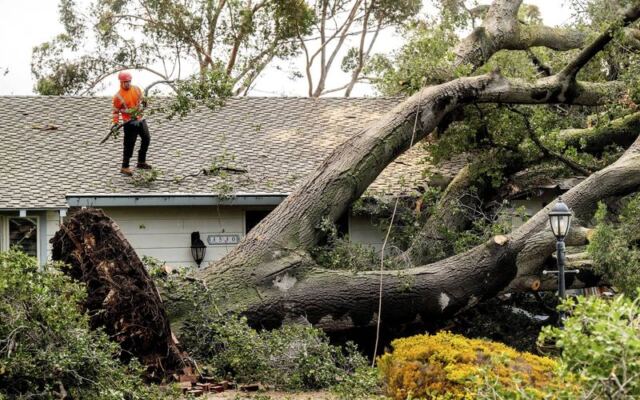
When a neighbor’s tree lands on your house after a big storm, your own homeowners insurance is often the first place to ask for payment, if the damage is covered. Whether your neighbor also owes you money is a separate question, and it depends on the facts.
The storm helps explain why trees fall, but it does not settle who pays. Knowing the difference can save you time, stress, and money.
An atmospheric river raises the risk, not the liability question
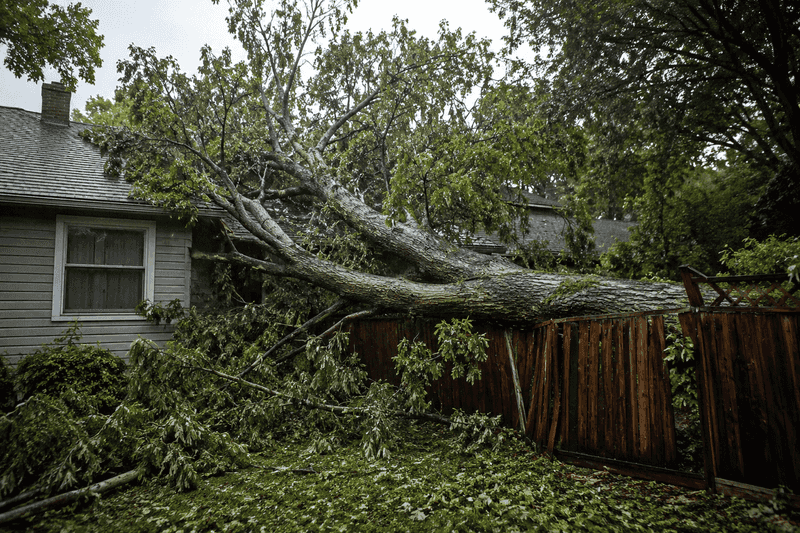
Atmospheric rivers carry huge amounts of water vapor through the sky, and when they reach land they can bring heavy rain or snow. NOAA explains that the strongest events can lead to extreme rainfall and flooding, but not every atmospheric river causes damage.
The label alone tells you very little about what happened to one particular tree.
Still, the conditions that come with these storms can stress trees. UC Agriculture and Natural Resources notes that saturated soil combined with wind can contribute to tree failure.
Wet ground may hold roots less firmly, and gusts then push on a heavy canopy. A tree can also be weakened by decay or damage that nobody noticed.
Here is the key idea for the rest of this article. Storm conditions help explain the risk, but they do not decide who pays.
Two separate things shape the answer: the terms of your insurance policy, and the facts about the tree, such as its condition and how it was cared for.
Think of it as two tracks. One track asks what your policy may cover and what your deductible is.
The other asks whether your neighbor may owe damages. Calling the storm an atmospheric river does not prove the tree fell for a particular reason, and it does not answer either question on its own.
Your homeowners policy is often the first place to seek payment
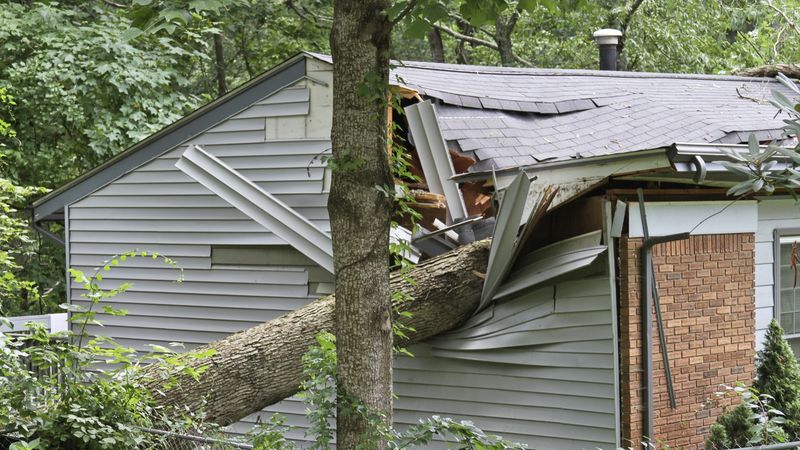
If a tree damages your house, your own insurer is often the first place to turn. The California Department of Insurance says fallen-tree damage is generally covered under standard homeowners policies.
It also tells people to check their specific policy and deductible, because limits and exclusions differ.
That does not mean your neighbor’s insurer automatically pays just because the tree grew next door. Where the tree stood does not decide which company handles your repair claim.
Your policy decides what it may pay for covered damage, and your deductible comes out of that payment.
So there are two questions. Insurance coverage asks what your policy may pay.
Liability asks whether your neighbor may owe damages. You can start the first one right away without waiting for the second to be sorted out.
Report the loss to your insurer soon and ask plainly what is covered, what your deductible is, and what the next steps are. Write down the date, the name of the person you spoke with, and any claim number.
Sometimes an insurer pays its policyholder and then goes after someone else. In City of Pasadena v.
Superior Court, a homeowner’s insurer paid the homeowner and later sued the city over a tree. That shows one possible sequence.
It is not a promise that an insurer will pursue a neighbor or recover any money.
When might the neighbor be responsible?
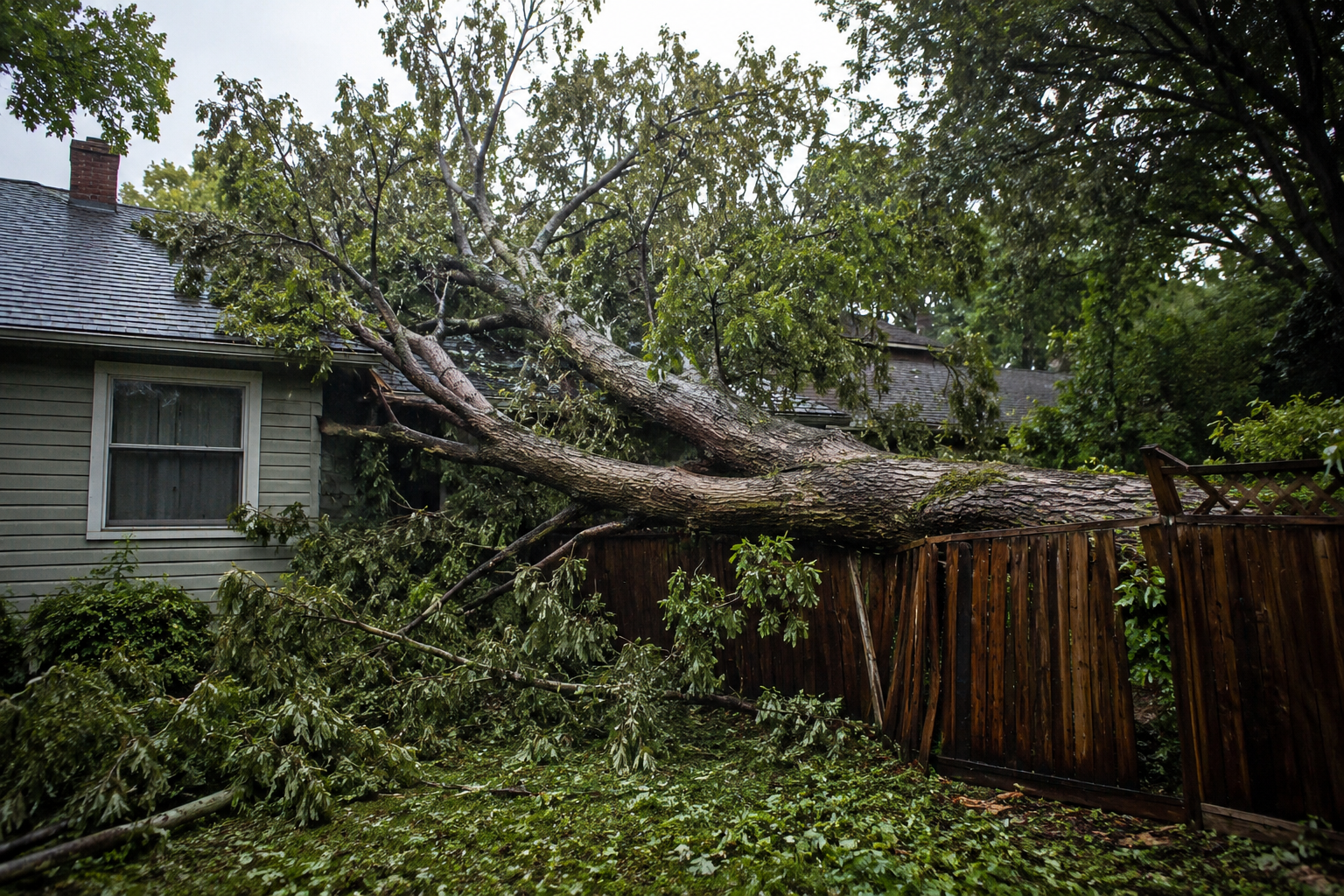
“The tree came from next door, so the neighbor pays” is too simple. Owning a tree does not, by itself, make someone negligent.
The Judicial Council’s jury instructions point to a windstorm case where the claim required proof of negligent maintenance.
In practice, the facts matter. Courts may look at the tree’s condition, what the owner knew or reasonably should have known, and what care the tree received.
The California Courts self-help guide on property damage offers an example involving a neighbor’s dying tree and an alleged lack of care.
Roots and branches that reach into your yard are a different kind of dispute. The same instructions recognize separate cases about encroaching roots or branches, and those are not the same as a healthy-looking tree that falls in a windstorm.
Keep the two situations apart.
A severe storm does not automatically excuse a tree owner, and it does not automatically make the owner liable. A UC guide to tree disputes reports that California courts have been hesitant to treat unusually strong storms as an automatic excuse.
Visible signs like leaning, decay, or broken limbs are good reasons to get a tree checked. They do not prove the neighbor is at fault, and having no warning does not prove the neighbor is off the hook.
For a case-specific answer, consider talking with a licensed California attorney.
Coverage changes with the kind of damage
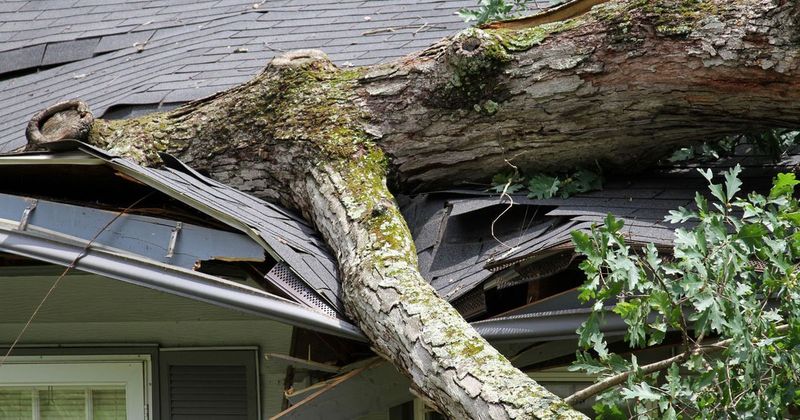
One storm can cause several kinds of loss, and each may be treated differently. Repairing a roof, fence, or wall that a tree damaged is not the same as hauling the tree away.
The state’s residential claims guide says debris removal may be available after a covered loss, subject to policy terms and limits.
Removal can be limited or unavailable in some cases. Travelers explains that removal may not be covered when a tree has not damaged property or blocked access, though some policies offer limited debris coverage.
If a tree dropped into your yard and touched nothing covered, do not assume your insurer will pay to take it away.
Water and earth movement are another dividing line. The Department of Insurance says homeowners policies typically exclude flood, mudslide, and debris flow, while fallen-tree damage may generally be covered.
If your yard has a toppled tree, a washed-out slope, and standing floodwater, expect those losses to be sorted separately.
Cars follow their own rules. Vehicle damage from a fallen tree generally falls under comprehensive, sometimes called other-than-collision, coverage on your auto policy.
Check that your auto policy includes it.
Because policies vary, read the declarations page and exclusions, or ask your insurer to explain each type of loss in writing. No one can promise payment before the policy is reviewed.
Stay safe and document the damage
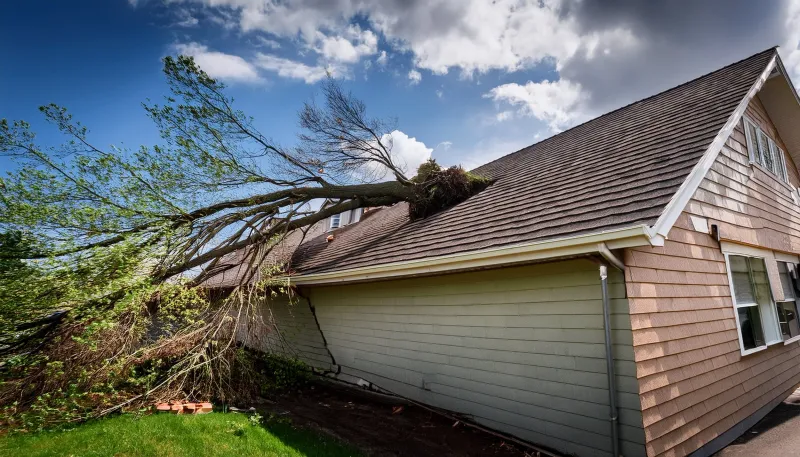
Start with safety. Stay far away from downed or impacted power lines, and report any tree or limb touching a line to the utility.
Cal OES warns that storm-damaged trees can stay hazardous after the weather passes.
Do not approach, climb, cut, or try to remove a damaged tree yourself. For trees still standing, UC guidance suggests looking from the ground and calling an arborist when a closer check is needed.
Cracks, leaning, and hanging limbs are all good reasons to bring in a professional.
Next, document what you can from a safe distance. Take photos and video of the tree, the damage, and the surrounding area, and keep receipts for any expenses.
Note the date and time the tree fell.
Then contact your insurer and ask about your coverage and deductible. The state’s claims guide recommends reasonable temporary measures to prevent more damage, such as covering a hole with a tarp, but only if you can do it without risking your safety.
When possible, wait for the adjuster before starting extensive permanent repairs. Keep records of what you did and why, so the claim is easier to review.
Check coverage and liability separately
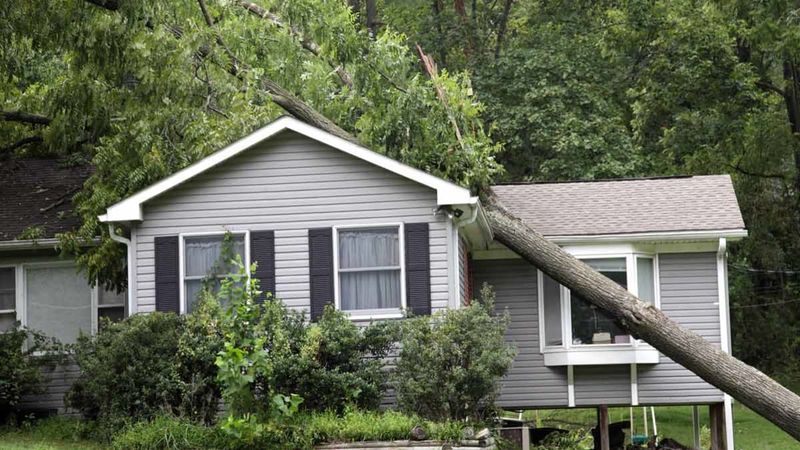
Keep two questions apart. First, find out what your own policy covers, starting with a call to your insurer using the Department of Insurance’s advice to report and document the loss.
Second, consider whether your neighbor may be responsible, which turns on the facts and the legal theory, as the court instructions show.
The storm explains the conditions but settles neither one. Check your policy, call your insurer, and record the damage from a safe distance.
A tree may fall in a minute, but the paperwork rewards patience.
Share this story