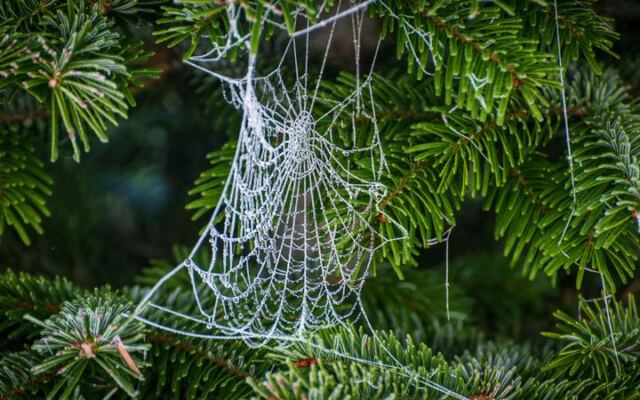
A fresh-cut Christmas tree smells like the woods, and sometimes it brings a little piece of the woods inside with it. Tiny bugs, eggs, and critters can hide in the branches of trees grown on Massachusetts farms.
Most of them are harmless, but a few can be annoying or even cause trouble. A quick check before the tree comes through your door can save you some surprises later.
1. Spruce Spider Mites

Picture a speck smaller than the period at the end of this sentence. Now picture thousands of them.
Spruce spider mites love cool weather, which makes New England evergreens like spruce and fir a favorite hangout.
Once your warm living room wakes them up, they may wander off the tree and leave tiny reddish smudges on walls, curtains, or a white tree skirt. They do not bite people or pets, so there is no need to panic.
To spot them, hold a white sheet of paper under a branch and tap it firmly. If little dots start crawling around, you have mites.
A good shake at the farm, or a pass through a mechanical tree shaker, removes most of them before the drive home.
2. Praying Mantis Egg Cases
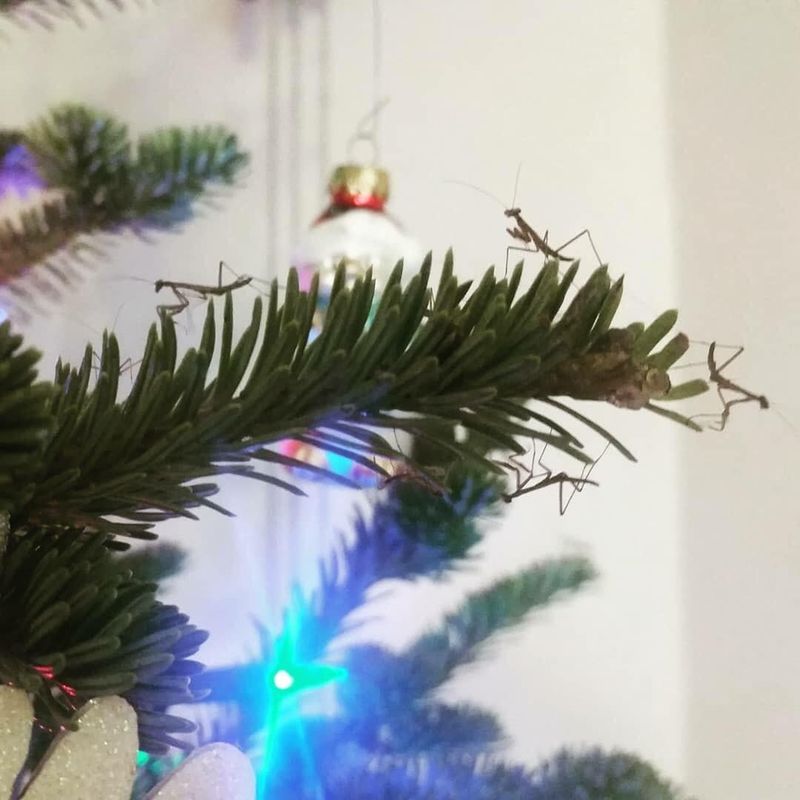
One family in central Massachusetts woke up in January to find dozens of baby praying mantises climbing their ceiling. The culprit was a small, tan, foam-like lump stuck to a branch of their Christmas tree.
Each of those egg cases can hold up to 200 eggs.
Indoors, the warmth tricks the eggs into hatching months early. Sadly, the babies have nothing to eat inside a house, so they usually do not survive.
Look for a walnut-sized, crusty brown mass on the branches. If you find one, snip off the twig and tuck it into a shrub outside.
Mantises are garden helpers that eat pest insects, so giving them a spring start is a nice gift to your yard.
3. Balsam Woolly Adelgids
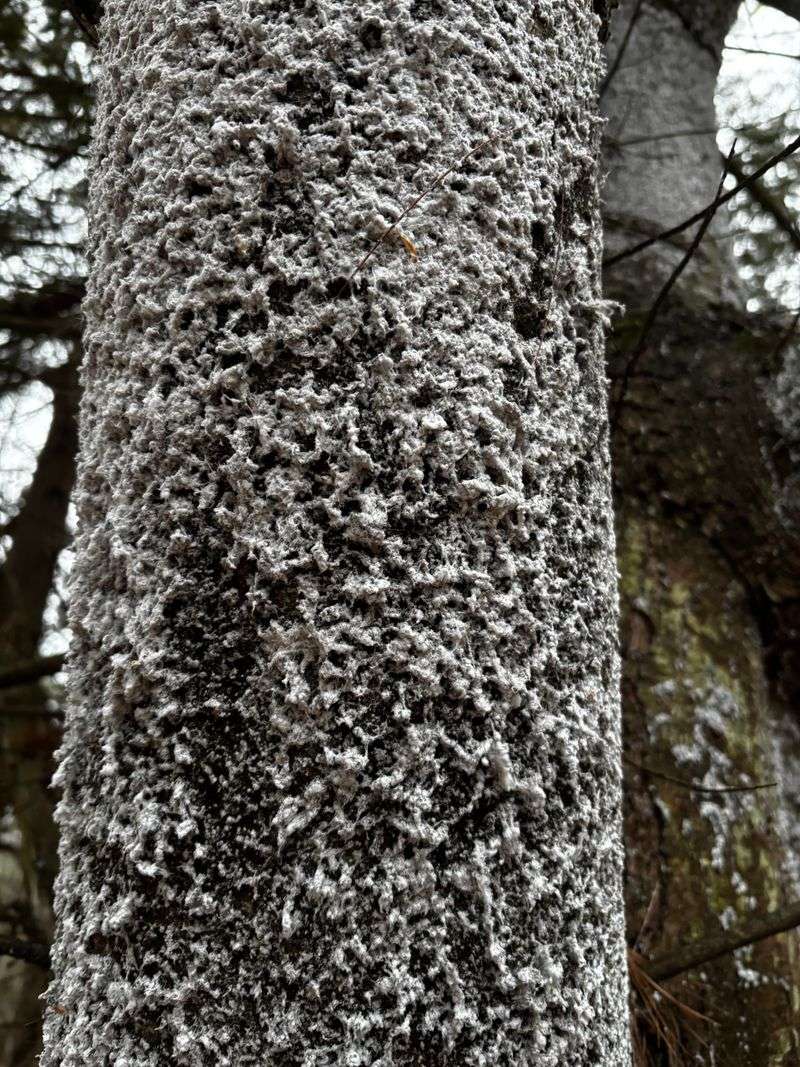
Ever noticed what looks like bits of white fluff or a dusting of snow on the bark that never melts? You may be looking at adelgids, tiny sap-sucking insects that cover themselves in waxy wool for protection.
Balsam fir, a classic Massachusetts holiday pick, is a common target. Inside your home, these bugs are mostly a cosmetic issue.
They will not infest furniture or chase your cat.
Still, heavy fluff can signal a stressed tree that dries out faster and drops needles early. Choose a tree with clean, healthy bark, and you will likely get a fresher tree that lasts through New Year’s.
4. Aphids
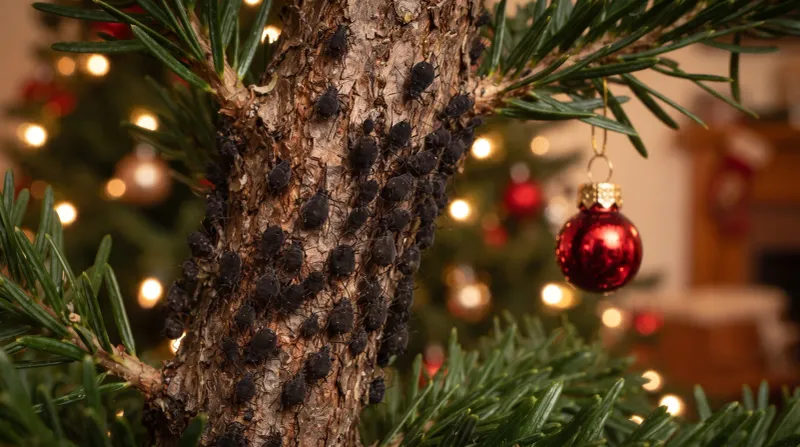
Small, round, and frankly a bit clumsy, aphids are the bugs most people mistake for ticks or spiders. Cinara aphids, the conifer type, are brown or black and can be a little bigger than garden aphids.
Here is the good news. They cannot live long once the tree is cut and moved inside, and they do not harm people.
You might see a few crawling on a windowsill or a gift box, then they fade away within days.
A quick vacuum handles stragglers. Skip bug sprays near the tree, since many are flammable and that is the last thing you want near holiday lights.
5. Bark Beetles
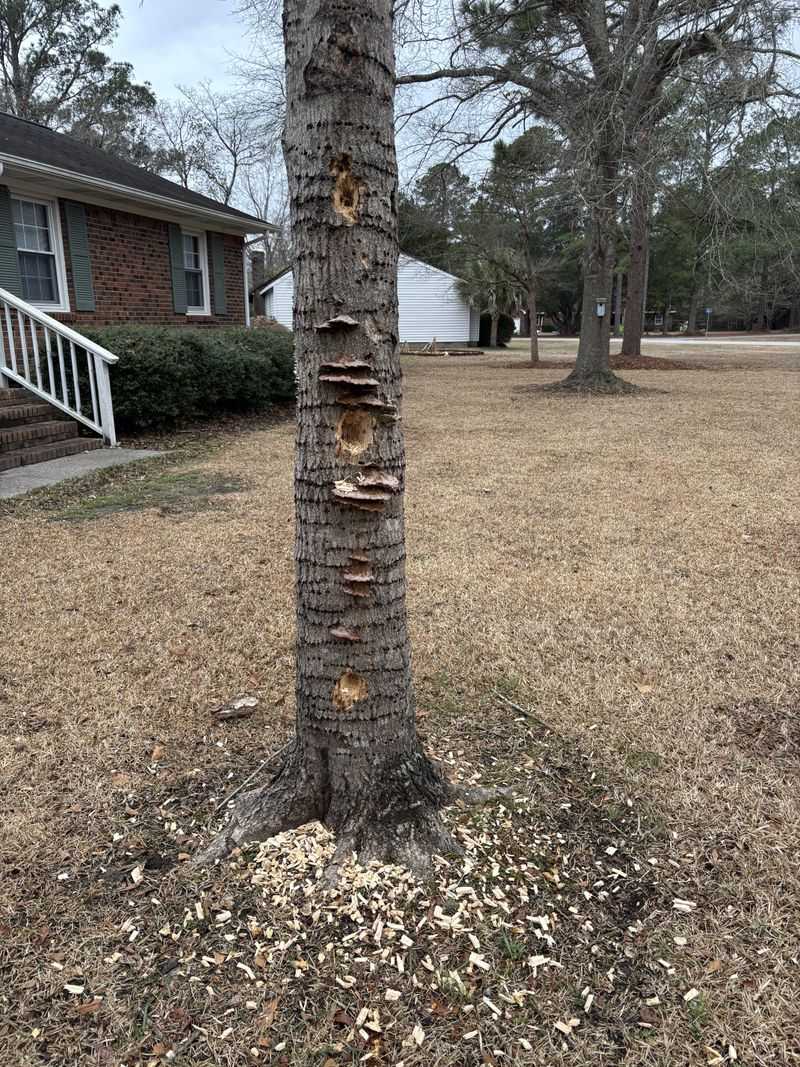
Tiny holes and little piles of sawdust near the trunk tell a story. Bark beetles tunnel under the bark to lay eggs, and the warm indoors can coax a few adults out early.
These beetles are only about the size of a grain of rice. They will not chew your wooden furniture, because they need living or freshly cut tree wood to survive.
When choosing your tree, run your eyes along the trunk. Pass on any tree with lots of pinholes or powdery dust, since beetle damage often means a weaker, drier tree.
A solid, smooth trunk is a sign you picked a winner.
6. Spiders and Overwintering Critters
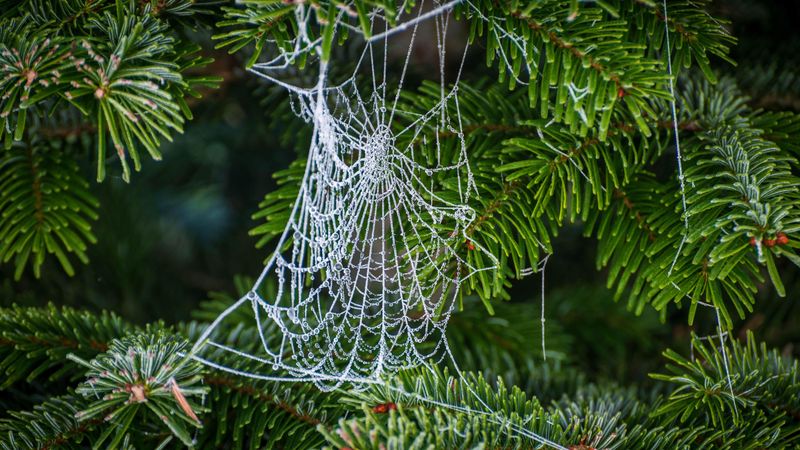
Spiders are the quiet roommates of the evergreen world. They tuck into branches to ride out the cold, and some even arrive as egg sacs that hatch when the tree warms up.
Massachusetts tree spiders are typically small and shy. They are far more interested in eating the other bugs on this list than bothering you.
Every so often, a sleepy ladybug or even a tiny bird nest turns up too.
Fun fact: in Ukraine, there is a legend about spiders decorating a poor family’s tree with webs that turned to silver, which is said to be one origin of tinsel. So if you see a web, consider it a holiday tradition.
Then gently shake the tree outside, let it rest in the garage for a day, and bring it in with confidence.
Share this story