Get the latest garden guides in your inbox →
Gardening Latest
  • General Gardening
  • Lawn Care
  • Plant Care
  • Composting
  • Soil Health
  • Backyard
  • Garden Muse Magazine
  • General Gardening
  • Lawn Care
  • Plant Care
  • Composting
  • Soil Health
  • Backyard
  • Garden Muse Magazine
  • News
  • Gardening Calendar
  • Garden Structures
  • Vegetable Garden
  • Vertical Garden
  • Raised Beds
  • Hydroponics
  • General Equipment
  • Community Gardens
Garden Themes
  • Spiritual Garden
  • Hydroseeding
  • Seeding and Laying Sod
  • Artificial Grass
  • Lawn Care Equipment
  • Plants
  • Trees
  • Planting Tools
  • Composting Basics
  • Fertilizer
  • Alternative Growing Mediums
  • Front Yard
  • Backyard Activities
  • Landscaping
Gardening Latest

Explore by state

Which state is your garden in?

Currently viewing Massachusetts

All states

Northeast

  • Connecticut —
  • Delaware 45
  • Maine —
  • Maryland 31
  • Massachusetts 47
  • New Hampshire —
  • New Jersey 31
  • New York 40
  • Pennsylvania 40
  • Rhode Island —
  • Vermont —

Southeast

  • Alabama 30
  • Arkansas —
  • Florida 31
  • Georgia 31
  • Kentucky 45
  • Louisiana 30
  • Mississippi —
  • North Carolina 29
  • South Carolina 44
  • Tennessee 27
  • Virginia 30
  • West Virginia —

Midwest

  • Illinois 30
  • Indiana 32
  • Iowa 44
  • Kansas —
  • Michigan 31
  • Minnesota 29
  • Missouri 29
  • Nebraska —
  • North Dakota —
  • Ohio 31
  • South Dakota —
  • Wisconsin 45

Southwest

  • Arizona 30
  • Colorado —
  • Nevada —
  • New Mexico —
  • Oklahoma —
  • Texas 29
  • Utah —

West

  • Alaska —
  • California 30
  • Hawaii —
  • Idaho —
  • Montana —
  • Oregon —
  • Washington —
  • Wyoming —

No state matches that search.

Site menu

Gardening Latest
  • General Gardening
    • News
    • Gardening Calendar
    • Garden Structures
    • Vegetable Garden
    • Vertical Garden
    • Raised Beds
    • Hydroponics
    • General Equipment
    • Community Gardens
    Garden Themes
    • Spiritual Garden
  • Lawn Care
    • Hydroseeding
    • Seeding and Laying Sod
    • Artificial Grass
    • Lawn Care Equipment
  • Plant Care
    • Plants
    • Trees
    • Planting Tools
  • Composting
    • Composting Basics
  • Soil Health
    • Fertilizer
    • Alternative Growing Mediums
  • Backyard
    • Front Yard
    • Backyard Activities
    • Landscaping
  • Garden Muse Magazine

Explore

  • About GardeningLatest.com
  • Contact Us

Get the latest from the garden

New guides on lawn care, plants and backyard projects, sent when they go up.

Subscribe →

Follow

  • Facebook
  • X
  • Pinterest
  • YouTube
Massachusetts Gardening

A Fisher Prowling Your Massachusetts Yard After Dark Is Hunting, So Keep Your Cat Inside Tonight

If a fisher is prowling your yard after dark, keep your cat inside tonight.

AT

By Abigail Thatcher

November 28, 2026 · 6 min read

A Fisher Prowling Your Massachusetts Yard After Dark Is Hunting, So Keep Your Cat Inside Tonight

If a fisher is prowling your yard after dark, keep your cat inside tonight. Fishers are predators, and a quiet night indoors is an easy way to take away any chance of a bad meeting.

Just as useful is knowing what a sighting can and cannot tell you, because a lot of what people assume about glowing eyes and single paw prints turns out to be shaky. Here is how to read the clues, and how to protect pets and chickens without panic.

At a glance

Where
Massachusetts Gardening
Hardiness zone
6 −10 to 0°F
Read
6 minutes
Published
November 28, 2026

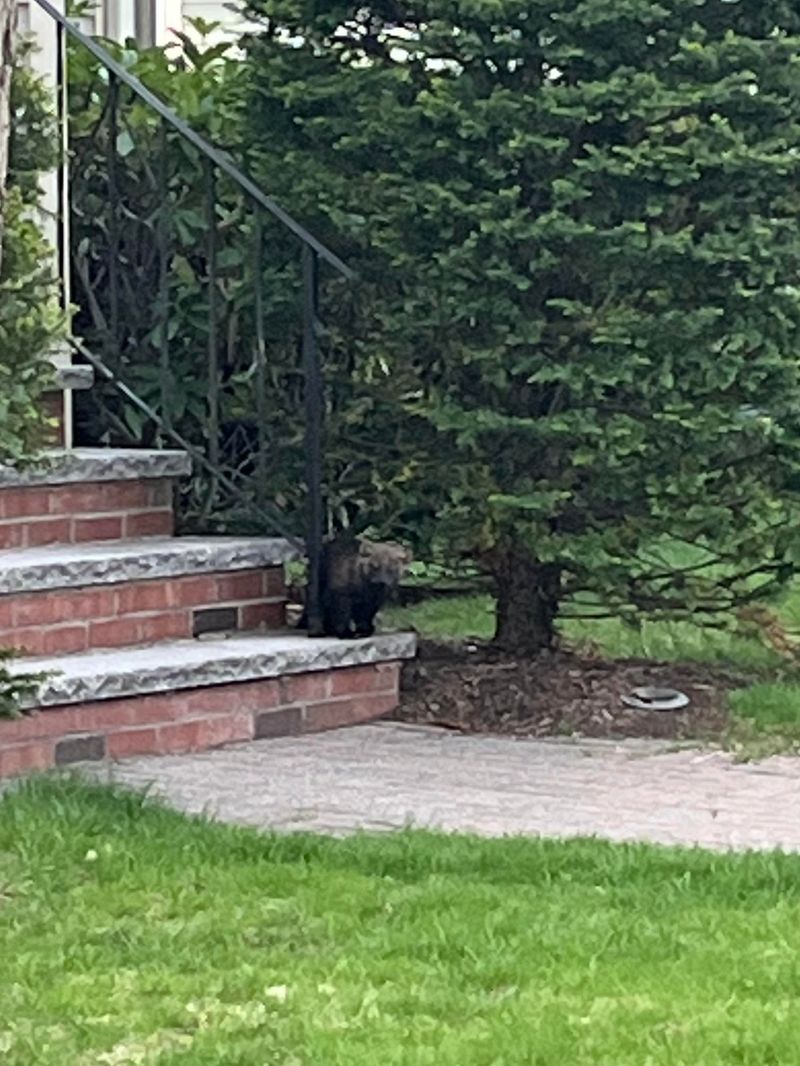
A sighting does not reveal what a fisher is doing
A sighting does not reveal what a fisher is doing
© Reddit

Seeing a fisher and knowing what it is doing are two different things. Fishers are predators, and according to MassWildlife’s fisher guidance, they can take small mammals, poultry, and sometimes domestic cats.

A nighttime sighting, though, does not tell you whether the animal is traveling through, foraging for food, or pursuing prey. A fisher crossing your lawn may simply be on its way to the next patch of woods.

Without more evidence, it is not safe to assign a plan or a target to the animal.

That is why the advice here is about caution rather than alarm. Massachusetts guidance recommends keeping cats indoors as a precaution.

At the same time, MassWildlife’s magazine feature on fishers describes attacks on cats as uncommon.

So a sighting does not mean your cat is in immediate danger. It does make a good reason to bring the cat in for the evening and to check that any poultry are locked up.

Think of it as sensible housekeeping, the same way you would lock a car parked in a busy lot.

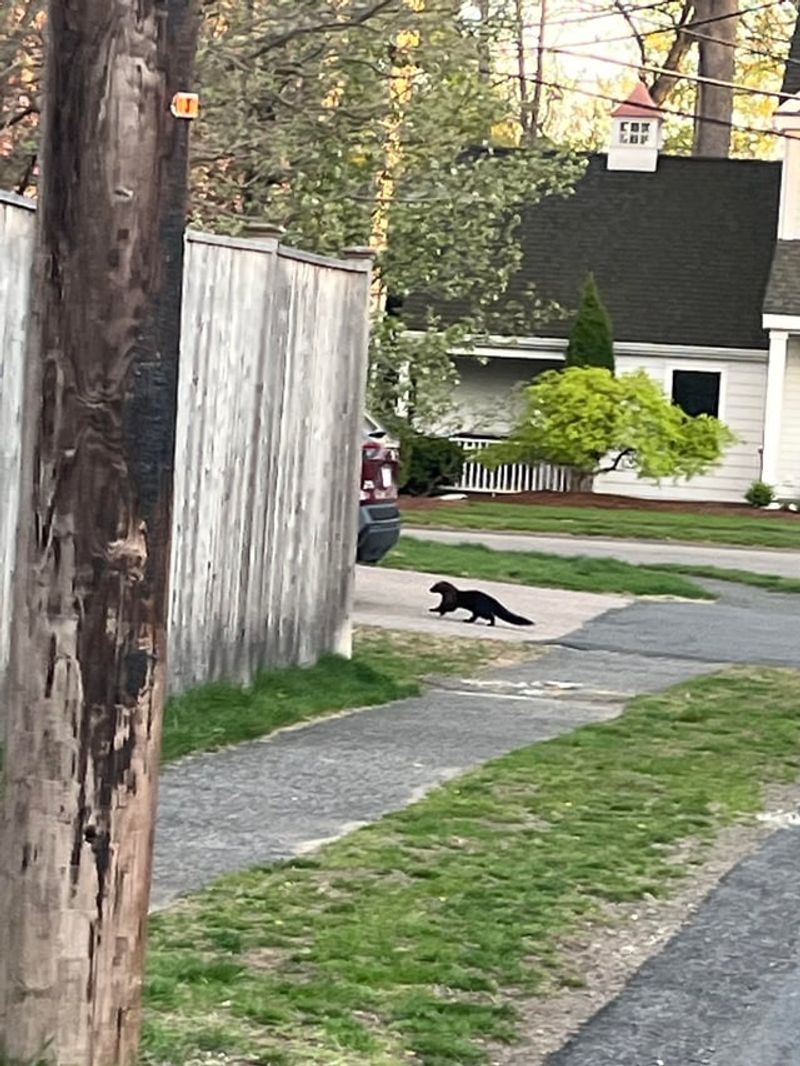
Why fishers visit suburban yards in winter
Why fishers visit suburban yards in winter

Fishers live across Massachusetts, with the exception of Nantucket and Martha’s Vineyard. They use forests, but they also move through wooded neighborhoods, backyards, and the strips of trees between them.

According to the state’s fisher fact sheet, they are active year-round and do not hibernate, so winter does not send them into a den for the season.

Eyeshine is light from your flashlight or porch lamp bouncing back off the animal’s eyes.

Their menu is broad. Fishers eat rodents, squirrels, rabbits, birds, eggs, fruit, and carrion, and they are even known to take porcupines.

Any yard that offers some of those foods, or simply a safe path between wooded patches, can fit into a fisher’s regular travels.

Timing is flexible too. Fishers can be active at any hour, though Massachusetts guidance says they lean toward more daytime activity in winter.

Spotting one in the afternoon snow is not unusual, and spotting one after dark is possible as well.

Put together, a winter sighting in a suburban yard is plausible and not especially strange. It does not tell you why that particular animal was there.

Treat it as a reminder that wildlife shares your neighborhood, and adjust your habits calmly.

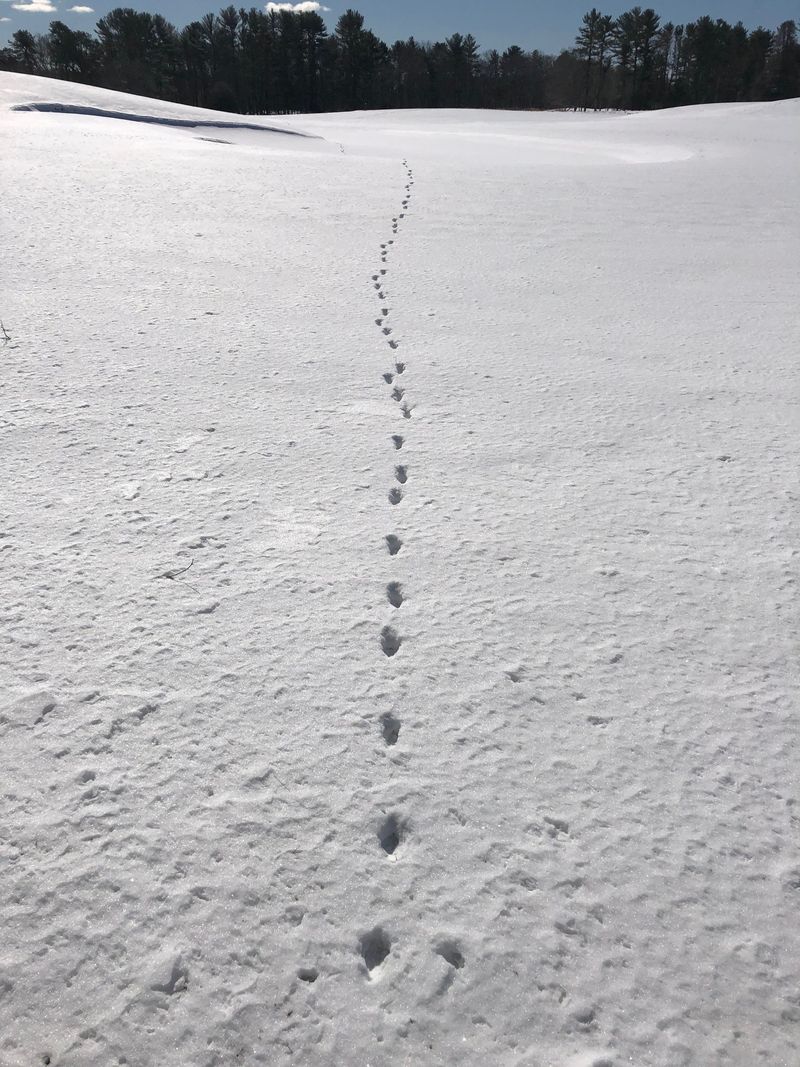
Track patterns matter more than one print
Track patterns matter more than one print
© Small State Big History

Footprints are tempting evidence, but a single print can mislead. Ground conditions change how a track looks, and so does the way the animal was moving.

A print in soft snow can spread out, while one in firm mud may show far less detail.

A better approach is to follow the trail and compare the whole sequence. Look at how the prints are spaced, how they line up, and what details repeat from step to step.

Then compare what you see with MassWildlife’s track guide, which shows fisher, fox, and raccoon prints side by side.

Do not rely on toe count alone. Fishers belong to the weasel family and have five toes, but raccoons and other mammals do too.

So five toes cannot settle the question by itself.

Raccoon prints are often described as hand-like, as noted in MassWildlife’s raccoon fact sheet. That can be a helpful hint, but it will not separate every set of tracks from every other.

Photograph the trail with a coin or ruler for scale, take shots from a few angles, and note the date and ground type. Tracks can be hard to name with confidence, as MassWildlife’s February 2026 update suggests, so being honest about uncertainty is part of good tracking.

Eyeshine cannot identify an animal or its intent

Eyeshine cannot identify an animal or its intent
© OneGreenPlanet

That pair of glowing eyes at the edge of your yard is simple physics. Eyeshine is light from your flashlight or porch lamp bouncing back off the animal’s eyes.

The animal is not producing the glow itself.

Many species show eyeshine, which is explained in a Wisconsin DNR article on the science of eyeshine. Foxes, raccoons, cats, deer, and many other animals can all light up in the dark.

Because so many creatures do it, the glow, and even its color, cannot reliably tell a fisher from a fox or a raccoon.

Eyeshine also says nothing about behavior. A bright pair of eyes does not mean an animal is hunting, stalking, or interested in your pets.

It only means something with eyes was looking toward the light.

If you want to know what visited, use eyeshine as a cue to take a closer look in daylight. Check the area for tracks, note the animal’s size and movement if you can see it clearly, and keep a safe distance.

Do not approach an unknown animal for a better view.

Keep cats indoors and chickens behind secure barriers
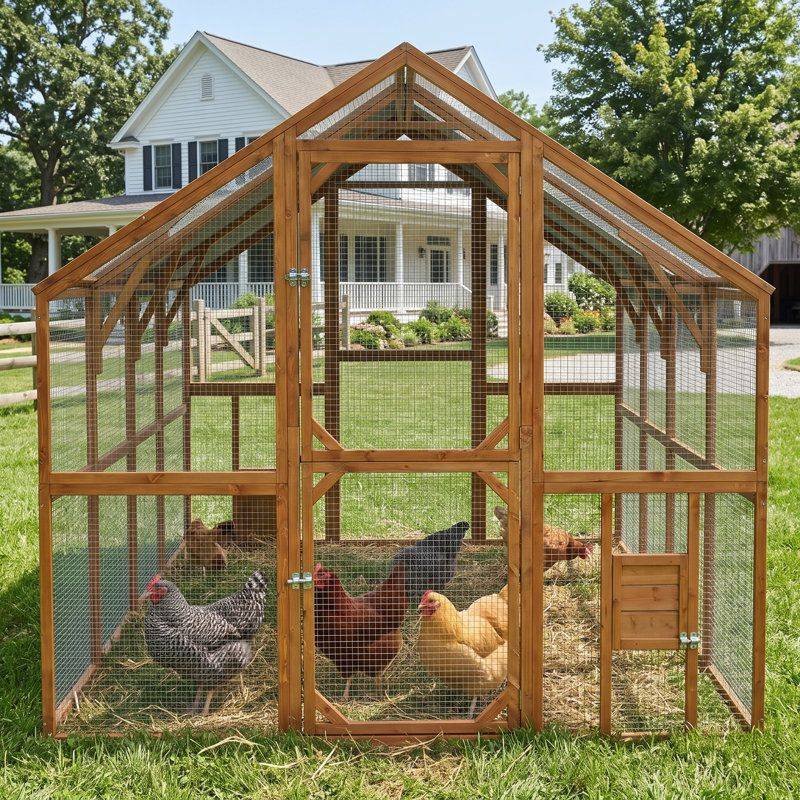
Keep cats indoors and chickens behind secure barriers
© Wayfair

When it comes to prevention, MassWildlife’s advice is direct. Keep cats indoors, and keep poultry in a tightly secured building or hutch, as described in the state’s fisher guidance.

For chickens, the details matter. MassWildlife’s poultry advice points to a sturdy, closed coop with secure fencing.

Chicken wire alone may not keep predators out, so sturdier materials and tight latches are a smarter choice.

Walk the coop with a critical eye. Check for gaps, loose boards, weak hinges, and any spot where wire is only stapled in place.

Close the birds in at dusk, and make a habit of checking the latch each night.

For cats, an evening routine helps. Feed the cat at a regular indoor dinner time so it learns to come home, and offer window perches or play time as a substitute for the outdoors.

These steps lower exposure. They are not proof that a fisher has picked out your pet or flock.

They are the kind of everyday precaution that works against many kinds of risk at once.

Remove food that attracts prey
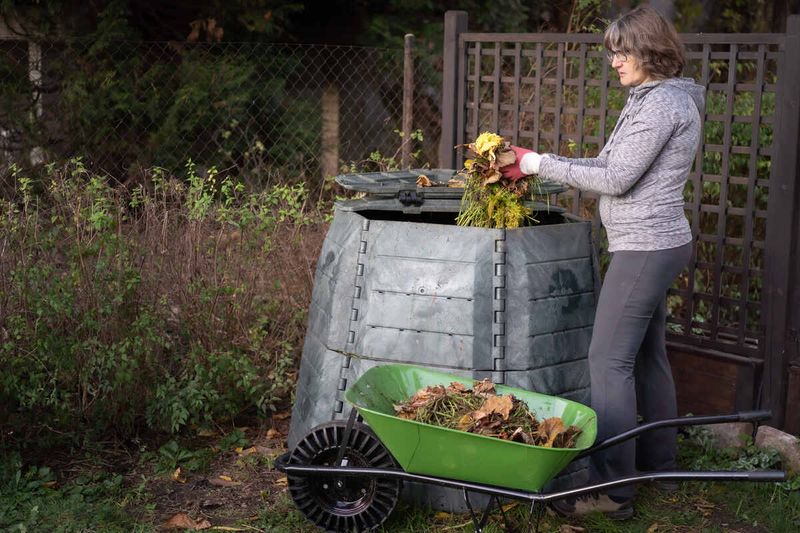
Remove food that attracts prey
© LawnStarter

Fishers often follow the food chain. Spilled birdseed, open garbage, and loose compost draw rodents and squirrels, and as MassWildlife points out in its fisher fact sheet, those animals can in turn attract fishers.

Start with the trash. Use cans with tight, locking lids, and set them out the morning of pickup rather than the night before.

If you compost, choose an enclosed bin and avoid adding meat or greasy scraps.

Next, look at pet food. Feed dogs and cats indoors, or pick up bowls as soon as meals are done.

Store bags of kibble inside the house or in a sealed container in the garage.

Birdseed deserves a sweep too. Sweep up hulls and spilled seed under feeders every few days, and think about using a tray to catch the mess.

If rodents keep showing up, take the feeder down for a while.

These steps reduce what might draw fishers to your yard, but they cannot promise a fisher-free property. Wooded neighborhoods will always see some wildlife passing through.

A tidy yard simply gives the visitors one less reason to linger.

Share this story

AT

Written by

Abigail Thatcher

More from Abigail Thatcher →

About Gardening Latest

Gardening Latest provides in-depth guides to maintaining and enhancing your garden and backyard. Learn how to make the most of the space you have and create a beautiful garden.

More about us →

Latest stories

  • Illinois GardeningDeer Are Rubbing Their Antlers on Your Illinois Saplings Right Now, and Here’s How to Save Them

    Deer Are Rubbing Their Antlers on Your Illinois Saplings Right Now, and Here’s How to Save Them

    3 min ago
  • Louisiana GardeningLouisiana’s Venomous Critters Are Hiding In Your Yard, And Fall Is When They Come Out

    Louisiana’s Venomous Critters Are Hiding In Your Yard, And Fall Is When They Come Out

    9 min ago
  • Delaware GardeningDelaware Bucks Are Shedding Their Antlers Soon, and Picking One Up in the Woods Is Perfectly Legal

    Delaware Bucks Are Shedding Their Antlers Soon, and Picking One Up in the Woods Is Perfectly Legal

    15 min ago
  • South Carolina GardeningSpotted a Big Black Snake Sunning on Your South Carolina Porch Steps This Winter? Here’s Which One It Is

    Spotted a Big Black Snake Sunning on Your South Carolina Porch Steps This Winter? Here’s Which One It Is

    23 min ago
  • Kentucky GardeningThat Loud Drumming on Your Kentucky Gutters at Dawn Is a Woodpecker Claiming Its Territory

    That Loud Drumming on Your Kentucky Gutters at Dawn Is a Woodpecker Claiming Its Territory

    29 min ago

Gardening by state

Stories for your state, and the hardiness zone most of it gardens in.

Keep exploring

Read next

All Massachusetts Gardening →
Massachusetts GardeningWhen Your Neighbor’s Tree Hangs Over Your Yard, This Is What Massachusetts Law Actually Says
Massachusetts Gardening

When Your Neighbor’s Tree Hangs Over Your Yard, This Is What Massachusetts Law Actually Says

1 hr ago
Massachusetts GardeningThat Tiny Moth Fluttering at Your Massachusetts Porch Light in December Is Bad News for Your Maple Trees
Massachusetts Gardening

That Tiny Moth Fluttering at Your Massachusetts Porch Light in December Is Bad News for Your Maple Trees

3 hr ago
Massachusetts GardeningBefore You Bring a Fresh-Cut Christmas Tree Into Your Massachusetts Home, Check It for These Six Hitchhikers
Massachusetts Gardening

Before You Bring a Fresh-Cut Christmas Tree Into Your Massachusetts Home, Check It for These Six Hitchhikers

10 hr ago

More from Massachusetts Gardening

  • Raking Leaves in Massachusetts? Here’s What We Know About the Northern Short-Tailed Shrew’s Venom

    Nov 27
  • Spotted a Giant Flower Spike in Your Massachusetts Rhubarb Patch? Here’s What It Means and Whether to Cut It

    Nov 26
Back to top

Leave a response Cancel

Your email address stays private. Required fields are marked with an asterisk.

Gardening Latest

In-depth guides to maintaining and enhancing your garden and backyard: how to make the most of the space you have, and how to make it beautiful.

  • Facebook
  • X
  • Pinterest
  • YouTube

We may earn a portion of sales from products or services that are purchased through our site as part of our affiliate partnerships with retailers.

Explore

  • About GardeningLatest.com
  • Contact Us
  • Terms and Conditions
  • Privacy
  • Editorial Note:
  • FTC Disclosure

Newsletter

New garden guides and seasonal tips, straight to your inbox.

We’ll email you a link to confirm. Unsubscribe any time.

Almost there! Check your inbox and tap the link to confirm.

© 2026 Gardening Latest. All rights reserved.

Back to top