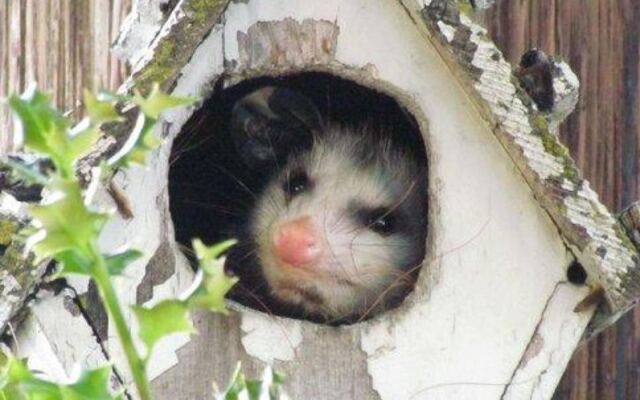
Opossums do use dry, sheltered spots around California homes, and a deck, porch, or shed can fit the bill. Rain may be one of the situations that makes such a space attractive, though nobody has shown it to be the cause.
Knowing how to respond keeps you, your pets, and the animal safer. A few calm steps can make your yard less inviting without turning a quiet visitor into a crisis.
Opossums use shelter around homes
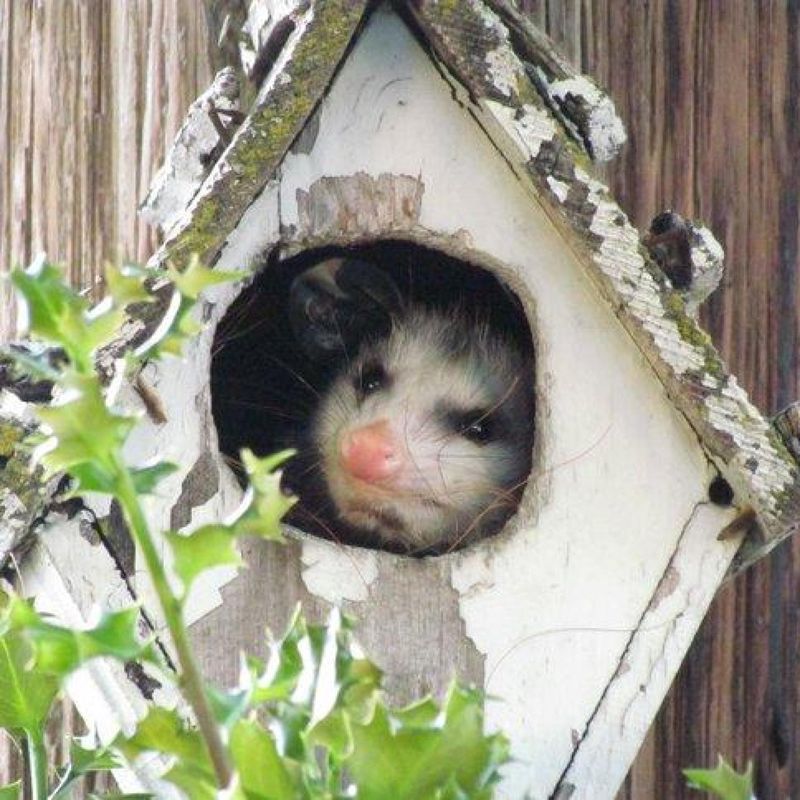
Spotting a gray-faced, pink-nosed animal under your porch can be a surprise. Opossums are comfortable in many kinds of cover, and California’s wildlife habitat account notes that they use buildings along with other shelter.
Brush piles, burrows dug by other animals, and human-made structures can all serve as dens.
That means a gap under a deck, porch, shed, or building may simply look like a ready-made den site. Opossums are nocturnal, so you will most often notice them after dark, and they may switch between several resting places instead of staying put.
UC IPM also describes opossums denning around homes, so this is a documented pattern and not a rare oddity.
One detail surprises many Californians: the Virginia opossum is not native to the state. According to the California Department of Fish and Wildlife, it was introduced, and it has since settled into many neighborhoods.
A single sighting does not call for an emergency response. An opossum walking across the lawn at night or resting under a structure is usually just looking for food and cover.
The sections ahead explain how to make your property less appealing, how to check whether a space is occupied, and when to call for help.
What winter rain can tell you about an opossum
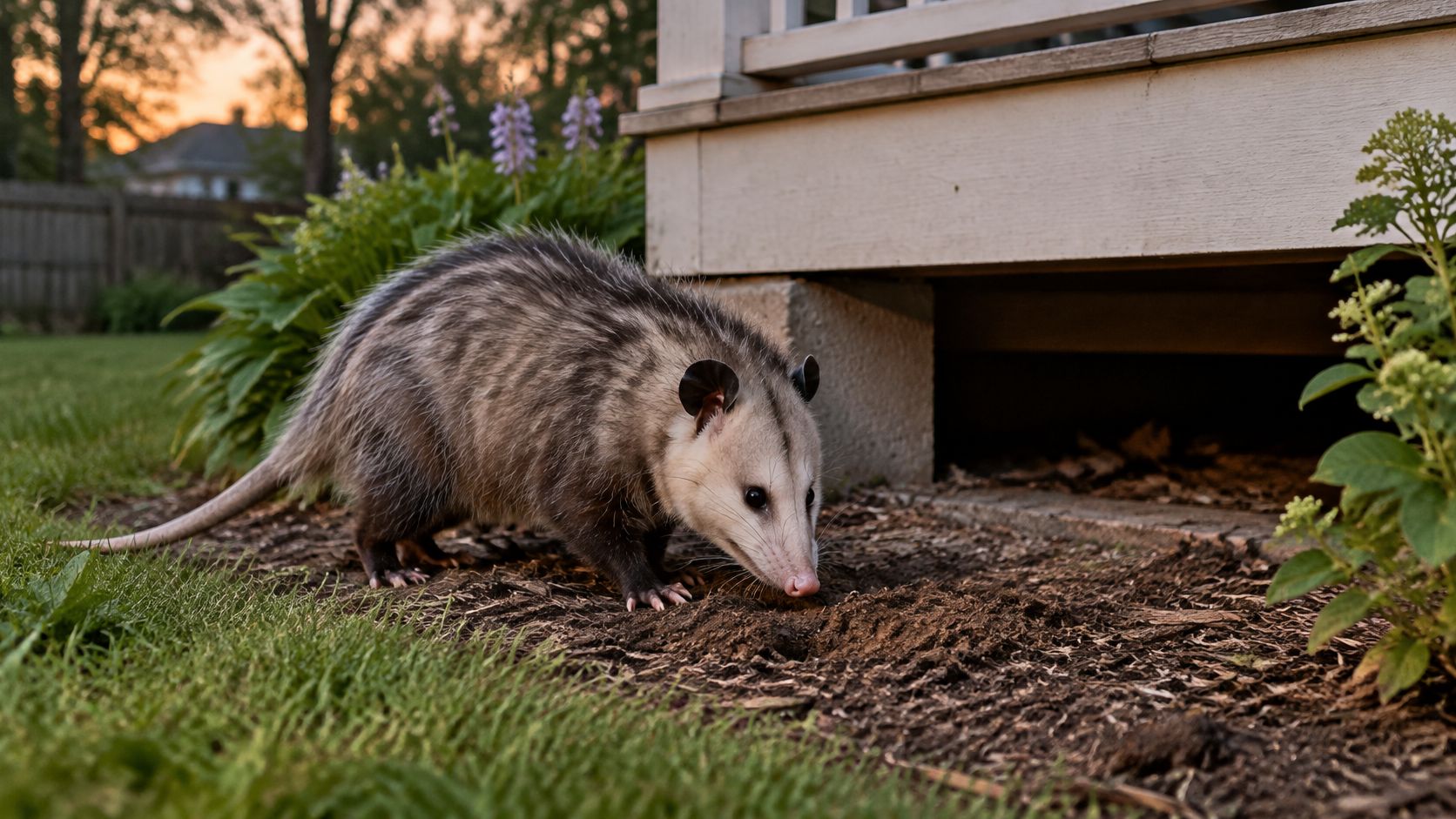
Rain makes a nice story, but the sources tell a more careful one. California’s life-history account for the Virginia opossum documents shelter use and also says activity is lower in winter.
Lower activity is not the same as disappearing, and it is not a sign that more animals are heading for houses.
Nothing in the sources shows that rain pushes opossums toward homes or that sightings jump in a predictable wave when storms arrive. Rain may be one circumstance in which an animal uses a space that is already open and dry.
If a gap under your deck exists, a wet night is simply one more reason it might get used.
That gives you a practical way to read a sighting. Skip the question of whether the weather brought the animal and ask whether it is using a structure on your property.
Look for signs such as a worn path to an opening, disturbed soil, or droppings near a crawl space.
UC IPM guidance focuses on the same things: denning spots, food sources, and openings. Those are the parts you can change.
Whether it is raining or not, fixing them will do more than waiting for the weather to clear.
Reduce food and clutter in the yard
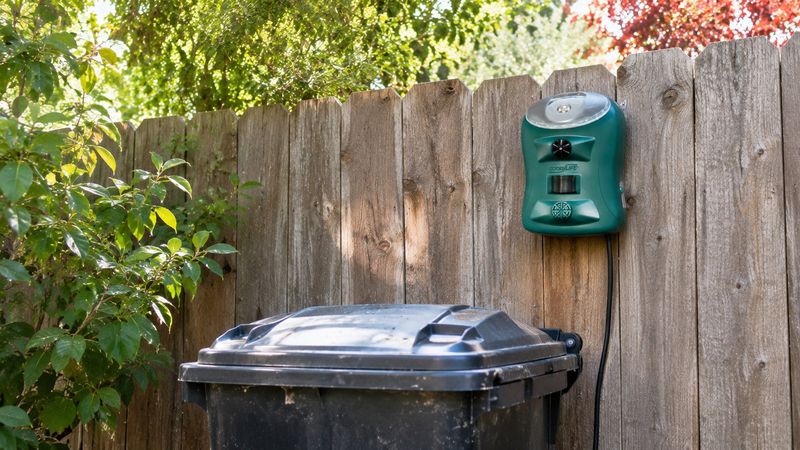
Food and cover are what make a yard worth visiting. UC IPM recommends securing garbage and compost, bringing pet food inside at night, and picking up fallen fruit.
Tidying piles of lumber, vegetation, and debris also removes places where an animal could rest.
Think of these steps as lowering the odds, not locking the gate. An opossum may still wander through, and it may not leave right away.
But a yard with fewer snacks and fewer hiding spots offers less reason to linger.
Pets deserve extra attention after dark. California public-health guidance, in a guide to vertebrates of public health importance, says to keep pets away from opossums and not to pick them up.
Bringing cats and dogs inside overnight is a simple way to avoid a confrontation.
Skip the home remedies. UC IPM says mothballs and ammonia are not legal or recommended for this use, and it warns against rodent poison, which can harm opossums and other animals.
Clutter control and secured food are safer and more useful.
You may also hear that opossums eat thousands of ticks and so protect your yard. A peer-reviewed study re-examined that estimate and questioned its basis.
It is not a good reason to attract or feed an opossum.
Check that the space is empty before sealing it
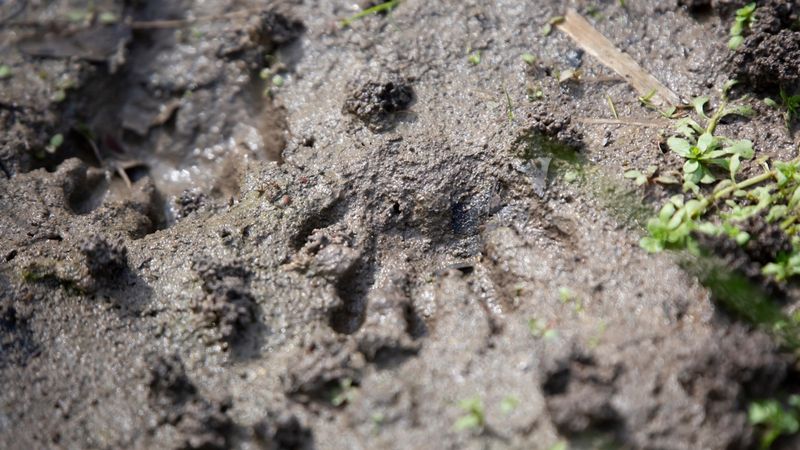
Closing the hole right away may feel like the quickest fix, but it can trap an animal inside. First confirm the animal has left.
Sealing an occupied space can lead to a stressed animal, damage to your structure, and a much bigger problem than the one you started with.
UC IPM describes a tracking patch for checking activity. Smooth a thin layer of soil, sand, or flour across the entrance so that any animal passing through leaves footprints.
Check it each morning and evening, and smooth it again after reading the tracks.
If the patch stays clear for several days, the animal is probably no longer using the space. If tracks keep appearing, it is still active, and you should wait and keep watching before doing anything else.
The next section covers young and local rules, which matter before any exclusion work.
Once you are confident the space is empty, screen the opening with hardware cloth, a sturdy wire mesh. Fasten it firmly over vents, gaps, and crawl space openings.
Where it is feasible, bury the mesh in the ground so an animal cannot simply dig under it.
Stay patient and keep it simple: watch first, confirm second, seal last. A sturdy screen that goes up after the animal has left lasts longer and avoids harm to anyone.
Check for young and local restrictions before removal
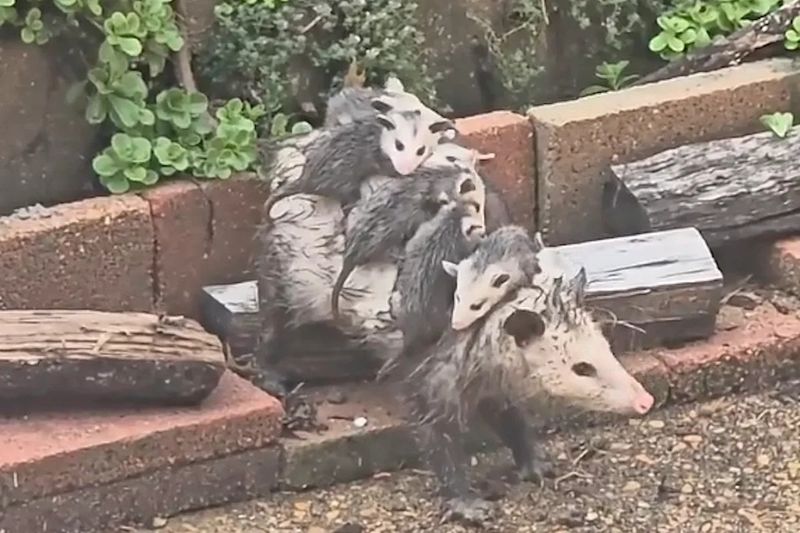
Before any sealing, look carefully for young. Babies can ride in the mother’s pouch or cling to her back, so an animal that looks alone may not be.
California’s life-history account reports breeding and litter peaks in January to March and May to July, which means young may be present at many times of year, including winter.
If young might be present, consult a wildlife professional. CDFW’s guidance on skunks and opossums is a good place to learn how these animals raise their young.
Separating a mother from her babies can be harmful to both, so it is better to get expert advice than to guess.
Rules matter here too. CDFW says wildlife cannot be trapped and released elsewhere, so relocation is not a legal shortcut in California.
Trapping is not a simple do-it-yourself job either.
UC IPM advises checking municipal or county restrictions before any removal. A quick call to your city or county animal services can tell you what is allowed locally.
A licensed wildlife professional can also handle the work legally and with care.
Waiting a little costs little. If young are possible, a short delay and a phone call protect the animals and keep you on the right side of the rules.
Keep your distance and get help after an injury or bite
Seeing an opossum near your home does not mean it is sick or dangerous. Most are just passing through for food or cover.
Even so, it is wise not to approach, touch, or let pets confront one, since any wild animal may bite if it feels cornered.
Do not handle an animal that looks sick or injured either. Signs might include staggering, lying still in daylight, or visible wounds.
Call local animal control or a wildlife rehabilitator, who have the training and gear to help. California’s public-health guide says not to pick up opossums and to keep pets away.
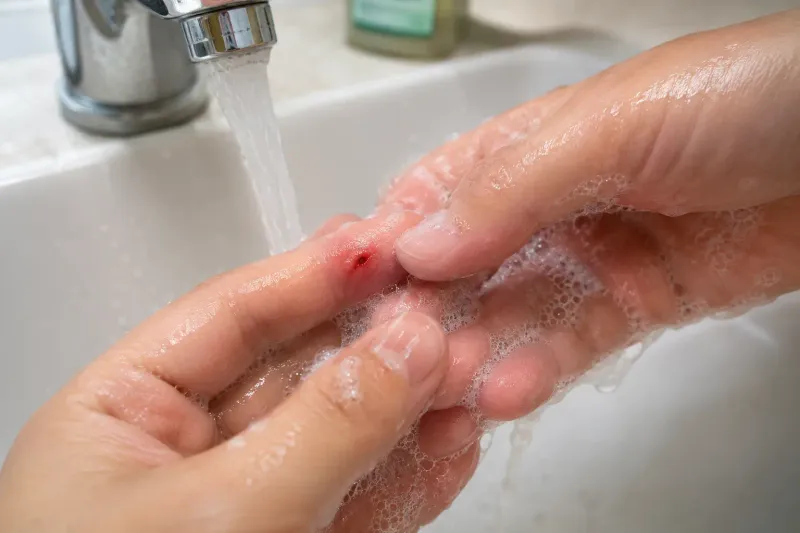
If a person is bitten, wash the wound promptly with soap and water. Then seek medical or public-health advice about rabies risk, using CDC guidance on when to seek care.
The same goes for saliva that touches a scratch, broken skin, or the eyes, nose, or mouth.
You may hear that opossums cannot get rabies. That is too simple to rely on.
The California Department of Public Health identifies bats and skunks as the animals most often found with rabies in the state, but that does not make a bite risk-free. Let a medical professional decide.
Most opossum visits end quietly with the animal wandering off before sunrise. Give it room, and it will usually give you the same.
Share this story