Get the latest garden guides in your inbox →
Gardening Latest
  • General Gardening
  • Lawn Care
  • Plant Care
  • Composting
  • Soil Health
  • Backyard
  • Garden Muse Magazine
  • General Gardening
  • Lawn Care
  • Plant Care
  • Composting
  • Soil Health
  • Backyard
  • Garden Muse Magazine
  • News
  • Gardening Calendar
  • Garden Structures
  • Vegetable Garden
  • Vertical Garden
  • Raised Beds
  • Hydroponics
  • General Equipment
  • Community Gardens
Garden Themes
  • Spiritual Garden
  • Hydroseeding
  • Seeding and Laying Sod
  • Artificial Grass
  • Lawn Care Equipment
  • Plants
  • Trees
  • Planting Tools
  • Composting Basics
  • Fertilizer
  • Alternative Growing Mediums
  • Front Yard
  • Backyard Activities
  • Landscaping
Gardening Latest

Explore by state

Which state is your garden in?

Currently viewing Wisconsin

All states

Northeast

  • Connecticut —
  • Delaware 45
  • Maine —
  • Maryland 31
  • Massachusetts 47
  • New Hampshire —
  • New Jersey 31
  • New York 40
  • Pennsylvania 40
  • Rhode Island —
  • Vermont —

Southeast

  • Alabama 31
  • Arkansas —
  • Florida 31
  • Georgia 31
  • Kentucky 45
  • Louisiana 30
  • Mississippi —
  • North Carolina 29
  • South Carolina 44
  • Tennessee 28
  • Virginia 30
  • West Virginia —

Midwest

  • Illinois 30
  • Indiana 32
  • Iowa 44
  • Kansas —
  • Michigan 31
  • Minnesota 30
  • Missouri 30
  • Nebraska —
  • North Dakota —
  • Ohio 31
  • South Dakota —
  • Wisconsin 46

Southwest

  • Arizona 31
  • Colorado —
  • Nevada —
  • New Mexico —
  • Oklahoma —
  • Texas 30
  • Utah —

West

  • Alaska —
  • California 30
  • Hawaii —
  • Idaho —
  • Montana —
  • Oregon —
  • Washington —
  • Wyoming —

No state matches that search.

Site menu

Gardening Latest
  • General Gardening
    • News
    • Gardening Calendar
    • Garden Structures
    • Vegetable Garden
    • Vertical Garden
    • Raised Beds
    • Hydroponics
    • General Equipment
    • Community Gardens
    Garden Themes
    • Spiritual Garden
  • Lawn Care
    • Hydroseeding
    • Seeding and Laying Sod
    • Artificial Grass
    • Lawn Care Equipment
  • Plant Care
    • Plants
    • Trees
    • Planting Tools
  • Composting
    • Composting Basics
  • Soil Health
    • Fertilizer
    • Alternative Growing Mediums
  • Backyard
    • Front Yard
    • Backyard Activities
    • Landscaping
  • Garden Muse Magazine

Explore

  • About GardeningLatest.com
  • Contact Us

Get the latest from the garden

New guides on lawn care, plants and backyard projects, sent when they go up.

Subscribe →

Follow

  • Facebook
  • X
  • Pinterest
  • YouTube
Wisconsin Gardening

Woke Up to Deep Holes Dug Through Your Wisconsin Snow? A Skunk Was Hunting Grubs Under It

Small, shallow, cone-shaped holes poking through a snowy Wisconsin lawn often point to a skunk looking for food.

HB

By Heidi Brandt

November 29, 2026 · 6 min read

Woke Up to Deep Holes Dug Through Your Wisconsin Snow? A Skunk Was Hunting Grubs Under It

Small, shallow, cone-shaped holes poking through a snowy Wisconsin lawn often point to a skunk looking for food. Skunks are a common suspect, and the holes they leave are easy to spot once you know what to look for.

A few simple clues, like hole shape and tracks, can help you decide how likely that is. Getting it right can save you from buying lawn products you may not need.

At a glance

Where
Wisconsin Gardening
Hardiness zone
5 −20 to −10°F
Read
6 minutes
Published
November 29, 2026

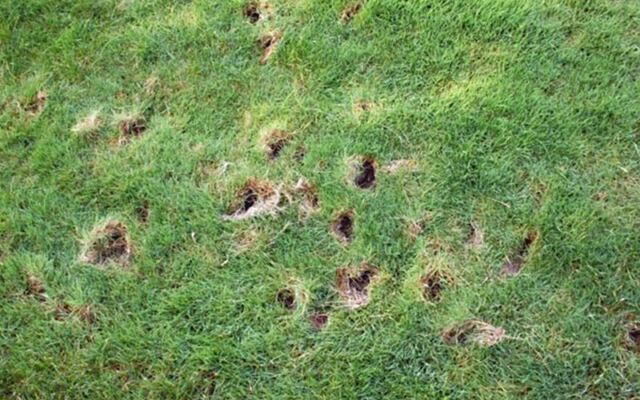
Small, cone-shaped holes point toward a skunk
Small, cone-shaped holes point toward a skunk
© UMD Extension – University of Maryland

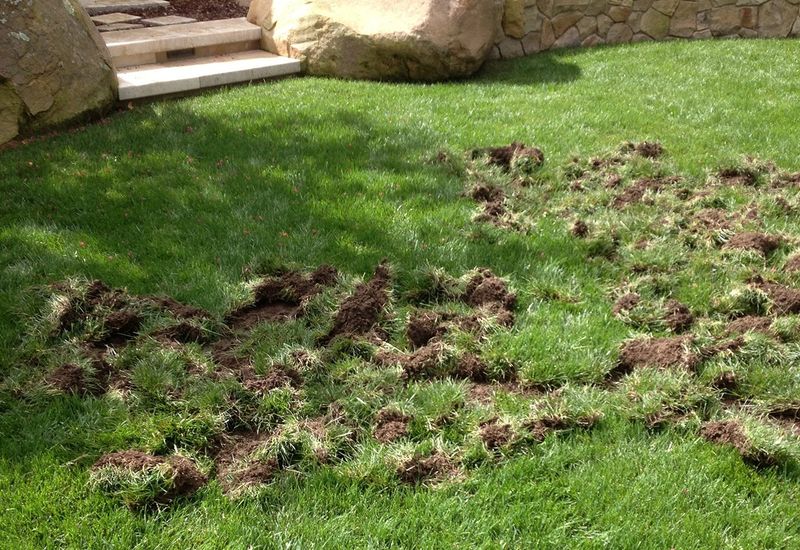
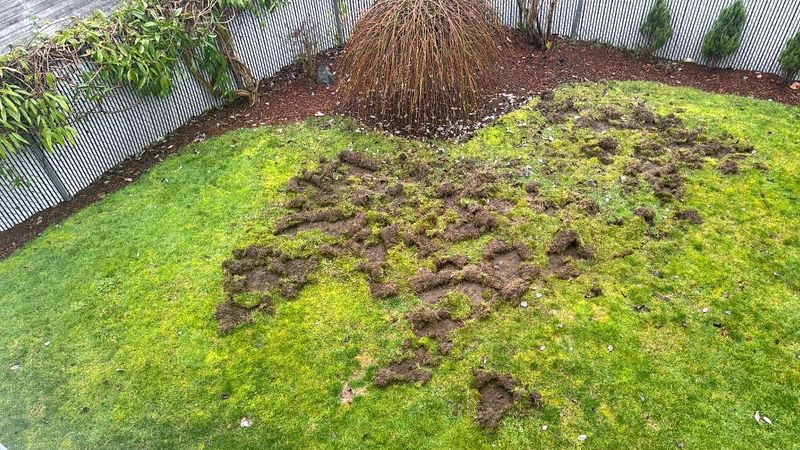
Picture a lawn that has just come out from under snow or a thaw. Scattered across it are small, shallow holes, and here and there a little flap of sod has been rolled back like a rug corner.

That pattern is what many Wisconsin homeowners notice first.

According to UW-Madison Extension’s skunk guide, typical skunk foraging holes are about 2 to 3 inches across and cone-shaped. Skunks may also dig or roll up small pieces of sod while searching for grubs.

The holes tend to be scattered rather than one big torn-up patch.

Penn State Extension describes something similar, with holes or patches of upturned earth up to 3 to 4 inches wide. Two universities describing the same general look gives you a reasonable starting point.

Still, shape is a clue and not a test. Small cone-shaped holes make a skunk a reasonable explanation, but they do not confirm one.

Before settling on an answer, look around for other signs, such as tracks nearby, the pattern of the damage across the yard, and whether the holes seem fresh.

Take a few photos and measure a handful of holes with a ruler. Notes like these will help you compare what you see with the other clues covered next.

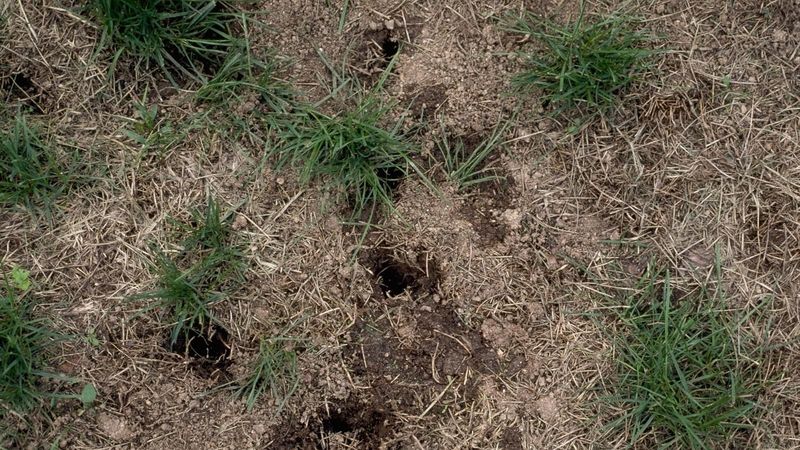
What tracks can tell you
What tracks can tell you
© Deschutes Land Trust

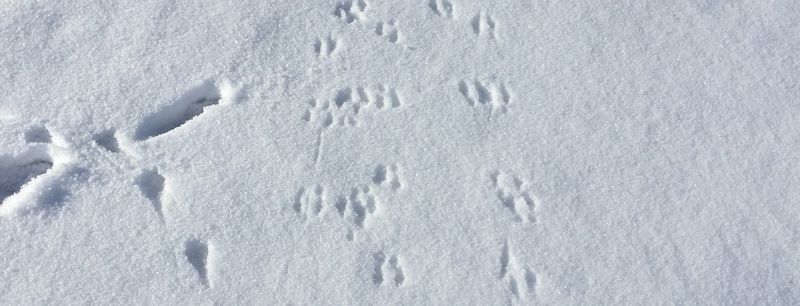
Tracks can add a useful clue, but only if you look at more than one. A single smudged print in snow rarely tells the whole story.

Walk the edges of the damaged area and look for a trail that leads to and from the holes.

UW-Madison Extension says a few grubs are common in Wisconsin lawns and usually cause no noticeable damage.

Wisconsin guidance in the UW skunk guide says skunk tracks show five toes with visible claw marks. The Wisconsin EEK striped skunk page also describes a distinct, angled walking pattern.

Check whether several prints and the trail line up with that description.

Snow conditions can blur things. Melting, drifting, or a crusty surface can leave partial impressions that look like almost anything.

If the signs stay unclear, Michigan DNR notes that a camera can help show which animal is visiting.

Keep your distance while you investigate. Watch from a window or a safe spot, and never approach or handle a skunk.

The Wisconsin DNR lists skunks as a main rabies carrier in the state, though that does not mean any one skunk has rabies.

If a person is bitten, scratched, or gets fresh saliva in an open wound or on a mucous membrane, wash the area and contact a health department promptly. If a pet may have had contact, call your veterinarian for advice.

Winter signs don’t show when holes formed
Winter signs don't show when holes formed
© LawnSavers

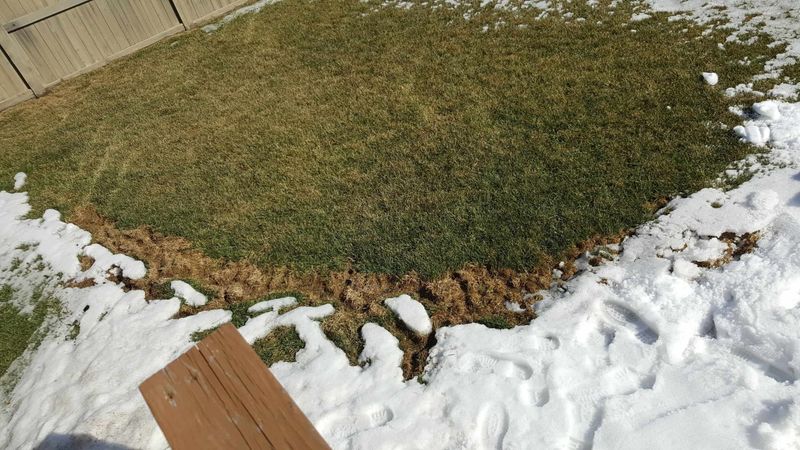
Finding holes when you step outside in the morning feels like a clear story: something dug overnight. But the holes tell you only that they exist.

They do not show when they formed, and they do not prove an animal dug through the snow.

Holes noticed after snow cover or a thaw may have been dug before the snow fell, or while the ground was bare during a mild spell. Digging seen under snow is a different thing, and that would need to be actually observed.

Without that, treat the timing as unknown.

Skunks also do not forage nonstop in winter. The Wisconsin EEK page says they stay in dens during most of winter.

They do not truly hibernate, and the UW skunk guide says they are less active in the cold and sometimes venture out for food.

That same guide says skunks mainly eat small mammals and carrion in winter. So a hole in the lawn does not reveal a meal of grubs.

Skunks eat many foods, and a dug spot could mean something else.

Other animals muddy the picture too. Maryland Extension cautions against assuming abundant grubs explain animal digging, and raccoons, turkeys, and crows can also tear up turf while foraging.

If your clues do not agree, it is fine to say the culprit is still uncertain.

Confirm grubs before treating
Confirm grubs before treating
© KnowTheYard

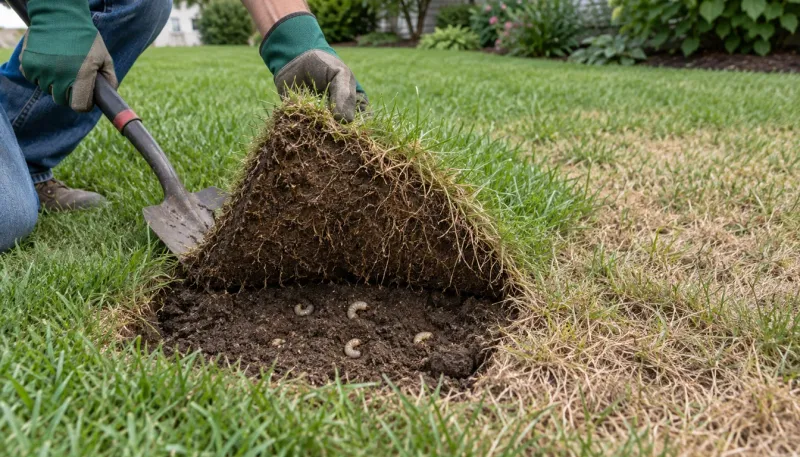
When the snow is gone and the soil softens, you can check for yourself. Peel back a small piece of damaged turf and look in the top few inches of soil.

Do the same in a spot that looks healthy so you have something to compare.

Finding a few grubs should not alarm you. UW-Madison Extension says a few grubs are common in Wisconsin lawns and usually cause no noticeable damage.

It advises treatment only where high populations or damage justify it, and says most Wisconsin lawns do not need grub treatments.

That means animal digging alone is not a reason to reach for an insecticide. Holes do not prove grubs are there, and a treatment will not necessarily stop the digging.

Animals may keep visiting for other foods.

If you do find enough grubs or real turf damage to consider a product, the right choice depends on the grub species and the timing. Read and follow the label directions closely.

Some grub-control insecticides also pose risks to bees and other pollinators, which is one more reason to confirm the problem first.

If you are unsure what you found, your local UW-Madison Division of Extension office can help you identify the grubs and decide on next steps.

Repair damaged patches as needed in spring
Repair damaged patches as needed in spring
© Good Nature Organic Lawn Care

Once the snow melts, walk the yard and see how much damage there really is. Small holes and flipped sod often look worse than they are.

Many spots can be pressed back into place or filled with a little soil.

For damaged areas that need help, UW-Madison Extension advises reseeding as needed. You do not have to treat every dent as a disaster, and there is no reason to assume every patch will die.

Bigger bare spots take a bit more work. UW lawn-repair guidance recommends working up the soil before reseeding larger damaged areas.

Loosening the surface gives new seed better contact with the ground.

Let the amount of visible damage guide your effort. A lawn with a few scattered holes needs touch-ups, not replacement.

Reseed where grass is actually thin or missing, and leave healthy turf alone.

Put the clues together before you act
Put the clues together before you act
© Ecohome

Think of the holes as one clue among several. Compare their shape with more than one set of tracks, set up a camera if the animal is still a mystery, and check the turf before choosing any response.

A skunk can be a fair guess, but the signs cannot tell you when the holes formed or what the animal ate. Hold that guess loosely, and let what you actually find in the soil decide your next step.

A lawn full of holes is a puzzle, not a verdict.

Share this story
HB

Written by

Heidi Brandt

More from Heidi Brandt →

About Gardening Latest

Gardening Latest provides in-depth guides to maintaining and enhancing your garden and backyard. Learn how to make the most of the space you have and create a beautiful garden.

More about us →

Latest stories

  • Arizona GardeningFound A Gopher Snake In Your Arizona Yard? Here’s Why You’ll Want It To Stay

    Found A Gopher Snake In Your Arizona Yard? Here’s Why You’ll Want It To Stay

    11 min ago
  • Texas GardeningTexas Has Venomous Critters Living Right In Your Yard, And Fall Brings Them Out Of Hiding

    Texas Has Venomous Critters Living Right In Your Yard, And Fall Brings Them Out Of Hiding

    16 min ago
  • Missouri GardeningIf Your Missouri Woodpile Sits Against the House, You’re Inviting Brown Recluses Indoors This Winter

    If Your Missouri Woodpile Sits Against the House, You’re Inviting Brown Recluses Indoors This Winter

    33 min ago
  • Tennessee GardeningBefore You Dig In, Here’s How To Recognize Every Venomous Creature Sharing Your Tennessee Yard

    Before You Dig In, Here’s How To Recognize Every Venomous Creature Sharing Your Tennessee Yard

    39 min ago
  • Alabama GardeningThat Burning Saddleback Caterpillar Sting in Your Alabama Garden Calls for These Steps Right Away

    That Burning Saddleback Caterpillar Sting in Your Alabama Garden Calls for These Steps Right Away

    45 min ago

Gardening by state

Stories for your state, and the hardiness zone most of it gardens in.

Keep exploring

Read next

All Wisconsin Gardening →
Wisconsin GardeningWinter Flies on a Wisconsin Windowsill: Could They Be Cluster Flies?
Wisconsin Gardening

Winter Flies on a Wisconsin Windowsill: Could They Be Cluster Flies?

2 hr ago
Wisconsin GardeningWisconsin Law Says Whether You Can Shoot or Trap the Raccoon Wrecking Your Yard This Winter
Wisconsin Gardening

Wisconsin Law Says Whether You Can Shoot or Trap the Raccoon Wrecking Your Yard This Winter

6 hr ago
Wisconsin GardeningYour Wisconsin Bird Feeder Draws Hawks All Winter, and Here’s What to Do When One Strikes
Wisconsin Gardening

Your Wisconsin Bird Feeder Draws Hawks All Winter, and Here’s What to Do When One Strikes

9 hr ago

More from Wisconsin Gardening

  • Wisconsin Porcupines Chew the Bark Off Backyard Trees All Winter, and Here’s How to Stop the Damage

    Nov 27
  • A Wild Turkey Flock Keeps Roosting in Your Wisconsin Trees This Winter, and Here’s Why They Picked Your Yard

    Nov 27
Back to top

Leave a response Cancel

Your email address stays private. Required fields are marked with an asterisk.

Gardening Latest

In-depth guides to maintaining and enhancing your garden and backyard: how to make the most of the space you have, and how to make it beautiful.

  • Facebook
  • X
  • Pinterest
  • YouTube

We may earn a portion of sales from products or services that are purchased through our site as part of our affiliate partnerships with retailers.

Explore

  • About GardeningLatest.com
  • Contact Us
  • Terms and Conditions
  • Privacy
  • Editorial Note:
  • FTC Disclosure

Newsletter

New garden guides and seasonal tips, straight to your inbox.

We’ll email you a link to confirm. Unsubscribe any time.

Almost there! Check your inbox and tap the link to confirm.

© 2026 Gardening Latest. All rights reserved.

Back to top