Get the latest garden guides in your inbox →
Gardening Latest
  • General Gardening
  • Lawn Care
  • Plant Care
  • Composting
  • Soil Health
  • Backyard
  • Garden Muse Magazine
  • General Gardening
  • Lawn Care
  • Plant Care
  • Composting
  • Soil Health
  • Backyard
  • Garden Muse Magazine
  • News
  • Gardening Calendar
  • Garden Structures
  • Vegetable Garden
  • Vertical Garden
  • Raised Beds
  • Hydroponics
  • General Equipment
  • Community Gardens
Garden Themes
  • Spiritual Garden
  • Hydroseeding
  • Seeding and Laying Sod
  • Artificial Grass
  • Lawn Care Equipment
  • Plants
  • Trees
  • Planting Tools
  • Composting Basics
  • Fertilizer
  • Alternative Growing Mediums
  • Front Yard
  • Backyard Activities
  • Landscaping
Gardening Latest

Explore by state

Which state is your garden in?

Currently viewing Texas

All states

Northeast

  • Connecticut —
  • Delaware 45
  • Maine —
  • Maryland 31
  • Massachusetts 47
  • New Hampshire —
  • New Jersey 31
  • New York 40
  • Pennsylvania 40
  • Rhode Island —
  • Vermont —

Southeast

  • Alabama 31
  • Arkansas —
  • Florida 31
  • Georgia 31
  • Kentucky 45
  • Louisiana 30
  • Mississippi —
  • North Carolina 29
  • South Carolina 44
  • Tennessee 28
  • Virginia 30
  • West Virginia —

Midwest

  • Illinois 30
  • Indiana 32
  • Iowa 44
  • Kansas —
  • Michigan 31
  • Minnesota 30
  • Missouri 30
  • Nebraska —
  • North Dakota —
  • Ohio 31
  • South Dakota —
  • Wisconsin 46

Southwest

  • Arizona 31
  • Colorado —
  • Nevada —
  • New Mexico —
  • Oklahoma —
  • Texas 30
  • Utah —

West

  • Alaska —
  • California 30
  • Hawaii —
  • Idaho —
  • Montana —
  • Oregon —
  • Washington —
  • Wyoming —

No state matches that search.

Site menu

Gardening Latest
  • General Gardening
    • News
    • Gardening Calendar
    • Garden Structures
    • Vegetable Garden
    • Vertical Garden
    • Raised Beds
    • Hydroponics
    • General Equipment
    • Community Gardens
    Garden Themes
    • Spiritual Garden
  • Lawn Care
    • Hydroseeding
    • Seeding and Laying Sod
    • Artificial Grass
    • Lawn Care Equipment
  • Plant Care
    • Plants
    • Trees
    • Planting Tools
  • Composting
    • Composting Basics
  • Soil Health
    • Fertilizer
    • Alternative Growing Mediums
  • Backyard
    • Front Yard
    • Backyard Activities
    • Landscaping
  • Garden Muse Magazine

Explore

  • About GardeningLatest.com
  • Contact Us

Get the latest from the garden

New guides on lawn care, plants and backyard projects, sent when they go up.

Subscribe →

Follow

  • Facebook
  • X
  • Pinterest
  • YouTube
Texas Gardening

Texas Has Venomous Critters Living Right In Your Yard, And Fall Brings Them Out Of Hiding

When the Texas heat finally breaks, people head outside to rake leaves, stack firewood, and enjoy cooler evenings.

RC

By Ruby Castillo

November 29, 2026 · 6 min read

Texas Has Venomous Critters Living Right In Your Yard, And Fall Brings Them Out Of Hiding

When the Texas heat finally breaks, people head outside to rake leaves, stack firewood, and enjoy cooler evenings. Plenty of wild creatures have the same idea, and some of them pack a painful or even dangerous bite or sting.

Knowing who might be hiding under that woodpile or inside your garden boots can save you a trip to the emergency room. Here are ten venomous neighbors that get busier in fall and how to stay safe around them.

At a glance

Where
Texas Gardening
Hardiness zone
8 10 to 20°F
Read
6 minutes
Published
November 29, 2026

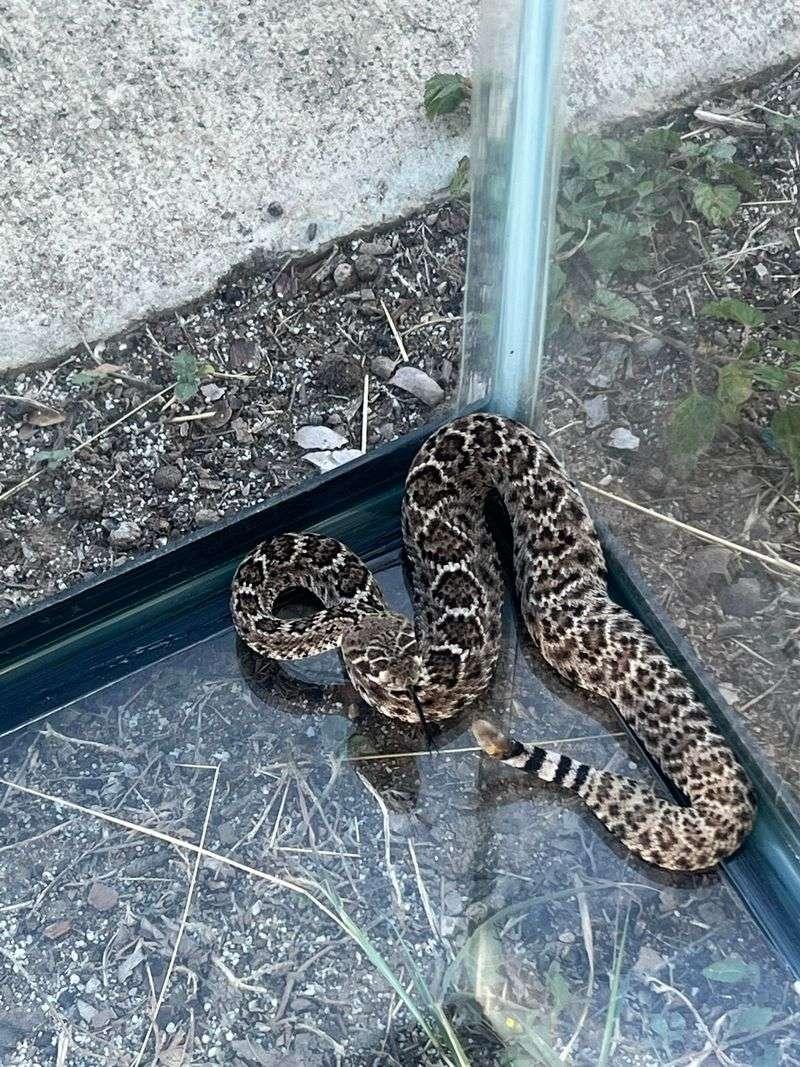
1. Western Diamondback Rattlesnake

Western Diamondback Rattlesnake
© Reddit

That dry buzzing sound near the woodpile is the one noise every Texan learns to respect. The western diamondback is the state’s most famous rattlesnake, and it can grow longer than five feet.

Fall matters because these snakes are fattening up before winter and traveling to find dens. Many dens are shared, so a single rocky slope can hold dozens of snakes in late autumn.

Your yard may simply be a stop along the way.

Look for a thick body, diamond patterns down the back, and black and white rings just before the rattle, often called a raccoon tail. If you hear the rattle, freeze, find the snake, and back away slowly.

Keep grass short, clear brush piles, and wear boots when moving firewood. A bite needs a hospital fast, so skip the old tricks like cutting the wound or sucking out venom.

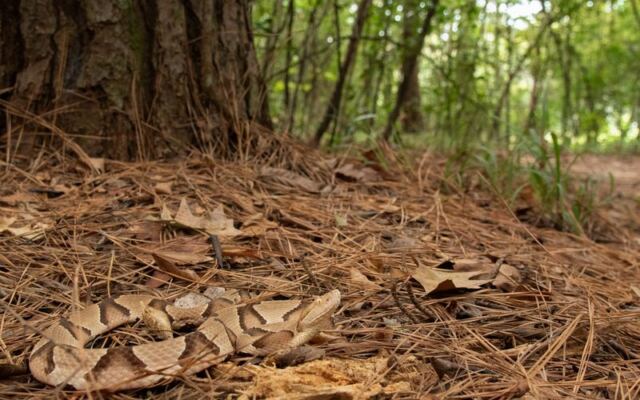
2. Southern Copperhead
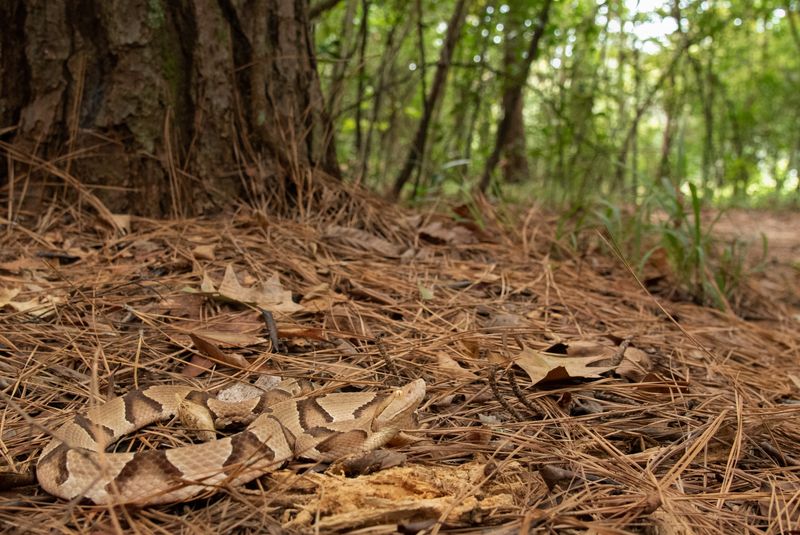
Southern Copperhead
© lmb.outdoors

Picture a pile of brown oak leaves. Now picture one of those leaves slowly moving.

Copperheads blend into autumn litter so well that most bites happen when someone steps or reaches without looking.

Their tan bodies are crossed with darker hourglass shapes, wide on the sides and skinny on the back. Babies even have bright yellow tail tips that they wiggle like worms to lure frogs.

Here is the comforting part: copperhead venom is the mildest among Texas pit vipers, and deaths are very rare. Bites still hurt badly and cause swelling, so treat any bite as an emergency.

September and October are birthing months, which means more tiny copperheads around. Use a rake, not your hands, to move leaf piles, and wear gloves when gardening.

3. Texas Coral Snake
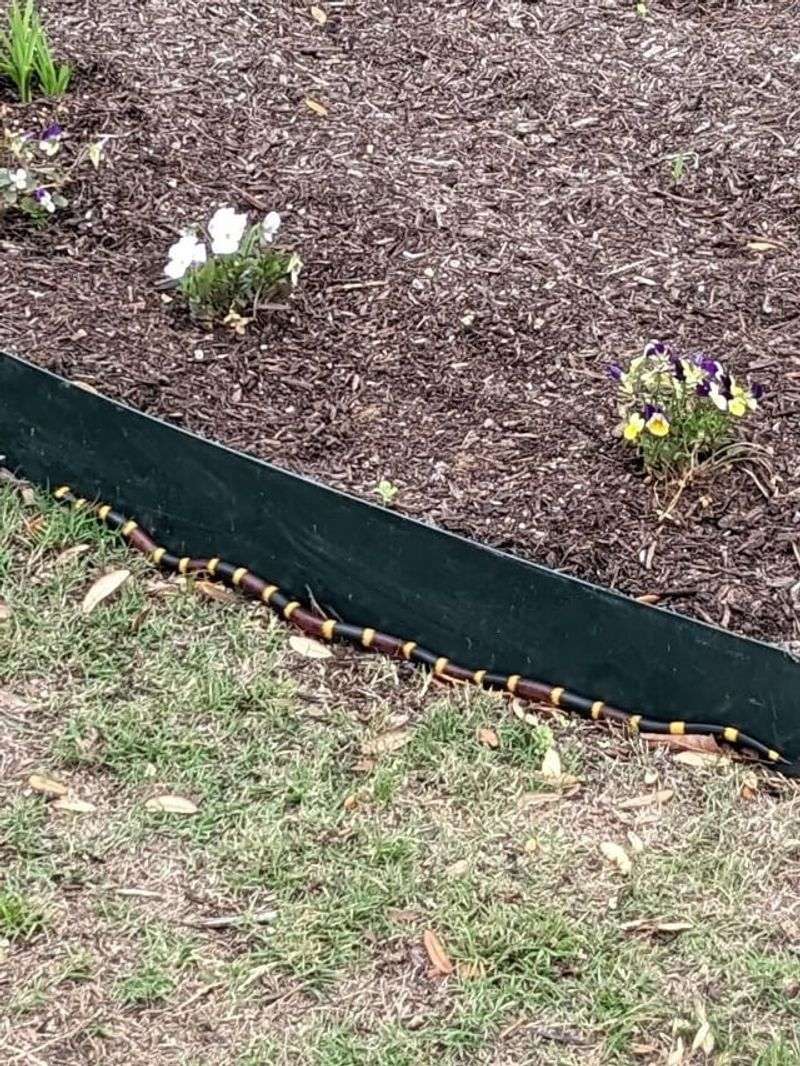
Texas Coral Snake
© Reddit

Red touches yellow, kills a fellow. Generations of kids learned that rhyme to tell the coral snake apart from harmless milk snakes.

Coral snakes are shy and secretive, spending most of their lives under mulch, logs, and leaf litter. Cool, damp fall mornings can bring them to the surface, especially in flower beds.

Touching one can cause burning pain that some people rank above a wasp sting, plus redness, swelling, and even nausea.

Their venom attacks the nervous system and is extremely potent. Symptoms can be delayed for hours, so anyone bitten should get to a hospital right away even if they feel fine.

Good news: these snakes rarely bite unless picked up. Teach children to never handle any brightly banded snake, no matter how pretty it looks.

4. Brown Recluse Spider
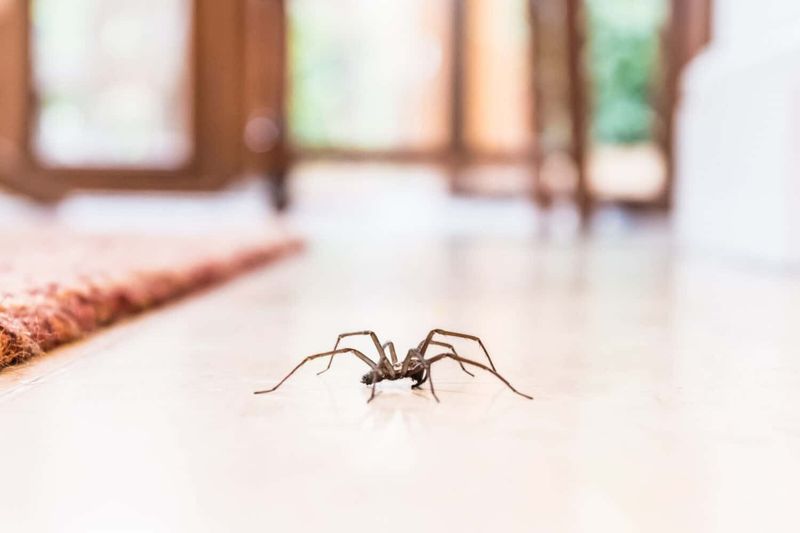
Brown Recluse Spider
© A-Z Animals

Hauling the holiday decorations down from the attic? Check the boxes first.

Brown recluses love undisturbed cardboard, closets, and garages, and fall is when people start digging through stored stuff.

They are tan to brown with a darker violin shape on the back. Most spiders have eight eyes, but the recluse has six, arranged in pairs, which is a fun detail if you have a magnifying glass and nerves of steel.

Bites often go unnoticed at first. In some cases the venom causes a slow-healing sore.

Shake out shoes and gloves, use plastic bins instead of cardboard, and see a doctor if a bite worsens.

5. Southern Black Widow
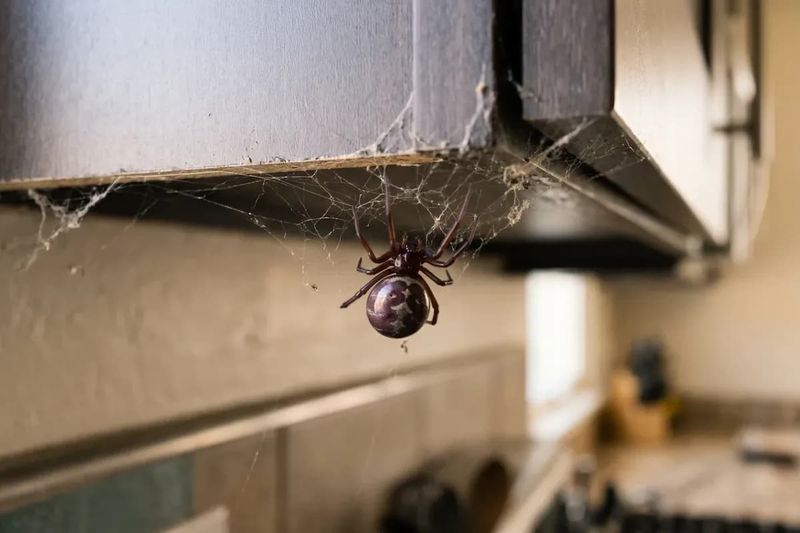
Southern Black Widow
© Bug Identifier

Shiny, jet black, and marked with a red hourglass, the black widow looks like a villain from a cartoon. Females hang upside down in messy, tangled webs under decks, water meters, and outdoor furniture.

As nights cool, widows sometimes move toward sheds and homes. Their egg sacs, tan and papery, can hold hundreds of babies.

The venom can cause muscle cramps, sweating, and stomach pain. Healthy adults usually recover, but kids and older folks should get checked quickly.

Wear gloves when reaching under patio chairs or lifting pots. A flashlight sweep of dark corners before you grab anything is a smart habit.

6. Striped Bark Scorpion
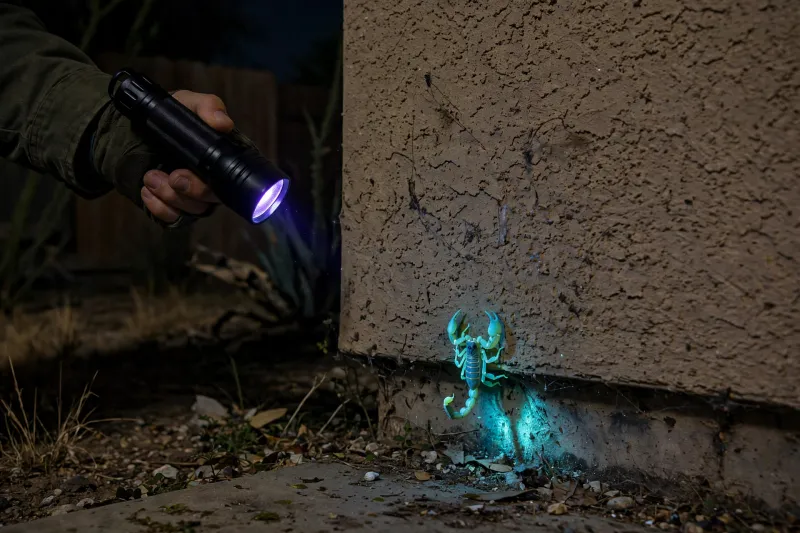
Striped Bark Scorpion
© SilkStoneHome

Grab a blacklight and walk your patio after dark. If you live in Texas, there is a decent chance something will glow back at you.

Striped bark scorpions are the most common scorpion in the state. They are small, yellowish, and marked with two dark stripes.

Their bodies shine a ghostly blue-green under ultraviolet light, a trick scientists still argue about.

In fall, these climbers often slip indoors through gaps around doors and pipes. A sting feels like a hot needle and may tingle for hours, but serious reactions are uncommon.

Seal cracks, shake out bedding, and keep shoes off the floor.

7. Southern Flannel Moth Caterpillar
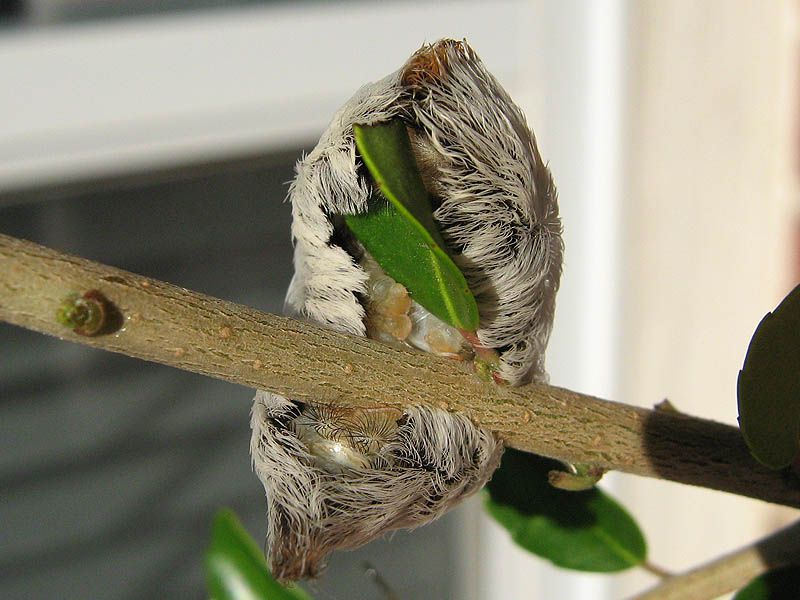
Southern Flannel Moth Caterpillar
© DFW Urban Wildlife

It looks like a tiny furry toupee, or maybe a lost piece of a teddy bear. Kids want to pet it.

Please do not.

The asp, as Texans call it, hides venomous spines under that soft hair. Touching one can cause burning pain that some people rank above a wasp sting, plus redness, swelling, and even nausea.

Asps show up on oaks, elms, and shrubs, with a big wave in early fall. If someone gets stung, press clear tape on the spot and pull it off to remove spines, then apply ice.

Seek care if symptoms grow severe.

8. Red Imported Fire Ant
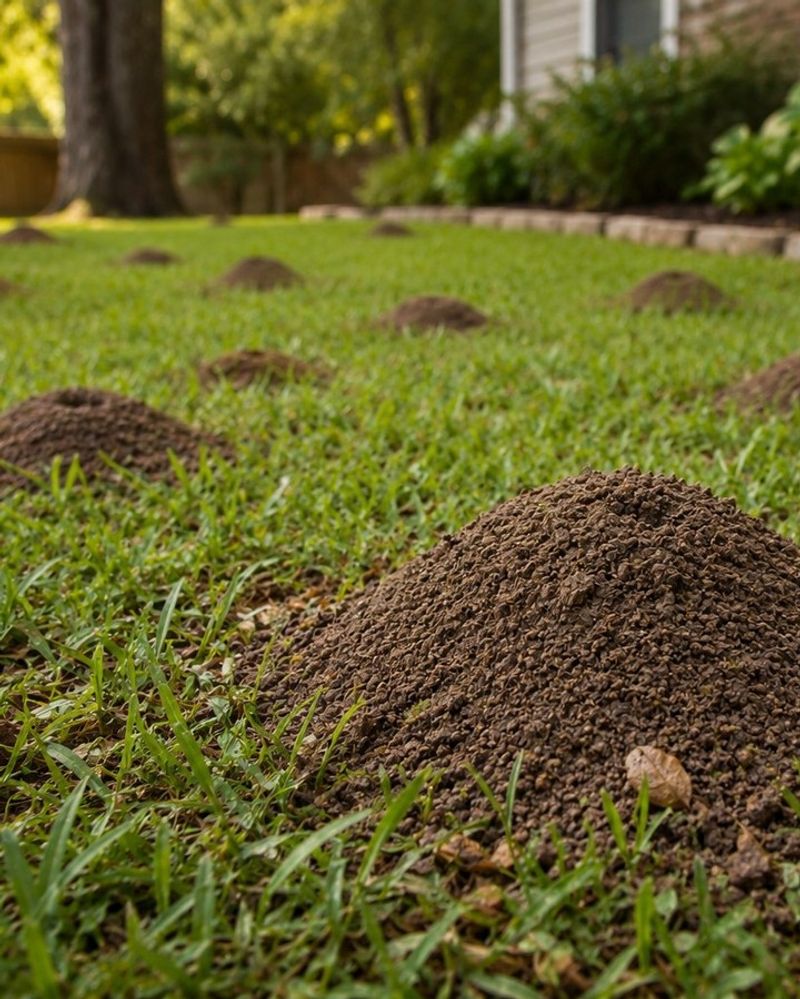
Red Imported Fire Ant
© ecoprotx

Anyone raised in Texas knows the dance: one step on the wrong patch of grass, and suddenly you are hopping and slapping your ankles.

Fire ants arrived by ship in the 1930s and now cover much of the state. Fall rains make mounds pop up fast, and colonies are busy before winter.

Each ant bites to hold on, then stings again and again. The result is itchy white blisters.

A few people have serious allergic reactions, so watch for swelling or trouble breathing.

Autumn is actually the best time to treat with bait, since ants are foraging hard. Wear shoes outdoors and keep kids away from mounds.

9. Texas Redheaded Centipede
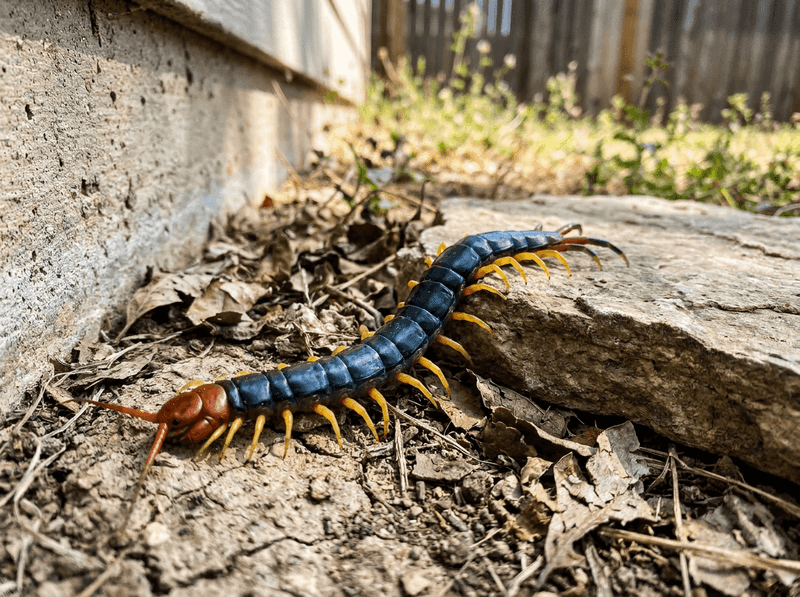
Texas Redheaded Centipede
© Pest Me Off

Eight inches long. Red head, dark blue body, yellow legs.

The giant redheaded centipede looks like something designed for a monster movie.

It hunts insects, lizards, and even small mice using venom-delivering claws near its head. Damp fall weather pulls these night hunters out from under rocks and landscape timbers.

A bite is intensely painful, with swelling that can last a day or two, though it is rarely dangerous for healthy people. Wear gloves when lifting stones, and nudge any centipede away with a long tool.

10. Yellow Jackets and Paper Wasps
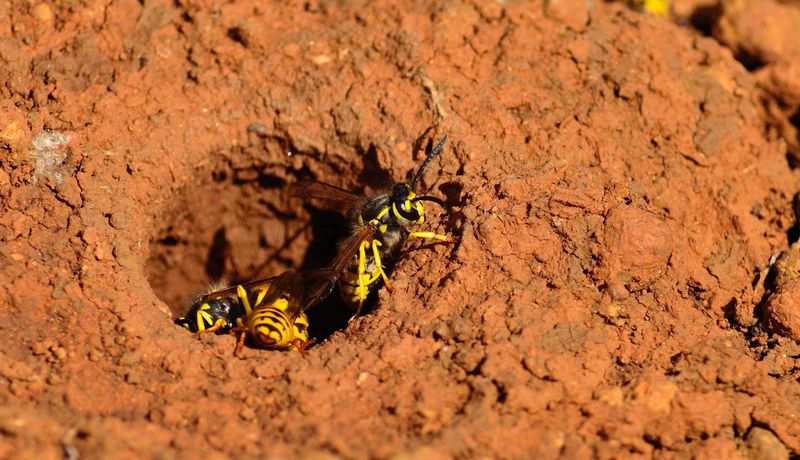
Yellow Jackets and Paper Wasps
© The Old Farmer’s Almanac

Ever notice wasps acting extra cranky at fall cookouts? You are not imagining it.

By autumn, yellow jacket colonies are at peak size, and their natural food supply is shrinking.

That hunger sends them straight to soda cans, sweet drinks, and grilled meat. Yellow jackets often nest underground, so a lawn mower pass can trigger a furious swarm.

Paper wasps build umbrella-shaped nests under eaves and are usually calmer, but they will defend their homes. Cover drinks, keep trash sealed, and call a pro for big nests.

Anyone with a known allergy should carry their epinephrine pen when outdoors.

Once a hard freeze hits, most of the colony dies off, leaving only queens to hide away until spring.

Share this story
RC

Written by

Ruby Castillo

More from Ruby Castillo →

About Gardening Latest

Gardening Latest provides in-depth guides to maintaining and enhancing your garden and backyard. Learn how to make the most of the space you have and create a beautiful garden.

More about us →

Latest stories

  • Arizona GardeningFound A Gopher Snake In Your Arizona Yard? Here’s Why You’ll Want It To Stay

    Found A Gopher Snake In Your Arizona Yard? Here’s Why You’ll Want It To Stay

    5 min ago
  • Wisconsin GardeningWoke Up to Deep Holes Dug Through Your Wisconsin Snow? A Skunk Was Hunting Grubs Under It

    Woke Up to Deep Holes Dug Through Your Wisconsin Snow? A Skunk Was Hunting Grubs Under It

    21 min ago
  • Missouri GardeningIf Your Missouri Woodpile Sits Against the House, You’re Inviting Brown Recluses Indoors This Winter

    If Your Missouri Woodpile Sits Against the House, You’re Inviting Brown Recluses Indoors This Winter

    27 min ago
  • Tennessee GardeningBefore You Dig In, Here’s How To Recognize Every Venomous Creature Sharing Your Tennessee Yard

    Before You Dig In, Here’s How To Recognize Every Venomous Creature Sharing Your Tennessee Yard

    33 min ago
  • Alabama GardeningThat Burning Saddleback Caterpillar Sting in Your Alabama Garden Calls for These Steps Right Away

    That Burning Saddleback Caterpillar Sting in Your Alabama Garden Calls for These Steps Right Away

    39 min ago

Gardening by state

Stories for your state, and the hardiness zone most of it gardens in.

Keep exploring

Read next

All Texas Gardening →
Texas GardeningYes, Texas Really Has a Venomous Mammal, and This Sub-Ounce Shrew Hunts in Garden Beds
Texas Gardening

Yes, Texas Really Has a Venomous Mammal, and This Sub-Ounce Shrew Hunts in Garden Beds

2 hr ago
Texas GardeningHere’s How To Recognize The Scorpions, Snakes, And Spiders That Carry Venom In Texas Yards
Texas Gardening

Here’s How To Recognize The Scorpions, Snakes, And Spiders That Carry Venom In Texas Yards

6 hr ago
Texas GardeningWhen Coyotes Start Howling Near Your Texas Home After Midnight, This Is What They’re Telling Each Other
Texas Gardening

When Coyotes Start Howling Near Your Texas Home After Midnight, This Is What They’re Telling Each Other

9 hr ago

More from Texas Gardening

  • Spotted A Yellow Jacket Nest Near Your Texas Home? Here’s What To Do Next

    Nov 27
  • Before You Cut That Tall Flower Stalk Off Your Texas Cilantro, Here’s What It Actually Means

    Nov 27
Back to top

Leave a response Cancel

Your email address stays private. Required fields are marked with an asterisk.

Gardening Latest

In-depth guides to maintaining and enhancing your garden and backyard: how to make the most of the space you have, and how to make it beautiful.

  • Facebook
  • X
  • Pinterest
  • YouTube

We may earn a portion of sales from products or services that are purchased through our site as part of our affiliate partnerships with retailers.

Explore

  • About GardeningLatest.com
  • Contact Us
  • Terms and Conditions
  • Privacy
  • Editorial Note:
  • FTC Disclosure

Newsletter

New garden guides and seasonal tips, straight to your inbox.

We’ll email you a link to confirm. Unsubscribe any time.

Almost there! Check your inbox and tap the link to confirm.

© 2026 Gardening Latest. All rights reserved.

Back to top