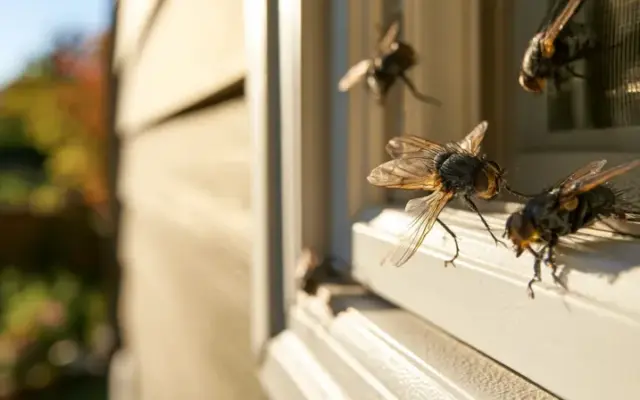
A small crowd of slow insects on a sunny windowsill in December can be a strange sight. Many people wonder where they came from and whether they are a sign of a bigger problem.
One possible answer is cluster flies, which sometimes hide in buildings for the cold months. Here is how to size up what you are seeing, clean up what you can reach, and plan ahead for next fall.
Could these be cluster flies?
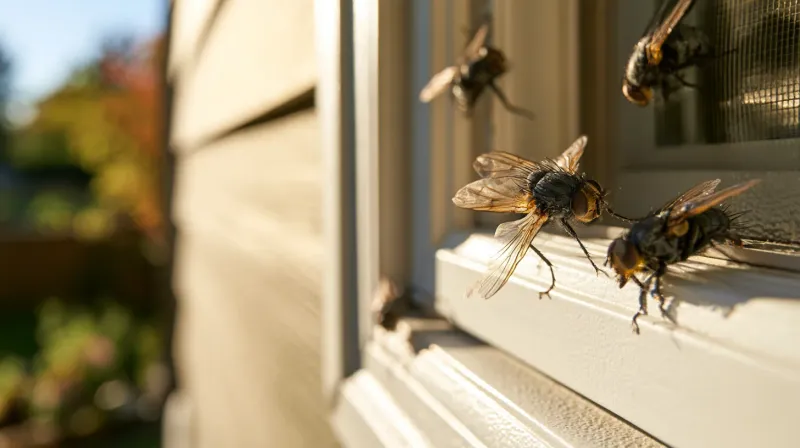
Start with what you can see rather than a guess. Cornell’s pest management program describes cluster flies as grayish or gray-brown, and extension guidance puts them at roughly one-quarter to three-eighths of an inch long.
Some have fine yellowish hairs on the middle part of the body.
That is bigger than many people mean when they say “tiny.”
The phrase “tiny black bugs” does not settle the question. Fungus gnats, small beetles, and other insects can look dark from across a room.
Unless a photo or a specimen shows a fly-sized, grayish insect with a single pair of wings, treat cluster flies as one possibility and not a confirmed answer.
It also helps to rule out boxelder bugs. Colorado State University Extension notes that young boxelder bugs, called nymphs, have no wings and have red abdomens.
A fly has wings folded over its back and lacks that bright red color. These are different kinds of insects, so one should not be mistaken for a young version of the other.
For a firmer identification, take a clear, close photo with a coin beside the insect for scale, or save one in a small container. Your local extension office can often look at a photo and tell you more.
Until then, keep your conclusions loose.
Why flies may appear at windows in winter
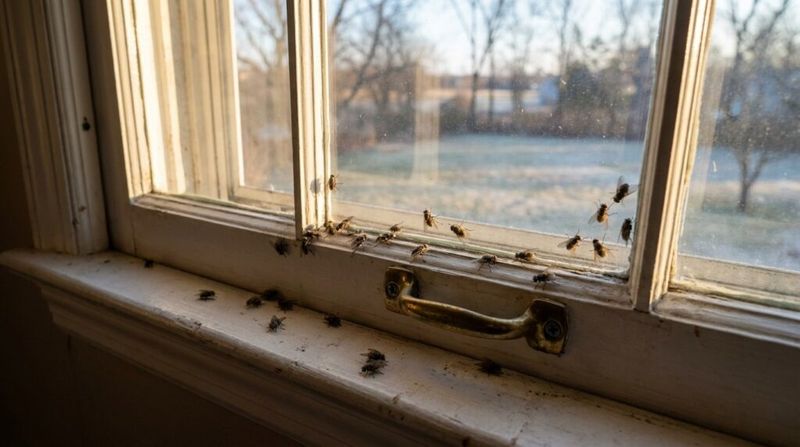
Late summer and fall set the stage. According to Utah State University Extension, adult cluster flies look for sheltered spots as the weather cools, and buildings can offer them.
Attics and wall voids are common places they settle for the cold months.
Once inside, they stay put until conditions change. Penn State Extension explains that a warm spell, or heat from the sun on a wall, can wake some of them up.
Waking flies tend to move toward light, which is why a bright window can collect them. They often seem slow and clumsy because they are not fully active.
That is the general pattern, and the details can vary. University of Maryland Extension describes the same cycle, but these sources come from several regions rather than from Wisconsin.
Timing and numbers can shift with location, weather, and the year, so none of this works as a Wisconsin forecast.
A fly on your sill in December, then, fits the pattern but does not prove it. Other insects also wander indoors in winter.
A sunny afternoon and a gray, sluggish fly make cluster flies a reasonable suspect, and a photo can help confirm it.
A windowsill sighting does not reveal the entry point
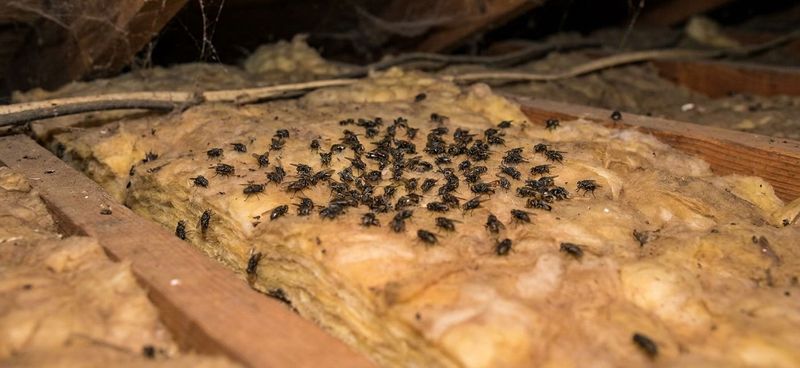
Where you spot a fly is not the same as where it got in. Flies that spent the winter in a wall space may drift toward the nearest light, and that light can be a window far from the gap they used.
Utah State University Extension describes flies sheltering in attics and walls and appearing indoors later.
Think of a window as a place where flies end up, not a map. The insects may have crawled through a wall cavity, along a ceiling, or from an attic before reaching the glass.
Penn State Extension notes that they move toward light when they become active, which can carry them well away from where they spent the winter.
So avoid betting on one window or one wall as the culprit. A sill covered in flies might sit right beside the entry point, or it might not.
Nothing about the sighting alone can tell you.
If you want clues, wait until the warm months. A careful walk around the outside of the house, checking trim, eaves, vents, siding joints, and screens, gives a better picture of where flies could enter.
Treat what you find as possible openings, not proof.
Their immature stages develop outdoors
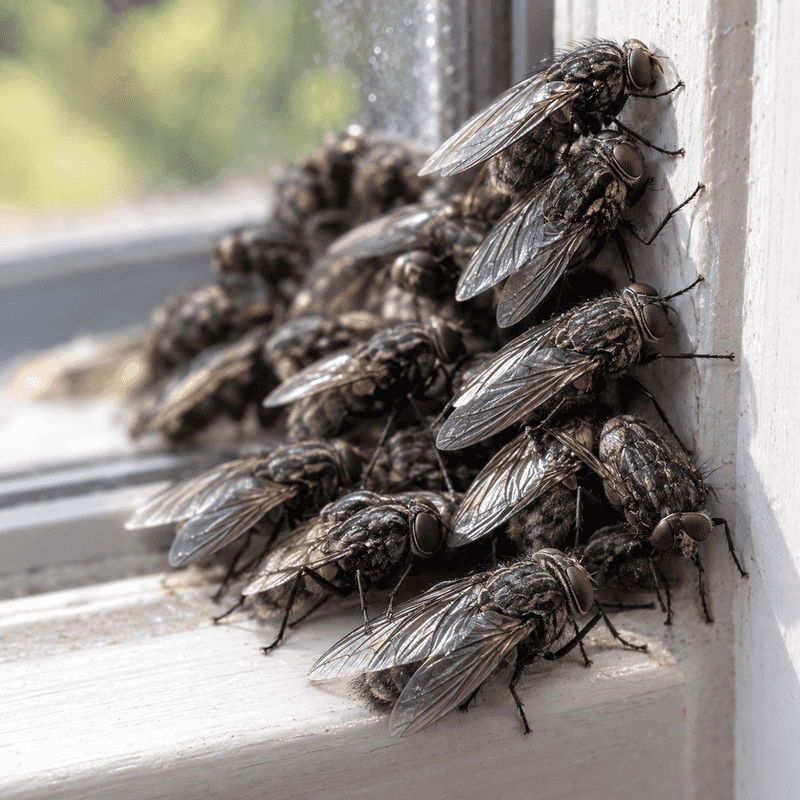
A cluster of flies in the house can feel like an infestation that is growing. The life cycle says otherwise.
Cornell’s pest management program explains that cluster flies develop outdoors, and that they do not breed in buildings.
Here is how it works. Females lay eggs in soil.
The larvae that hatch then parasitize earthworms, feeding on them while they grow. Adults emerge later and eventually look for a protected place to wait out the cold.
Penn State Extension makes the same point, so indoor flies are best understood as adults taking shelter, not a nursery. If more flies appear on a warm day, that likely reflects more of them waking up, not new ones hatching in your walls.
This also changes how you think about the problem. You are dealing with a fixed group of adults that came in earlier, and no indoor population is growing.
Flies that are bred in kitchens, drains, or trash are another story, and they look and behave differently.
If you keep seeing small flies near food or sinks all year, that points to a different insect and a different fix. A photo can again help sort out which one you have.
Remove the flies you can reach
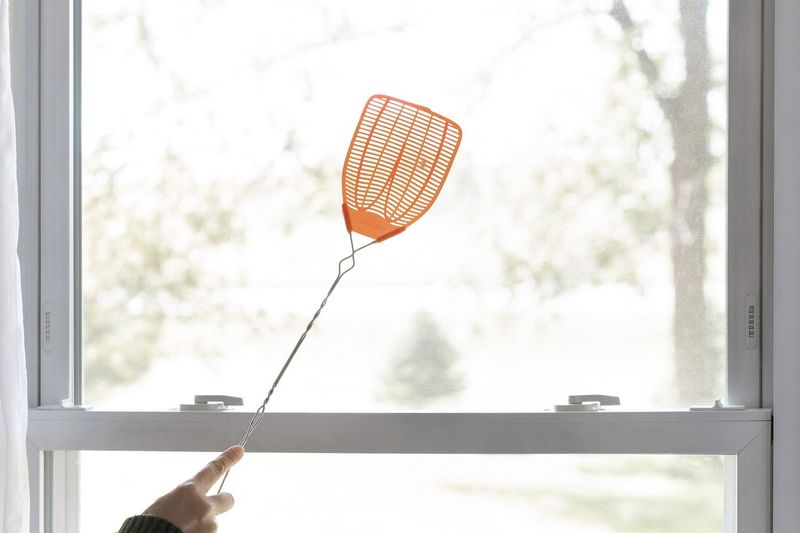
Dealing with the flies you can see is simple. A vacuum with a hose attachment picks them up quickly, and a fly swatter works too.
Virginia Cooperative Extension lists vacuuming as a practical option for flies indoors.
Afterward, empty the vacuum right away into a sealed bag or an outdoor trash bin. Leaving the flies inside the canister gives them a place to hang around, and a full bag in the house is easy to forget.
Cleanup matters for another reason. Colorado State University Extension notes that dead flies left in places you cannot reach can attract carpet beetles and other scavengers.
A few dead flies in a wall void can become food for other pests, so it is better to remove the ones you can.
Keep your expectations realistic, though. Clearing a windowsill will not clear flies sheltering in a wall or attic, and more may show up on the next warm, sunny day.
That is normal, and you can simply repeat the vacuuming as needed.
Skip sprays aimed at windows or into hidden spaces. Products differ by site and label, and treating inaccessible areas can leave dead flies out of reach.
For anything beyond vacuuming, ask your extension office or a licensed pest professional.
Seal openings before the next fall

Prevention happens outdoors, and it works best before flies start looking for shelter. University of Maryland Extension recommends inspecting the exterior and sealing gaps around windows, doors, eaves, vents, and other openings.
Repairing damaged screens belongs on the same list.
Timing matters. Flies generally begin seeking shelter in late summer or early fall, so aim to finish your inspection and repairs before then.
Because the cited guidance comes from regional university sources and not a Wisconsin-specific forecast, treat the dates as a general guide and start early.
Be clear about what sealing does. It helps keep new flies out next season, but it will not remove flies already in wall voids or attics.
If you seal this winter, you may even trap some inside, so spring and summer are better times for most repair work.
Two popular ideas are not sound controls. Colorado State University Extension says lawn treatments have not been shown to kill developing cluster flies, and adults can arrive from sites hundreds of yards away.
Getting rid of earthworms is not a practical answer either.
If you consider a chemical product, it must be labeled for the exact site where you plan to use it, and you must follow the label. Conditions vary, so a professional can advise on your situation.
A tight house in September is worth more than any scramble in December.
Share this story