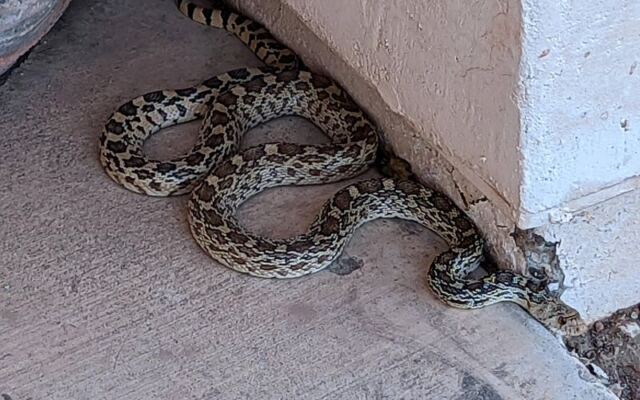
A gopher snake in your Arizona yard can be a welcome visitor. When it is reliably identified, the Sonoran gopher snake is nonvenomous and eats small mammals, so it fits fine in an ordinary yard.
It is still a wild animal that deserves room, and a quick glance is not enough to know what you are looking at. Here is how to tell what matters, what to do, and when to call for help.
Why a gopher snake can be a welcome yard visitor
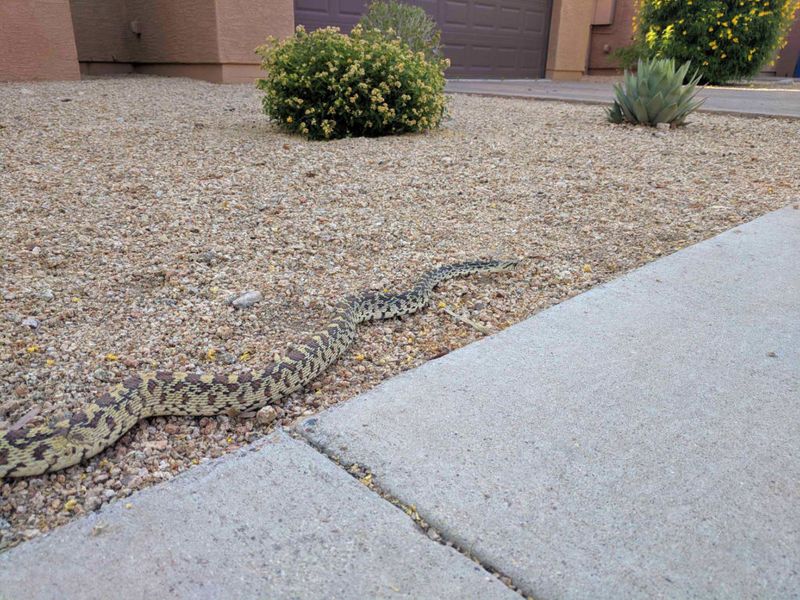
Here is the short answer: a reliably identified Sonoran gopher snake is nonvenomous, and it eats small mammals along with other prey. That makes it a reasonable guest in an ordinary Arizona yard.
The Phoenix Zoo’s species profile identifies it as Pituophis catenifer affinis, describes it as nonvenomous, and lists small mammals, birds, eggs and lizards among its foods.
Because it is a constrictor that hunts wild prey, a gopher snake passing through is behaving like any other native predator. It does not need your help, and it does not need an invitation.
Most of the time, the best move is to let it travel on its own schedule.
Welcome does not mean tame. A wild snake can still bite if it feels cornered, and nonvenomous does not mean risk-free at close range.
It also has no obligation to stay. It may cross the yard in minutes, rest in shade for an afternoon, or vanish before you return with a camera.
The word that carries the most weight here is reliably. If you saw a flash of scales near the woodpile or heard a buzzing noise, you do not yet know which snake you saw.
The advice in this article applies when a gopher snake has truly been identified, not when someone is guessing. Later sections cover how to handle uncertainty and what to do next.
Think of it as a good neighbor you watch from the window. You appreciate it, you keep kids and pets inside or well back, and you let it go about its day.
A rodent predator is not a rodent-control guarantee
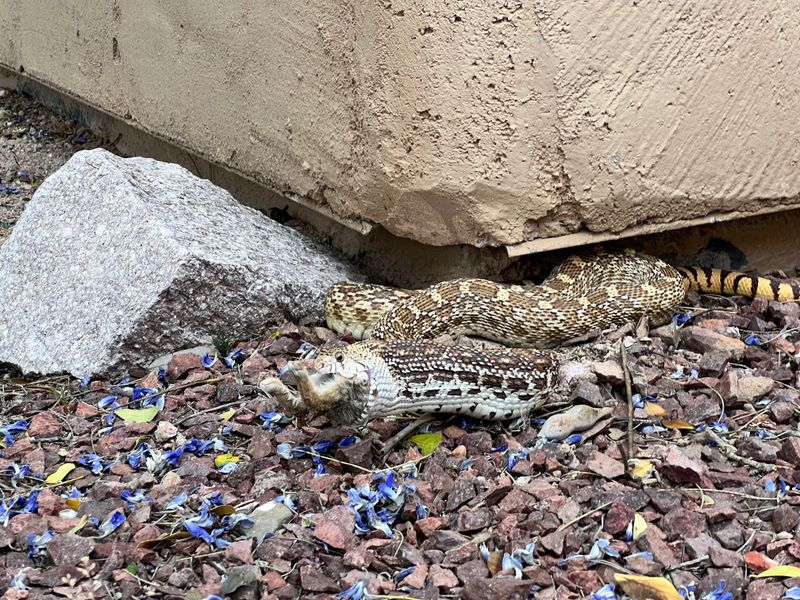
Gopher snakes eat rodents, and that is a fair thing to say. A large diet study of the species, Rodríguez-Robles’ 2002 feeding ecology paper, found mammals were the most common prey category.
Birds, eggs and lizards were also on the menu.
Where the snake lives changes what it eats. The same research documented clear regional differences, including lizards being more common in desert populations.
So a snake in Phoenix, Tucson or a rural lot may be eating a different mix than one in another part of its range.
That is why eating small mammals is not the same as clearing a yard of them. Nobody has measured how many pests one snake removes from a particular property, and rodents breed quickly.
If mice or rats are getting into your garage, one snake passing through will not be a fix.
The common name can mislead, too. Gopher snake does not mean the animal is hunting pocket gophers on your land.
Its documented diet covers several kinds of mammals and other prey, as the Phoenix Zoo notes.
Nor is there good support for the idea that gopher snakes keep rattlesnakes away. The diet research describes a broad, location-dependent menu, not a dependable deterrent.
Enjoy the snake for what it is, a native predator, and handle any rodent trouble with ordinary rodent-proofing.
Can you identify it without getting closer?
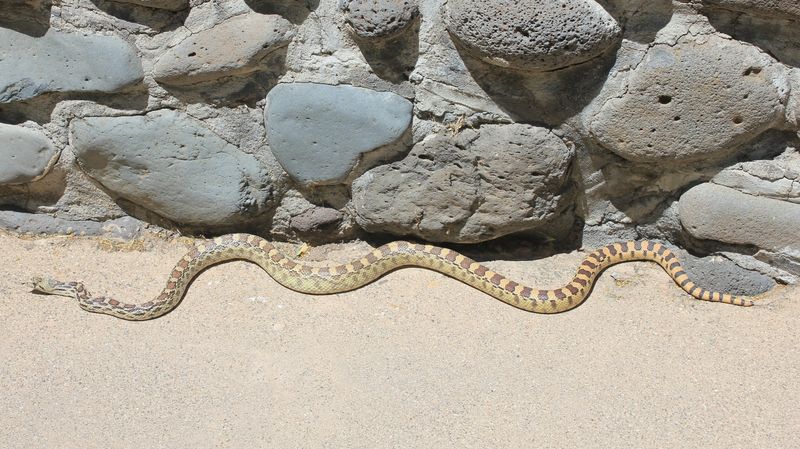
A brief glimpse rarely settles anything. Arizona has venomous snakes, and guidance from the Arizona Poison and Drug Information Center warns that getting close to identify a snake is dangerous.
Head shape and sound are not safe shortcuts.
Part of the confusion comes from defensive behavior. A threatened gopher snake may hiss, flatten its head and vibrate its tail.
In dry leaves or grass, that tail vibration can sound like a rattle, even though the snake has no functional rattle.
It is tempting to say the snake is imitating a rattlesnake on purpose. The evidence is less certain.
A Canadian government status report describes the display but calls the snake a poor visual mimic, and suggests the blotched pattern may simply reflect similar habitats.
The practical lesson is that a buzzing sound proves nothing, and neither does a defensive pose. A real rattlesnake can behave defensively too.
The Phoenix Zoo describes the gopher snake display, but behavior alone does not name the species.
If you are unsure, do not step closer, lean in, or poke at it with a stick. Stay back, keep children and pets away, and take a photo only if you can do it from a long way off.
Someone qualified can identify it from there.
Give an outdoor snake room to move on
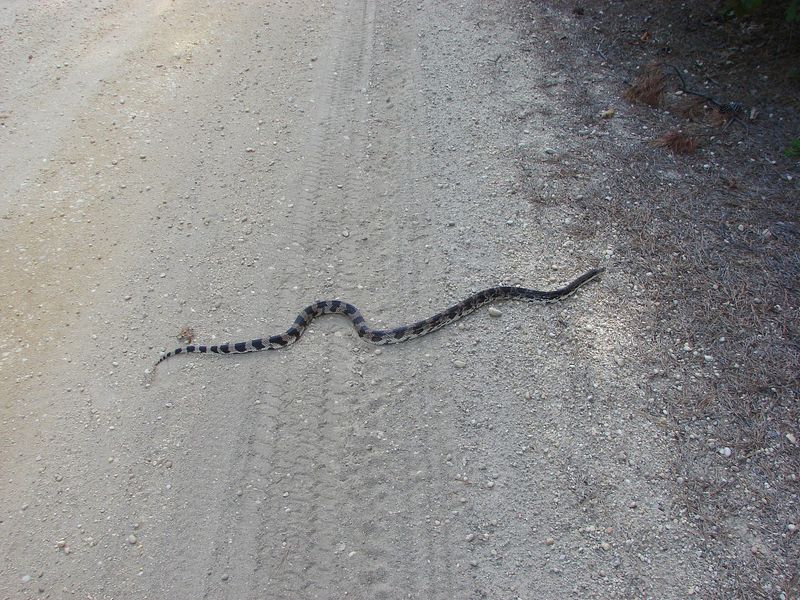
When a snake is outside and not creating an immediate safety problem, patience is the whole plan. Scottsdale’s fire department advises watching from at least six feet away and not trying to catch or kill the snake.
More distance is better.
Bring children and pets inside or well away while the snake is present. Dogs are curious and quick, which is a bad mix around any snake.
A closed door is a simple, reliable barrier.
Then let it move on. Most snakes continue on their way within minutes or hours if nobody crowds them.
Stand behind them rather than in their path, and keep the hose, broom and shovel out of it.
Leaving it alone has limits. It does not mean picking it up, feeding it, trapping it, or driving it to another spot yourself.
Arizona Game and Fish also advises keeping wildlife at a distance, and the agency does not provide nuisance-wildlife capture or removal services.
Feeding is worth a special mention. A snake that learns a yard offers something good may keep coming back.
Fresh water bowls and pet food left out can draw prey, which then draws predators.
If you want to keep an eye on the snake, do it from a window or the far side of the yard. Calm and quiet works better than any trick.
When should you call for help?
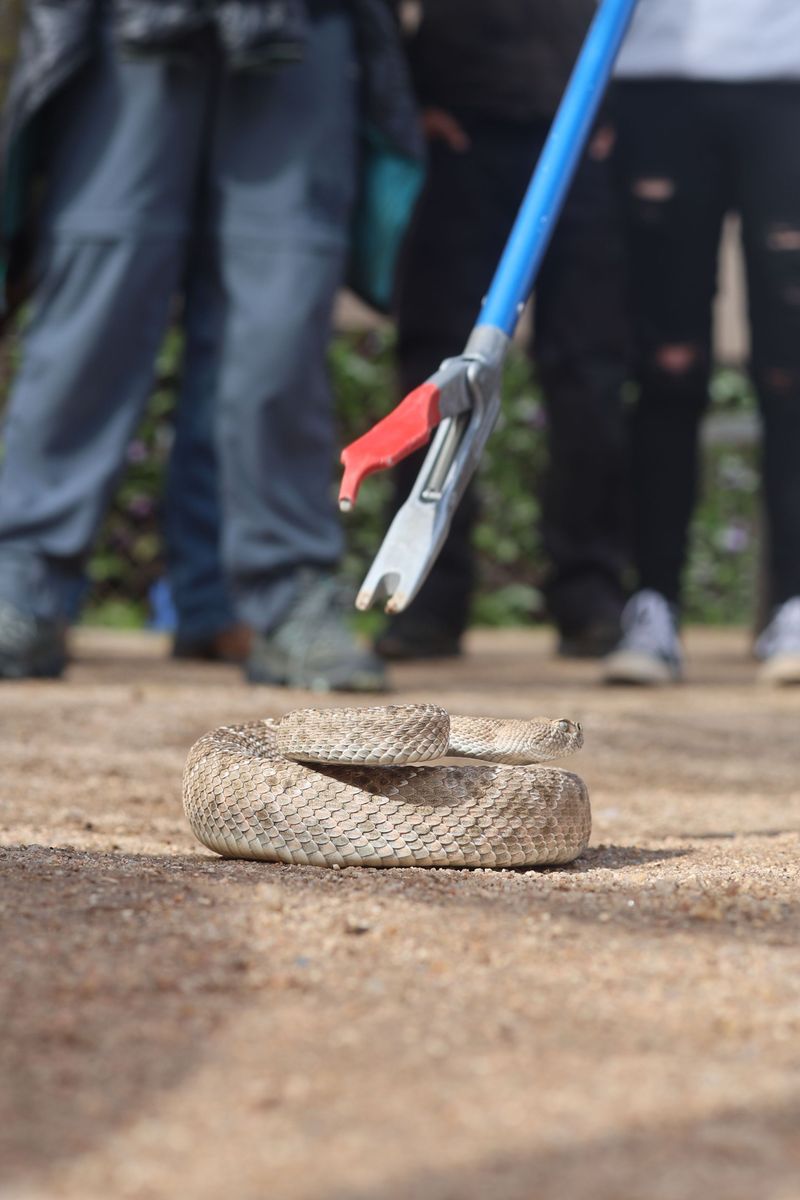
Some situations call for a professional. If the snake is inside your home, in a high-traffic spot such as a doorway or walkway, or you cannot confidently identify it from a distance, make a call instead of handling it.
A quick phone call beats a bite.
Who to call depends on where you live. Scottsdale offers a local example, and its fire department snake safety page explains how it handles these calls.
Other cities and counties have different procedures and contacts, so check your own local fire department or city website for the right service.
Arizona Game and Fish says it does not capture or remove nuisance wildlife. Its wildlife guidance points homeowners who need removal toward a qualified wildlife-control business.
Looking up the service before you need it saves time later.
While you wait, keep everyone away from the snake. Close interior doors, move pets to another room, and keep eyes on where the snake is from a safe spot.
Note the location so you can tell responders.
Do not try to scoop it into a bucket, pin it, or carry it off. Even a harmless species can bite a person who grabs it, and a mistaken guess about the species can turn serious fast.
Professionals have the tools and training to do it safely.
Reduce what attracts wildlife to your yard
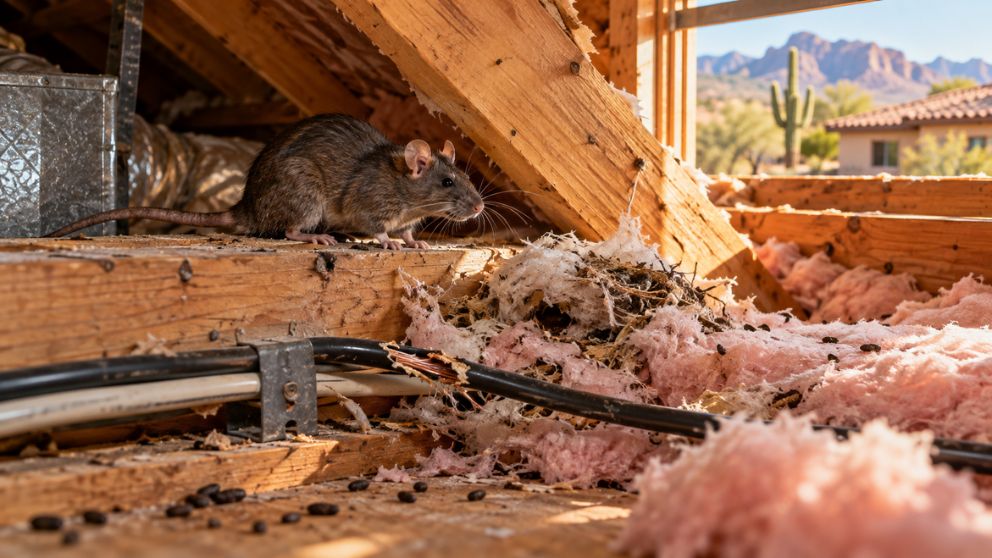
A few yard habits can lower the odds of surprise wildlife visits. Start with food.
Arizona Game and Fish recommends securing food and other attractants, which means lidded trash cans, pet food brought indoors, and fallen fruit picked up.
Next, look at rodents. Scottsdale recommends reducing rodents and removing woodpiles and junk in its snake safety guidance.
Seal gaps around sheds and garages, and store birdseed in tight containers.
Then tackle shelter. Dense brush, stacked lumber, and piles of debris give small animals places to hide, and animals that hunt them may follow.
Trimming and tidying makes it easier to see what is moving through your yard.
These steps may make a yard less appealing to wildlife overall. They cannot sort visitors by species, so you cannot keep a gopher snake while shutting out other snakes.
Treat them as general upkeep, not a selection tool.
The takeaway is simple. If a confidently identified gopher snake is outdoors and poses no immediate safety issue, let it move on undisturbed.
If it is indoors, in the way, or you are not sure what it is, call local help.
The best yard guest is the one you admire from a distance.
Share this story