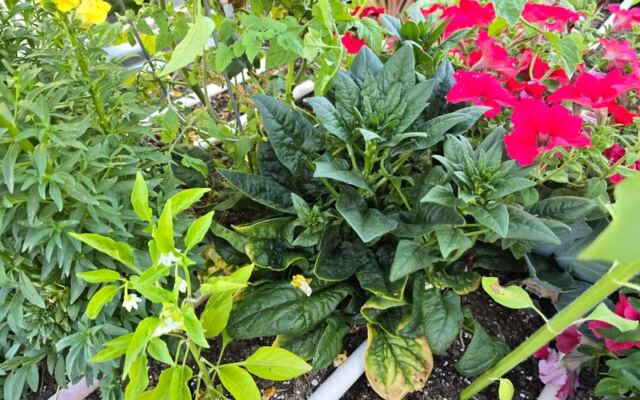
A sudden flower stalk means your spinach is bolting, and the time for picking good leaves is running out. The plant has switched from growing leaves to making flowers and seeds.
Cutting the stalk off is not a dependable fix, so it helps to know what to do instead. Here is how to size up the plant, use what is left, and plan a better next crop.
What the stalk means
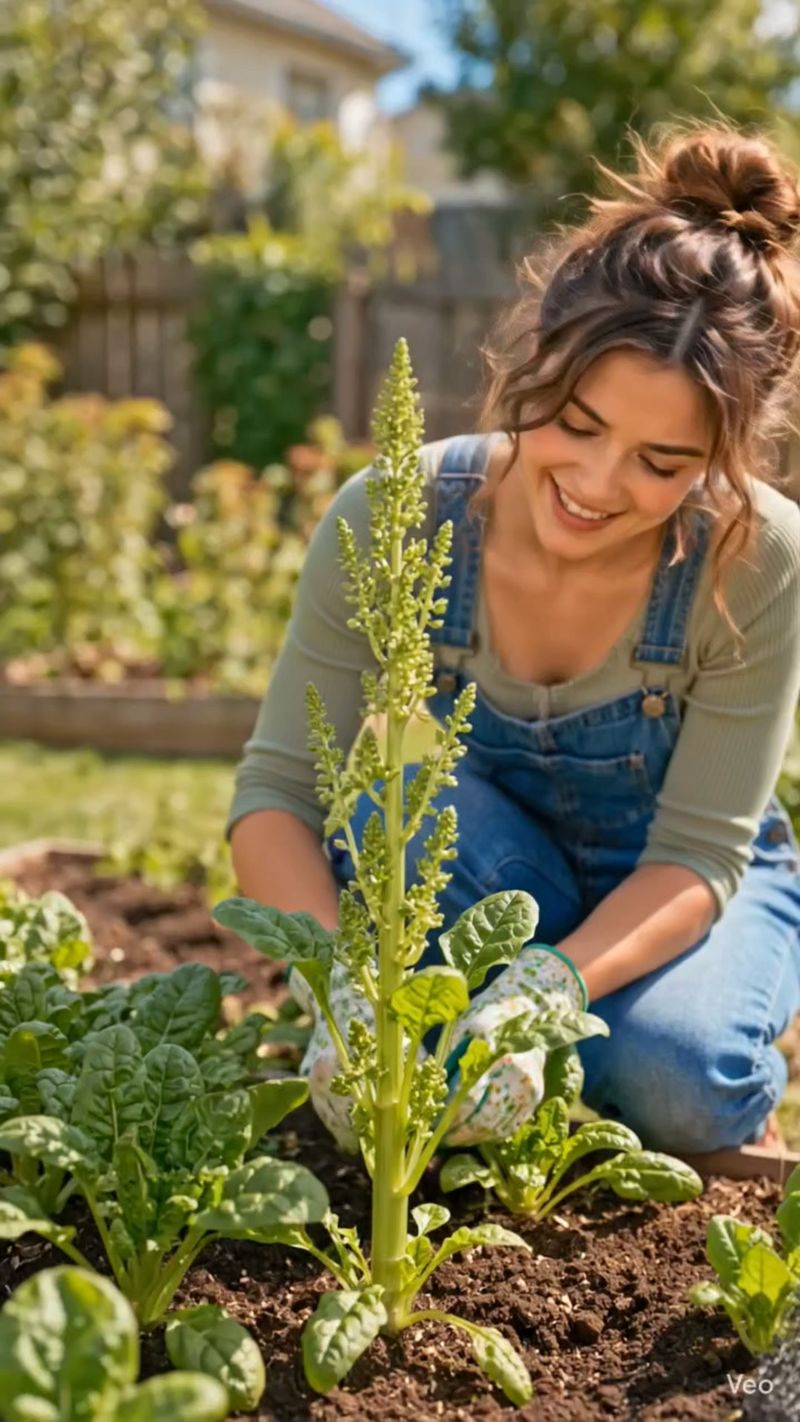
Bolting is simply a plant moving from leaf growth to flowering and seed production. When a tall, upright stalk shoots up from the center of a spinach rosette, that shift has started.
For a gardener who grows spinach for leaves, the stalk is a signal that the harvest window is closing.
It does not mean the plant is sick. Spinach is a cool-season crop, and University of Arizona Cooperative Extension notes that it tends to flower and go to seed as days grow hotter and longer.
A healthy plant can bolt just as easily as a struggling one, so the stalk alone is not proof of a mistake you made.
Leaf quality usually slips once the stalk appears. The Royal Horticultural Society advises picking leaves regularly until plants start to flower, then removing and composting the plant because the leaves turn bitter.
That is a useful rule of thumb, though how fast the change happens can differ from plant to plant.
A quick note on the crop itself. Everything here applies to true spinach, Spinacia oleracea.
New Zealand spinach and Malabar spinach are different plants, and Extension lists them as summer-growing substitutes. They handle heat differently, so advice about bolting true spinach should not be applied to them.
If your plant is one of those summer substitutes, the stalk story changes entirely. If it is true spinach with a fresh central stalk, treat it as a plant near the end of its leafy run and decide how to use the leaves while they last.
Several conditions can lead spinach to bolt
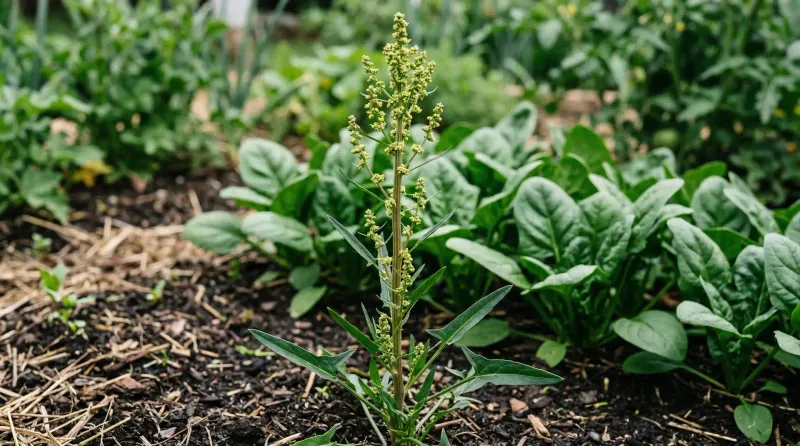
Plenty of gardeners blame heat the moment a stalk appears. Heat is a real player, but it is not the only one.
Oregon State University Extension lists increasing day length and temperature, crowded plants, and low soil moisture or nutrients among the factors linked to higher bolting risk.
Variety matters too. Some spinach types are bred to bolt more slowly than others, and plant age plays a part as well.
A seedling that matures just as the days lengthen has less time before the flowering signal arrives.
Moisture and growing conditions can tip the balance. The University of Minnesota Extension describes how stress in cool-season crops from heat or water problems can lead to bolting and bitter foliage.
How strongly each factor acts will vary from one garden to the next.
This is why one stalk cannot tell you the cause. A plant in a hot, dry corner and a plant in a shaded, well-watered bed might both bolt for different reasons, or for the same mix of them.
Guessing from the stalk alone can send you chasing the wrong fix.
A better approach is to jot down what was going on. Note the sowing date, the variety, how often you watered, how close plants were, and the recent weather.
Over a season or two, those notes show patterns that a single flower stalk never could.
Check the leaves before deciding what to do
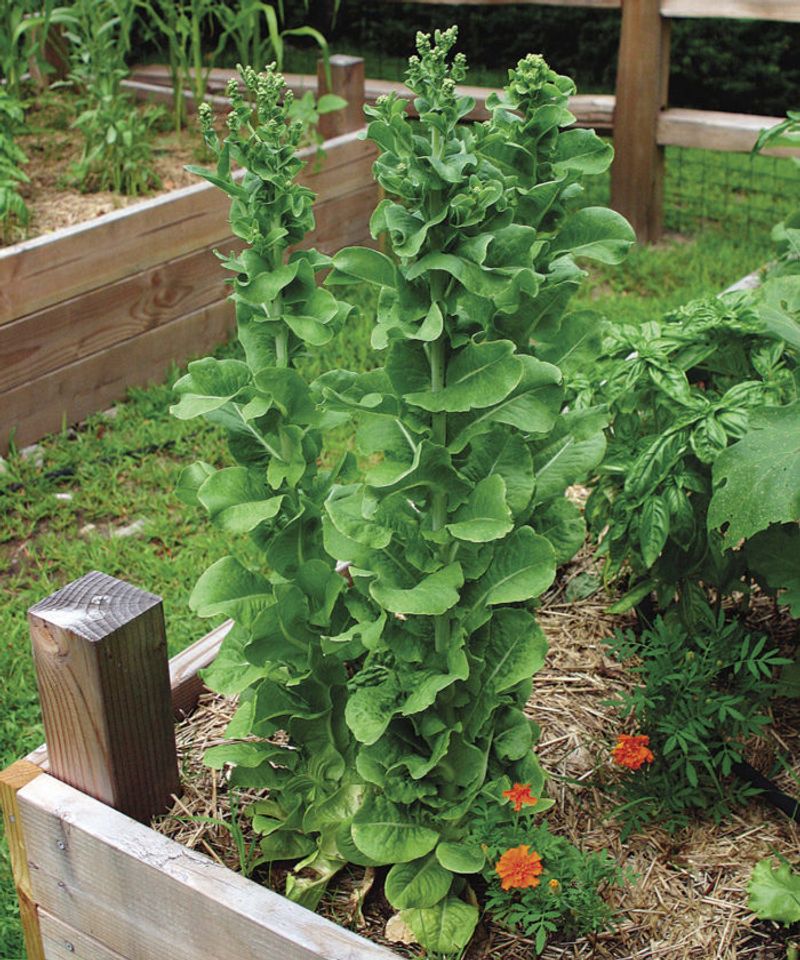
Once a stalk is rising, let your taste buds make the call. Pick a few leaves from different parts of the plant, rinse them, and try them raw.
If they taste mild enough, harvest what you can and use it soon.
Bitterness is the documented concern here. Extension sources such as the University of Minnesota report that bolting and related stress can make foliage bitter, and how bad it gets varies.
Younger leaves lower on the plant may still taste fine while the ones near the stalk are harsh.
If the leaves are too bitter, the RHS suggests removing and composting the plant. Cooking, mixing with milder greens, or adding to smoothies and soups can soften a slight edge, but strong bitterness is rarely worth the effort.
Poor flavor does not make the leaves poisonous. The sources reviewed point to declining eating quality, not danger, as the problem with bolted spinach.
Food safety depends on handling, not on whether a stalk has formed.
That handling starts at the sink. FDA guidance says washing produce under running water can reduce bacteria but does not eliminate them.
It also advises against using soap, detergent, or commercial produce wash, so plain running water is the method to use for homegrown spinach.
Cutting the stalk will not reliably restart leaf growth
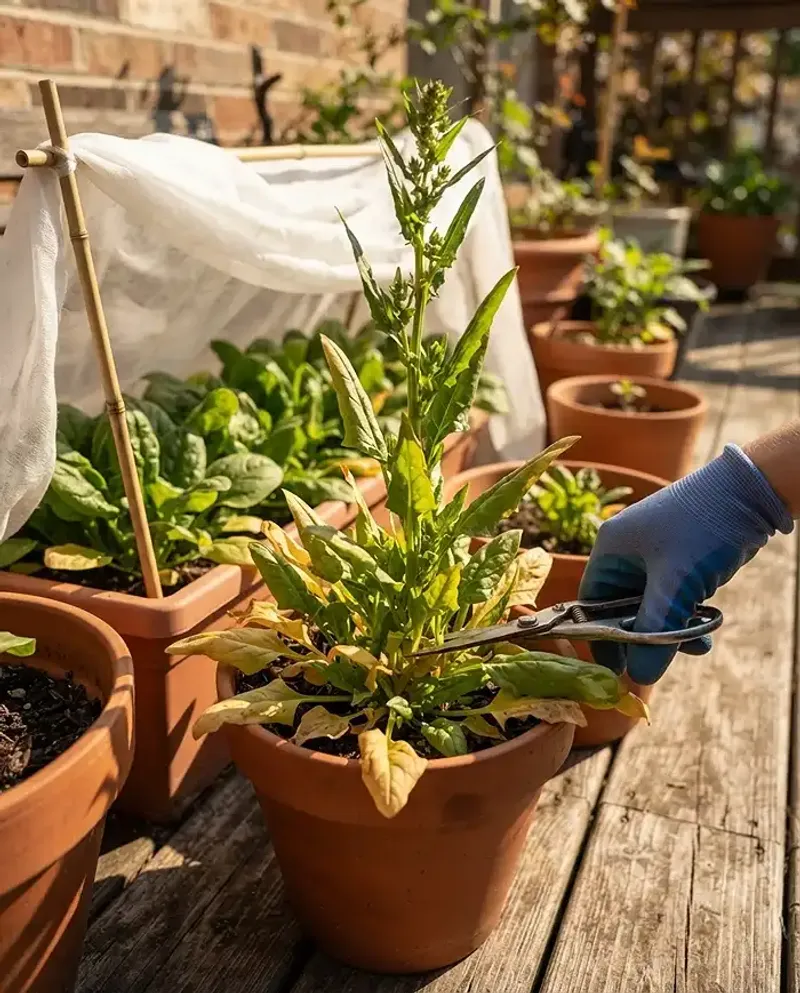
Snipping the stalk is the first thing many of us want to try. It can make the plant look neater, and there is no harm in doing it.
What it will not do, as far as the spinach guidance shows, is reliably turn the plant back into a leaf producer.
Both the RHS and University of Arizona Extension advice centers on harvesting leaves before flowering or removing the plant afterward. Neither promises that removing the stalk brings back a long run of good leaves.
You may have heard that cutting flowers sends energy back into the plant. Maryland Extension discusses that idea for crops such as rhubarb, onions, and hard-neck garlic, but it does not show that it works for spinach.
Borrowing the trick for spinach is a guess, not a proven method.
So here is a simple plan. Harvest any leaves that taste good, and do it soon.
When the foliage is no longer worth eating, pull the plant and add it to the compost.
That frees the bed for something else. In many Arizona gardens, a bolted spinach patch can make room for heat-loving crops or for a fresh sowing when the season suits it.
Use a planting calendar for your part of Arizona
Arizona covers desert valleys, central highlands, and cold mountain towns, so one planting date will not fit everyone. A spinach sowing that works at one elevation can bolt early or freeze at another.
Local timing matters more than any statewide rule.
The University of Arizona spinach sheet, Growing Spinach, comes from Yavapai County. That means its advice reflects conditions there, and it is a good starting point rather than a rule for every garden.
A separate guide, Vegetable Planting and Harvest Times, covers Arizona’s central highlands at 3,000 to 6,000 feet. It gives different planting guidance by season and elevation, which shows how much the answer shifts across even one region.
If you garden above or below that range, look for the calendar from your own county Extension office. Staff there can tell you what has worked in your area and when the first and last frosts tend to arrive.
Treat your last bolting experience as local data too. If your spinach stalked up in a given month, that is a clue about when to sow earlier or choose a different variety next time.
Reduce bolting risk in the next crop
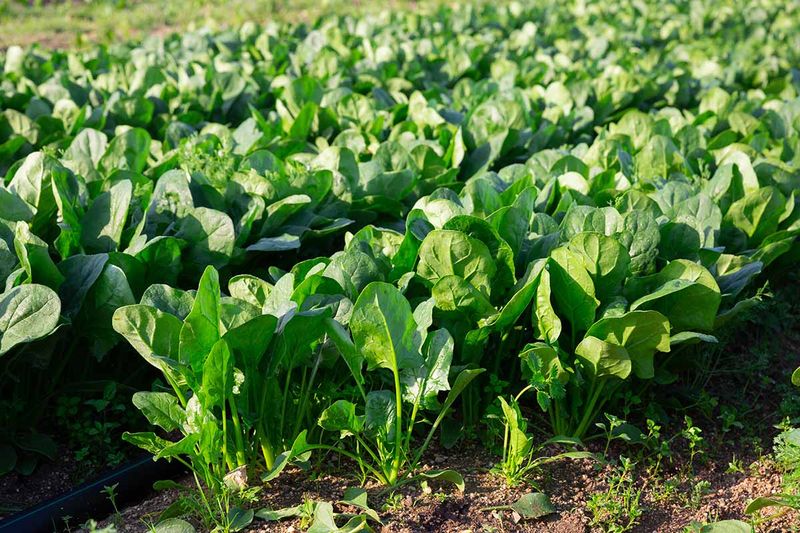
No step can promise that spinach will never bolt, but a few habits lower the odds. Start with the variety.
Pick one described as slow-bolting and suited to your area, and check with your county Extension office if you are unsure which ones do well locally.
Watering comes next. Oregon State University links crowding and low soil moisture or nutrients to higher bolting risk, so give plants room and keep the soil evenly moist rather than swinging between dry and soaked.
A layer of mulch can help hold moisture.
Timing is the third piece. Sow so the crop grows during the cool part of the season in your location, using the calendar for your elevation.
The RHS also recommends regular leaf picking, which fits well with harvesting early and often.
Staggering small sowings every couple of weeks during the right window spreads out your harvest. If one planting bolts, the next may still be tender.
Your current plant can teach you something. Use its stalk as a cue to taste, harvest what is good, and plan the replacement, rather than hoping a trim will bring it back.
Spinach rewards a gardener who picks early and sows with the season.
Share this story