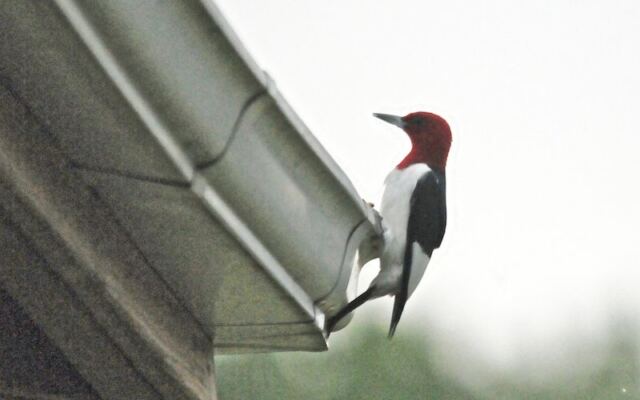
That rapid rat-a-tat on your gutter is most likely a woodpecker drumming, and drumming is one way these birds send social messages, including claiming territory. A metal gutter works like a loudspeaker, so a small bird can sound enormous.
Once you know what the noise may mean, you can check your home for real damage and respond without hurting the bird. Here is how to sort out the sound, the season, and the safest next steps.
Why a metal gutter can make drumming so loud
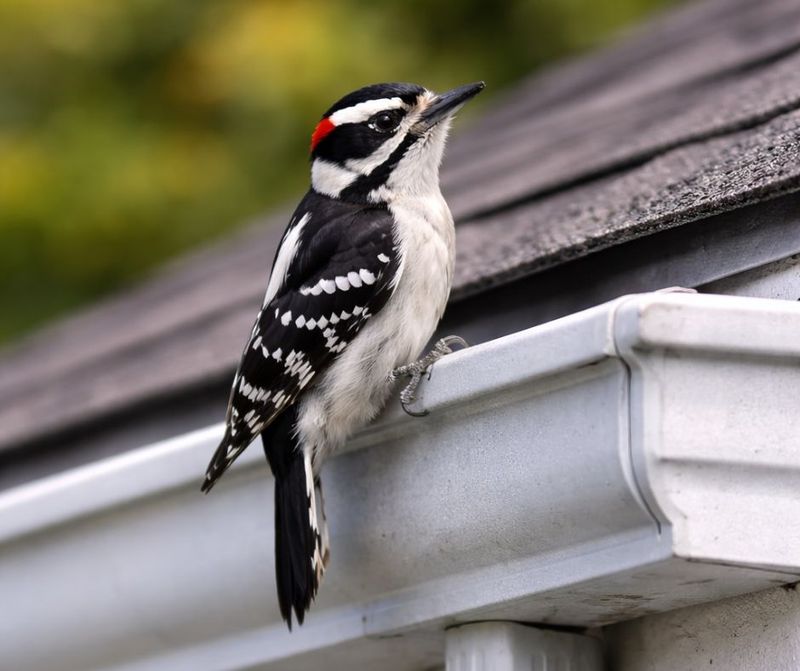
Woodpeckers do not only peck to find food. They also drum, which means hammering in fast, steady bursts on a hard surface to send a message.
Cornell Cooperative Extension guidance notes that birds use resonant surfaces to communicate, and that metal building parts can make especially effective sounding boards.
Gutters and downspouts are thin, hollow, and made of metal, so they ring like a drum. A tiny tap that would barely be heard on a tree trunk can echo through your whole house.
That is why the noise can feel far bigger than the bird making it.
Rapid, rhythmic bursts on a surface like this are consistent with drumming. They are not necessarily a sign that the bird is trying to bore into your home.
Drumming usually causes little harm, though it is still worth looking at the area to be sure.
You may notice the sound at dawn and wonder if the hour tells you something. It does not.
Hearing tapping early in the morning cannot by itself identify the bird or explain its purpose, and the guidance from the U.S. Fish and Wildlife Service deals with seasonal activity rather than any special meaning for a certain time of day.
Treat the sound as a clue to look closer, not as a final answer.
Late-winter drumming can carry a social message
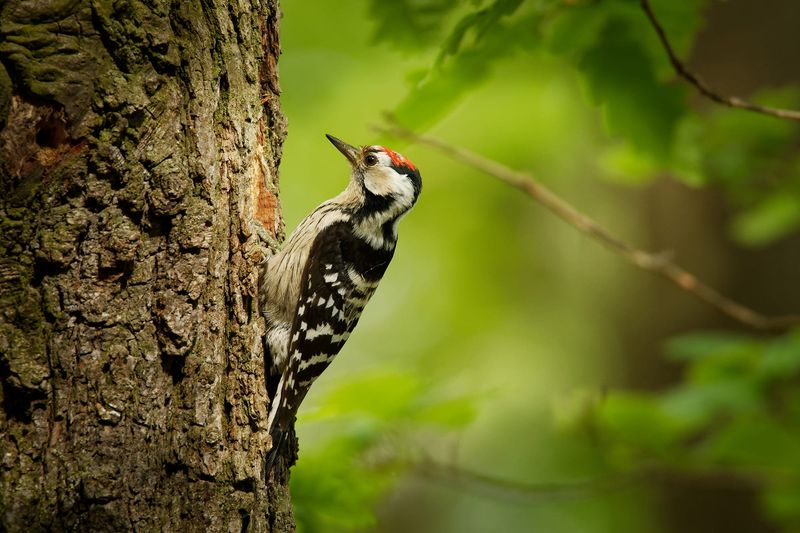
Late winter is a believable time to hear this. Cornell’s Bird Academy says woodpeckers can start drumming in midwinter.
So a burst of tapping in February or March fits what birds are known to do.
The peak is a little later. The U.S.
Fish and Wildlife Service says territorial or social drumming most likely happens in early spring, as birds get ready for the breeding season. Late winter is not the only time you might hear it, though, since drumming can show up at other times too.
As for what the message is, drumming can help a bird claim a territory, attract a mate, or serve other social purposes. Cornell Lab’s Downy Woodpecker sound page describes drumming as a way to hold territory and draw a mate, and notes that both sexes do it.
Even so, you cannot read the exact meaning from the noise. The season makes social drumming plausible, but it does not prove the bird is defending a particular patch.
The time of day does not settle it either, so there is no need to give dawn special weight.
A practical way to think about it is this: the tapping probably carries a message meant for other woodpeckers, not for you. If it stays confined to the gutter and stops after a few weeks, it may simply be part of the spring routine.
Kentucky has more than one possible woodpecker
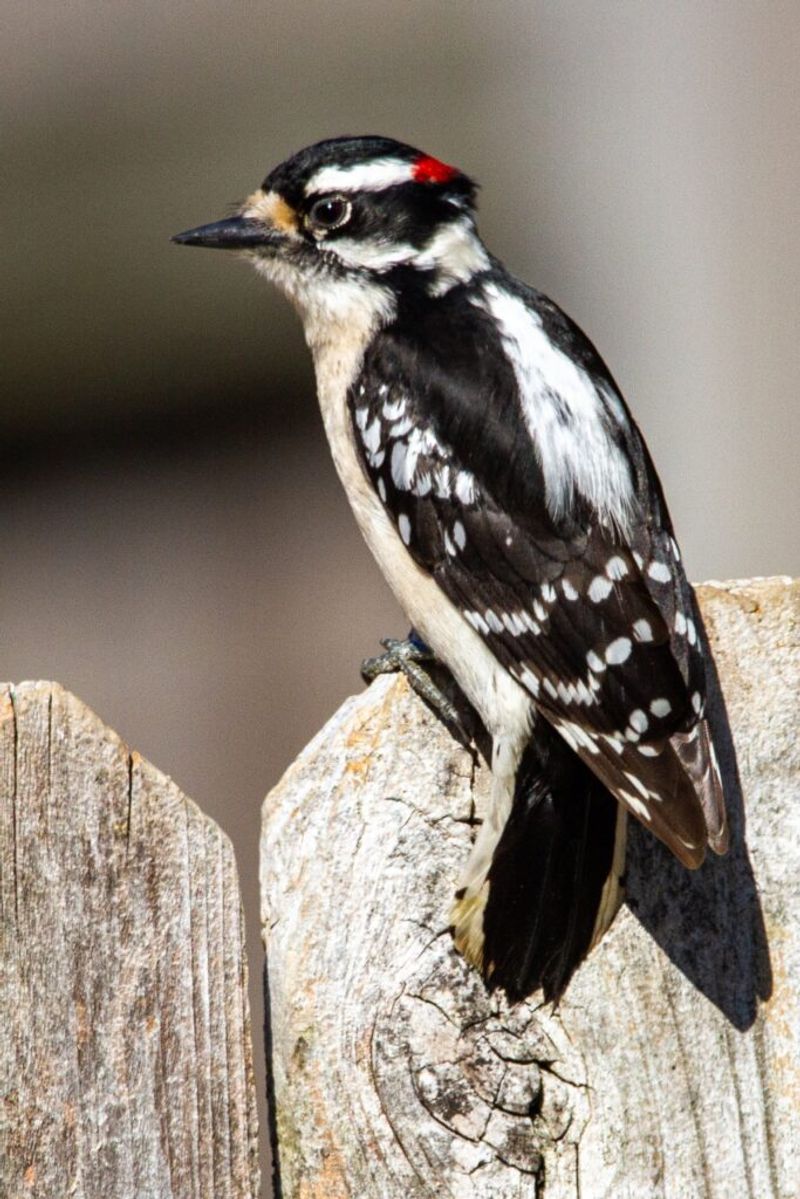
Two familiar candidates are the Downy Woodpecker and the Red-bellied Woodpecker. Both live in Kentucky year-round, which makes either one a plausible visitor to your yard.
Cornell Lab’s range map for the Downy Woodpecker shows it across the state, and the Red-bellied Woodpecker overview describes a bird common in the eastern and southeastern United States.
Being possible is not the same as being identified. A gutter tapping at your house does not tell you which species is behind it, and the location alone cannot either.
Other woodpeckers may also pass through, so it is best not to guess from the sound.
If you want to know who it is, watch instead of listen. Stand back from a window with binoculars if you have them, and look at size and color.
A Downy is small with a white back and short bill, while a Red-bellied is larger with a barred back and a red patch on the head.
You can also snap a photo and compare it with a field guide or a bird identification app. A few minutes of watching will tell you more than hours of listening, and it keeps you from assuming too much about the bird.
The tapping pattern can point you toward the right inspection
Different kinds of pecking leave different clues. Fast, rhythmic bursts on a resonant surface like a gutter are characteristic of drumming, which usually causes little damage.
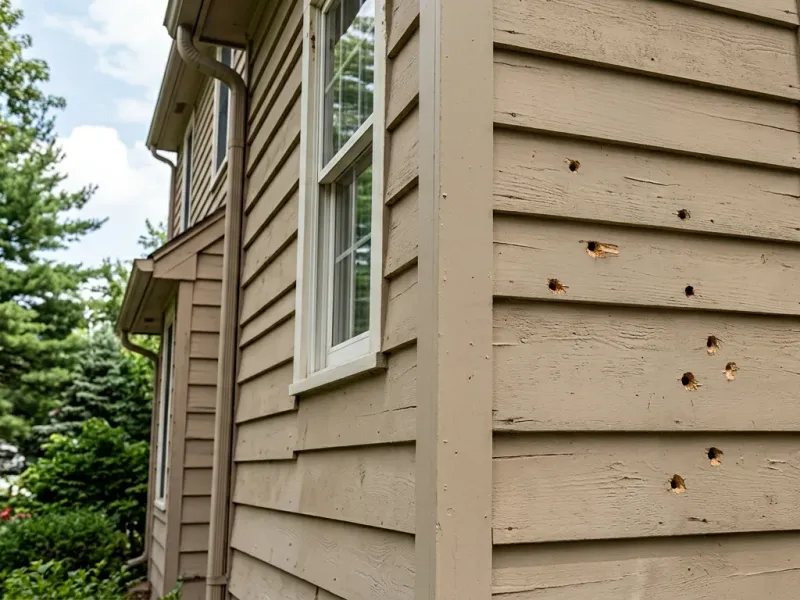
Irregularly scattered holes in siding look more like foraging, and slower, quieter tapping can happen during excavation of a cavity.
Virginia Tech Cooperative Extension separates these behaviors for exactly this reason. They are clues, not a diagnosis, so use them to decide where to look rather than what to conclude.
Do not assume every peck means insects are living in your walls. Drumming can be mostly noise.
On the other hand, do not assume there is no problem either, because foraging holes sometimes do point to insects or decaying wood.
So take a walk around the spot where you hear the sound. Check the nearby siding and trim for holes, soft or rotted boards, and signs of insects such as fine sawdust or tunnels.
The U.S. Fish and Wildlife Service recommends starting with the affected area in this way.
Take notes or photos of what you find, along with when the tapping happens. If the gutter is the only thing being hit and the wood looks sound, you may have a noise problem rather than a damage problem.
That difference shapes which fix makes sense.
Choose a fix only after you find damage
If your inspection turns up real holes, repair them. Also deal with any underlying insect or wood-decay problem, since that can keep drawing birds back.
This advice applies when there is actual damage, not when the only trouble is noise on the gutter.
When damage keeps coming back, physical barriers have the best support. The U.S.
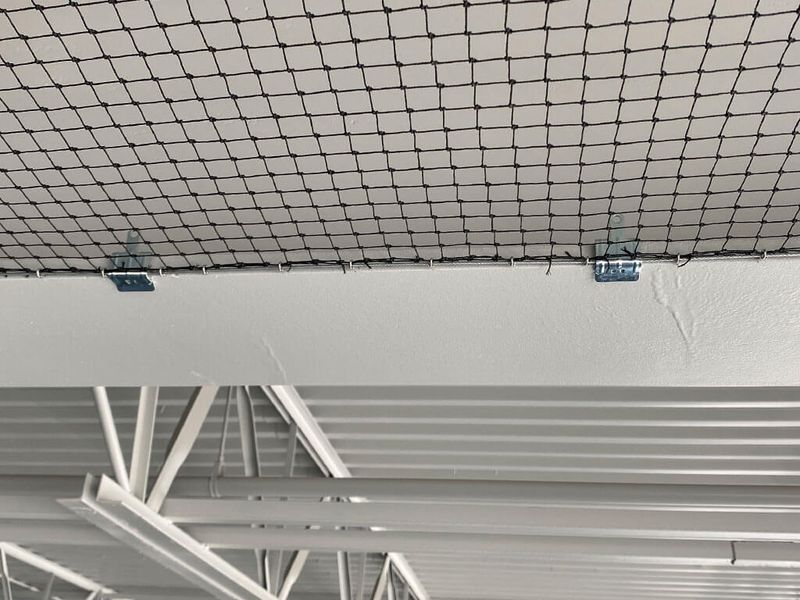
Fish and Wildlife Service describes properly installed, taut bird netting as probably the most effective control method. Iowa State University Extension also ranks barriers such as netting or hardware cloth above visual or sound deterrents.
Netting works best when it is held a few inches away from the surface so the bird cannot reach the wall through it. Loose or sagging netting can tangle birds, so keep it tight and check it from time to time.
Scare devices such as reflective tape, decoys, or noisemakers are a weaker bet. They can work inconsistently, and birds often get used to them and return.
If you try one, treat it as a short-term experiment rather than a promise.
One thing to avoid completely is sticky or adhesive deterrents. Wildlife officials warn that these can impair a bird’s flight and its ability to stay warm, which can turn a nuisance into an injury.
Humane exclusion keeps both your home and the bird safe.
Leave an active nest or cavity undisturbed
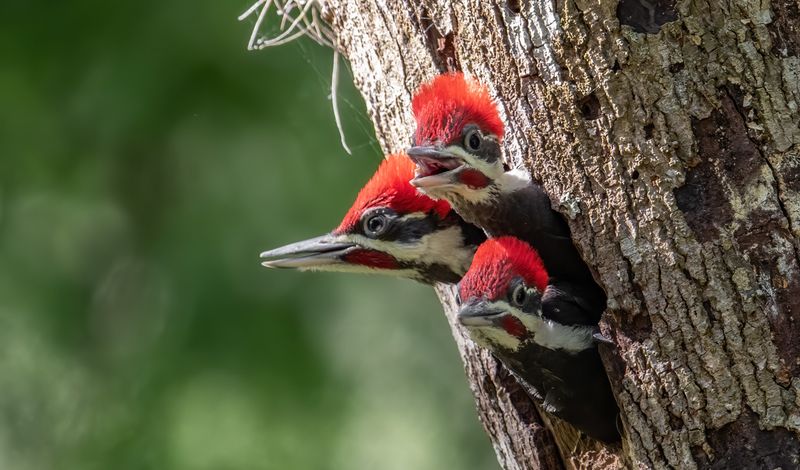
Sometimes the story changes from noise to nesting. If you find a hole that may hold an active nest or dependent young, do not seal it or disturb it.
Blocking the opening could trap or harm the birds inside.
Woodpeckers are protected under the Migratory Bird Treaty Act, so the law is on the side of leaving them alone. The U.S.
Fish and Wildlife Service says that intervention may need to wait until the young have left, and that some actions may require a permit.
For general background on why nests matter and how they are treated, see the agency’s page on bird nests. Active nests get extra care, even when they are in an inconvenient spot.
If you are unsure whether a cavity is in use, contact the U.S. Fish and Wildlife Service or Kentucky wildlife officials.
They can give advice for your exact situation, including when repairs can safely happen. A short phone call is better than a guess.
In the meantime, keep pets and children away from the area and avoid poking at the hole. Waiting a few weeks is usually enough for the birds to move on.
The tapping is loud, but it is also temporary.
Share this story