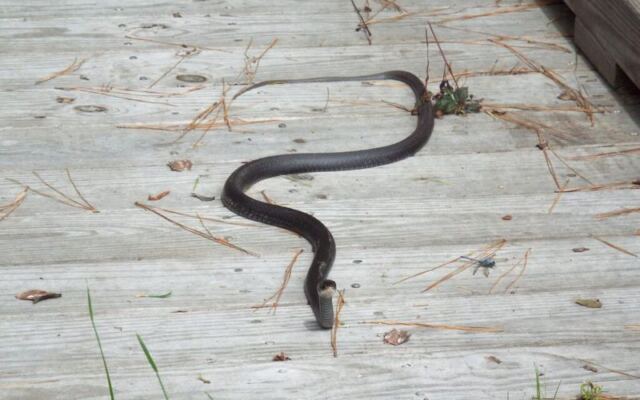
A big black snake on your porch steps could be a black racer or a rat snake, and both are real possibilities in South Carolina. But a dark adult cottonmouth can look a lot like them, so color and size alone will not tell you which one you have.
A warm winter day can bring snakes out to soak up the sun near doors and steps. Here is how to think through what you are seeing while staying a safe distance away.
Warm weather can bring snakes out, but it cannot name one
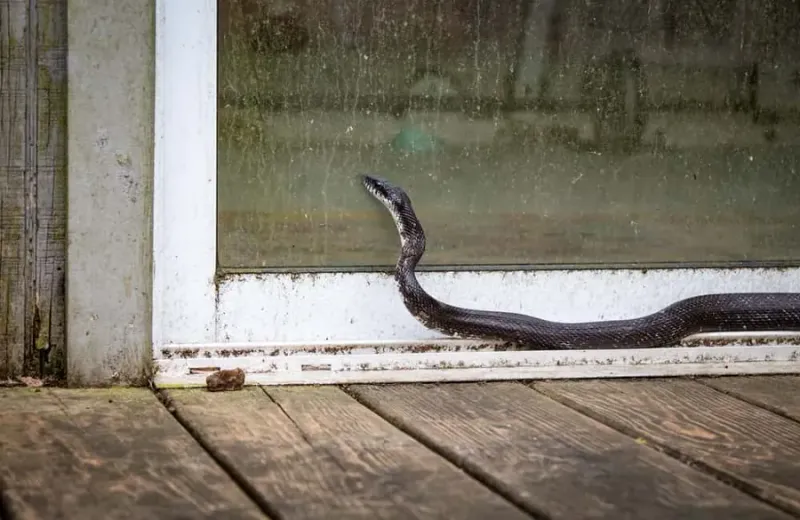
Here is the plain answer: a black racer or a rat snake is a plausible possibility for a big dark snake on your steps. An adult cottonmouth can also look dark, though.
The color, the size, the porch, and the winter date cannot settle the species, no matter how sure you feel.
Snakes depend on outside warmth to move around. South Carolina DNR explains in its overview of snakes of South Carolina that snakes are most active in the warmer months.
That fits with a peer-reviewed study in the state’s Atlantic Coastal Plain, which found that snake movement generally increased as temperatures rose.
What does that mean for your porch? A warm spell may increase snake activity, and a sunny slab of concrete is a handy place to warm up.
Basking is a sensible explanation for what you are seeing.
It is not a forecast, though. Nobody can name a single winter temperature that sends snakes out, and warmth does not tell you which species will turn up.
Treat the snake as unidentified until someone can confirm it from clear details.
Racers and rat snakes can look different
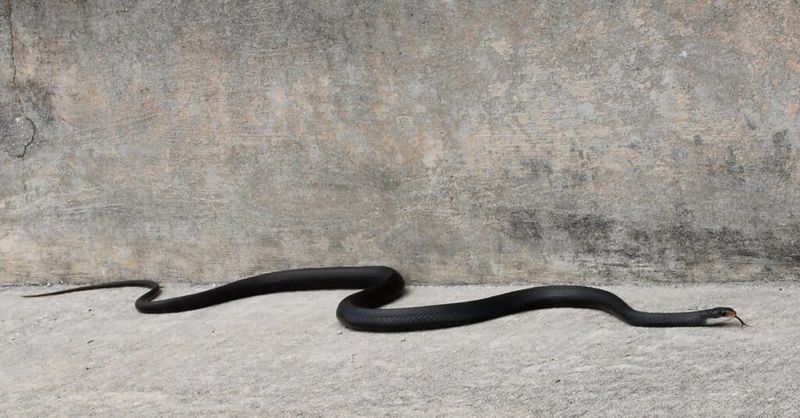
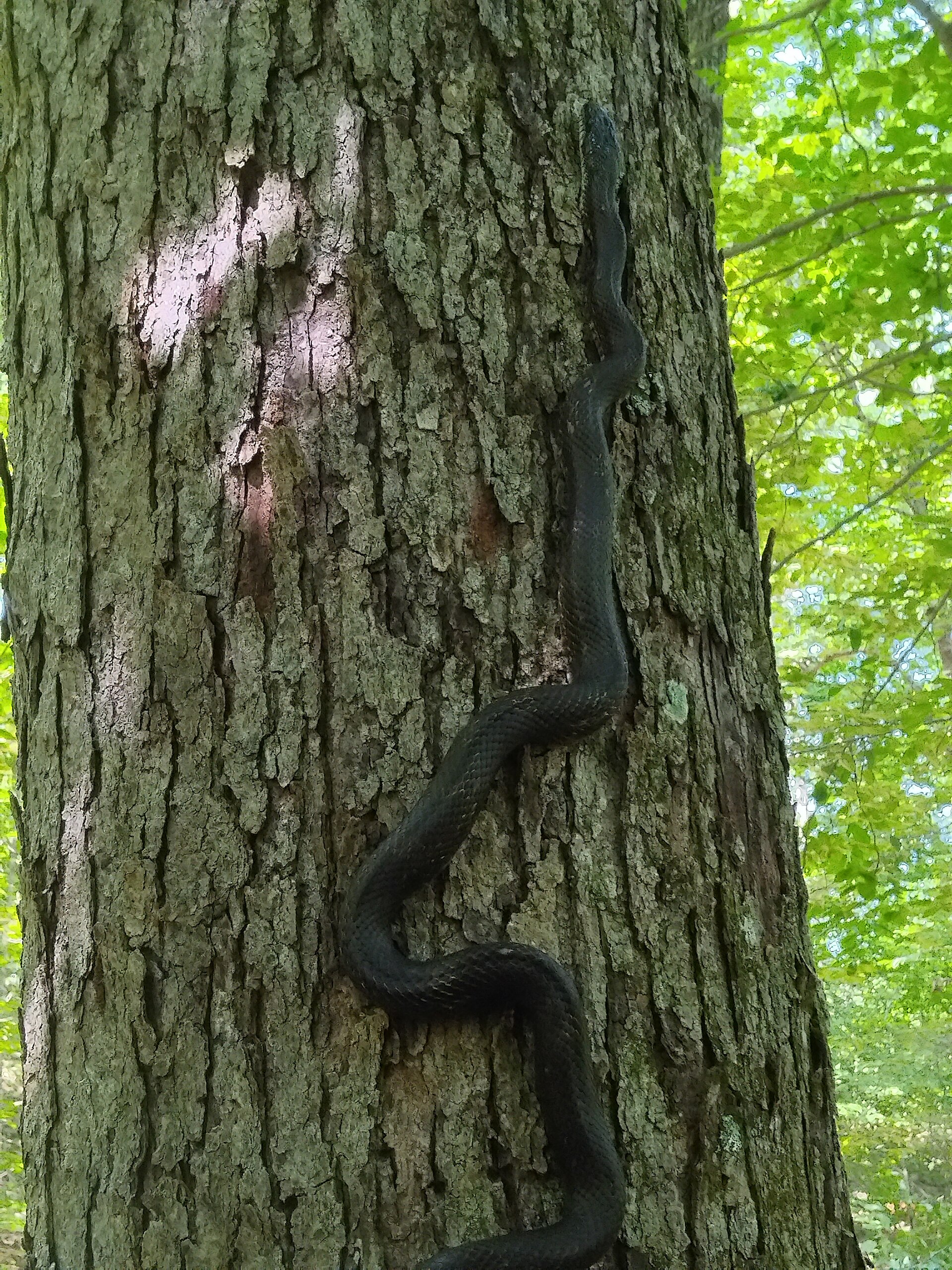
South Carolina DNR gives some helpful descriptions in its guide to the black snakes. Adult black racers are dull black, slender, and fast-moving, and many have a white chin.
Adult black rat snakes in the upstate guide are shiny black, sometimes with faint blotches, and generally slower-moving.
Age matters too. Young rat snakes are patterned, and they darken as they grow.
A blotchy snake on your steps could therefore still be a young rat snake rather than something else entirely.
Treat these as regional guidance, not a test that works the same everywhere in the state. In a coastal-plain guide from DNR, the southern black racer is the “black snake” most often observed there.
The same guide names the coastal rat snake as the yellow rat snake, so the rat snake you meet near the coast may not be black at all.
Even good descriptions are hard to use on a moving animal from across the yard. Think of them as clues that raise or lower your guess, not as proof.
A dark snake could still be a cottonmouth
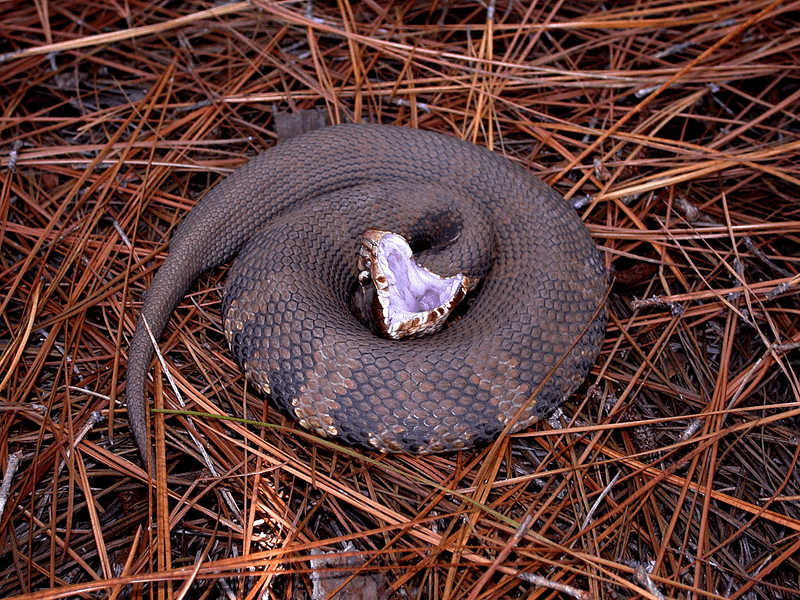
Many people expect a cottonmouth to look boldly banded. Adults often do not.
South Carolina DNR’s snake FAQ notes that adult cottonmouths can be dark, and their pattern may be hard to see. So a mostly black snake does not rule one out.
Cottonmouths are associated with wetlands and occur mainly in the Sandhills and Coastal Plain. DNR says they do not generally occur in the Piedmont or mountains, but it notes records in the Savannah River Valley in McCormick and Edgefield counties, as described in its reptile and amphibian FAQ.
Use that as background, not as proof. A porch does not make a snake a cottonmouth, and it does not exclude one either.
Near the coast, DNR’s coastal guidance says camouflage can make cottonmouths hard to see when they are basking.
Cottonmouths are also not the only venomous snakes here. South Carolina has multiple venomous species, which is one more reason to keep your distance from any snake you cannot name.
Familiar clues cannot settle the identification
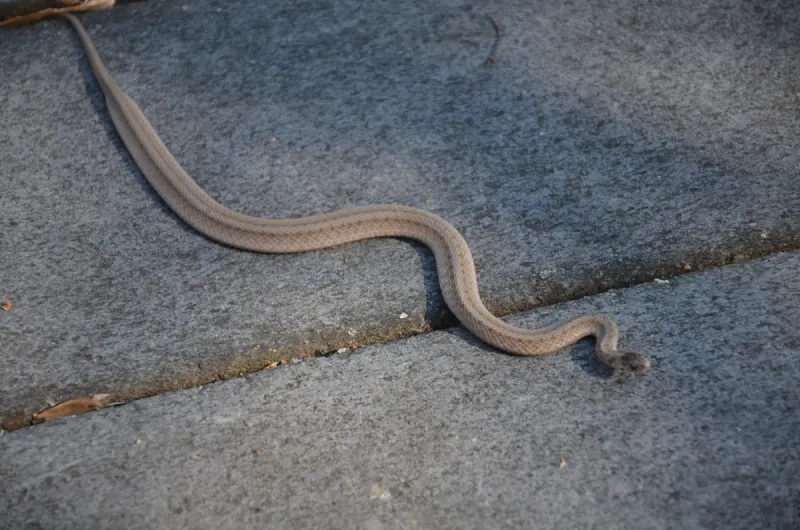
Black color, a large body, a winter date, and a porch setting all feel like useful clues. None of them establishes a species.
Racers, rat snakes, and cottonmouths can all be dark, big, and sunning near a house.
Head shape is another trap. DNR notes that nonvenomous snakes can flatten their bodies and make their heads look larger or more triangular.
University of Florida extension guidance likewise warns against relying on single features. Head shape and apparent pupil shape cannot identify a venomous snake on their own, and nobody should step closer to study the eyes or facial pits.
What does help? Your county, plus a clear view of the whole snake from far away, gives an expert something to work with.
Where you live matters, since cottonmouths are mainly a Sandhills and Coastal Plain concern.
Even then, a photo may not be detailed enough. SCDNR cautions that poor-detail images may not support an identification.
If you are unsure, keep your distance and ask for reliable help.
Give the snake room and take a photo only from a safe distance
At the doorway, the first job is simple: keep people and pets back. Bring dogs inside, call children away, and use another exit if you have one.
Give the snake room to leave on its own.
Do not corner, catch, move, handle, or try to kill it. Racers and rat snakes are nonvenomous, but DNR says larger nonvenomous snakes may bite if handled.
An unidentified snake could be venomous, and most bites happen when people try to interfere.
If you can take a photo without moving closer, do it. Zoom in from where you stand, include the whole snake, and note your county.
Skip the photo if getting it means stepping toward the animal.
You can then ask for help through SCDNR’s identification assistance page. Be aware that a blurry or partial image may not be enough for an answer.
If the snake is still there after a while, keep the area clear and rely on that expert help rather than a closer look.
Clear away hiding places in the yard
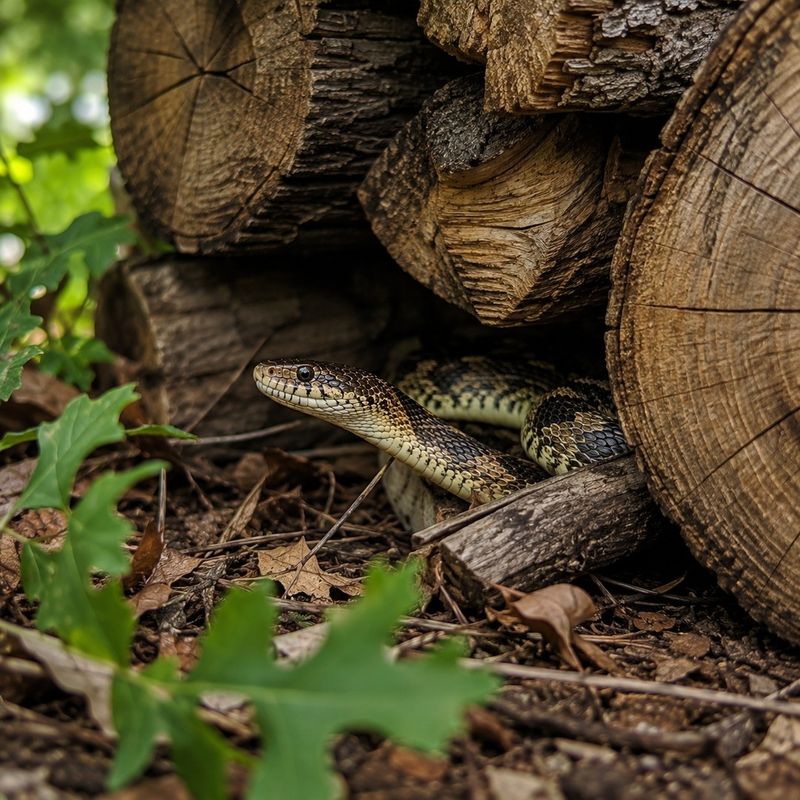
No yard is guaranteed to be snake-free, but you can make yours less inviting. Snakes look for cover, and so do the rodents they hunt.
SCDNR recommends in its reptile and amphibian FAQ that homeowners reduce hiding places such as lumber, woodpiles, tin, and debris.
Start with the spots near doors and steps. Move scrap boards, old roofing tin, and loose piles away from the house, or get them off the ground.
Keep firewood stacked neatly and away from the foundation.
Next, look at the plants. DNR also suggests keeping grass and low shrub growth managed, which removes the dense cover that makes a sheltered resting spot.
Do this kind of cleanup on a cool day when you do not see any snakes around, and wear sturdy gloves and boots when moving things. Treat each pile as a possible hiding place and lift it with a tool rather than your bare hands.
Get medical care promptly after a suspected venomous bite
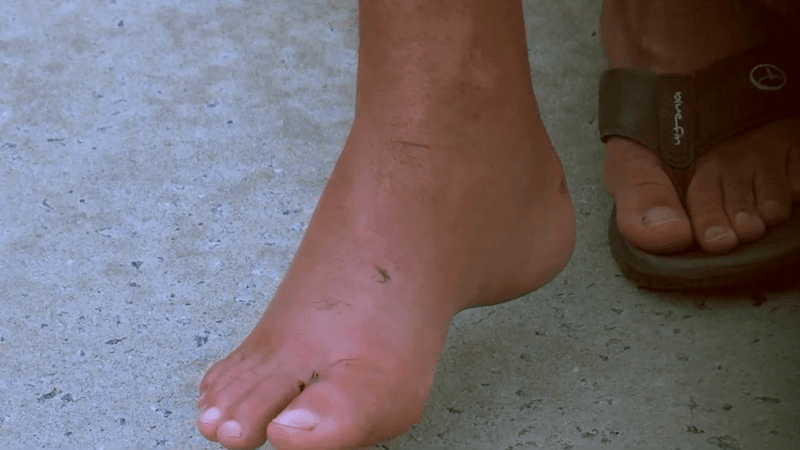
If someone is bitten and you think the snake may be venomous, seek medical attention promptly. The South Carolina Department of Public Health lists this kind of guidance in its animals and insects safety advice.
Do not wait to be sure of the species.
Do not cut the wound, and do not try to suck out the venom. Skip other home remedies too, since they are not supported and can make things worse.
Leave the treatment to medical professionals.
Also avoid any attempt to catch or kill the snake to prove what it was. DNR’s snake FAQ advises against trying to kill venomous snakes.
Get away from the snake and get help.
A calm distance is the best protection you have.
Share this story