If a saddleback caterpillar’s spines touch your skin, burning pain can start quickly, though reactions vary from person to person. The first moves are simple: keep bare hands off the caterpillar, lift the spines away with tape, wash gently, and call Poison Control.
Knowing these steps before you reach into the tomato plants or the shrubs can save you a lot of misery. Here is what to do, what to watch for, and how to spot this spiny little insect.
Remove the caterpillar and spines without using your hands
Start with the caterpillar itself. If it is still on your skin, brush it off with a stick, a folded leaf, or a tool, not your bare fingers.
Touching it again can push more spines into your skin.
Next, take a piece of tape and press it gently onto the affected spot. Lift it straight away, then repeat with a fresh piece.
This helps pull out hairs or spines that may be stuck in the skin, and Poison Control recommends this tape method before anything else.
After the tape, wash the area gently with soap and water. Skip the scrubbing.
Rubbing the site can break off more spines and spread them around.
Only after the spines are lifted and the skin is washed should you think about comfort measures for itching or soreness. Getting the spines out comes first, because everything else works better once they are gone.
If you are not sure whether you touched one, treat the spot the same way and keep an eye on how it feels over the next hours.
What the reaction can feel like
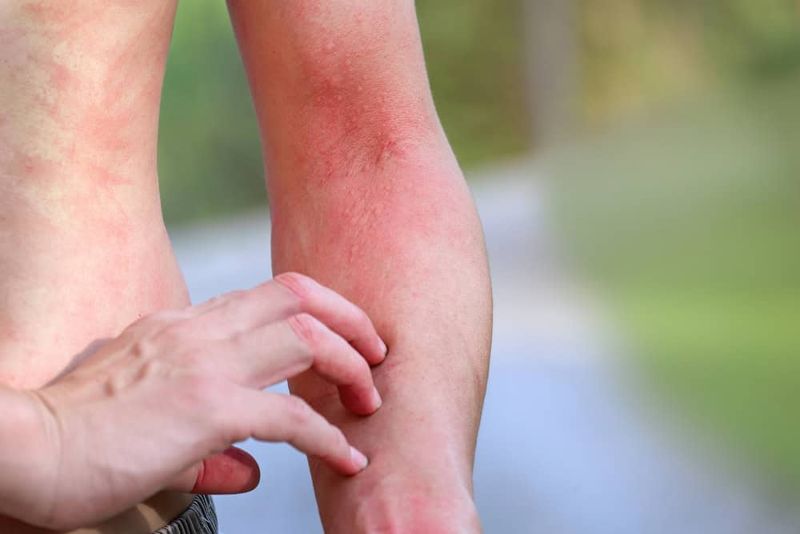
The word sting is a handy shorthand, but a saddleback does not have a stinger like a bee. The reaction comes from defensive spines or hairs that touch the skin and can break off there.
That contact can cause burning pain, redness, itching, swelling, welts, or even blisters.
Some people also feel nauseated or get a headache. Severe allergic reactions are rare but possible, so pay attention to how you feel beyond the skin itself.
Reactions vary, and two people touching the same caterpillar might notice very different things.
Virginia Cooperative Extension describes burning and inflammation that can resemble a bee sting and may last a day or two. That is a rough picture, not a promise.
Some reactions fade faster, and others linger longer.
Once the spines are lifted off and the skin is washed, Poison Control suggests hydrocortisone as one possible way to ease itching. Treat it as an optional comfort step, not a replacement for tape and soap.
When to call Poison Control or 911
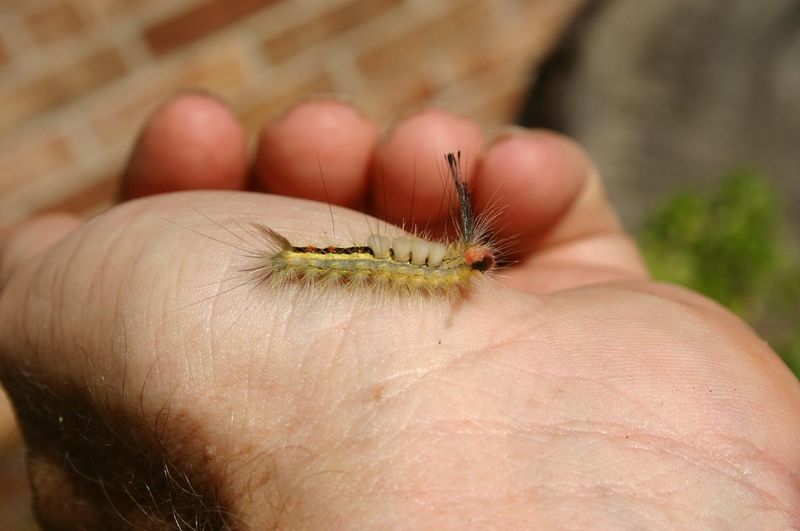
You do not need to wait for symptoms to get worse before reaching out. In the United States, you can call Poison Control at 1-800-222-1222 any time after suspected contact.
The specialists can give advice that fits your situation, including your age, the spot that was touched, and how you feel.
Some signs call for a different number. Dial 911 for difficulty breathing, fainting, or swelling of the lips, face, or tongue.
These point to a serious allergic reaction and need emergency care right away.
Think of it as two tracks. Poison Control is for questions, tailored guidance, and symptoms that seem stronger than expected.
Emergency services are for the warning signs above, and you should not spend time on first aid if one of them appears.
If you are helping a child or another person who cannot explain what happened, say what you saw, such as a green-marked, spiny caterpillar, and when the contact happened. A photo of the caterpillar, taken from a safe distance, can help too.
Rinse the eye if spines or hairs get in it
Eye contact calls for extra caution. If spines or hairs get in an eye, start rinsing with lukewarm water right away.
Do not stop to figure out which caterpillar it was first.
Keep the eye open as much as you can while the water flows gently across it. Poison Control advises seeking medical advice if irritation persists after rinsing.
Skip any skin remedies near the eye. Tape, creams, and pastes are not meant for it.
Rubbing is also a bad idea, since it can scratch the surface.
If you are unsure what to do next, this Canadian poison centre guide also covers eye and skin exposure, and Poison Control at 1-800-222-1222 can help you decide whether to get care.
How to recognize a saddleback caterpillar
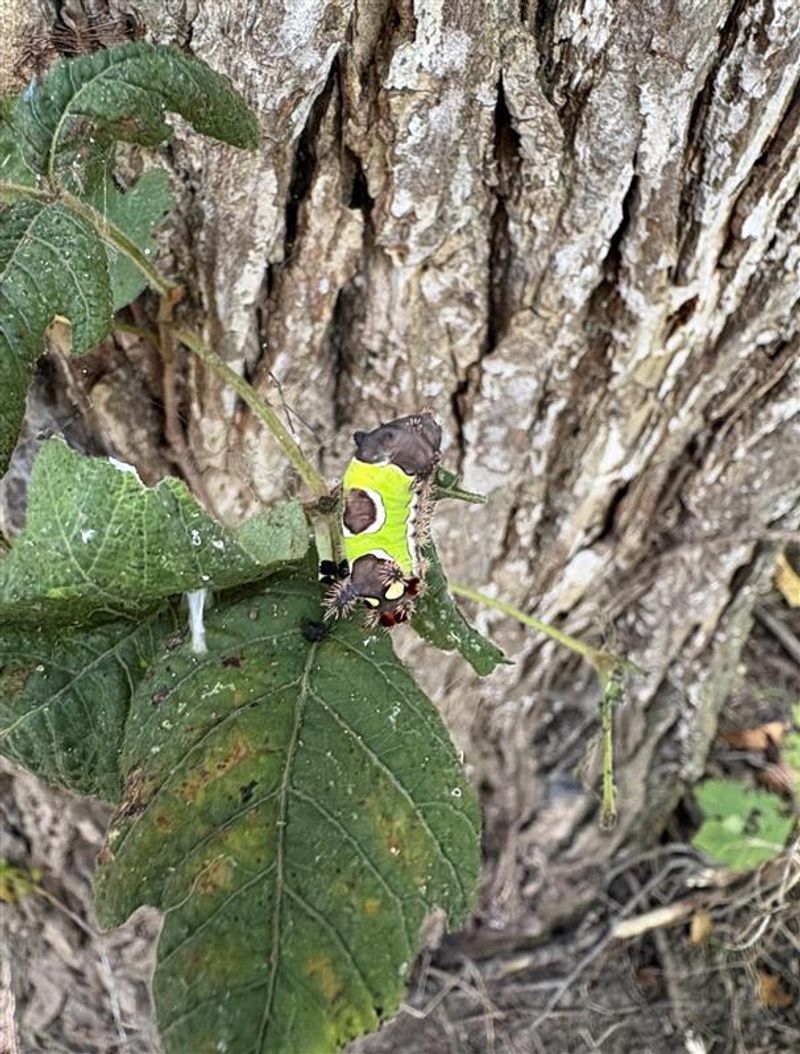
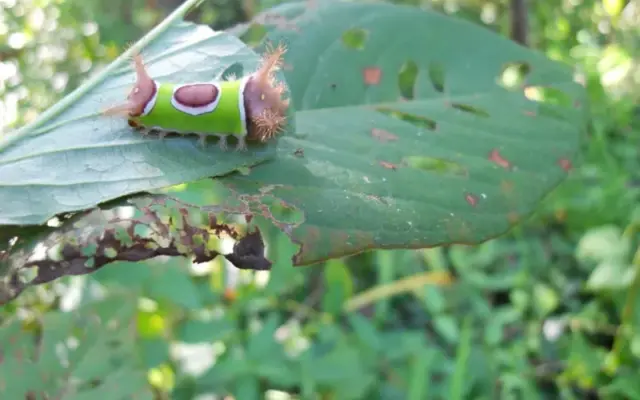
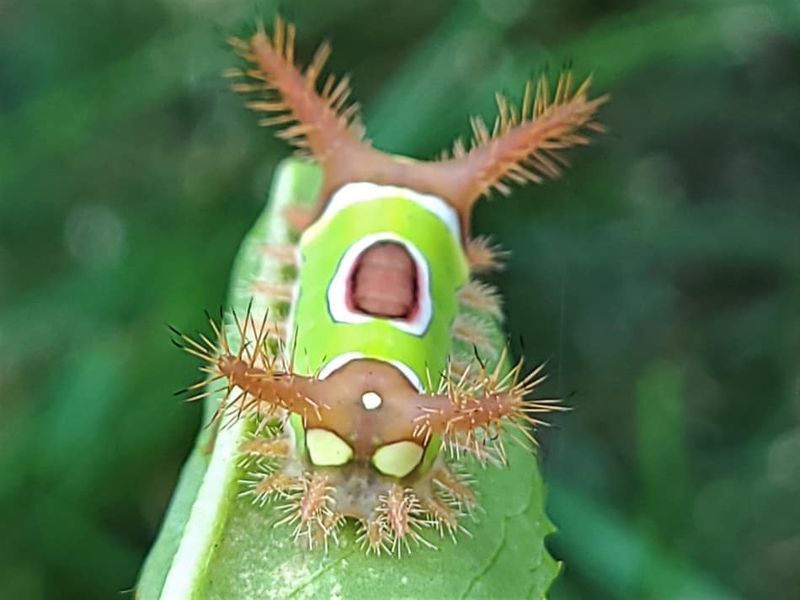
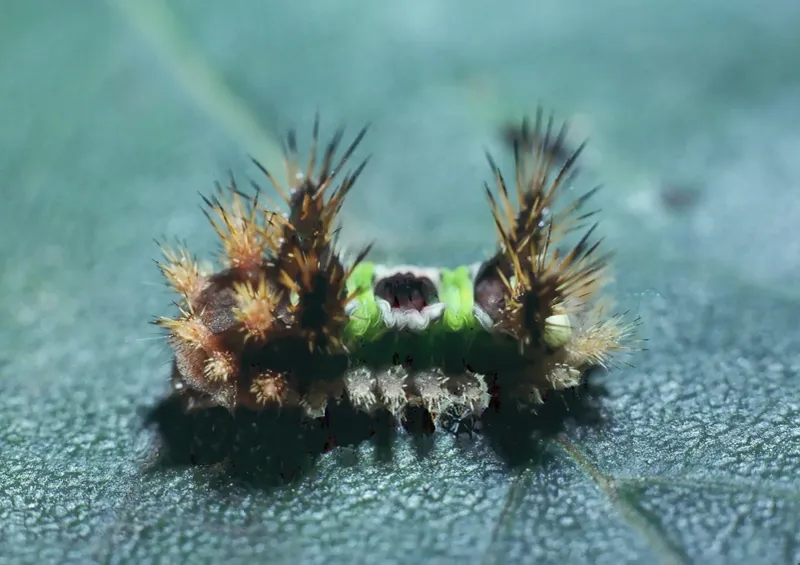
Picture a small, stubby caterpillar with a brown body and a bright green patch across its middle, like a saddle blanket. Fleshy projections tipped with spines stick out along its body.
Those spines, along with the saddle marking, are your best identification clues.
It is the larval stage of a moth. Like many young insects, it feeds on leaves, so it can turn up on plants where you are working.
Virginia Cooperative Extension notes that the spines can break off and cause a painful skin reaction, which is why it is best to admire this one from a distance.
As for Illinois, Illinois Natural History Survey collection records list Acharia stimulea in Lawrence, Montgomery, and Brown counties. Specimens were collected in August in 1943, 1949, and 1952.
Those records show that the species has occurred in the state. They do not tell us how common it is now, how often people run into it, or how likely you are to find one in your own yard.
Keep your hands clear around foliage

A little habit goes a long way. Treat any unfamiliar spiny or hairy caterpillar as something to look at, not touch.
If one is in your way, nudge it aside with a stick or tool.
When you work in places where caterpillars could be hiding, such as dense shrubs, leafy borders, or corn and tomato rows, Poison Control suggests wearing gloves. Long sleeves can add a layer of protection for your forearms.
Keep the advice in proportion, though. Gloves lower the chance of contact but do not remove it, so check leaves before you grab them and wash up when you finish.
Nothing here suggests saddlebacks are widespread in Illinois gardens.
A quick look before you reach in costs only a few seconds, and your hands will thank you.
Share this story