That tall, thick stalk shooting up from the middle of your rhubarb is its flower stalk, and removing it near the base helps the plant keep its energy pointed toward the leafstalks you actually pick. Rhubarb makes these stalks as a normal part of its life cycle, so there is no need to panic.
You can cut or snap the stalk off, and the plant will usually carry on. Here is what the stalk is, what taking it out can do, and what it cannot.
What is that towering stalk?
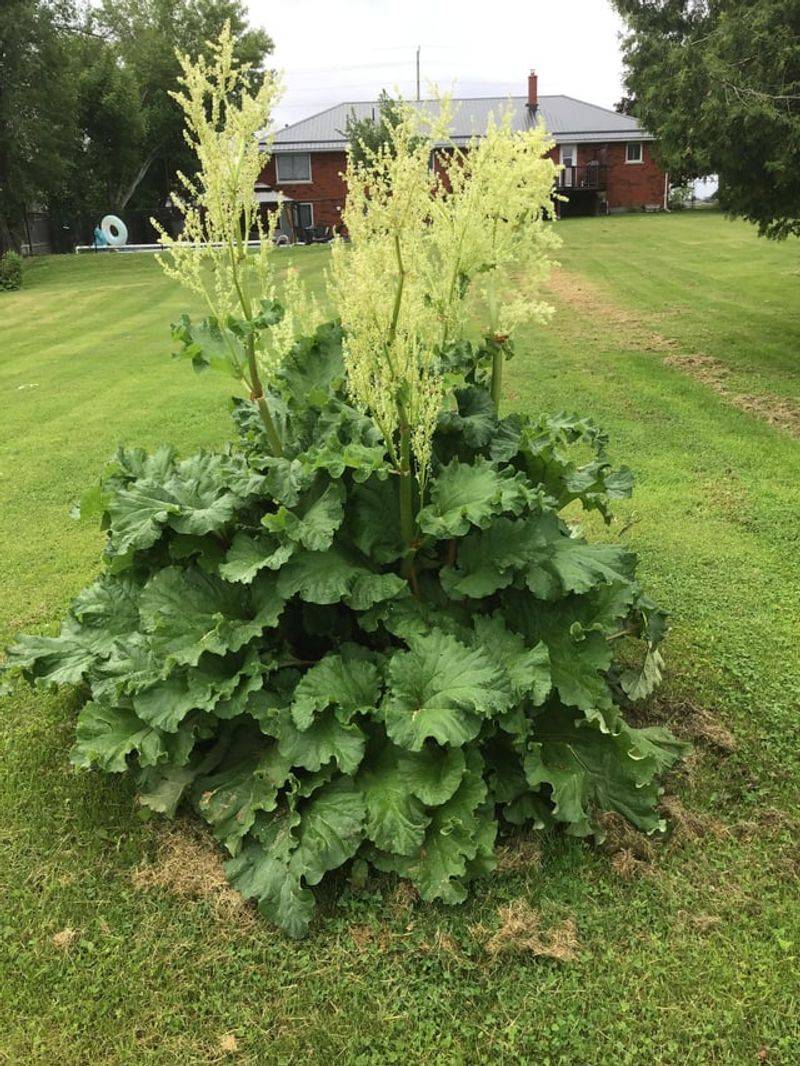
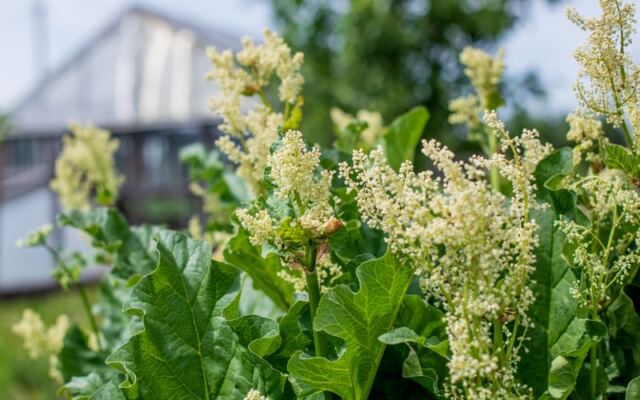
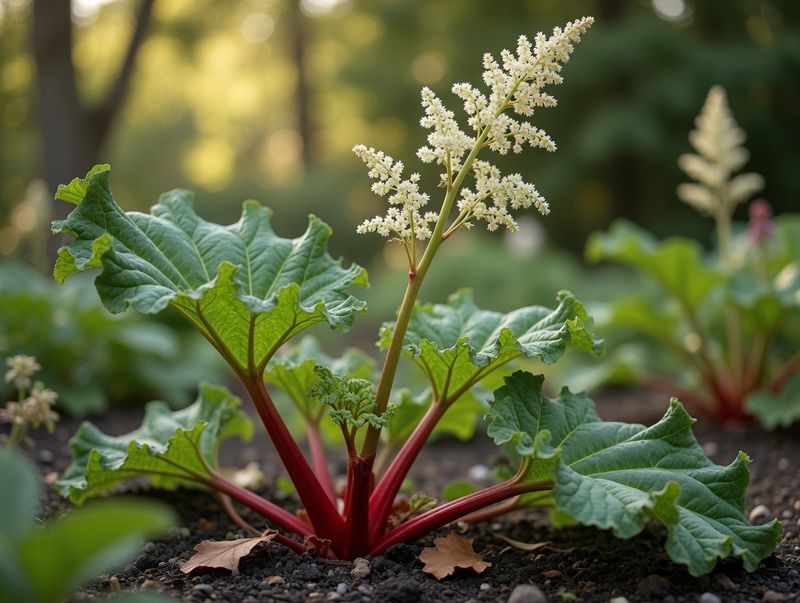
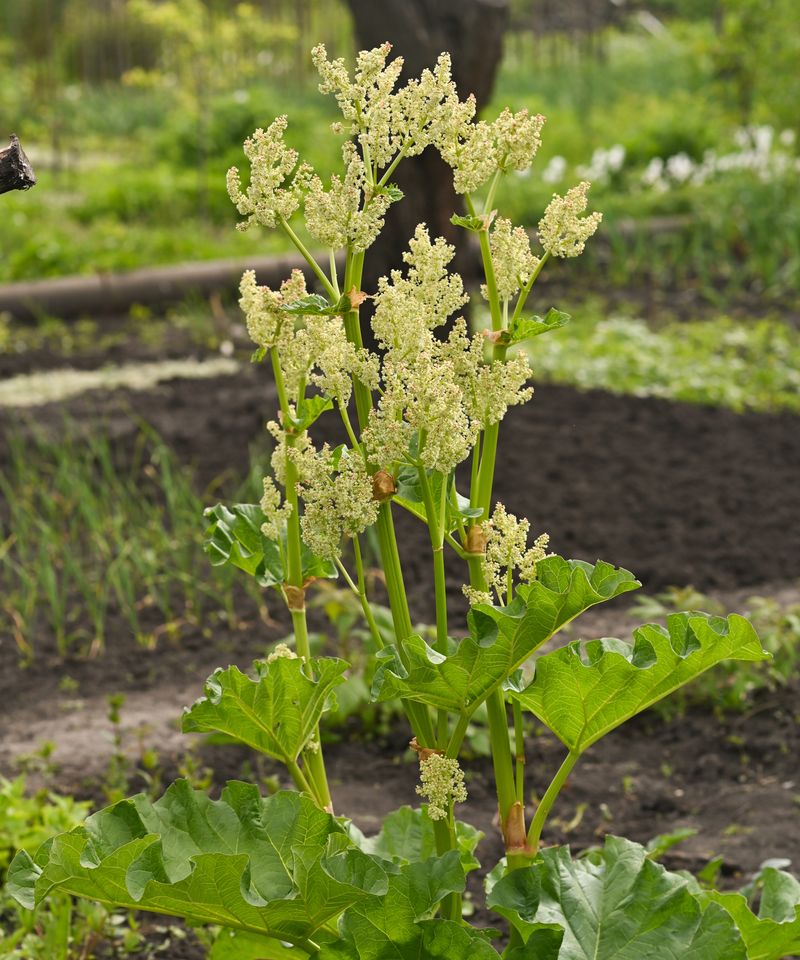
Walk out to the garden one morning and you may spot something odd rising from the middle of your rhubarb clump. It is a thick, tall stalk topped with a lumpy bud that opens into a plume of small creamy flowers.
That is the flower stalk, and it can grow several feet tall.
Flowering is part of rhubarb’s normal reproductive cycle. Purdue Extension explains that gardeners often call this bolting, a word used for plants grown for edible leafstalks that send up flowers instead.
The term sounds dramatic, but the stalk is not a disease, and it does not mean the plant is dying.
It helps to know the parts of the plant so you can tell them apart. The leafstalks are the thick, celery-like stems that grow from the crown and hold up the big leaf blades.
The flower stalk looks different. It is rounder and sturdier, it has no large leaf blade at the top, and it grows straight up from the center with a swollen bud at the tip.
Varieties differ in how often they flower, a point Oregon State University Extension makes in its rhubarb guide. So seeing one stalk in your patch tells you what the plant is doing, not why it is doing it.
Once you know what you are looking at, the next steps are simple.
Why gardeners remove flower stalks
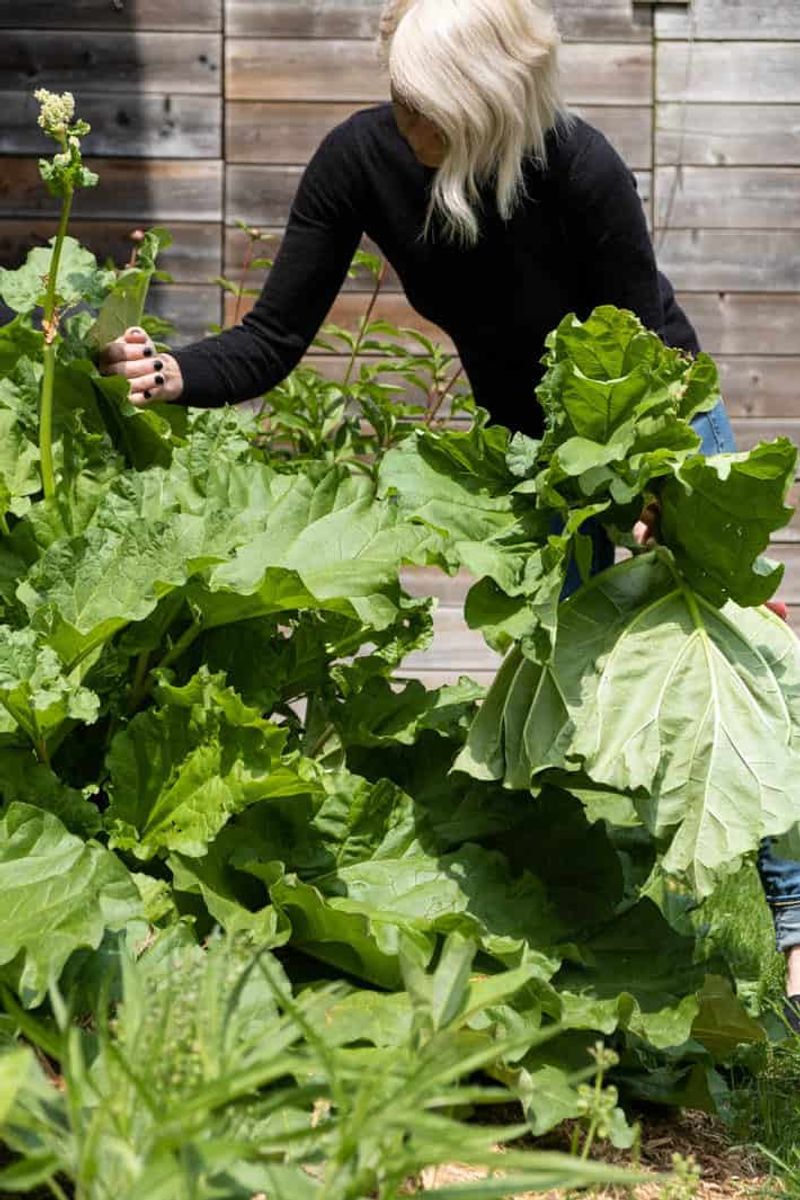
A plant that flowers is busy. Building flowers and then seeds takes energy and materials, and that effort competes with growing new leafstalks.
For a crop grown for its stems, that trade is not what most gardeners want.
Iowa State University Extension notes that flower and seed production can reduce plant vigor and inhibit leafstalk production, and it advises removing flower stalks as they appear. Utah State University Extension gives the same advice.
Two states with different climates reaching the same recommendation is a good sign that it is a sensible habit.
Notice what the advice does not say. It does not say that a flowering plant is doomed or that you did something wrong.
Many rhubarb plants flower, get the stalk removed, and keep producing for years.
Think of removal as housekeeping. You are asking the plant to spend its energy on the part you care about instead of on seeds you do not need.
If you ever wanted seeds, that would be a different story, but most rhubarb is grown from crown divisions and seed adds little for a home harvest.
So the reason for removing the flower stalk is practical, not urgent. Taking it out early keeps the plant from investing more in something that works against your harvest.
Remove the flower stalk near the crown
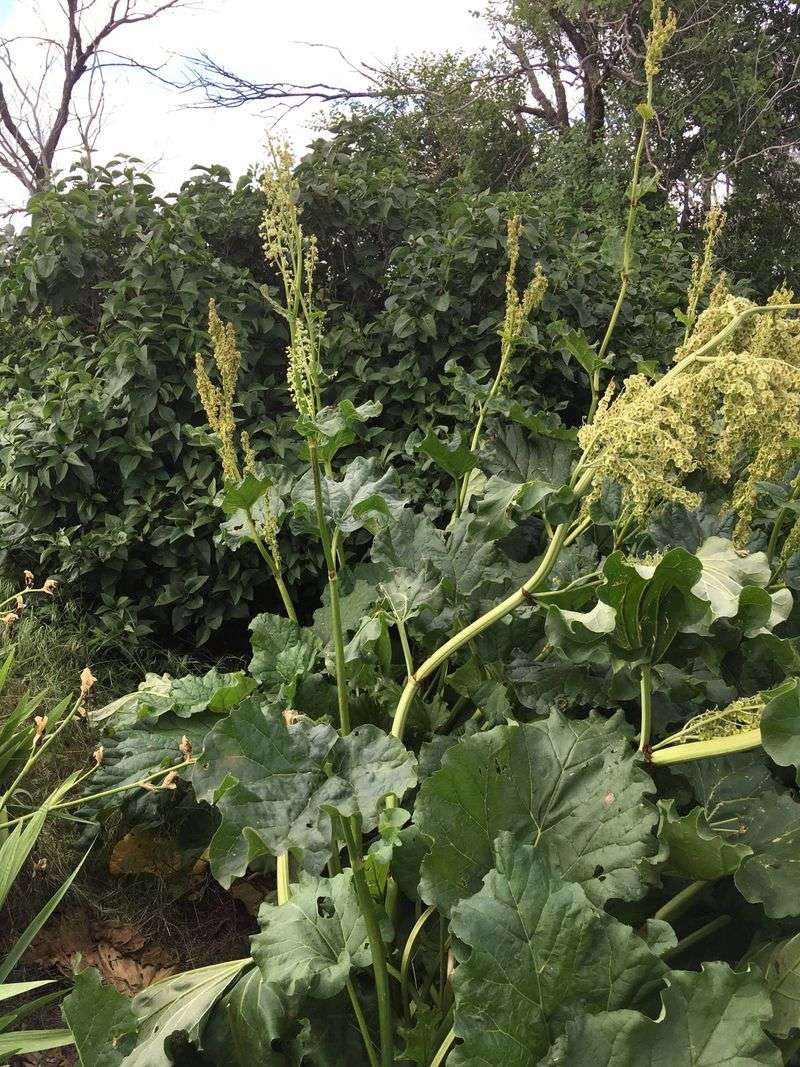
Timing matters more than technique. Remove the flower stalk as soon as you spot it, and take it off low, near the base where it meets the crown.
Leaving a tall stub behind gains you nothing.
You have two easy options. You can cut it with clean pruners or a sharp knife, or you can grab it low and snap it off with a firm bend.
Both work. Illinois Extension supports removing the flower stalk, and snapping is not essential, so choose whichever feels cleaner in your hands.
Hold the stalk close to the base so you do not tug on the crown or nearby leafstalks. If it will not snap cleanly, switch to a cutting tool.
Wiping blades between plants is a good habit if you grow more than one clump.
Plan to check again. Purdue Extension notes that a plant may send up more flower stalks, so a quick look each week or so during the growing season is worth it.
If another one shows up, remove it the same way.
Keep the job narrow. This step is only about the flower stalk.
Your edible leafstalks should be harvested on their usual schedule, and you do not need to trim them back because a flower stalk appeared.
What removing it can—and cannot—do
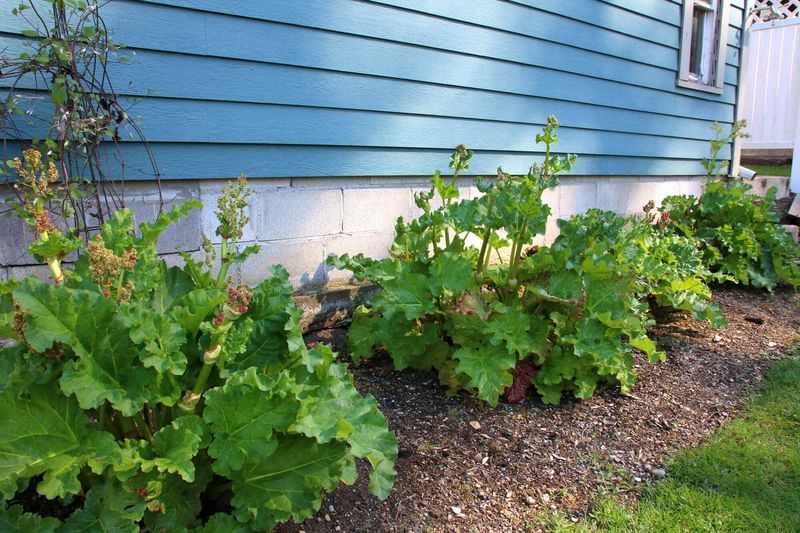
Taking out the flower stalk limits how much the plant puts into flowers and seeds. That can favor continued leafstalk production, and it works whether you cut the stalk or snap it.
The benefit comes from the stalk being gone, not from the way it came off.
What it does not do is guarantee a bigger, tastier, or more plentiful crop. Sources support removal as a way to save the plant’s effort and vigor, but none promise a particular yield or flavor.
Treat it as one helpful step, not a magic switch.
It also will not repair a plant that is struggling. Iowa State University Extension lists poor soil, weather extremes, drought, and old or crowded crowns as possible contributors to flowering.
If one of those is in play, removing the stalk will not fix it.
A practical example: if your plants are thin and spindly and a flower stalk appeared, remove the stalk, then look at the basics. Is the soil rich and well drained?
Has it been dry? Are the crowns crowded?
Those questions are about overall care, and they are separate from the stalk.
Likewise, a flower stalk is not proof that the crown needs dividing. Purdue Extension describes bolting as potentially coming from a mix of factors.
So remove the stalk, keep an eye on the plant, and judge the rest by how it grows.
Flowering does not make leafstalks poisonous
A common worry is that a flowering plant has gone toxic. It has not.
Purdue Extension states that the leafstalks stay edible whether or not flower stalks are present, so flowering alone does not make them poisonous.
The trick is knowing which part is which. The edible part is the thick leafstalk, also called the petiole.
The USDA says only the leafstalk is suitable for human consumption. The flower stalk is not a leafstalk, so do not cook it as one.
The leaf blades are the toxic part and should never be eaten. Trim them off when you harvest and keep them out of the kitchen.
University of Minnesota Extension calls the idea that the whole plant turns poisonous later in summer a myth, while still advising that the leaves are not edible.
Frost is where advice gets less tidy. Purdue’s plant diagnostic lab says there is little evidence that freezing makes stalks toxic, while Illinois Extension warns that oxalic acid may move into the stalks after a severe freeze.
Since the experts do not fully agree, play it safe in a simple way. Discard stalks that are soft, wilted, blackened, or otherwise freeze-damaged.
A light frost does not turn every plant dangerous, and firm, healthy stalks can be treated as usual.
Several conditions can contribute to flowering
If you are wondering why your plant flowered, the honest answer is that there is rarely a single cause. Plant age, variety, low fertility, heat, drought, and sharp temperature swings have all been linked to flowering.
Other growing conditions can play a part too.
Varieties differ, as Oregon State University Extension points out, and some simply flower more readily than others. Purdue Extension describes bolting as something that may come from a combination of factors.
In Ohio, a warm spell after a cool spring or a dry stretch in summer could be part of the story, but the stalk alone cannot tell you.
Iowa State University Extension adds poor soil and old or crowded crowns to the list of possible contributors. That does not mean your crown must be divided.
It means those are things you can look at if the plant seems weak in other ways.
A useful way to use this list is as a set of gentle checks, not a verdict. Look at soil fertility, watering during dry weeks, and how crowded the clump looks.
Fix what is clearly off and leave the rest alone.
For now, the takeaway is simple. Remove the flower stalk near the crown, check back for more, and count it as a helpful step rather than a full diagnosis.
A flower stalk is a plant doing what plants do, and you get to steer it back toward the stems.
Share this story