Your backyard in Alabama might look calm, but some of its smallest residents pack a painful punch. The state is home to several venomous snakes, a couple of dangerous spiders, and even fuzzy caterpillars that can sting.
Knowing what they look like helps you stay safe while gardening, mowing, or letting kids play outside. Here are ten critters worth learning to recognize before you reach into that woodpile.
1. Eastern Copperhead
Picture a pile of fallen oak leaves. Now picture a snake hiding in it so well you could step right on it.
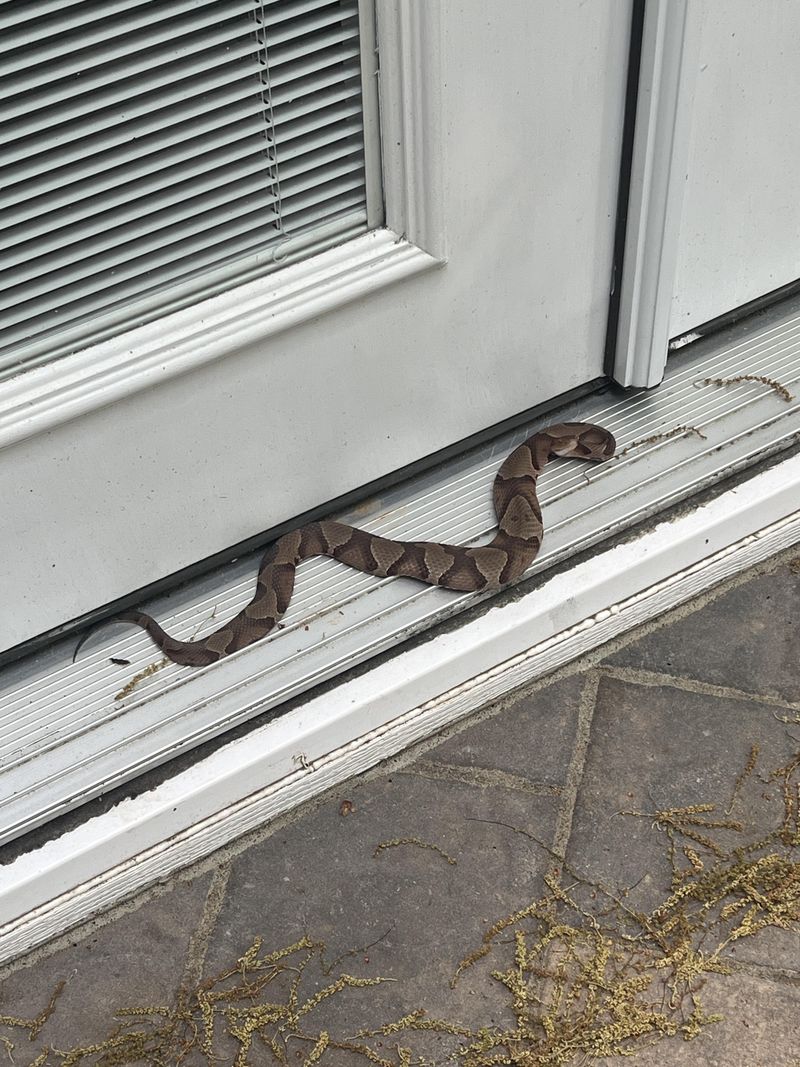
That is the copperhead’s whole game, and it is the venomous snake Alabamians run into most.
Look for a thick body in tan, peach, or copper tones with darker bands shaped like hourglasses or Hershey’s Kisses when viewed from the side. The head is wide and triangular, and young ones have a bright yellow tail tip they wiggle to lure frogs.
Copperhead bites hurt a lot and cause swelling, but they are rarely deadly. Wear gloves and boots when clearing leaves, mulch, or firewood, and give any snake you spot plenty of room.
2. Cottonmouth
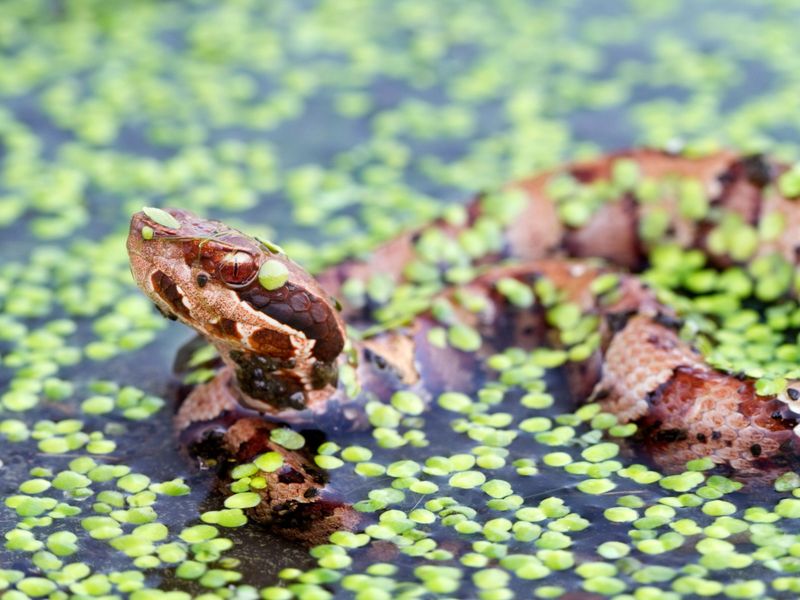
Got a pond, creek, or drainage ditch near your property? Then the cottonmouth may be your neighbor.
Also called the water moccasin, it loves wet spots across Alabama.
Adults are dark olive, brown, or nearly black with a heavy body and a blocky head. When threatened, it often stands its ground and opens its mouth wide, flashing a cotton-white lining that gave it its name.
Here is a handy tip: cottonmouths tend to swim with their whole body floating on top of the water, while harmless water snakes usually swim with only their head above. Their venom is serious, so call a professional if one keeps showing up near your home.
3. Timber Rattlesnake
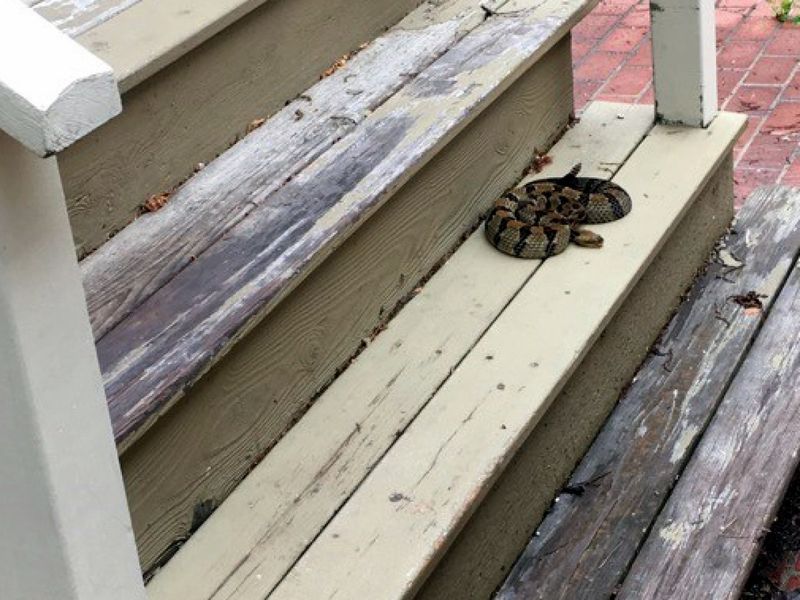
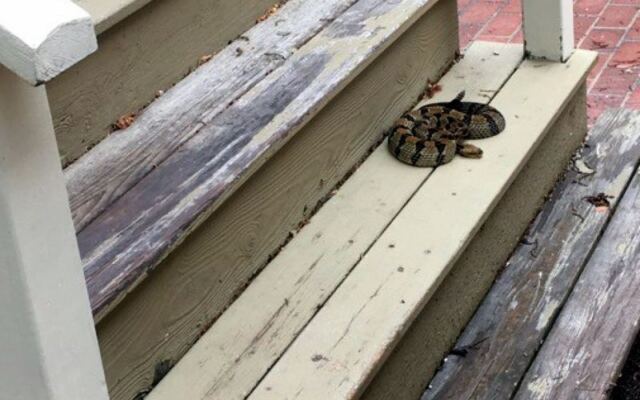
Few sounds stop a hiker faster than a dry buzz from the brush. Timber rattlesnakes, sometimes called canebrake rattlers in southern Alabama, live in wooded areas and can wander into yards that border forests.
Watch for gray, tan, or pinkish bodies with dark zigzag or V-shaped bands and a solid black tail ending in a rattle. Many have a rusty stripe running down the middle of the back.
These snakes are usually calm and would rather stay hidden. Still, they are large and their venom is strong.
Keep brush trimmed near the house and never try to move or kill one yourself.
4. Eastern Diamondback Rattlesnake
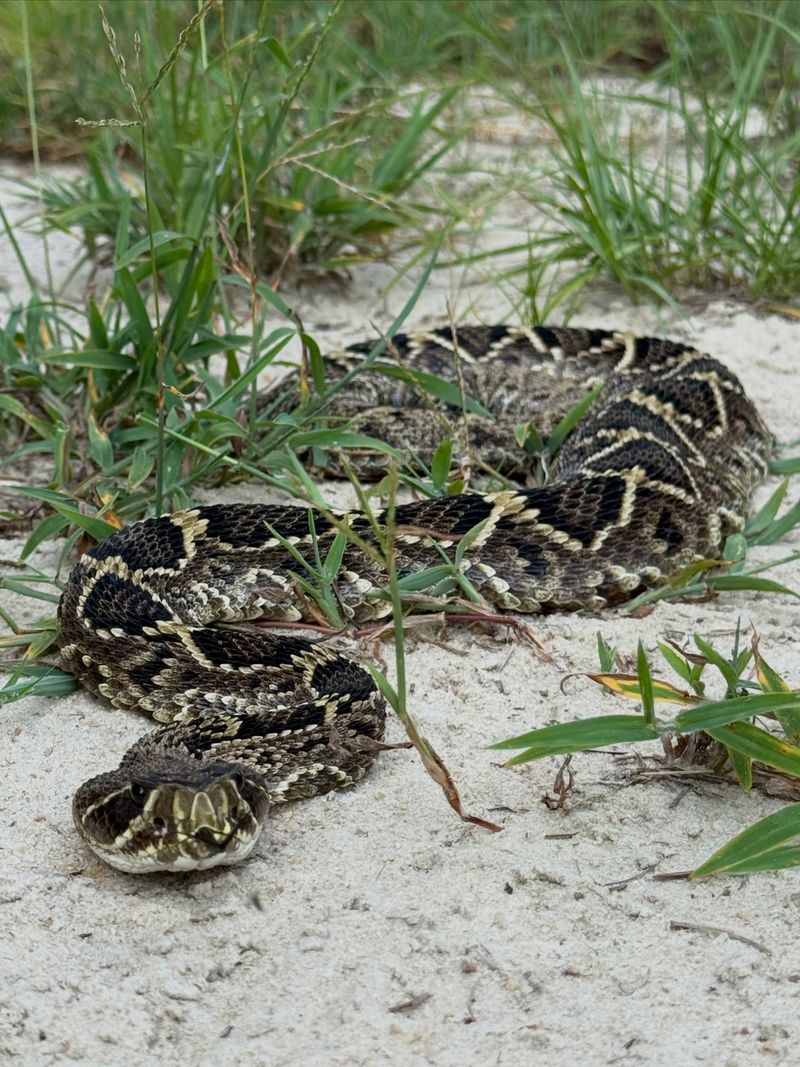
Size alone makes this one memorable. The eastern diamondback is the largest venomous snake in North America, sometimes stretching past six feet.
You will find it mainly in southern Alabama, especially in pine forests and sandy areas near the coast. Its back is covered in dark diamonds outlined in cream, and it has light stripes running across its face.
Fun fact: rattlesnakes add a new rattle segment each time they shed, so you cannot tell age by counting them. If you hear rattling, back away slowly.
A bite from this snake is a true medical emergency.
5. Pygmy Rattlesnake
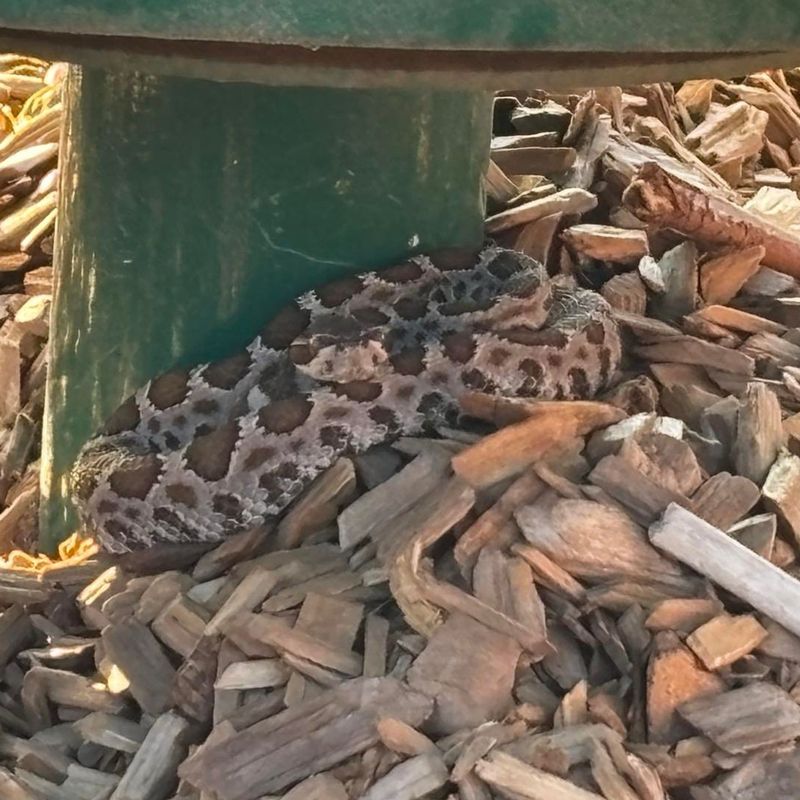
Small snake, big attitude. Pygmy rattlesnakes rarely grow longer than two feet, and their tiny rattle sounds more like a buzzing insect than a warning.
Look for a gray body with dark round blotches along the back and sides, often with a reddish-orange stripe down the middle. They hide in pine straw, mulch, and tall grass.
Bites are painful but seldom life-threatening for adults. Because they are so easy to miss, kids and pets are most at risk, so check flower beds before reaching in.
6. Eastern Coral Snake
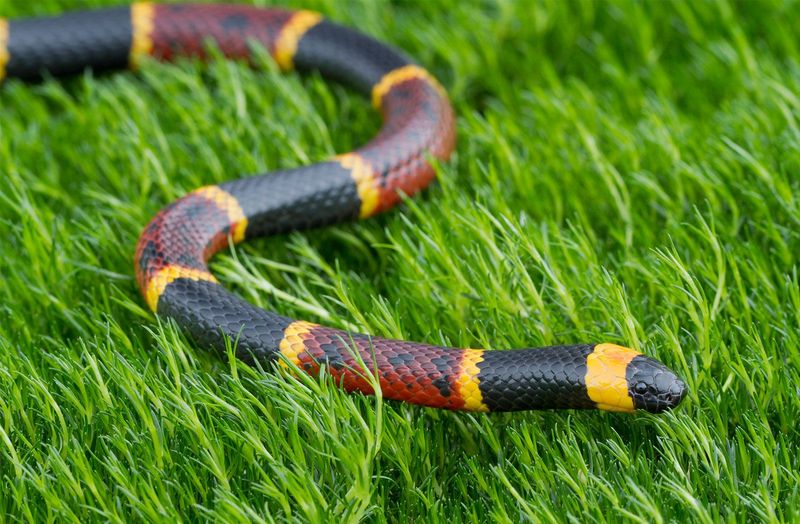
“Red touches yellow, kills a fellow. Red touches black, friend of Jack.” Plenty of Southern kids learn that rhyme, and it works for coral snakes in Alabama.
This slender snake has bright bands of red, yellow, and black, with the red and yellow touching. Harmless look-alikes like the scarlet kingsnake have red next to black instead.
Coral snakes are shy and spend most of their time underground or in leaf litter. Their venom affects the nervous system, though, so never pick up a colorful snake just because it looks pretty.
7. Black Widow Spider
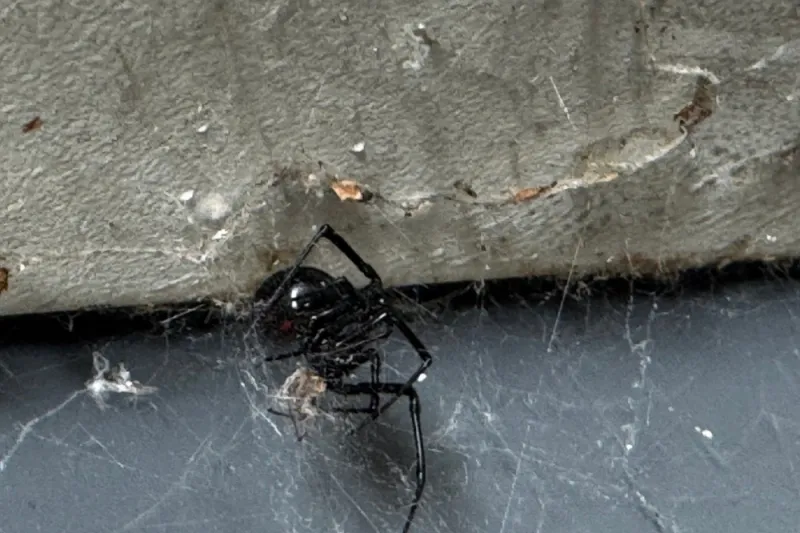
Ever flipped over an old flowerpot and found a tangled, messy web? There is a decent chance a black widow built it.
Females are glossy black with a round belly and a red hourglass shape underneath. Males are smaller, lighter, and harmless.
These spiders like dark, quiet spots such as sheds, woodpiles, meter boxes, and under patio furniture.
A bite may cause muscle cramps, sweating, and stomach pain. It is rarely deadly, but you should see a doctor if bitten, especially with young children or older adults.
8. Brown Recluse Spider
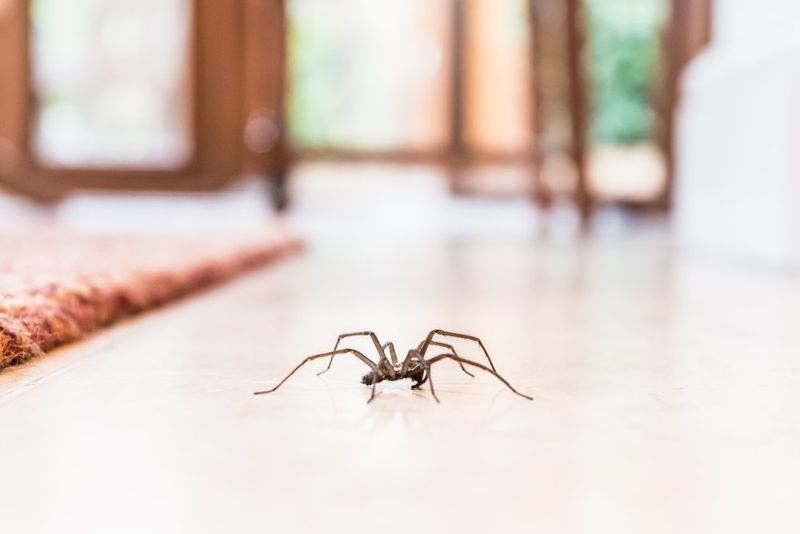
True to its name, the brown recluse loves to be left alone. It hides in garages, attics, closets, and storage boxes, and it only bites when pressed against skin.
Spotting one takes a close look. It is tan to brown with a dark violin-shaped mark on its back, the neck of the violin pointing toward the rear.
It also has six eyes instead of the usual eight.
Some bites cause a sore that slowly breaks down the skin around it. Shake out shoes and gloves stored in the garage, and use sticky traps to check if recluses are hanging around.
9. Puss Caterpillar
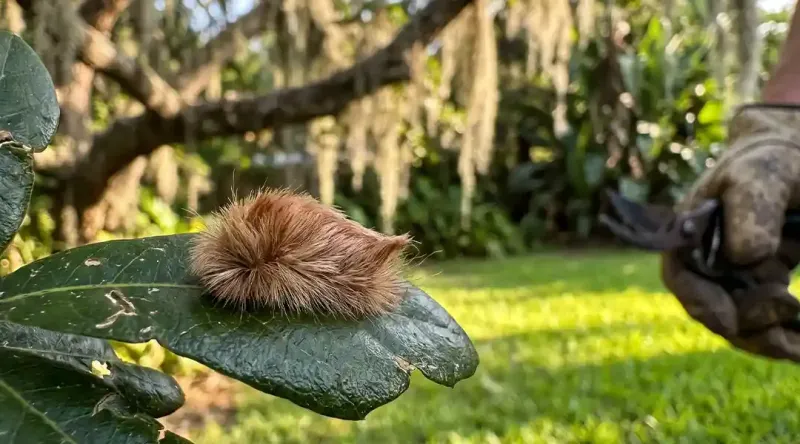
It looks like a tiny toupee or a fuzzy cat you want to pet. Please don’t.
The puss caterpillar is one of the most painful stingers in the country.
Hidden under that soft, golden-brown fur are venomous spines. Touching one can cause burning pain that spreads up the arm, plus a red grid-like rash and sometimes nausea.
Look for them on oak, elm, and maple trees from late summer into fall. Teach kids that fuzzy does not mean friendly, and use tape to pull out spines if someone gets stung.
10. Saddleback Caterpillar
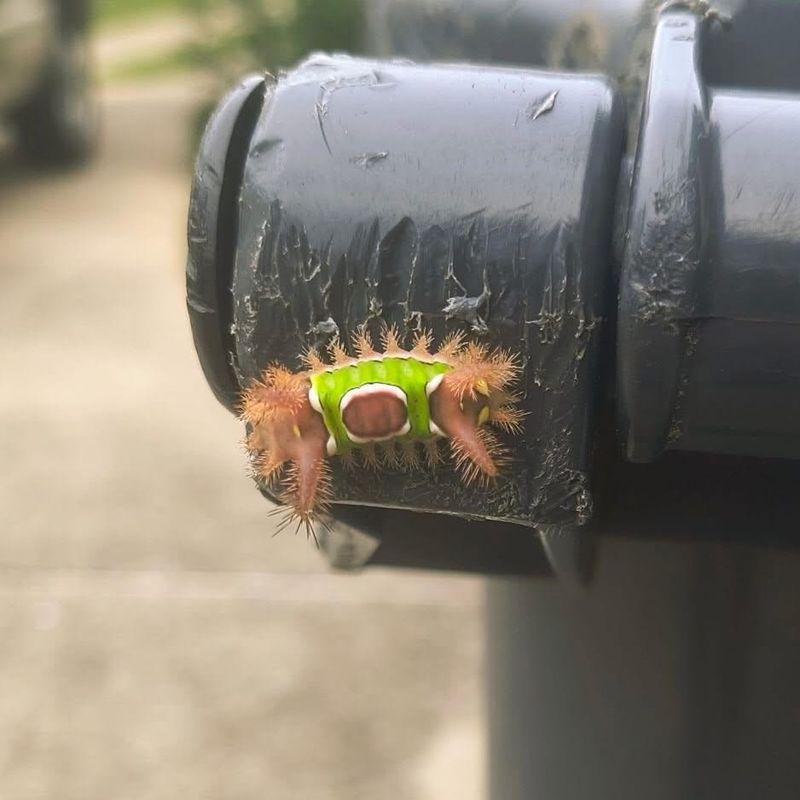
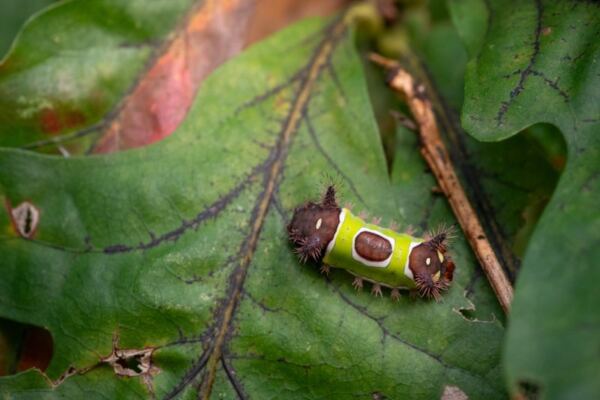
Nature gave the saddleback a costume worth remembering. Its body is brown with a bright green patch in the middle and a brown spot that looks just like a tiny saddle.
Fleshy horns covered in stinging hairs stick out from both ends. Brushing against one feels like a bee sting, followed by swelling and an itchy rash.
Saddlebacks feed on many plants, including corn, roses, and fruit trees, so gardeners often meet them by accident. Wear gloves while pruning or harvesting, and wash the area with soap and water if you get stung.
Share this story