Bobcats are turning up near New York homes, and the plain meaning is that these wild cats are using nearby woods, fields, and edges. In some parts of the state, that reflects a real change in where bobcats live.
A sighting is exciting, but it tells you less than you might think about the animal or about your pets. Here is what a sighting can show, what it cannot, and what to do next.
What does a sighting actually tell you?
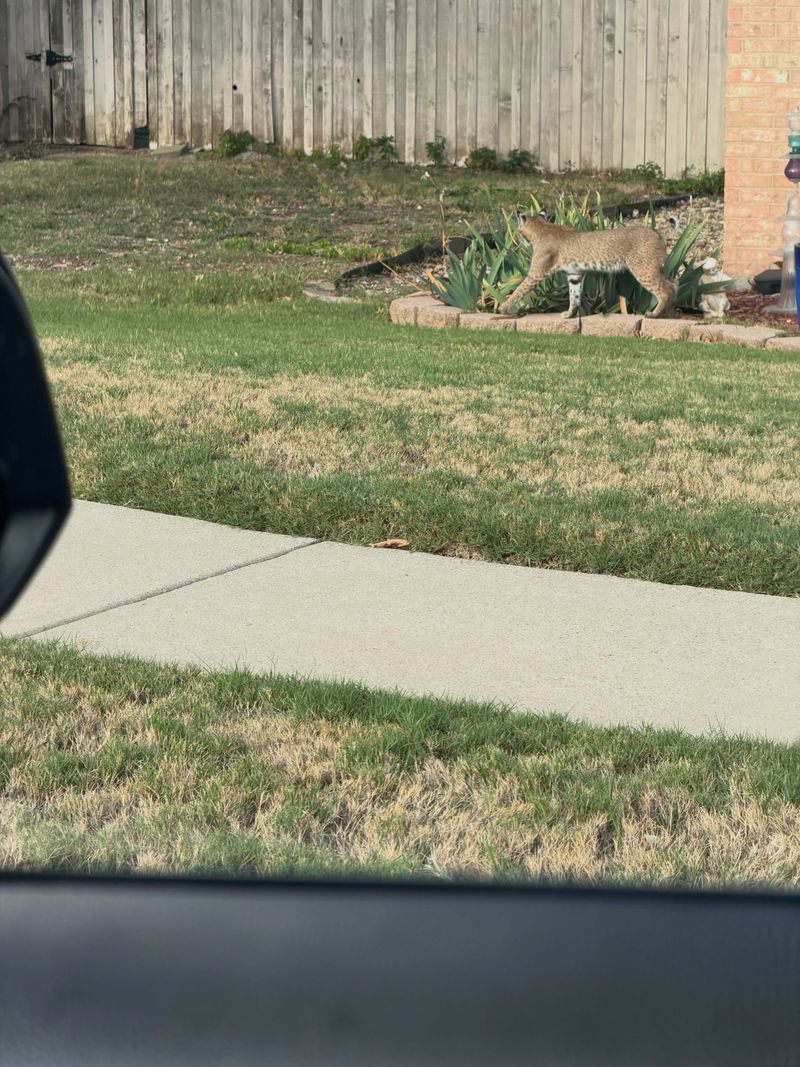
Bobcats are adaptable. According to New York DEC, they use many kinds of habitat, including some suburban and farming areas.
They can use patches of habitat near development as long as those patches are not completely cut off by growth. They are generally absent from large, continuous population centers.
So what does it mean when one walks across your lawn or shows up on a doorbell camera? It means a bobcat used the area, at least for a moment.
That is the full extent of what one sighting proves.
It does not show that the animal lives on your property. It does not show a den is nearby, and it does not tell you the bobcat will come back tomorrow or ever again.
Bobcats cover a lot of ground while moving between hunting areas, resting spots, and other parts of their range.
Home range size also varies quite a bit. DEC reports that it differs substantially by sex and by region, so a male and a female in the same county may roam very different distances.
A single observation cannot reveal where the animal sleeps, how big its range is, or why it passed through.
Think of a sighting as a snapshot. It is a useful clue that suitable habitat exists close to your home, such as a wooded creek corridor, a hedgerow, or a field edge.
It is not a map of the animal’s life, and it is not a reason to assume anything about its intentions.
Where DEC has seen more bobcat observations

Geography matters here. DEC’s bobcat management plan reports that hunters and trappers have seen more bobcats in parts of its Population Growth Area, which covers parts of central and western New York.
Bobcats are recolonizing places they had disappeared from.
In the established range, which includes much of the Adirondacks and the Southern Tier, DEC describes observations as stable overall. So the change is regional, not a uniform wave across the map.
What does that mean for houses? DEC’s findings come from hunters and trappers, not from counts of bobcats near homes.
They show a genuine range change in some areas, but they do not establish a statewide trend in sightings near houses. They also do not rule one out.
If you live in central or western New York, a bobcat nearby fits a known pattern of recovery. If you live in an area where bobcats have long been present, a sighting fits the stable picture instead.
One more limit applies. DEC says bobcats are not currently present in New York City or Long Island and considers natural colonization there unlikely.
A bobcat story from upstate says nothing about the five boroughs or Nassau and Suffolk counties.
Why sightings do not count bobcats
Counting sightings feels like counting animals, but the two are different. DEC notes in an earlier posted plan that public reports vary greatly from year to year.
Fewer than 20 percent of survey submissions included a photograph, so many reports cannot be checked.
Awareness plays a big part too. When more people know about the survey, more reports come in, even if the number of bobcats has not changed.
Doorbell cameras and social media can boost reporting in the same way.
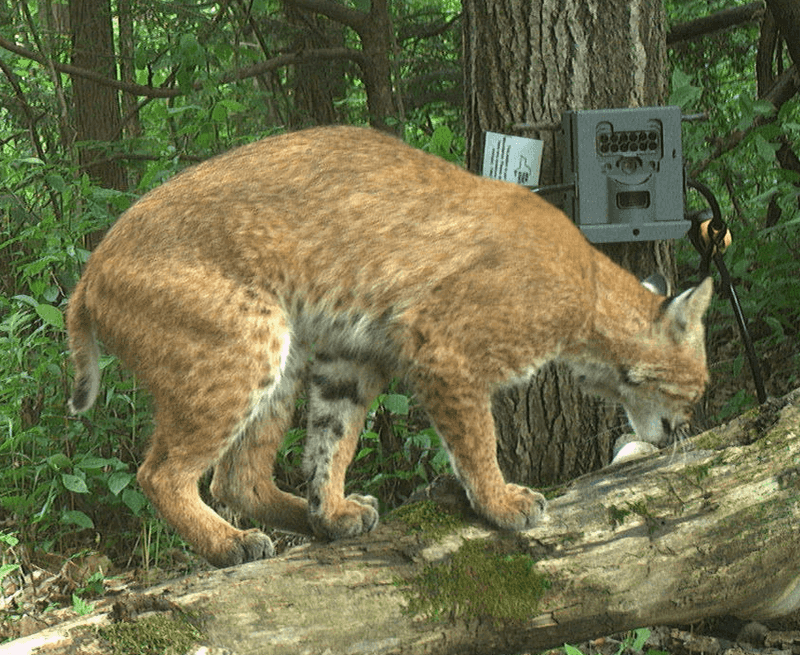
Camera traps offer a different kind of evidence, but with limits of their own. A USGS-listed study found low bobcat occurrence in a New York camera-trap survey.
DEC cautions in its public comment assessment against treating that as a definitive population estimate.
The survey was designed for fisher, so bobcat detections were incidental. The cameras also ran for only three weeks, which is a short window for a wide-ranging animal.
Put together, rising reports in some areas and few camera detections in another study do not contradict each other. They come from different methods, places, and time periods.
The sensible reading is to describe the evidence by region and method, without declaring a statewide boom or collapse.
Wild prey comes first, but pets are not risk-free
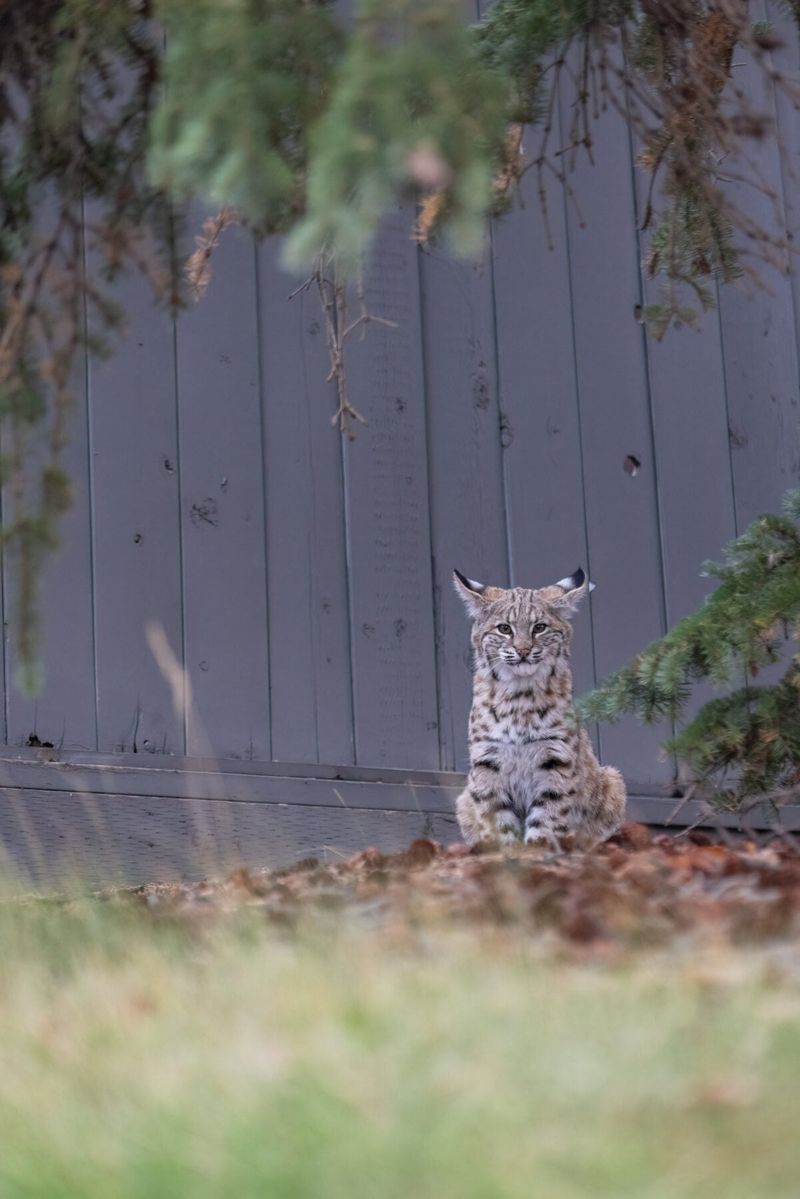
Bobcats are mostly hunters of wild animals. DEC says deer and rabbits are important foods in New York.
That is the baseline to keep in mind when one appears near your home.
A sighting alone does not show that a bobcat is stalking pets. It also does not show that something in your yard drew the animal in.
Proving either would take evidence beyond the animal simply being there.
That said, pets are not risk-free. Attacks on pets and livestock are possible.
DEC describes bobcat depredation as generally uncommon, even where bobcats are relatively abundant.
The numbers help show the scale. From 2019 through 2024, DEC recorded 43 bobcat damage complaints and issued permits in 17 cases, most involving poultry.
Those figures are a tally of complaints. They are not a pet-attack rate, and they cannot tell you the risk to your own dog or cat.
They do suggest that backyard chickens and other small livestock deserve the most attention.
The practical takeaway is balance. Small pets left outside unattended, especially at dawn and dusk, are the sensible ones to protect, without treating every sighting as a threat.
Give a bobcat room to leave
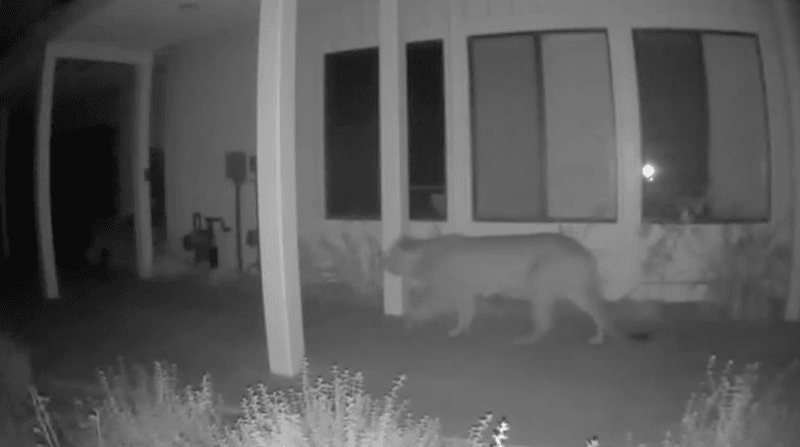
Most bobcat encounters end quietly when the animal is left alone. If you spot one, stay where you are or back away slowly.
Ontario’s wildlife guidance gives specific advice on this, including not cornering the animal.
Keep your distance and make sure the bobcat has a clear path to leave. Never approach it, try to touch it, or feed it.
Feeding teaches wild animals to hang around people, and that is a problem for everyone.
Bring pets inside or keep them close on a leash. Rather than trying to create any kind of interaction, simply put a door between your animals and the wildlife.
A sighting by itself is not an emergency, so there is no need to panic.
Behavior is worth watching. DEC’s management plan reports four recorded bobcat attacks on people in the state, and the animals involved tested positive for rabies.
It also lists aggression and lack of fear as behaviors associated with rabies in infected wildlife.
Still, those are warning signs, not a diagnosis. You cannot tell whether an animal has rabies from how it looks or from one behavior.
If a bobcat seems unusually bold or aggressive, keep away and seek professional advice, such as from DEC or local authorities.
Sightings and bites call for different next steps
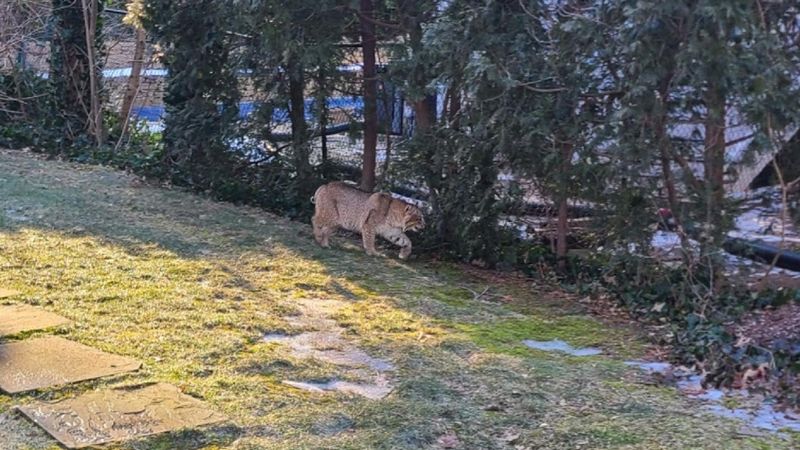
Reporting a sighting and responding to an injury are two separate jobs. If you want to share what you saw, DEC accepts reports through its Furbearer Sighting Survey.
Photos and details help, and they add to DEC’s picture of where bobcats are.
The survey is not monitored in real time, though. It is not an emergency channel, so do not use it if you need help right away.
A bite or scratch is a different matter. Wash the wound promptly and thoroughly with soap and water.
Then contact a health professional or your local health department for advice about rabies exposure.
New York State directs people who may have been exposed to contact their county health agency. The CDC also explains when to seek care after a possible exposure.
Do not try to judge on your own whether you need medical care or rabies treatment. That decision belongs to a professional who can ask about the animal, the wound, and the circumstances.
A quick call is the simple, safe move.
Respond to what you see
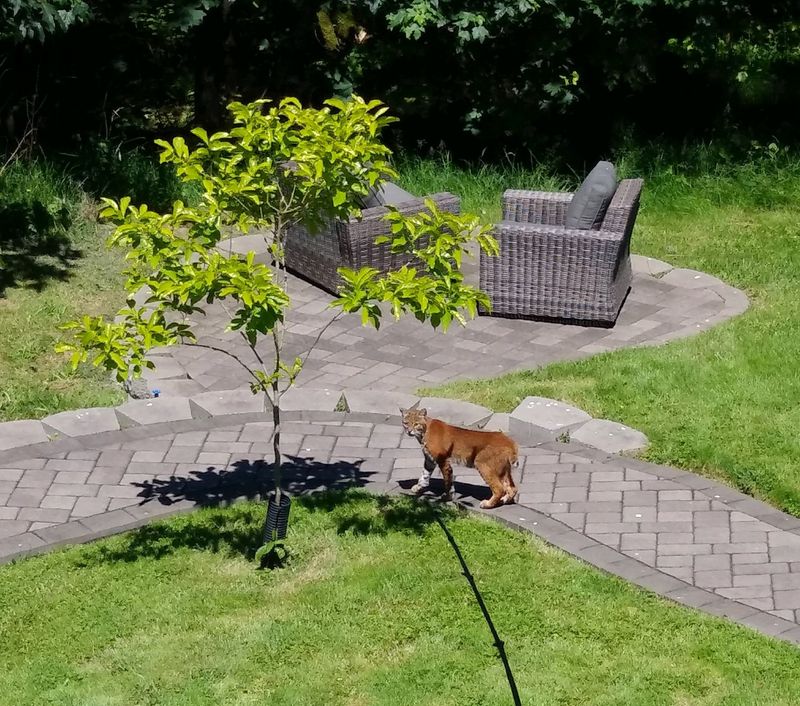
A bobcat near your house shows that it used nearby habitat. In some regions, as DEC’s plan describes, it also reflects real range expansion.
It does not show a neighborhood-wide influx or immediate danger to pets.
Noticing an animal is different from having evidence of a specific risk. Give the bobcat space, secure your pets, and use the right reporting or health channel when needed.
As DEC’s bobcat page shows, these cats are wild neighbors with a wide range. Most of the time, they are just passing through.
Share this story