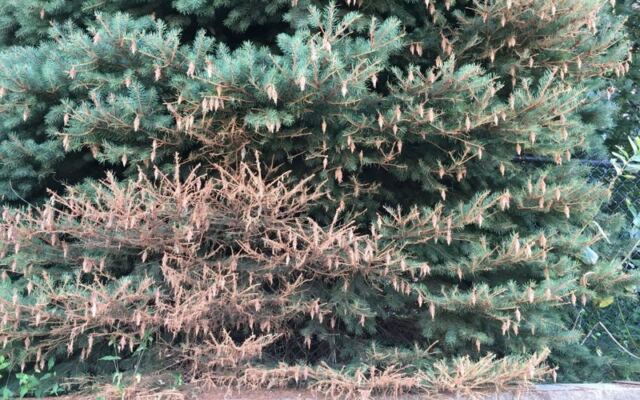
You spot a brown, cone-shaped thing hanging from a spruce branch in winter, and it looks like a tiny pinecone in the wrong place. It might be a bagworm case, but it might also be something else entirely.
Many people assume these pouches are full of sleeping caterpillars waiting for spring, and that is not quite right. Knowing what you are looking at helps you decide whether to do anything at all.
What is actually inside an old bagworm case?
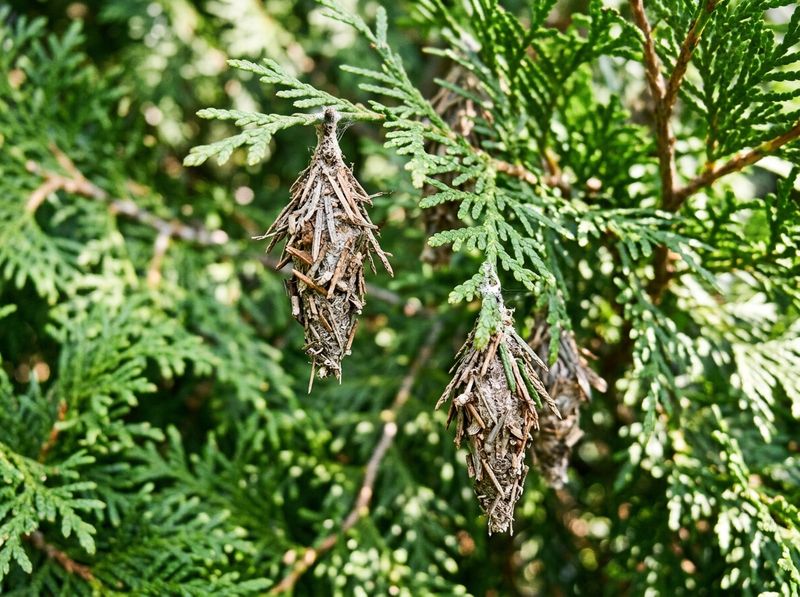
Here is the surprise: for the common evergreen bagworm, Thyridopteryx ephemeraeformis, the old bag hanging on a branch in winter is not a cozy bed for dormant caterpillars. According to University of Delaware Extension, the case typically holds overwintering eggs, along with the remains of the female that made them.
The caterpillars that built the bag are long gone by winter. They finished feeding the previous year, and the female laid her eggs inside her own case before dying.
The eggs are what wait out the cold.
When spring arrives, the eggs hatch and the tiny larvae crawl out. Each one begins spinning a small case of its own, and the cycle starts again.
Timing varies by region, so a hatch date reported for another state should not be treated as a Minnesota calendar. Watching your own trees and local extension updates is a better guide.
One more limit is worth knowing. The word bagworm covers more than one species, and the egg-in-the-old-case story applies to the common evergreen bagworm discussed here.
Other bagworm species can have different life histories. And without a photo or a location, no particular brown structure can be called a bagworm case for certain.
A USDA Forest Service pest manual describes the same basic life cycle.
How a bagworm builds and carries its case
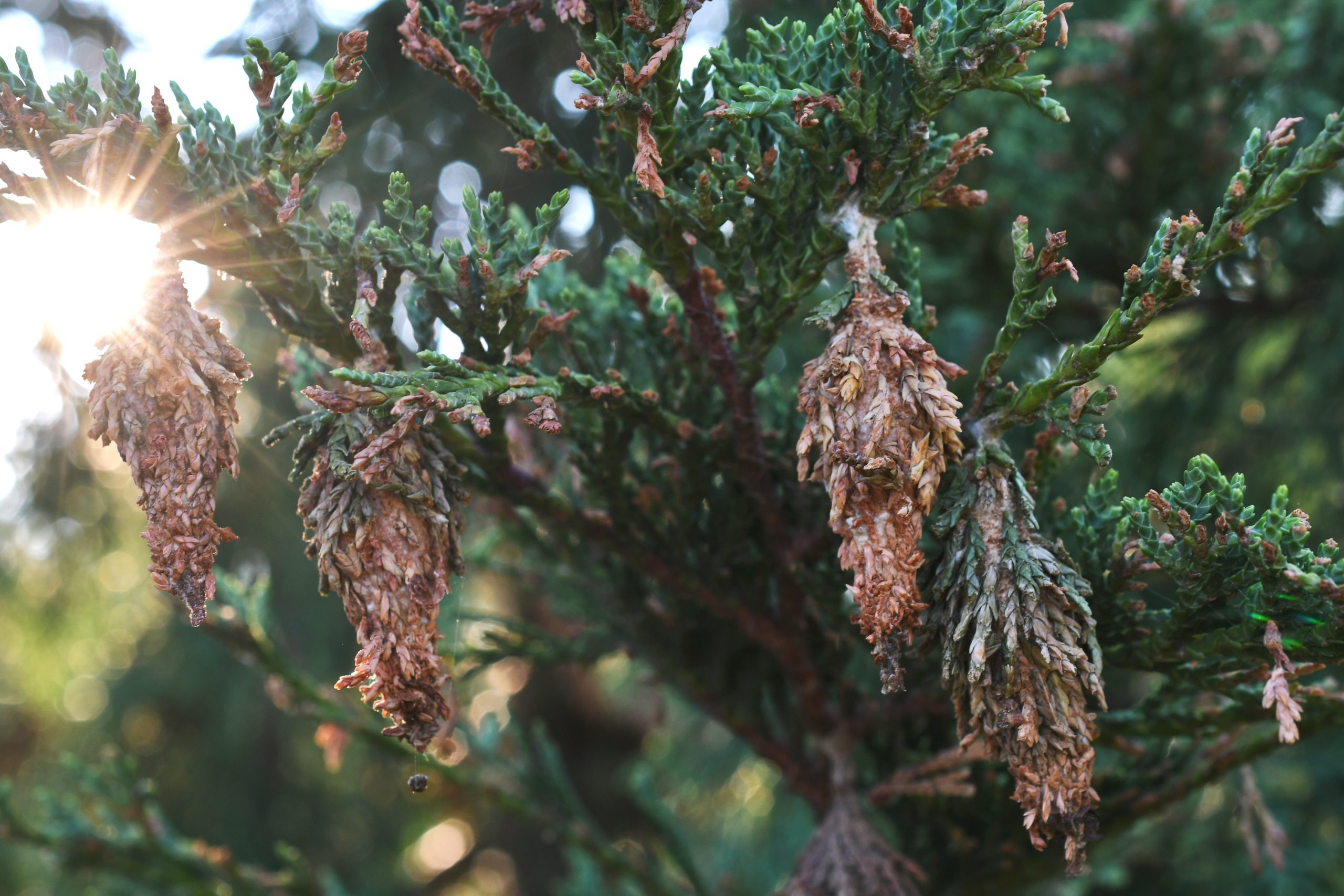
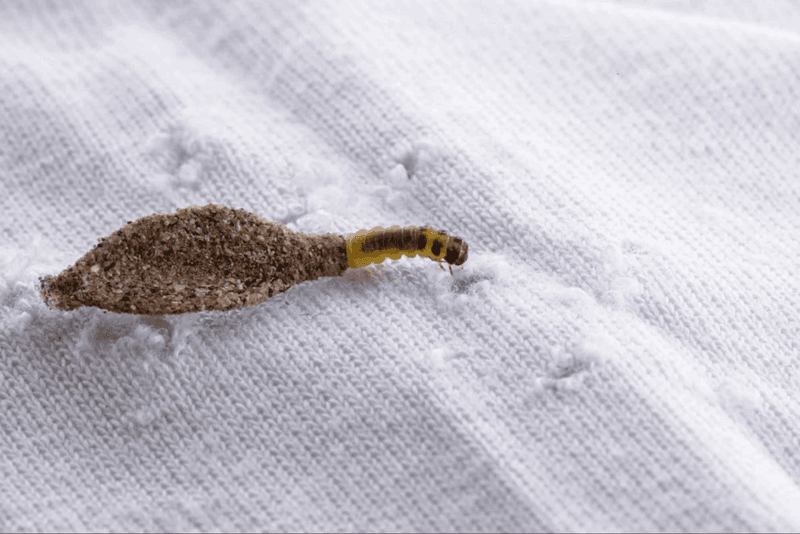
A young bagworm is a bit like a hermit crab with a silk-spinning habit. The larva spins a case from silk and weaves in bits of needles or other plant material from the tree it is feeding on.
It then drags that case along wherever it goes, with only its head and front legs sticking out.
As the caterpillar eats and grows, it keeps adding to the bag, so the case gets bigger through the season. The USDA Forest Service manual describes this carried-and-enlarged bag, and mature cases are often around 1 3/4 to 2 inches long.
Good visual clues include a hanging, spindle-like shape, a tough silky texture, and a surface studded with needle bits or twigs. The case hangs from a twig by a silk band, so it dangles rather than growing out of the branch.
Delaware Extension also notes that bagworms feed on spruce and other conifers.
Still, shape and size are only hints. Plenty of brown, bumpy objects on evergreens can look a little like a bag from a distance.
A closer look, ideally with a photo shared with a local extension office, is the safer way to be sure.
Could the brown structure be a spruce gall?
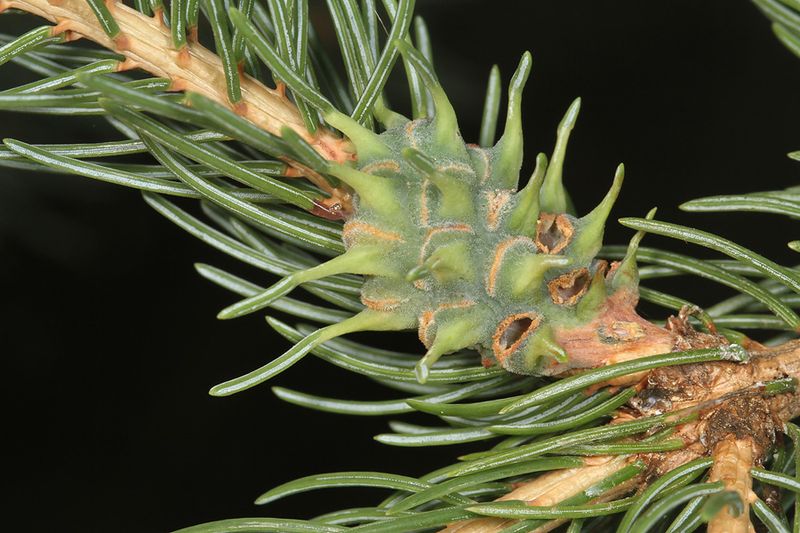
Some of those brown pinecone lookalikes are not made by a caterpillar at all. Spruce gall adelgids are tiny insects whose feeding causes spruce tissue to swell into cone-like galls.
University of Minnesota Extension describes these galls, and they are a real Minnesota lookalike.
The location on the twig is a useful clue. Cooley spruce gall forms at the shoot tips, while eastern spruce gall forms at the base of new shoots.
Either way, the gall is part of the plant, built from plant tissue, so it grows out of the branch instead of dangling by a silk band.
Color will not settle the question. Old galls turn brown and dry, and old bagworm cases are brown too.
A brown structure alone confirms neither one.
So try a closer look before you act. Check whether it hangs loose from a silk attachment or grows firmly from the shoot, and take a clear photo for a local extension office or arborist.
The USDA manual describes bagworm bags as larval-made, which is part of what sets them apart. Do not treat an uncertain structure as bagworms until you know.
Tree damage depends on the amount of feeding
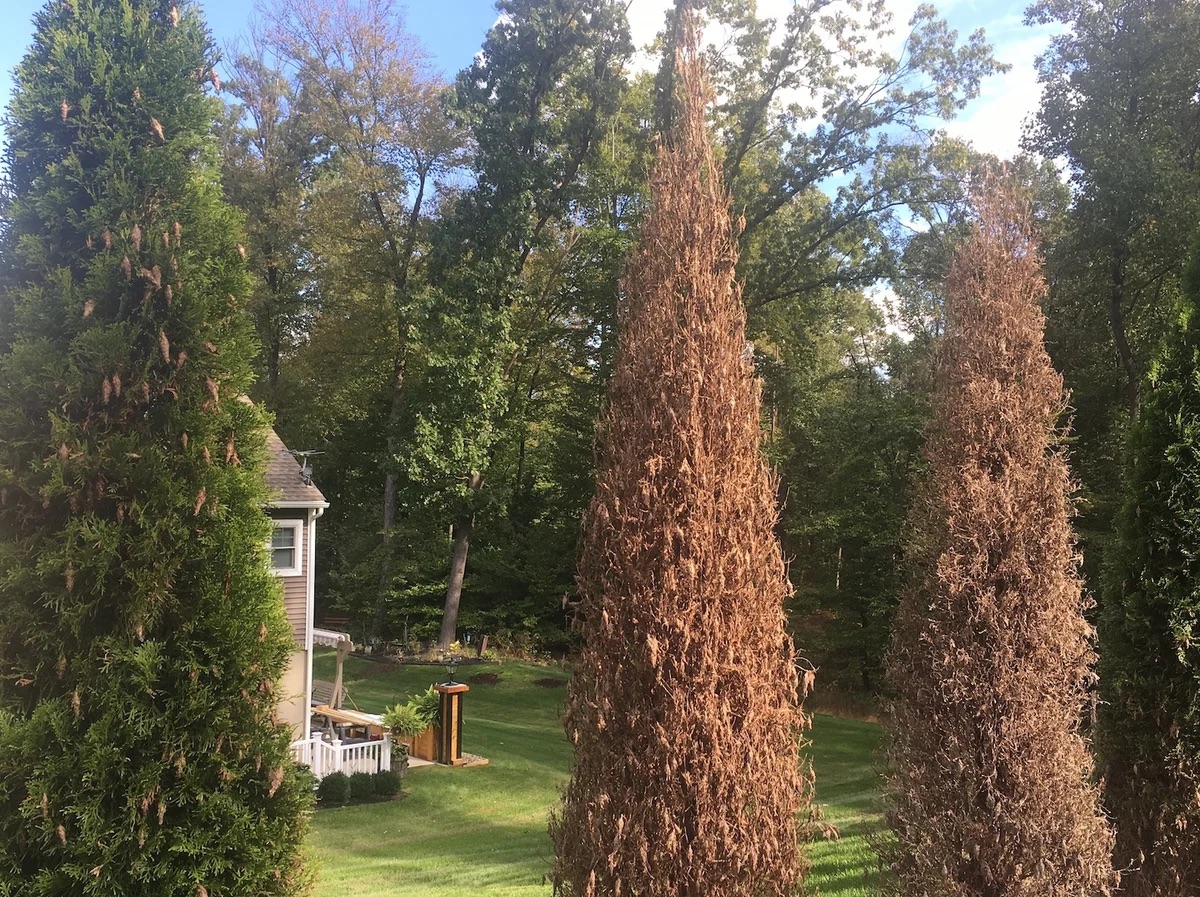
Finding a case does not mean a tree is doomed. Damage depends on how many bagworms are feeding and for how long.
A few cases on a large spruce is a very different situation from a heavily infested tree.
Bagworms do feed on spruce and other conifers, and heavy feeding can matter. According to the USDA Forest Service manual, heavy feeding can permanently damage or kill conifers because they cannot replace lost needles the way many deciduous trees can regrow leaves.
Where you live matters too. That same manual describes common bagworms as most common from southern Minnesota southward, so they are not equally common across the whole state.
There is no single magic number of cases that triggers action. University of Maryland Extension frames the issue around infestation severity, and the sources do not set a universal count per tree.
A sensible approach is to watch your tree, notice whether needles are thinning or browning in summer, and respond to what you actually see. Spraying every tree because of one case is not the goal.
Remove confirmed cases only when they are safely reachable
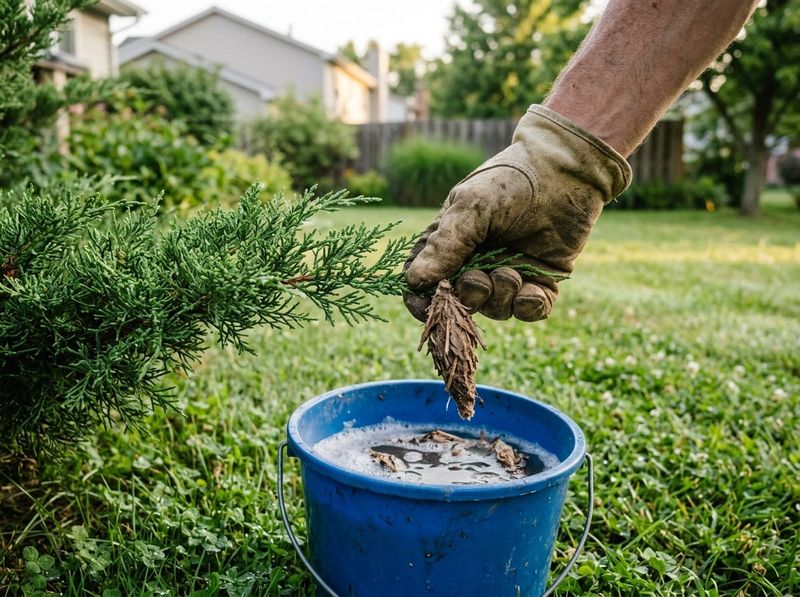
If you have confirmed a few bagworm cases and can reach them from the ground, hand removal is a low-tech option. Fall, winter, or early spring all work.
Because the old cases hold eggs, pulling them off can reduce the next generation on that tree.
Wear gloves and snip or pull the case free, cutting the silk band if needed. Then put the cases in the trash or otherwise destroy them.
Delaware Extension suggests this kind of disposal, and it matters because hatchlings that stay near the tree can find their way back to host plants. Dropping cases on the ground under the spruce does not solve the problem.
Safety comes first. Do not climb the tree or set up a ladder to get to cases high on the branches.
Oklahoma State Extension advises getting help from a qualified arborist for work beyond safe reach.
Removal is an option, not a chore every tree demands. If you only see a couple of cases, or you are not yet sure they are bagworms and not galls, it is fine to wait, look closer, and decide later.
After hatch, target young, feeding larvae if treatment is warranted
Spraying in winter will not help. The eggs sit sealed inside the old case, so a spray aimed at the bag is not reaching them.
Treatment, when it is warranted at all, aims at the young, actively feeding caterpillars after the eggs have hatched. Oklahoma State Extension points to this younger stage as the best target.
Small larvae are easier to control than big ones with large cases. Delaware Extension notes this too and mentions Btk, a strain of Bacillus thuringiensis labeled for caterpillars, as one option.
It is not required, and it is not the right answer for every yard.
If you do choose a product, use only one labeled for the pest and the site, such as an evergreen in a home landscape. Read the label and follow its directions on timing, mixing, and amounts.
Do not think of Btk as harmless to everything. It affects moth and butterfly caterpillars broadly, not just bagworms.
Cornell Cooperative Extension of Monroe County cautions against drift onto food plants for other caterpillars, such as milkweed. Spray on a calm day, aim carefully, and keep it off nearby garden plants.
Identify the structure before choosing a response
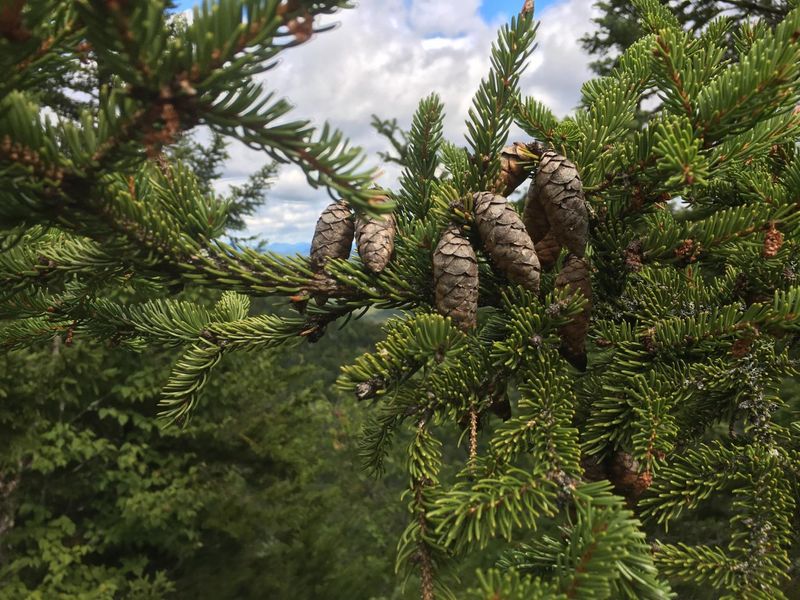
Start with the identification. Is it a bag hanging from a twig, or a gall growing from the shoot, as described by University of Minnesota Extension?
If it is a bag, look at how many there are and whether the tree is actually losing needles.
From there, hand-remove a few reachable cases, or consider well-timed treatment after hatch only if the problem is heavy.
A brown pouch is a question, not an answer. Take the photo first and decide second.
Share this story