Delaware has just one venomous snake, the eastern copperhead, but plenty of harmless snakes share its woods, gardens, and backyards. Many of them get mistaken for copperheads and killed for no reason, even though they eat mice, slugs, and insects that people would rather not have around.
Knowing who is who keeps you safe and keeps helpful wildlife alive. Here are ten snakes you might meet in a Delaware yard and how to tell them apart.
1. Eastern Copperhead
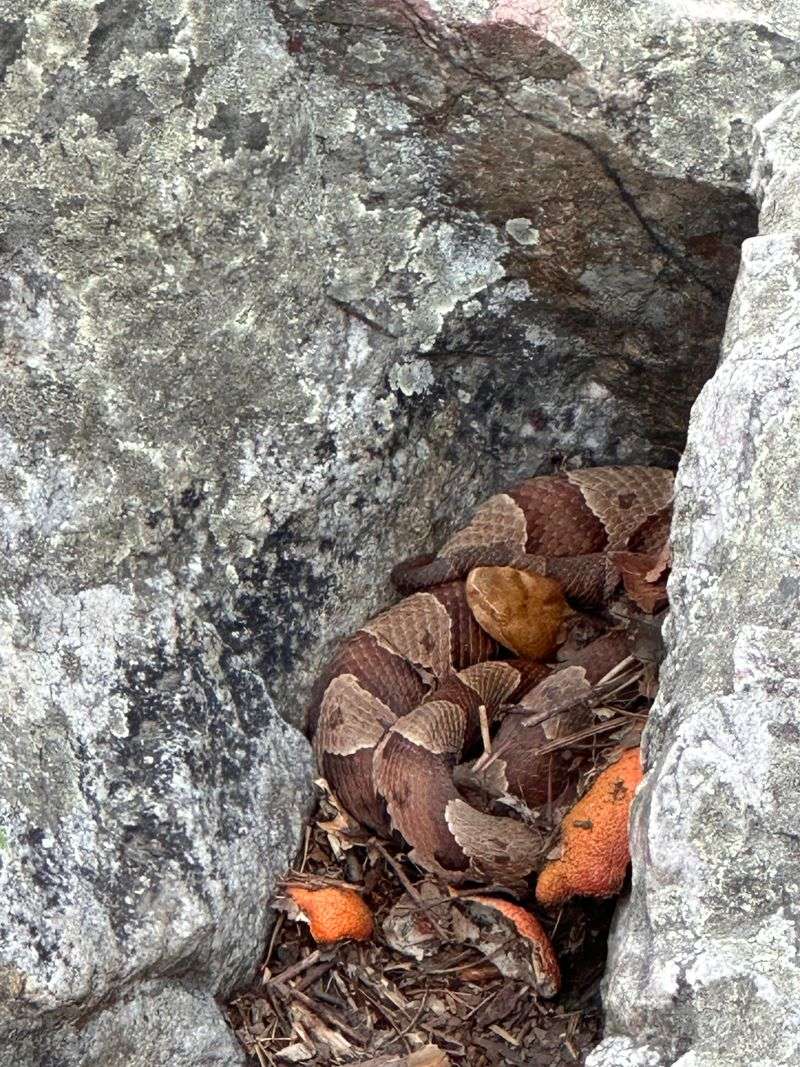
Picture a pile of fallen oak leaves, and then picture a snake that disappears completely into it. That is the eastern copperhead, the only venomous snake living in Delaware.
Its camouflage is so good that most bites happen when someone steps or reaches without looking.
Look for bands shaped like an hourglass or a Hershey’s Kiss seen from the side. The bands are wide on the sides and narrow across the back.
The head is coppery, wide, and somewhat triangular, and the pupils are vertical slits like a cat’s eyes.
Copperheads in Delaware are found mostly in the northern Piedmont area, near rocky, wooded hillsides. Young ones have a bright yellow or greenish tail tip they wiggle to lure frogs.
If you spot one, back away slowly and let it be, since bites are rarely deadly but still need a trip to the hospital.
2. Eastern Rat Snake
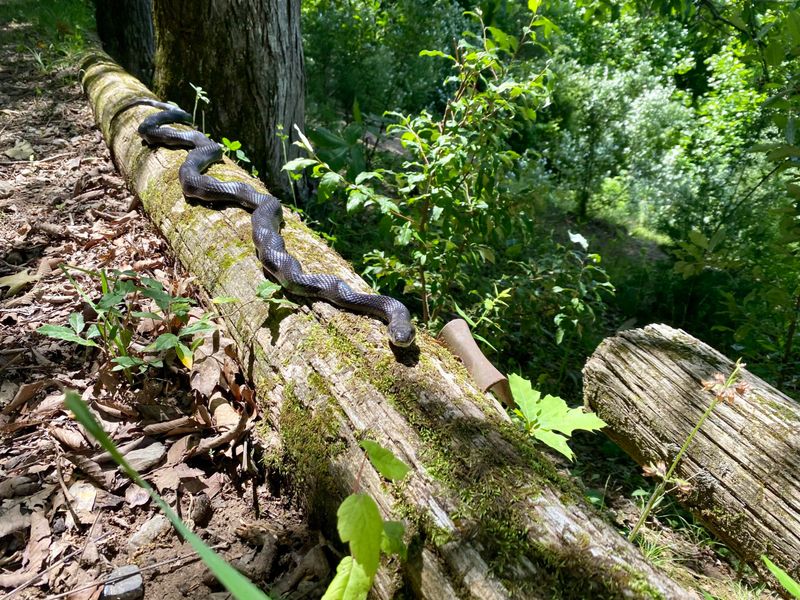
Farmers once called it a free mouse catcher, and they were right. The eastern rat snake can stretch past six feet, making it one of the longest snakes in the state.
Seeing one climb straight up a tree trunk is a sight you will not forget.
Adults are shiny black with a white or cream chin. The babies, though, are a different story.
Young rat snakes are gray with dark blotches, and that pattern fools many people into thinking they found a copperhead.
The quick check is the head shape and the pattern. Baby rat snakes have blotches that are blocky, not hourglass-shaped, and their heads are narrow.
They also have round pupils. Leave them in the barn or shed, and your rodent problem may shrink on its own.
3. Northern Water Snake
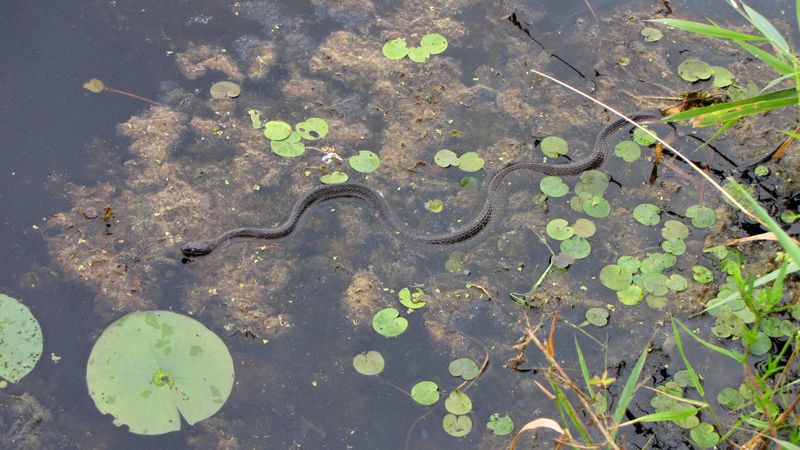
Ask anyone who fishes Delaware ponds, and they probably have a story about a cottonmouth. Here is the truth: cottonmouths do not live in Delaware.
The snake they saw was almost certainly a northern water snake.
Water snakes are thick, brown to reddish, with dark crossbands that fade as the snake ages. They bask on logs, rocks, and docks and slide into the water when startled.
They can look grumpy, and they will bite and release a smelly musk if grabbed.
Even so, they have no venom. Their bands run all the way across the body instead of pinching into an hourglass.
They mostly eat fish and frogs, so give them room at the dock and enjoy the show.
4. Eastern Garter Snake
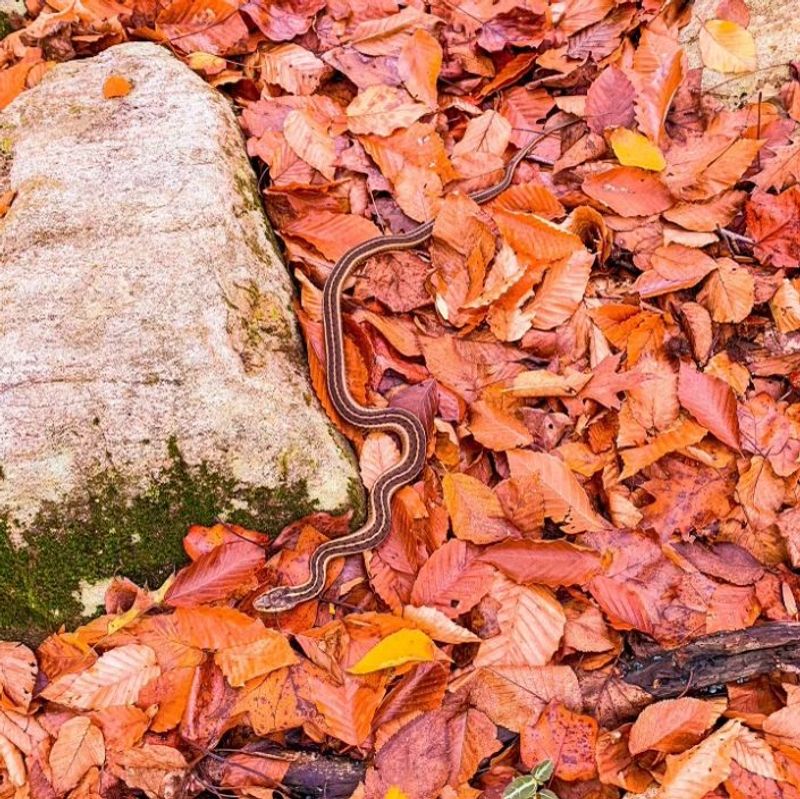
Stripes, stripes, and more stripes. If you have seen a snake in your garden, there is a good chance it was an eastern garter snake.
These are among the most common snakes in the whole country.
Most have three yellowish stripes running down a dark body, though some look checkered. They are slim and quick and usually under three feet long.
You will find them near lawns, flower beds, and the edges of ponds.
Garter snakes love worms, slugs, and small frogs. They are awake on cool spring days when other snakes are still hiding.
A garter in the garden is a small helper, not a threat.
5. Eastern Hognose Snake
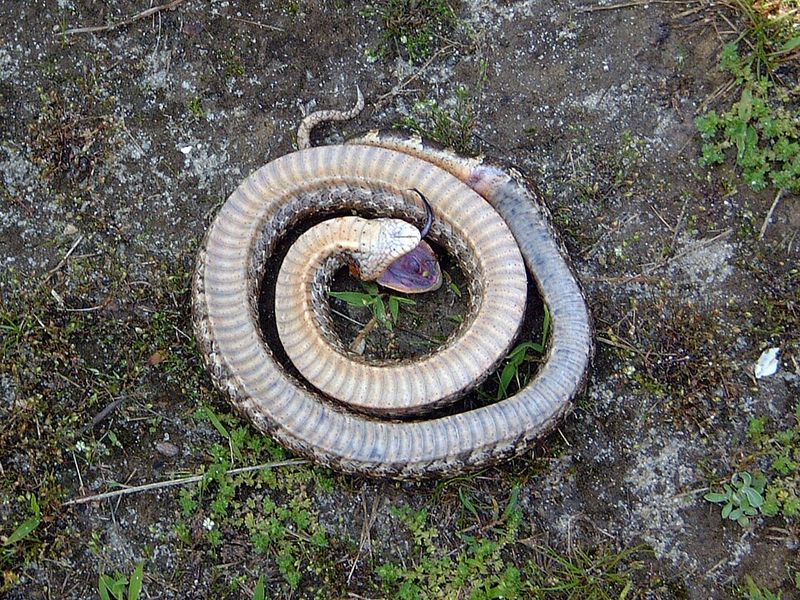
Some snakes run. The eastern hognose puts on a full stage play.
First it flattens its neck and hisses like a tiny cobra, and if that fails, it rolls over, opens its mouth, and pretends to be dead.
The funniest part? Flip it right side up, and it rolls right back over, as if to insist it is truly dead.
Its upturned snout works like a little shovel for digging toads out of sandy soil.
Hognoses are common in the sandy parts of southern Delaware. Their colors vary a lot, from yellow and brown blotches to almost solid black.
Despite the drama, they almost never bite people.
6. Northern Black Racer
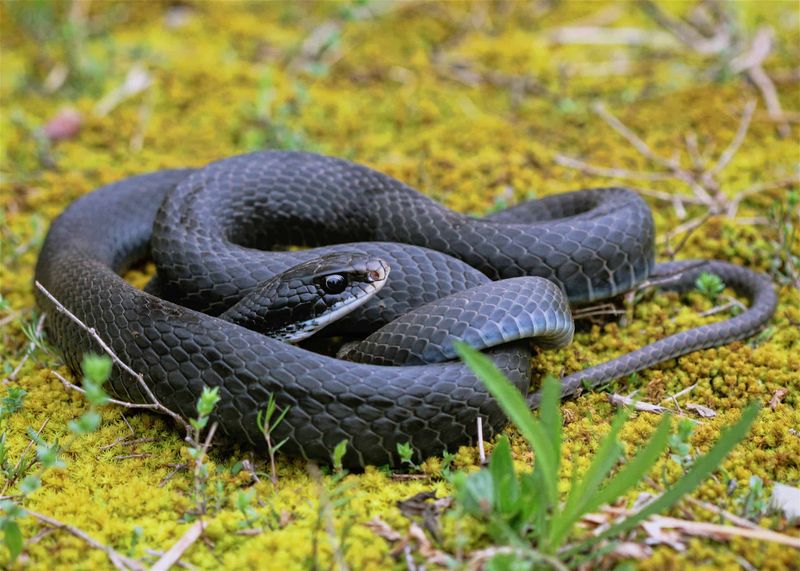
Blink and it is gone. The northern black racer earns its name by zipping across fields faster than most people expect a snake can move.
Racers are slim, satin black, and usually have a white chin, which makes them easy to mix up with adult rat snakes. One way to tell them apart is the feel and shine.
Racers have smooth, almost velvety scales, while rat snakes look glossier with slightly ridged scales.
They hunt by sight, often lifting their heads above the grass to look around. If cornered, a racer will shake its tail in dry leaves and may bite.
Just walk away, and it will happily do the same.
7. Eastern Milk Snake
Old folk tales claimed this snake sneaked into barns to drink milk from cows. It never did.
It was hunting the mice that lived around the hay.
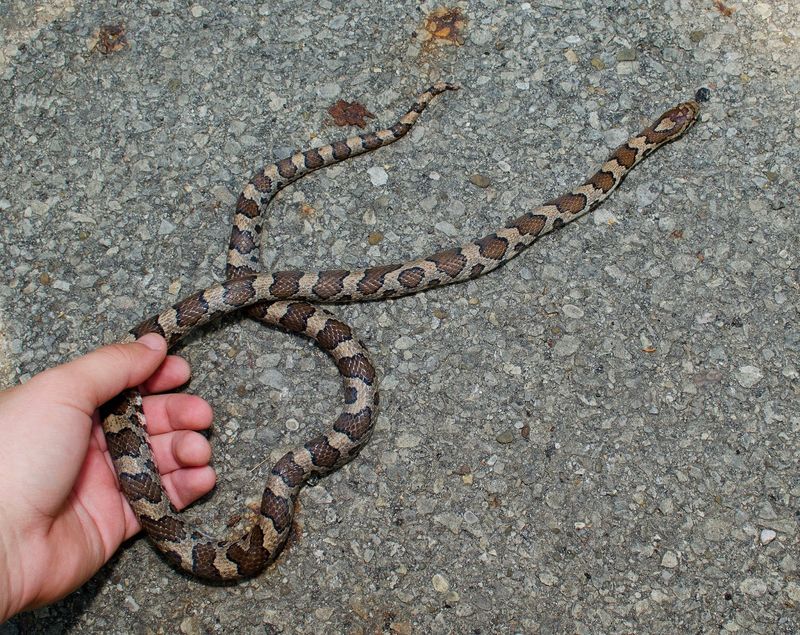
The eastern milk snake is gray or tan with reddish-brown blotches outlined in black. Many have a Y or V shaped mark on the back of the head.
Because of those warm brown patches, it is one of the snakes most often mistaken for a copperhead.
Look closely at the blotches. On a milk snake they are rounded saddles with black borders, not hourglasses.
The head is small and barely wider than the neck. Shy and secretive, milk snakes spend a lot of time under boards and rocks.
8. Eastern Worm Snake
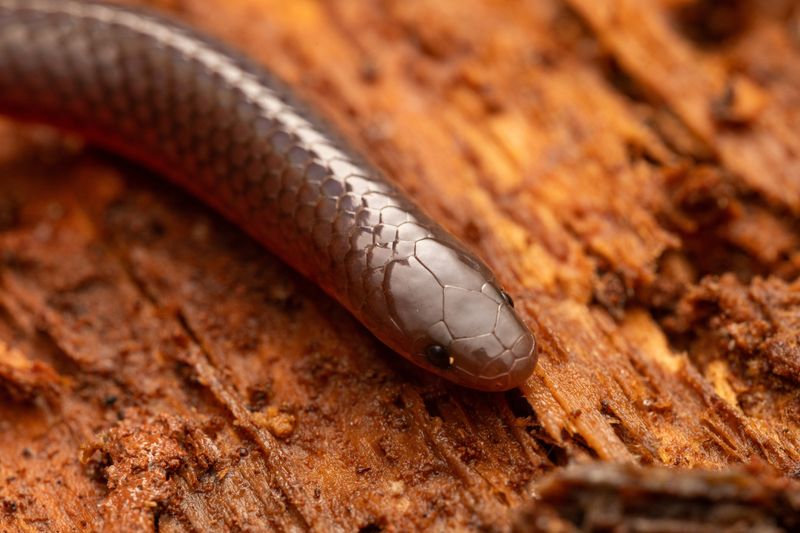
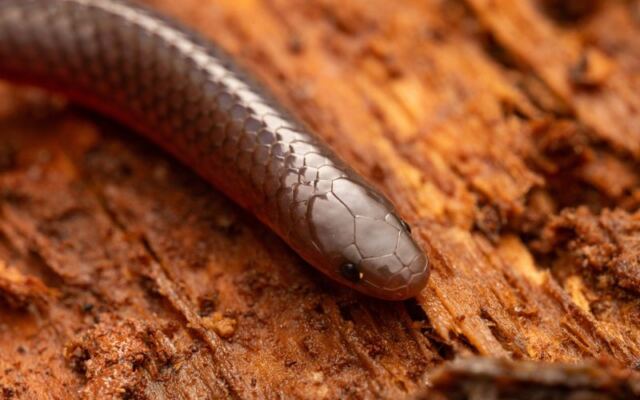
Flip over a flat garden stone, and you might find something that looks like an earthworm with an attitude problem. Meet the eastern worm snake, usually less than a foot long.
Its back is brown and its belly is pink, and its head is so tiny it barely looks like a head at all. The tail ends in a small pointed tip.
If you pick one up, it may gently poke you with that tip, which is harmless.
Worm snakes spend nearly their whole lives underground eating soft-bodied insects and earthworms. Kids often find them while digging.
Put them back under their rock and let them get back to work.
9. Northern Ring-necked Snake
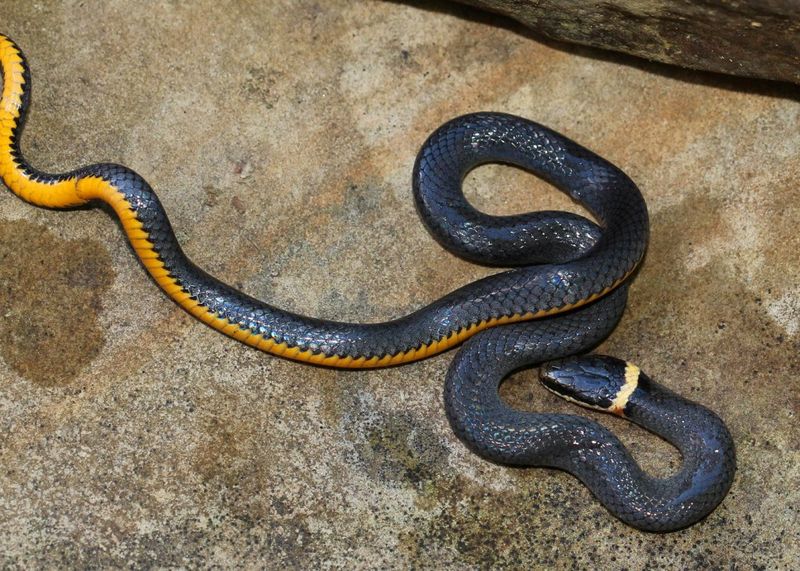
Think of it as a snake wearing a gold necklace. The northern ring-necked snake is dark gray or black with a bright yellow-orange ring around its neck and a matching belly.
These little snakes rarely grow longer than a pencil and a half. They hide under logs, leaf piles, and loose bark in damp woods and shady yards.
When scared, some curl their tail to flash the bright underside.
Ring-necks feed on salamanders, slugs, and worms. They are completely harmless to people and pets.
Finding one is a sign your yard has healthy, moist soil and plenty of life.
10. Northern Brown Snake
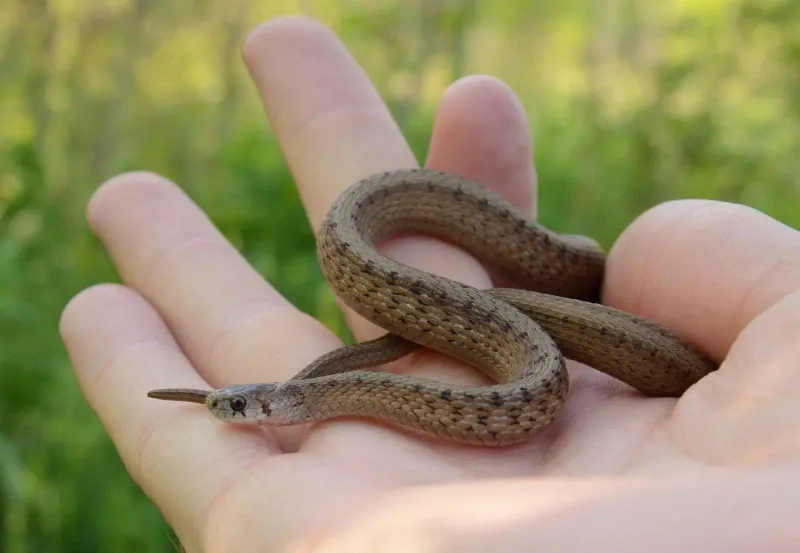
After a spring rain, you may spot a little brown snake crossing a sidewalk in a Delaware neighborhood. It is likely a northern brown snake, also called DeKay’s brown snake, after a naturalist from the 1800s.
Brown snakes are light brown or grayish with two rows of small dark spots down the back. They stay small, usually under a foot.
Because they are brown, nervous homeowners sometimes call them baby copperheads.
A real baby copperhead has bold bands and that yellow tail tip, while a brown snake just has tiny speckles. Brown snakes are slug specialists, which makes them a gardener’s quiet ally.
Toss one some kindness instead of a shovel.
Share this story