
If a neighbor’s tree hangs over your Delaware yard, you can generally trim the branches that cross onto your land, and you stop at the property line. That line is the guide for how much comes off, so knowing exactly where it sits matters before you pick up any tool.
Delaware law on this point has some gray areas, and tree health and safety add their own limits. Here is how to handle overhanging branches without starting a feud or hurting the tree.
What Delaware sources say about overhanging branches
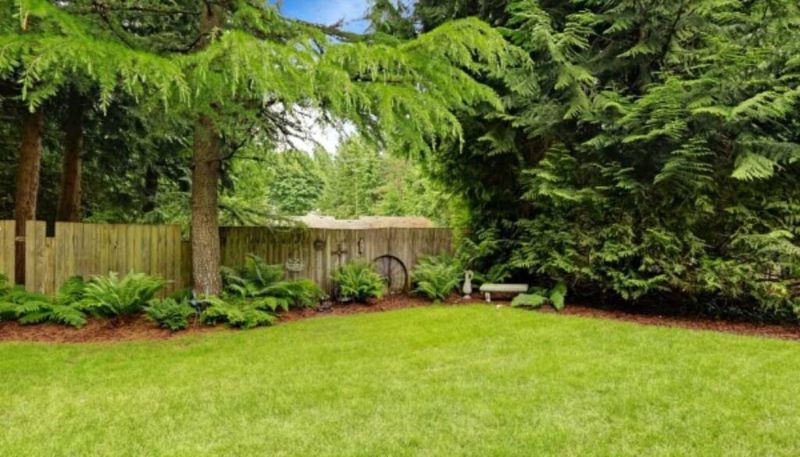
The practical guidance is straightforward. University of Maryland Extension summarizes the Delaware rule as letting a landowner trim encroaching growth back to the boundary, as long as the work is done without entering the neighbor’s land.
That guidance is useful, but the legal footing is not fully settled. In Dayton v.
Collison, a 2019 Superior Court decision, the judge said it remained unclear whether Delaware recognizes this self-help right. The earlier case of Keller v.
Oliver had been cited for it, but Keller relied on a stipulation, meaning an agreement between the parties, rather than a ruling that set the rule.
Later authority points the other way. A Court of Chancery magistrate report cited another Superior Court case, L. v.
Lee, for a common-law right to remove encroaching branches and roots up to the boundary.
Put together, these sources support a limited right to trim what crosses onto your side. They do not make it an absolute rule that every Delaware court has confirmed.
Treat the right as real but narrow, and let the steps in the next sections keep you on safe ground. If a dispute looks likely, a short talk with a lawyer costs far less than a fight over a cut.
Find the actual boundary before you cut
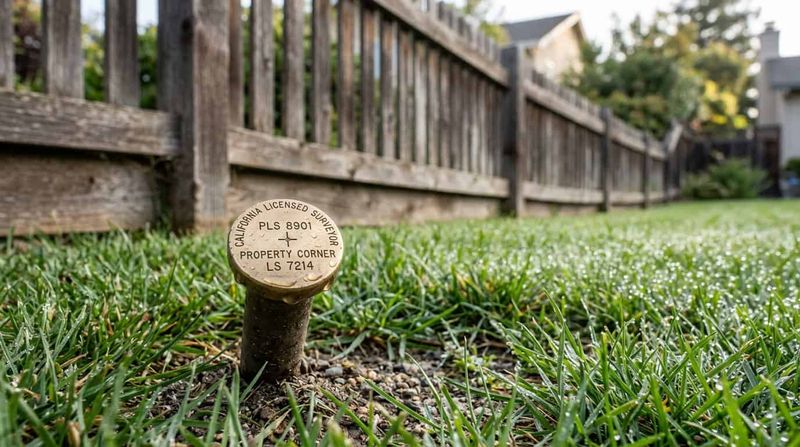
Trimming to the line only works as advice if you know where the line really is. Many homeowners assume the fence marks it, but fences are often built a little off the true boundary.
The legally established boundary is what counts, not the fence.
Cutting to a line you only guess at can put your saw on your neighbor’s side. That turns a simple trim into a possible dispute.
If you are unsure, the safest move is to hold off.
Start with your deed and any survey you received when you bought the home. A recorded plat can also help.
If these documents disagree with each other or with what you see in the yard, treat the line as uncertain.
Delaware’s boundary statute in Title 25, Chapter 11 sets out a process for marking boundaries. It is a useful tool, but it does not automatically settle every disagreement between neighbors.
If the line is uncertain or disputed, stop and get a licensed survey or legal advice before cutting anything. A survey costs money, yet it gives you a clear answer and protects you later.
Until you have it, do not guess.
Stay on your side and talk with the neighbor
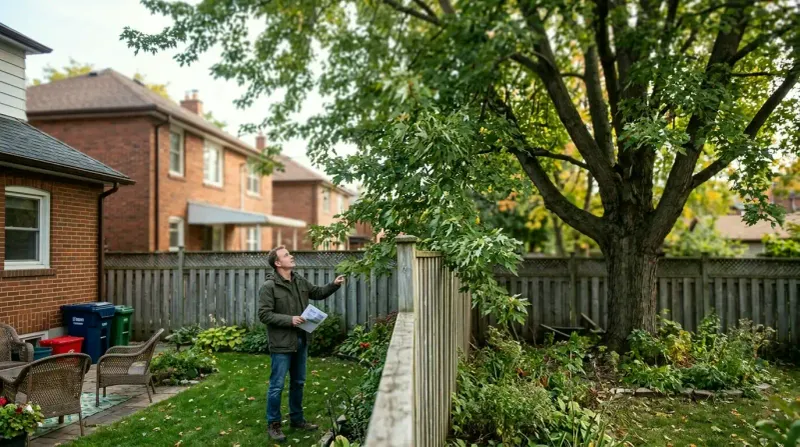
Once you know where the line sits, keep every part of the job on your own side of it. Do not step onto the neighbor’s property to reach a branch without permission.
A right to trim what hangs over your land does not include a right to cross the boundary, a point Extension guidance makes clear, and the court discussion in a Chancery report also separates the part of a tree on one property from the part on another.
Before you cut, consider a friendly conversation. Mention which branches are bothering you and ask whether the neighbor would prune them.
Many people say yes, especially if the problem is a branch near a roof or a shaded garden.
Asking is a practical first step, not a legal duty, and it will not always work. Your neighbor may say no, may not respond, or may not be able to afford the work.
One caution applies in New Castle County. County newsletter guidance says a neighbor may ask, but cannot compel the tree owner to prune or pay for the work.
That is county guidance, not a statewide rule, so do not assume it applies everywhere in Delaware.
If talking goes nowhere, you can still trim what hangs over your land, within the limits in this article.
Make cuts that protect the tree
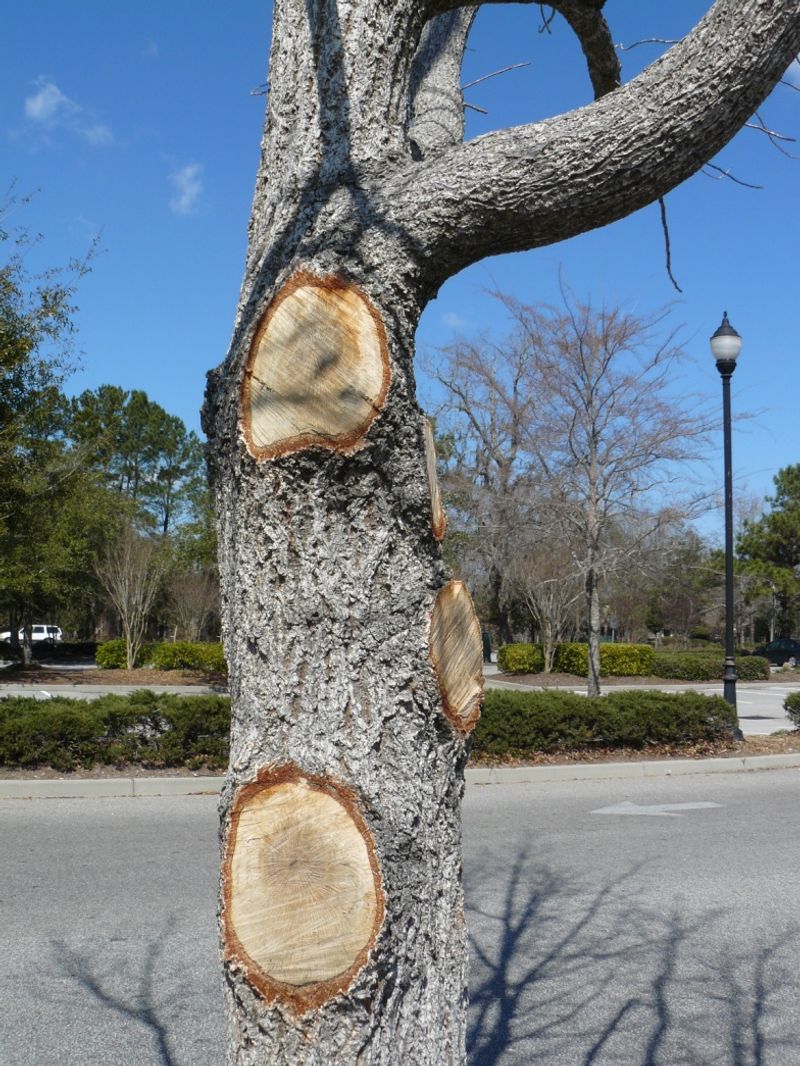
Staying inside the boundary does not make every cut a good one. A right to trim does not allow serious damage to the tree, and cutting a branch right back to the trunk is a common mistake.
New Castle County’s guidance also points toward keeping cuts at or inside the boundary and avoiding work likely to seriously damage the tree.
University of Delaware Extension’s pruning fact sheet explains what a proper cut looks like. For a limb too large to support by hand, it recommends the three-cut method.
That keeps the falling limb from tearing a strip of bark down the trunk.
The first cut is made partway through the underside of the limb, some distance out from the final spot. The second cut is made further out on the top, which lets the limb drop.
The third and final cut removes the short stub just outside the branch collar and the branch-bark ridge, the swollen area and rough line where the branch meets the trunk.
Cutting there lets the tree seal the wound on its own. Cutting flush with the trunk or leaving a long stub both slow healing and invite decay.
The same fact sheet warns that pruning or removing large trees is dangerous work best left to professionals. If a branch is thick, high, or heavy, do not try to handle it yourself.
Know when to call a professional
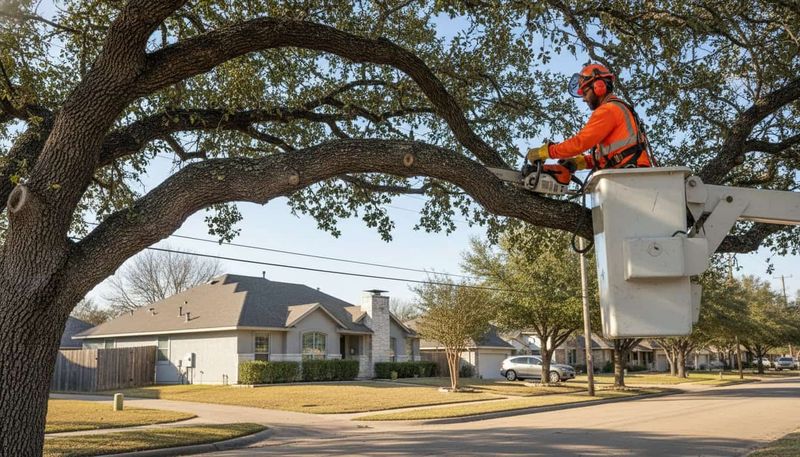
Some jobs are not for homeowners, no matter whose branch it is. Delaware’s Tree Owner’s Manual says not to prune branches within 10 feet of utility lines.
If a limb is that close to a wire, call the utility company and let its crews decide what happens next.
The same manual advises hiring an arborist whenever pruning cannot be done with both feet on the ground. That rule rules out reaching from a ladder, climbing into the tree, or using power equipment to get at a hard-to-reach branch.
Falls and kickbacks cause serious injuries every year, and a legal right to trim does not make the work any safer.
A good arborist can also help with the boundary question. They can work from your side of the line and tell you whether the cut you want would harm the tree.
The University of Delaware fact sheet gives the same caution about large trees.
Before hiring anyone, ask for proof of insurance and for the work to be described in writing. Make sure the crew understands where your property ends, so nobody steps across it.
If a limb looks cracked, hanging, or ready to fall, keep people and cars away from the area and call a professional.
Check separate rules for boundary trees and local trees
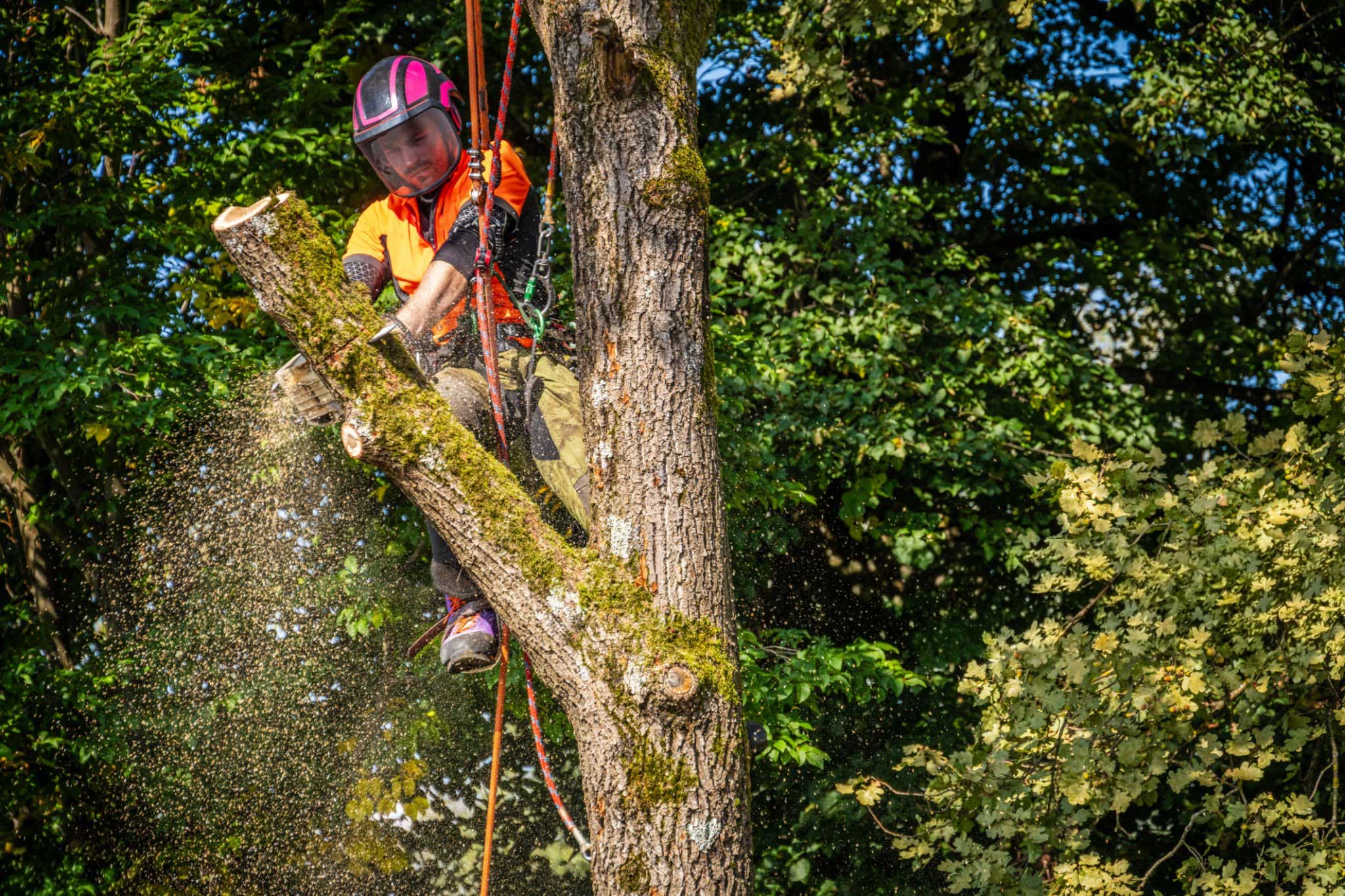
Other laws sit alongside the trimming question, and they should not be mixed up with it. Delaware’s timber-trespass statute deals with willfully, negligently, or maliciously cutting down or felling trees growing on another person’s land without consent.
Higher damages apply only under specific conditions, such as a marked boundary or notice and a finding of willfulness. The Dayton decision discussed it in the context of felled trees, not ordinary limb trimming.
Pruning overhanging branches from your own side is not an automatic trigger for triple damages.
A separate part of the boundary chapter bars cutting, felling, altering, or removing a boundary tree or other landmark without lawful authority. The wronged party can receive a $200 forfeiture.
That provision covers those specific features, not every tree growing near a property line.
Location can also bring local rules into play. Wilmington, for example, says city street trees are protected, and its permit page requires permits for specified work on them.
Those are city requirements, not statewide rules.
The New Castle County guidance on dead or dangerous trees likewise applies within that county. Before cutting, call your town, city, or county office and ask whether anything applies to your tree.
A few minutes on the phone can save you from a penalty and a lot of regret.
Share this story