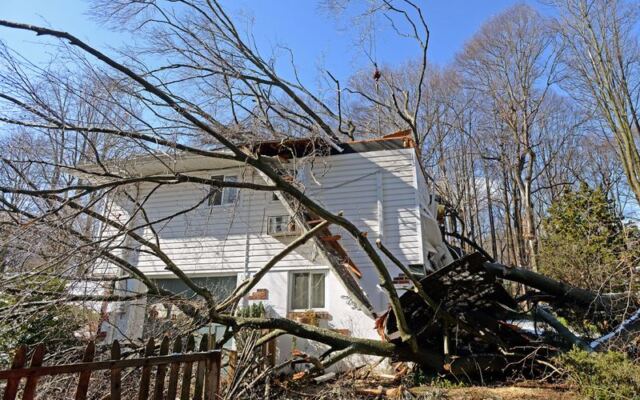
Your own homeowners insurance may pay for damage when a neighbor’s tree hits your house, even though the tree was never yours. Who owned the tree does not settle the insurance claim, and it does not settle who is legally at fault.
Those are two different questions, and mixing them up can leave you confused at a stressful time. Here is how the pieces fit together for Delaware homeowners.
Start with the damage and your policy
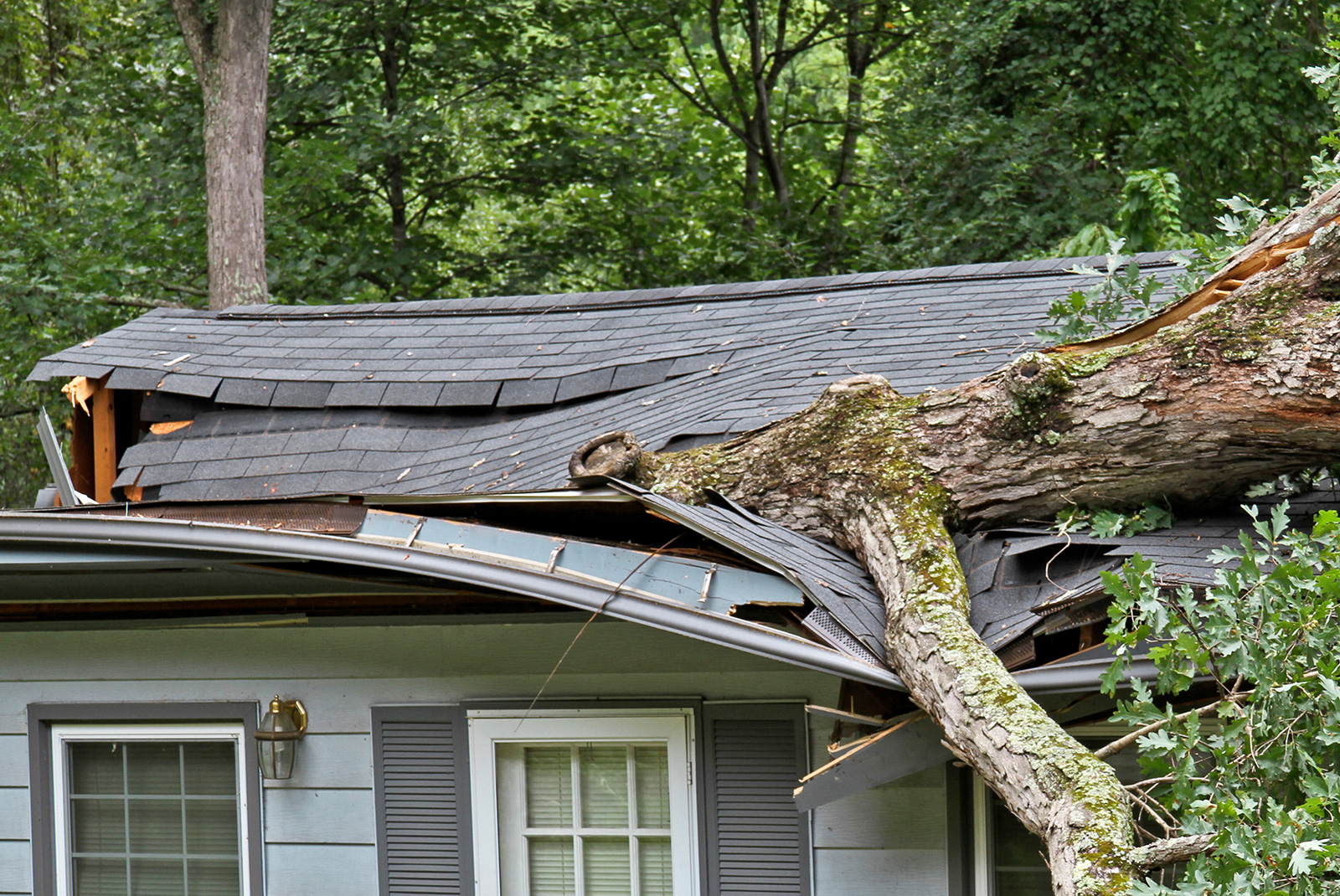
Picture a big limb crashing onto your roof from the yard next door. Two separate questions show up right away.
One is whether your own homeowners policy covers the damage. The other is whether your neighbor is legally responsible.
Those questions run on different tracks. Your policy is a contract between you and your insurer, and it looks at what was damaged and what caused the loss.
Legal responsibility looks at the neighbor’s conduct and the facts around the tree. Where the tree stood before it fell does not settle either one by itself.
For damage to an insured structure, such as your house or a detached garage, contacting your own insurer is a common first step. It is not a universal requirement, and it is not a guarantee of payment.
The Insurance Information Institute explains that tree coverage under a homeowners policy generally turns on what the tree hit.
Policies differ, so reading yours matters. The Delaware Department of Insurance Homeowners Guide recommends reviewing your policy to see which property and perils are covered.
Look for your deductible, your limits, and any wording about trees or windstorms.
When your homeowners policy may cover the damage
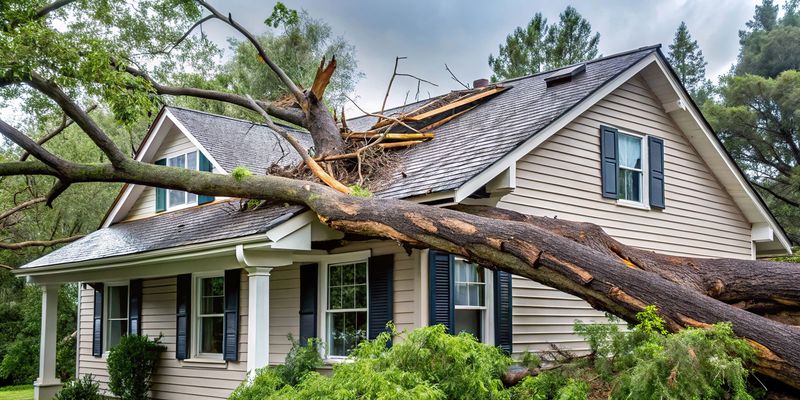
The Insurance Information Institute says coverage for a tree that hits a home generally applies regardless of who owned the tree. In other words, a neighbor’s oak can lead to a covered claim under your policy.
Your policy terms and the facts of the loss still control the outcome.
You may have a covered claim even if your neighbor did nothing wrong. A healthy tree can fall in a strong storm, and the neighbor may not have been negligent at all.
Your coverage does not depend on proving fault.
After paying a claim, your insurer may look at whether someone else should reimburse it. This process is often called subrogation.
If the facts support the neighbor’s liability, your insurer may seek reimbursement from the neighbor’s insurer.
If that effort succeeds, you may be reimbursed for the deductible you paid. Neither outcome is promised.
Recovery depends on the evidence, the neighbor’s coverage, and the applicable law.
Think of it as two stages. First comes your claim for the damage to the insured structure.
Later, if it applies, comes any attempt to recover money from the neighbor’s side. Your insurer usually handles that second stage, though you can ask how it works and whether your deductible is part of any recovery.
Tree removal has separate coverage rules
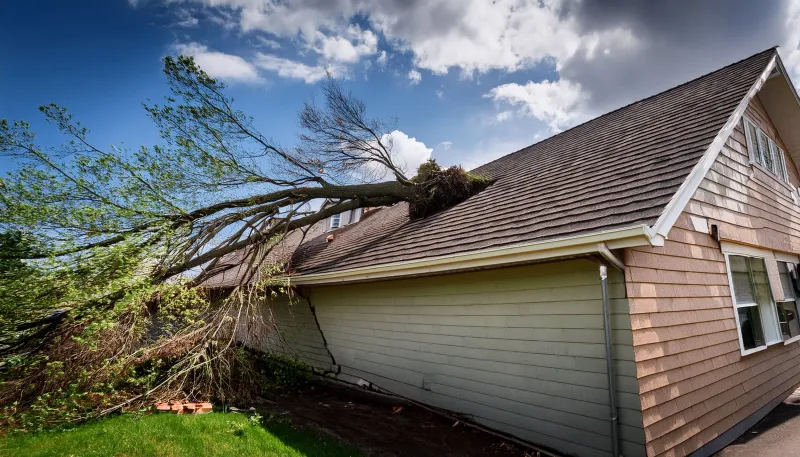
Paying for repairs and paying to haul away the tree are handled as different pieces of a claim. According to the Insurance Information Institute, removal may be covered when the tree hits an insured structure.
That coverage is often subject to a policy limit, so the full bill may not be paid.
If a tree falls and does not hit an insured structure, removal is generally not covered under that same guidance. There can be possible exceptions.
Examples include a tree blocking a driveway or an accessibility ramp.
Say a tree lands across your back lawn and misses the house. Removal may fall on you unless your policy has an exception that fits.
Say it clips the corner of your garage instead. Removal may then be treated differently, depending on your policy.
Be careful about stretching this guidance too far. It addresses homeowners tree removal.
It does not promise coverage for a damaged yard, a crushed fence, a vehicle, or every cleanup cost. Those depend on the applicable policy and the facts, and a car may fall under a different type of coverage altogether.
Check your policy for removal limits and wording before hiring anyone, and ask your insurer what it expects. A short call can save you from paying for something that might have been covered, or from assuming coverage that is not there.
Evidence can matter to a neighbor-liability claim
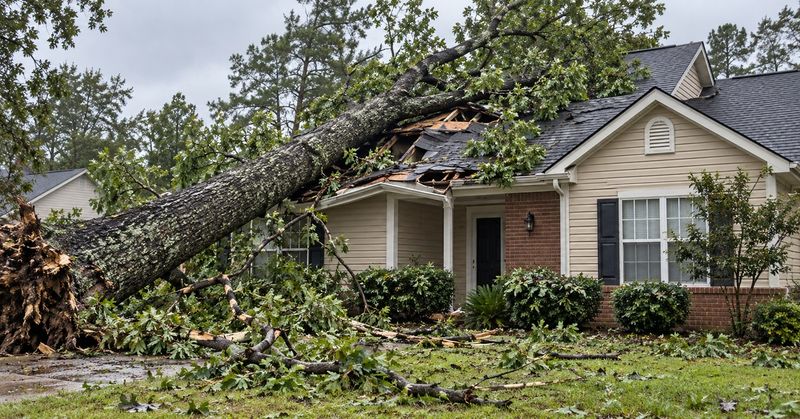
Whether your neighbor is legally responsible is a separate question from your coverage. A 2026 overview from a law firm describes liability as generally turning on whether the harm was foreseeable and resulted from negligence or a wrongful act.
The outcome in Delaware depends on the facts and the applicable law.
Certain details may be relevant evidence. Prior signs of trouble, such as dead limbs, leaning, rot, or an earlier failure, may matter.
So may how the neighbor maintained the tree and whether the neighbor knew about a problem. None of these is automatic proof either way.
A warning does not automatically make a neighbor liable. A storm does not automatically excuse the neighbor, and it does not automatically establish fault.
The Insurance Information Institute notes that poor maintenance may matter when insurers sort out recovery.
For context, Dignazio v. Rickerman Tree Services involved a tree that fell after an earlier failure in the same grove.
It shows why knowledge of earlier tree problems may matter to a negligence question. The case involved a tree-service inspection and injuries.
It was not a direct ruling on a neighbor’s liability for damage to adjoining property.
The takeaway is practical. Notice what you can about the tree’s condition and history, and let your insurer or an attorney weigh how those facts fit the law.
Document the scene and ask what your insurer needs
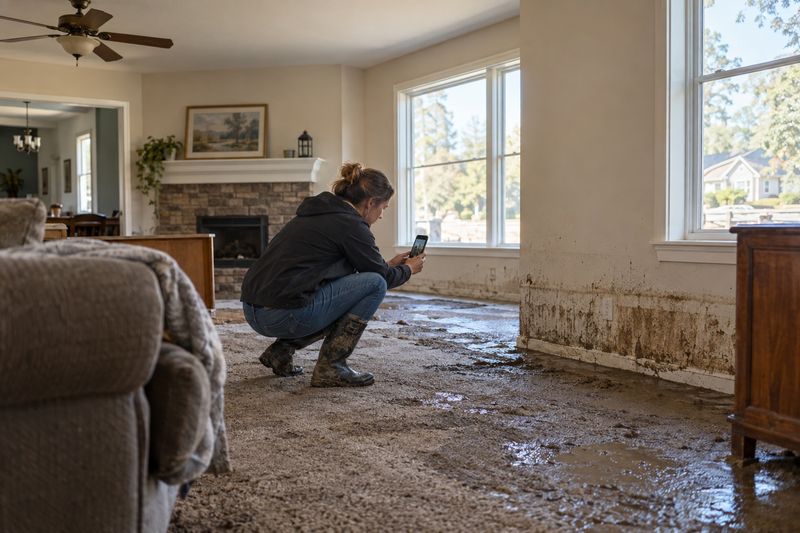
Good records help your claim move along. Start by reviewing your policy, as the Delaware Department of Insurance recommends in its Homeowners Guide.
Policies differ, so see what property and perils yours covers.
When it is safe, photograph the damage. Take wide shots of the whole scene and close-ups of the impact points.
Also photograph the tree itself, including the trunk, the break, the roots, and any signs of its condition.
Keep relevant communications, such as texts, emails, and letters with your neighbor, your insurer, and any contractors. Write down dates and names from phone calls.
Hold on to receipts for any expenses.
Then ask your insurer what documentation it wants and what temporary repairs it requires. A tarp over a hole in the roof is a common example, but ask before you spend money or sign anything.
Your insurer can tell you what it expects.
Remember what records can and cannot do. They preserve information and make it easier to report accurately.
They do not by themselves prove liability, and they do not guarantee coverage.
Branches over the property line raise a different issue
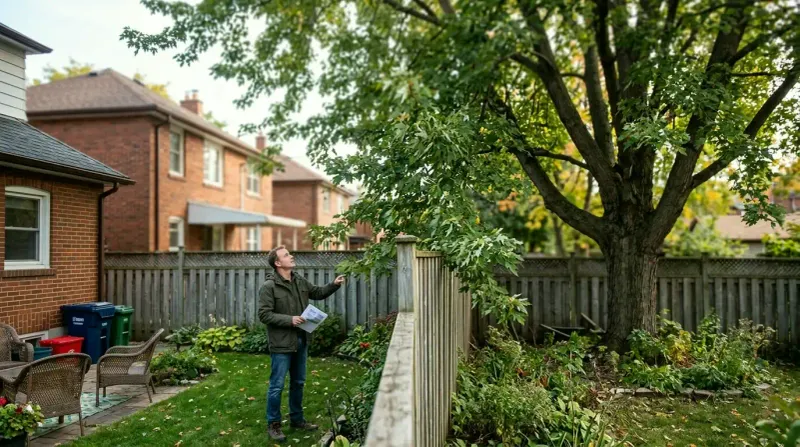
Branches or roots crossing a property line are a different matter from a tree that has already fallen. One question is what you may do about encroaching growth.
The other is who pays when a tree causes damage. The first does not answer the second.
A Delaware Court of Chancery report quotes Law v. Lee for a common-law right to remove encroaching branches and roots up to the boundary line.
That is about trimming what crosses onto your side. It does not determine who pays after a tree falls.
If you decide to trim, take care. The 2026 law-firm overview cautions that self-help trimming must not harm the tree.
A cut that damages the tree could create new problems with your neighbor.
For anything larger or riskier than light pruning, talking with your neighbor first is often wise. Local rules can also add requirements.
Bethany Beach, for example, has its own process for dangerous trees, and that is a town ordinance, not a statewide rule.
Stay away from trees near power lines
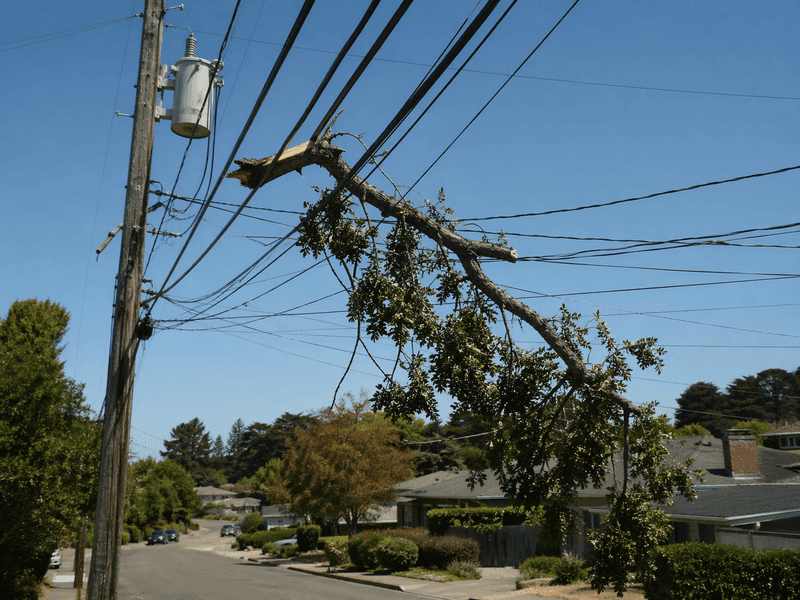
If a tree or branch is on a utility line, keep your distance and call the utility. Delaware’s Tree Owner’s Manual advises staying away from trees or branches on utility lines.
A tree touching wires can make the ground, the branches, and anything touching them dangerous.
For large-tree removal, or for broken limbs hanging in a tree, the same manual recommends an arborist. These jobs involve heavy weight and unpredictable movement.
Cutting up a big fallen tree yourself is not worth the risk.
Safety steps are separate from any question about liability or payment. Calling a utility or an arborist does not decide who is responsible, and it does not promise your insurer will cover the work.
As noted earlier, removal coverage depends on your policy and on what the tree hit.
Once everyone is safe, confirm coverage and next steps with your insurer. Ask before you hire a crew so you know what to expect.
A fallen tree is a problem you can sort out later, but a live wire is not.
Share this story