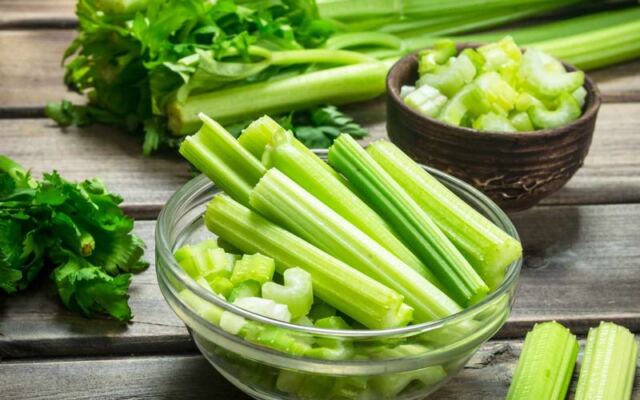
Eating celery every day does something real: it adds a crunchy, low-calorie vegetable and a bit of fiber to your meals, and that small habit can add up over weeks and months. Plenty of people in North Carolina grow celery in cool-season gardens or toss a bunch into the grocery cart without thinking twice.
Online claims about celery can get wild, though, so it helps to know what a stalk really brings to the table. Here is a clear look at what celery does, what studies have tested, and what to watch for.
A daily serving adds modest nutrition
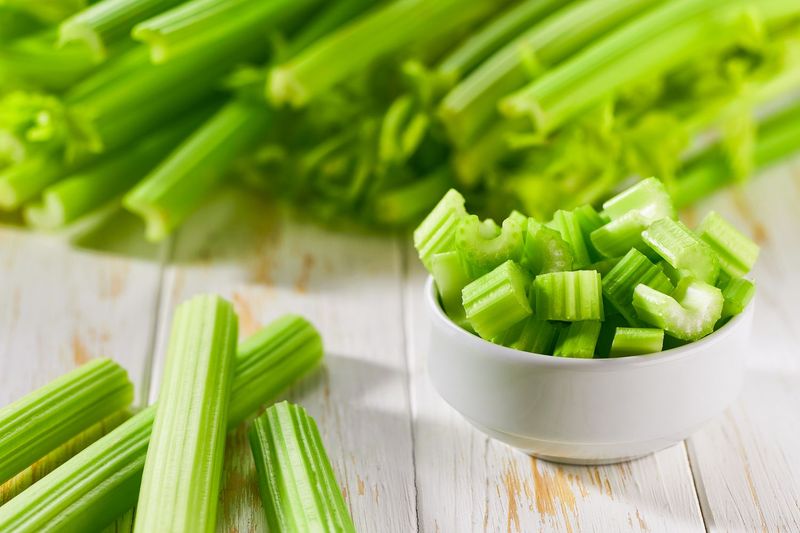
Picture a handful of raw celery sticks next to your lunch. According to the USDA FoodData Central entry for raw celery, a 100-gram reference serving has about 14 calories and 1.6 grams of fiber.
That is roughly one large stalk and a bit more, or a couple of medium ones.
Those numbers tell you what daily celery really is: a low-calorie vegetable that provides some fiber. It is not a major source of any single nutrient, and it is not a concentrated shot of vitamins or minerals.
The crunch and the water content are a big part of the appeal, since celery fills space on a plate without adding much energy.
Portion and preparation change the math. Two stalks weigh more than one, and a tablespoon of peanut butter or a scoop of ranch dip adds far more calories than the celery itself.
Cooking celery in soup or a stir-fry also changes what ends up in the bowl, because broth, butter, and other ingredients come along for the ride.
Think of celery as a convenient add-on. Slice it into tuna salad, chop it into chili, or keep a bag of sticks in the fridge for snack time.
It can make a meal a little more filling and a little more colorful, which is a perfectly good reason to eat it every day.
What it cannot do is act as a treatment for anything. A daily stalk is a food habit, not a health plan, and its value comes from replacing or supplementing heavier choices rather than from any special power.
What celery studies have actually tested
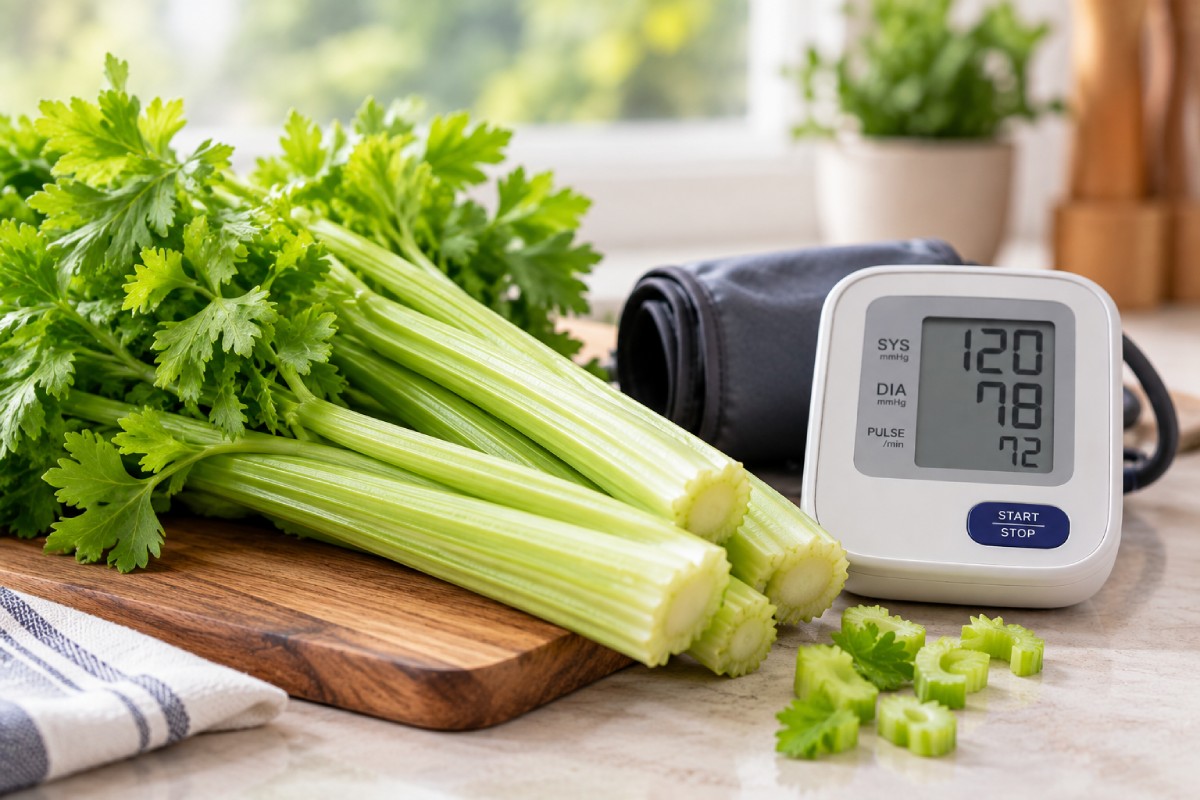
Headlines about celery and blood pressure usually trace back to research on concentrated forms, not a snack bag of sticks. A 2025 systematic review and meta-analysis pooled 10 randomized trials with 511 participants.
It reported improvements in some measures, including blood pressure, fasting glucose, and triglycerides.
There are big caveats. The trials differed a lot from one another, which researchers call substantial heterogeneity, and the sample sizes were limited.
The studies also involved celery preparations, so they do not tell us what happens when someone eats raw celery every day.
Then there is a smaller, more specific example. A 2022 randomized crossover trial gave 52 people with hypertension 1.34 grams per day of celery-seed extract over four weeks.
That is a concentrated supplement, and the trial does not give a recommended amount of celery stalks.
The takeaway is about forms. Whole stalks, juice, seeds, and extracts are different products, and a finding in one does not carry over to the others.
Research on celery preparations does not establish that ordinary stalks or celery juice lower blood pressure, blood sugar, or blood fats.
If you have high blood pressure, diabetes, or high cholesterol, celery is not a stand-in for your medication or your care team. Keep taking what your clinician prescribes, and talk with them before trying any celery seed supplement, since concentrated products can behave differently from food.
Low-calorie does not mean negative-calorie
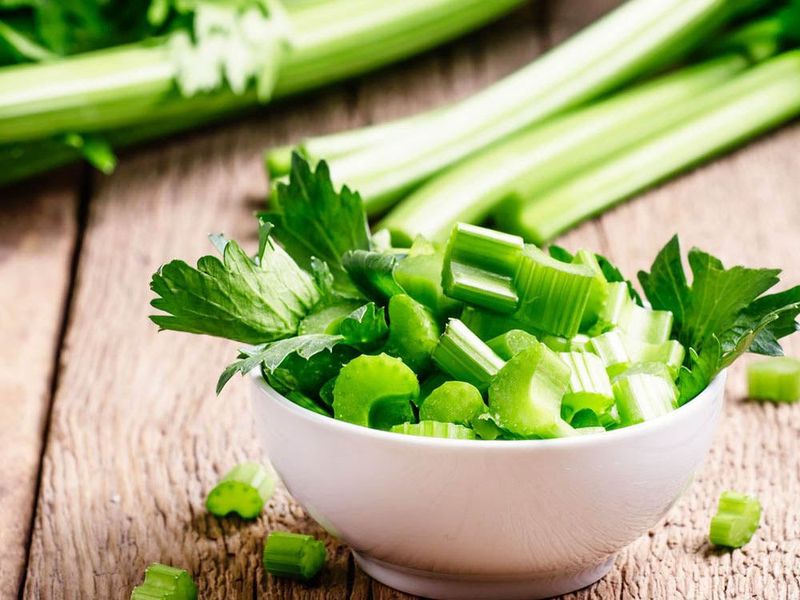
You have probably heard that celery burns more calories than it contains. It sounds neat, but it is not established.
A Mayo Clinic-authored answer says there are no reputable scientific studies proving that specific foods have negative calories.
Celery is still a smart low-calorie choice. It just is not calorie-free, and chewing it does not pay back its own energy.
Treat it as a light food that takes up room on the plate, not as a trick for weight loss.
Celery juice gets even bigger promises. Social media posts call it a detox or a cure for various diseases, or say it has unique powers no other vegetable has.
The clinical evidence cited in the 2025 review does not establish a detox effect or any special disease-fighting benefit for celery juice.
A quick way to spot a shaky claim is to look for words like cure, flush, or burn off. Another clue is a promise that one vegetable fixes a long list of unrelated problems.
Real nutrition advice usually sounds more modest, and it names the exact food form and the amount used.
None of this makes celery a bad choice. A crisp stalk beside your lunch is still a perfectly good habit, as long as you expect a vegetable and not a miracle.
Central North Carolina has seasonal planting windows

Gardeners who want to grow their own celery can start with a local calendar. NC State Extension’s central North Carolina planting calendar lists transplant windows for celery in spring and again in late summer or fall.
The key word is central. That calendar was written for one part of the state, and Extension notes that planting dates vary by region.
Folks in the mountains, the Piedmont, and the coast can see different frost dates, so check with your county Extension office before you mark your own calendar.
It also helps to be clear about what the calendar does not say. It does not mean every North Carolinian grows celery, and it does not tell you how easy or hard the crop will be.
It is simply a planting guide that shows when transplants fit the central region’s seasons.
If you are curious, start with a few plants rather than a whole bed. Buy transplants from a local nursery, and ask the staff which varieties do well in your area.
Cool-season timing is what the calendar points to, so plan around those spring and late-summer or fall windows for your own region.
Whether you grow it or buy it year-round at the store, the stalk on your cutting board is the same vegetable. The garden angle is just a way to connect a daily habit to a place.
Wash celery and take allergy symptoms seriously
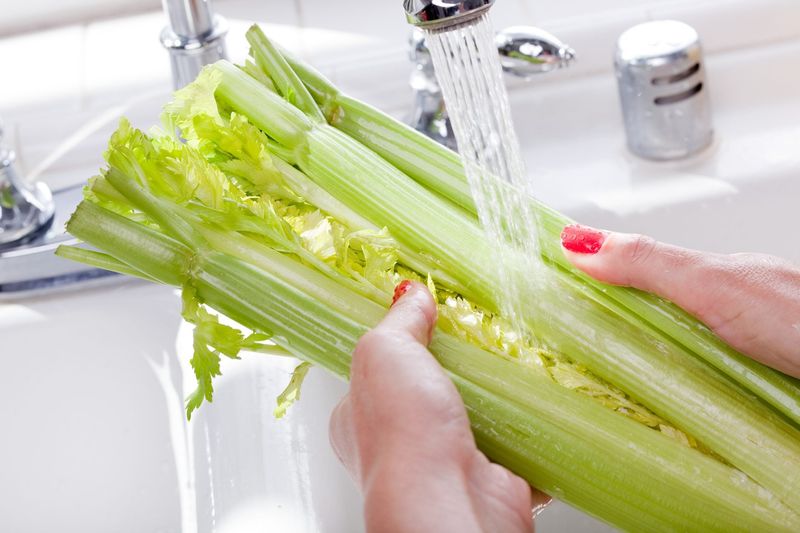
Before you chop, rinse. FDA guidance on selecting and serving produce says to wash produce under running water, not with soap or a commercial produce wash.
Washing can reduce bacteria, but it does not eliminate them.
For celery, that means separating the stalks and rinsing each one, then drying with a clean towel or paper towel. Keep cut celery away from raw meat and its juices on the cutting board, and store it in the fridge.
Now for the part many people skip. Celery is more than a mild vegetable for some people.
The AAAAI oral allergy syndrome table lists celery among foods associated with pollen-related oral cross-reactions, such as an itchy mouth or throat after eating it.
Reactions vary from person to person. A specialist celery allergen fact sheet notes that for some people they may be severe.
Cooking does not make celery safe for everyone with an allergy, so do not assume a soup or stir-fry is a workaround. If celery makes your mouth tingle, causes hives, or leads to trouble breathing, stop eating it and talk with a clinician or allergist.
Get emergency help for severe symptoms.
Keep celery in its everyday role
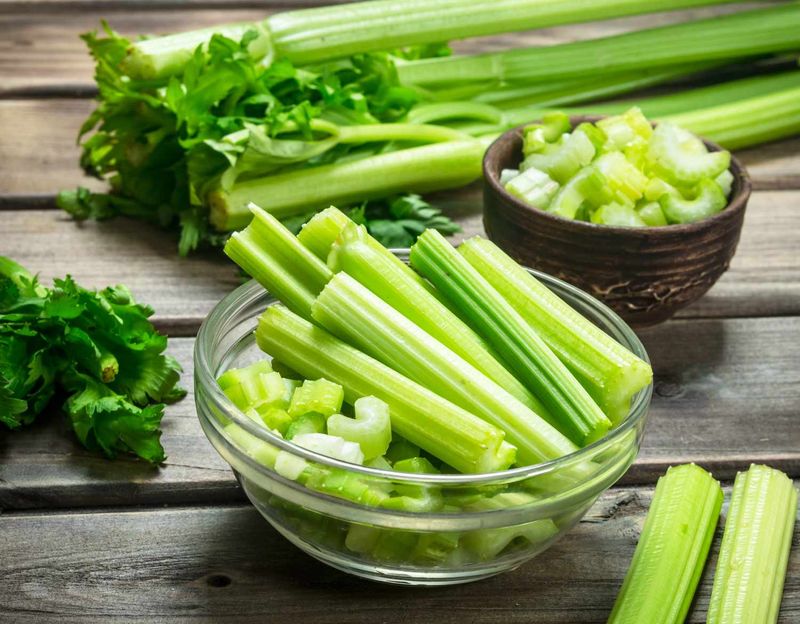
Celery works best as a simple add-on: a low-calorie vegetable with some fiber, as shown in USDA’s raw celery entry. Ordinary stalks should not be expected to match the effects reported in studies of concentrated celery preparations.
Let it share the plate with beans, greens, carrots, fruit, and whole grains. Variety does more for your diet than any single stalk ever could.
Celery earns its spot by being crunchy, cheap, and easy, and that is plenty.
Share this story