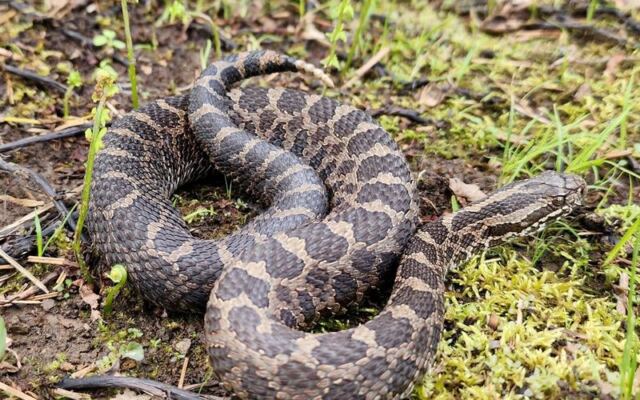
A small, thick-bodied rattlesnake still lives in parts of Wisconsin, though few people ever cross its path. The eastern massasauga is rare, protected, and easy to confuse with a harmless neighbor, the eastern foxsnake.
Knowing a little about both snakes helps you stay calm and safe outdoors. It also shows why this quiet animal needs room to survive.
Wisconsin has two rattlesnake species
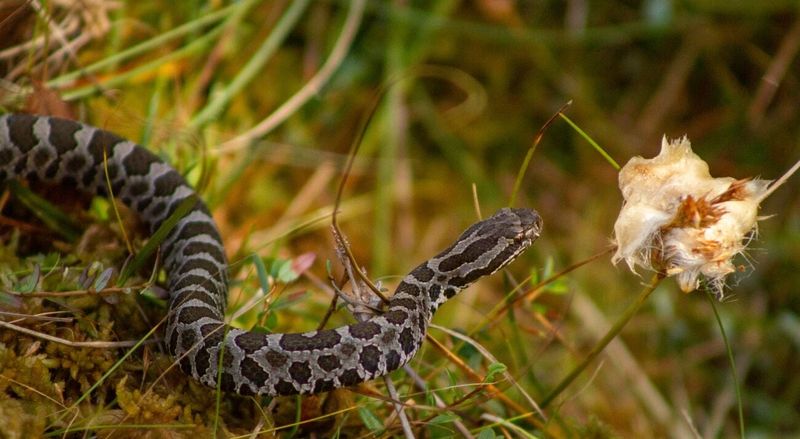
Wisconsin is home to two kinds of rattlesnake, not one. According to the Wisconsin DNR, they are the eastern massasauga and the timber rattlesnake.
Both are venomous, and both are part of the state’s native wildlife.
The timber rattlesnake is a larger snake that is tied to different country than the massasauga. It has not vanished from the state, and it deserves the same respect and distance.
This article, though, focuses on the massasauga, a smaller and much less often discussed species.
The massasauga is sometimes called a swamp rattler, a nod to the wet places it favors. Many people picture rattlesnakes only in deserts or the far West, so the idea of one in a Wisconsin wetland can come as a surprise.
Surprising or not, it is a real part of the state’s natural heritage.
Because the massasauga is rare, most residents will never see one. Hikers, anglers, hunters, and families near rivers and wet fields still benefit from knowing it exists.
A little background turns a startling moment into a manageable one, and it helps explain why careful, protective habits matter for both people and snakes.
What “very few known occurrences” tells us
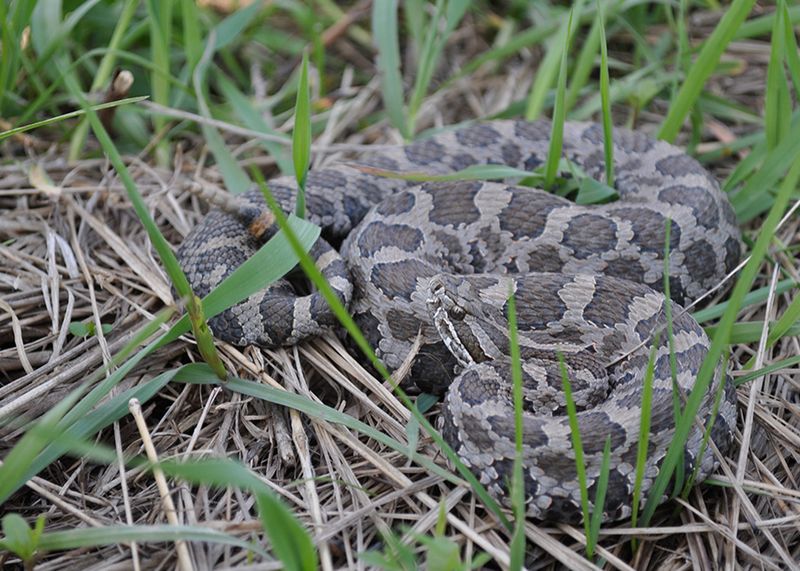
The Wisconsin DNR describes the massasauga’s status in plain terms: there are “very few known occurrences” in the state. The DNR lists the snake as state endangered.
That label is reserved for species at real risk of disappearing from Wisconsin.
The federal government adds another layer. The U.S.
Fish and Wildlife Service lists the eastern massasauga as federally threatened. Together, the two listings mean the snake is protected under both state and federal rules.
It helps to separate two ideas here. “Very few known occurrences” is a general statement about rarity. It is not a head count, and it does not tell us how many snakes live in the state today.
The sources reviewed for this article do not give a precise current number of snakes or occupied sites, so no number is offered here. Guessing would only add confusion.
What can be said with confidence is that the snake is scarce, and that wildlife managers treat it with care.
That caution extends to location details. Sensitive species information is generally shared only at a broad level, because exact spots can be vulnerable to disturbance or collection.
The goal of this article is understanding, not a map for anyone to follow.
Wetlands, nearby uplands, and a seasonal refuge
Floodplain wetlands near medium-to-large rivers are the heart of massasauga habitat in Wisconsin. The DNR species record points to sedge meadows and wet meadows, along with nearby upland prairie, floodplain forest, and old fields.
In other words, the snake uses a mix of wet ground and drier ground close by.
Seasons change how it uses that mix. The DNR notes that activity generally runs from spring into fall, depending on temperatures.
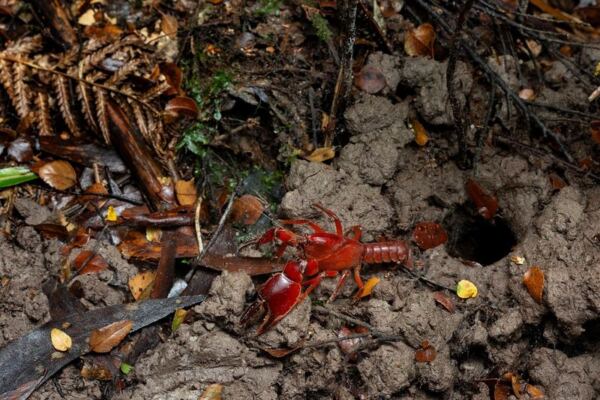
When cold weather arrives, massasaugas spend the winter in terrestrial crayfish burrows or root channels, where they stay below the frost.
That winter refuge is a good reminder that a wetland’s value goes beyond what you can see on the surface. Burrows, roots, and wet soil all play a part.
Protecting these quiet corners helps protect the animals that depend on them.
A habitat description like this is broad on purpose. Plenty of floodplains in Wisconsin look similar, and most of them hold no massasaugas at all.
The description cannot predict where a snake might be on any given day, and it should not be used that way.
The same goes for the wider category of reptiles and amphibians. The DNR’s herp pages offer general background on the state’s species.
For rare ones, the agency’s sensitive species policy calls for location details to be generalized to the county level, which protects the animals from disturbance.
Why a foxsnake can sound like a rattlesnake
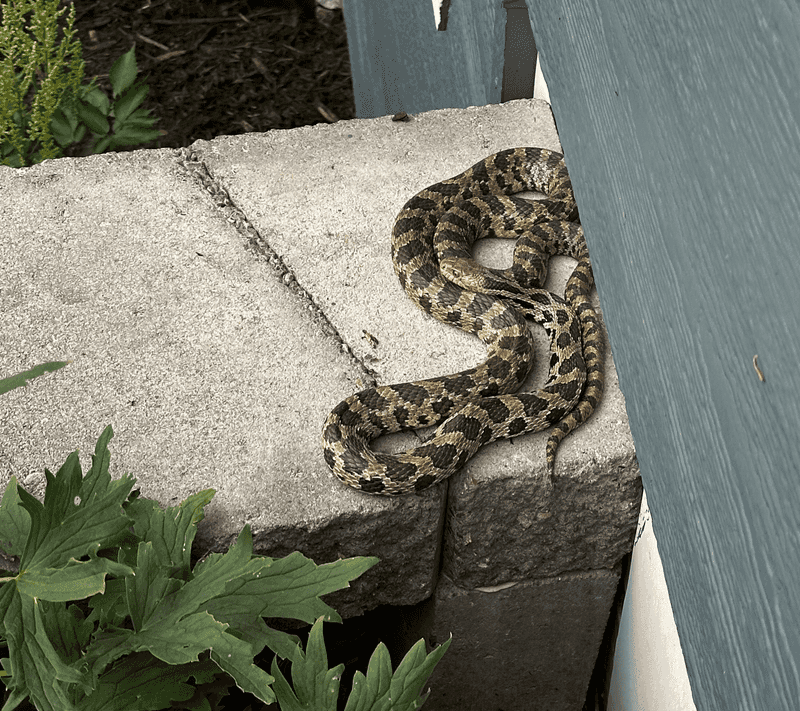
Eastern foxsnakes are common in Wisconsin, and they are completely nonvenomous. The DNR’s foxsnake page describes them as yellow, tan, or olive-gray, with large reddish-brown, dark brown, or black blotches down the back and smaller blotches on the sides.
That patterned look is one reason people mistake them for rattlesnakes.
Looks are only half the story. A frightened foxsnake may vibrate its tail rapidly against leaves, grass, or other nearby objects.
As a Wisconsin Natural Resources magazine reader feature explains, the result can be a buzzing, rattle-like sound.
Picture a dry fall day in a field edge. A snake freezes, its tail flickers in the dead grass, and a dry whirring fills the air.
To a startled walker, that sounds like a rattlesnake, even though no rattle is involved.
For that reason, a rattling noise by itself does not tell you which species you have found. A foxsnake can make the sound, and a rattlesnake might stay silent.
Sound is a clue at best, and never proof.
The foxsnake deserves credit as a helpful neighbor, since it is part of the local ecosystem. Still, the safest response to any unfamiliar snake is the same: stay back and let it move along.
No field clue makes an uncertain snake safe to approach
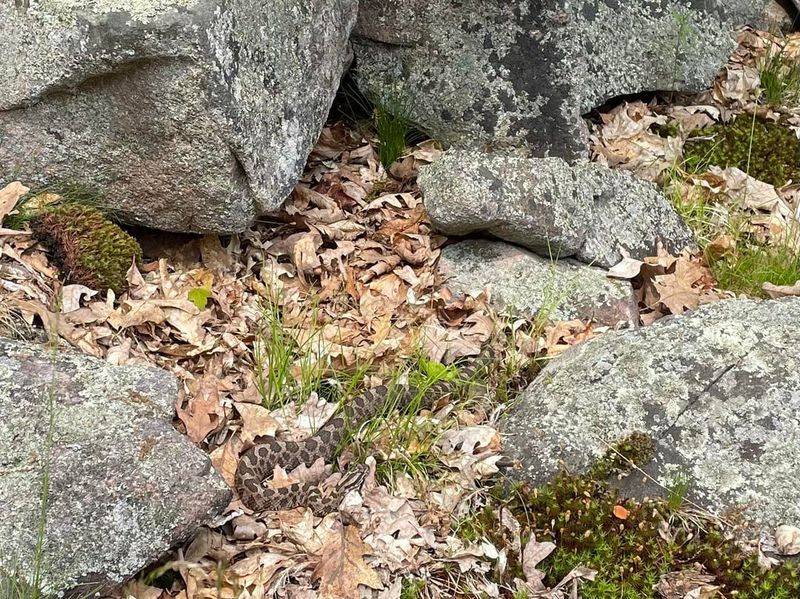
One contrast gets repeated often: a foxsnake’s tail tapers to a point, while a massasauga has a segmented rattle at the tip. The DNR foxsnake page supports that difference.
It is real, but it is not a dependable test.
Young rattlesnakes may have only a small button where the rattle will grow. Rattles can also break off over time.
As an Ohio State identification guide cautions, tail features alone can mislead.
Getting close enough to study a tail also means getting close enough to be bitten. That is a poor trade for a bit of curiosity.
Treat any snake you cannot name with certainty as potentially venomous.
For general background, the U.S. Fish and Wildlife Service describes the massasauga as venomous.
A federal species description adds that it is thick-bodied, gray to brown or sometimes black, with dark blotches, and that adults average about two feet long.
Those traits are useful for general knowledge, not for deciding whether to walk up to a snake. Color, pattern, size, and tail shape can all overlap or vary.
When in doubt, do not approach and do not handle it.
Give snakes space and get prompt care after a suspected bite
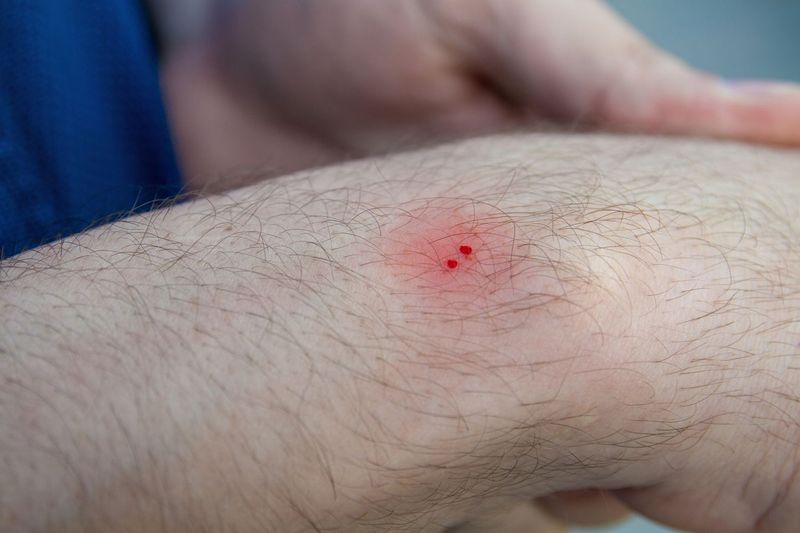
If you meet a snake, the best move is the simplest one: leave it alone. Give it plenty of room and walk around it.
Do not try to catch, kill, or move it, since most bites happen when people interfere.
Keep an eye on where you step and place your hands, especially near tall grass, logs, and rocks. Pets should stay leashed and out of brush.
A snake that has a clear way out will usually take it.
If someone is bitten by a snake that might be venomous, get emergency medical care promptly. CDC and NIOSH guidance advises against handling the snake, cutting the wound, or sucking out the venom.
Calling for help early matters more than any home remedy.
The same guidance says not to apply ice or use a tourniquet. Those old tricks can do more harm than good.
Stay calm, limit movement, and get professional care, as outlined in the NIOSH bulletin on venomous snakes.
You do not need a perfect identification to act wisely. Distance works whether the snake is a foxsnake, a massasauga, or something else.
The safest snake encounter is one where everybody goes their separate way.
Share this story