
Fall Lawn Care: A Practical Plan for Your Grass Type
Fall lawn care starts with the grass beneath your feet, long before you open a bag of fertilizer. The thin patch beside the gate might need relief from foot traffic. The lawn under the maple might need its wet leaves lifted. And the grass turning tan after a cold night might be settling into dormancy. Each deserves a closer look before you spend a Saturday treating the whole yard.
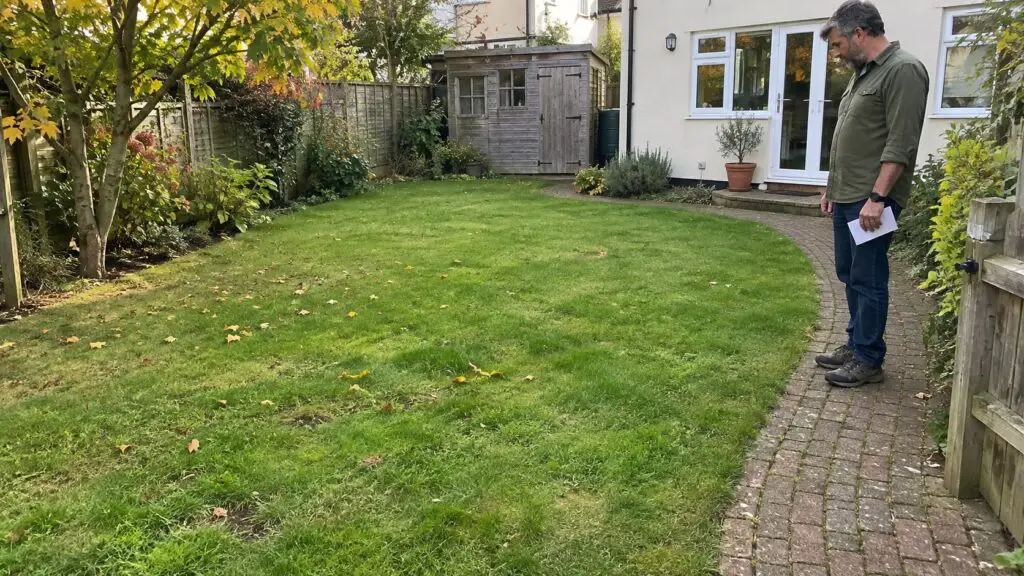
The most useful fall lawn care tips help you decide which jobs belong on your list. Grass type, soil conditions and the remaining growing season all shape that decision. This article covers the choices behind everyday autumn care and small lawn repairs. For detailed instructions you can take outside, the downloadable Fall Lawn Care Guide includes diagrams, grass-specific care plans and printable checklists, along with worksheets for measuring your lawn and recording what you’ve done.
Download FREE Fall Lawn Care Guide
Download our FREE 28-page fall lawn guide. Give your lawn stronger spring growth with this practical guide. Explore clear instructions, photos and diagrams covering aeration, overseeding, fertilizing, mowing, watering and leaf management, with guidance for different grasses and includes handy printable checklists for your lawn maintenance.
Match Your Fall Lawn Care Schedule to Your Grass
Fall Lawn Care for Cool-Season Grass
Kentucky bluegrass, tall fescue, fine fescues and perennial ryegrass grow well in mild fall weather. That gives you a useful window for repairing thin turf and tackling compacted ground while the grass can recover. But these grasses have different needs. Bluegrass takes longer to germinate than perennial ryegrass, while fine fescues tend to need less feeding. If you’ve still got the original seed bag, its label is a good place to start identifying your lawn.
Plan repairs around your local seeding window, with enough growing time before hard freezes. New grass needs time to root, not just show a few green shoots. Studies place fescue renovation in late summer and early autumn, but those calendar dates belong to zones 5b through 8a. Ask your local extension service for timing suited to your particular area, particularly if you’re working with slow-establishing bluegrass or gardening where winter arrives early.
Fall Lawn Care for Warm-Season Grass
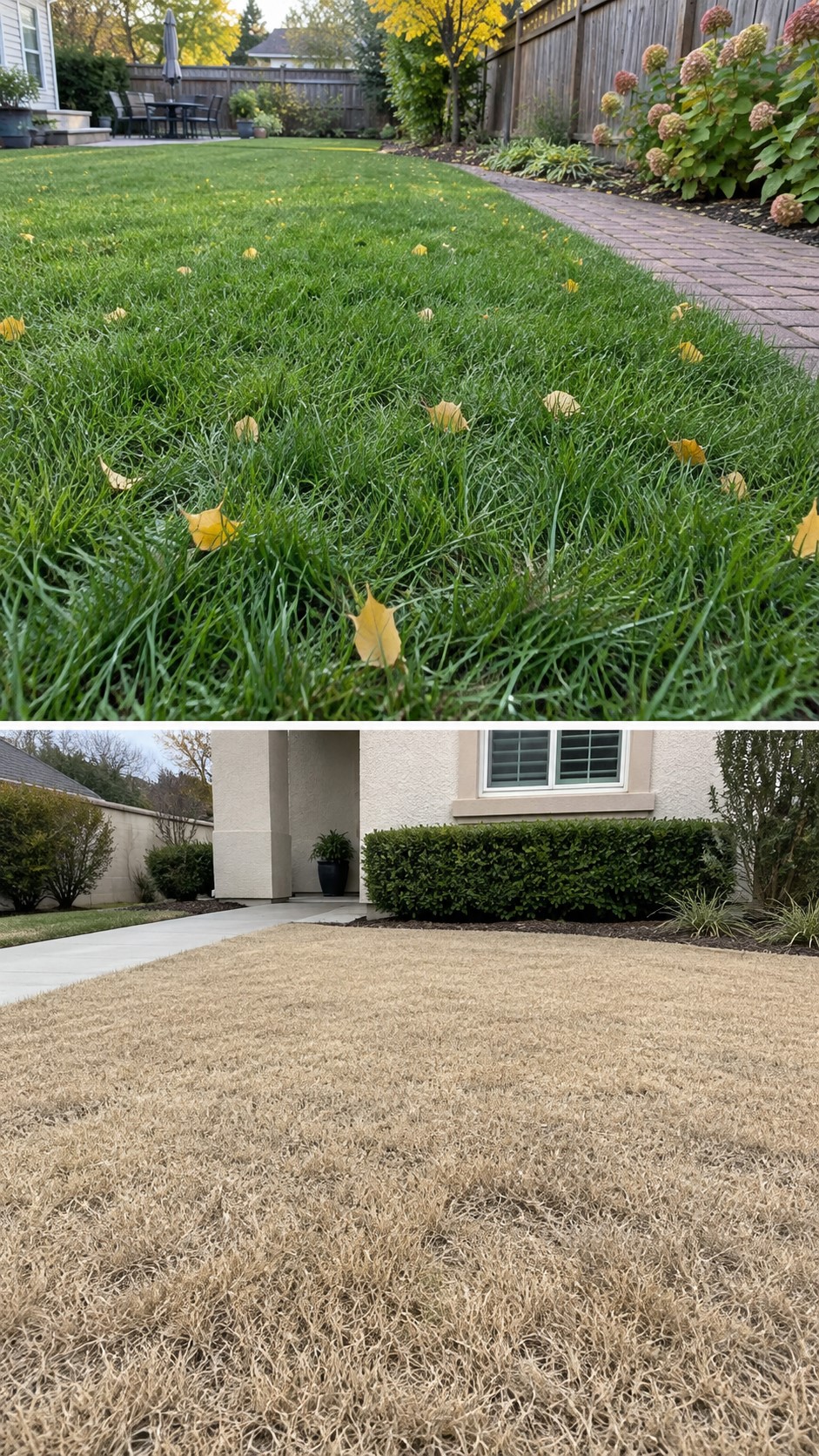
Bermuda, Zoysia and St. Augustine do their strongest growing in warm weather. As temperatures fall and growth slows, shift your attention toward protecting the grass already there. Major repairs and disruptive soil work usually belong in the next warm growing season. A fairly even change to tan after cold weather can be normal dormancy, while brown patches spreading through an actively growing lawn deserve investigation. Resist sowing ryegrass into dormant Bermuda just for winter color unless you’re prepared for the extra maintenance and possible delay to spring recovery. Routine winter overseeding is a poor fit for Zoysia and St. Augustine. In frost-free areas, follow a local year-round care schedule.
Start Your Fall Lawn Care Checklist With a Walk Around the Yard
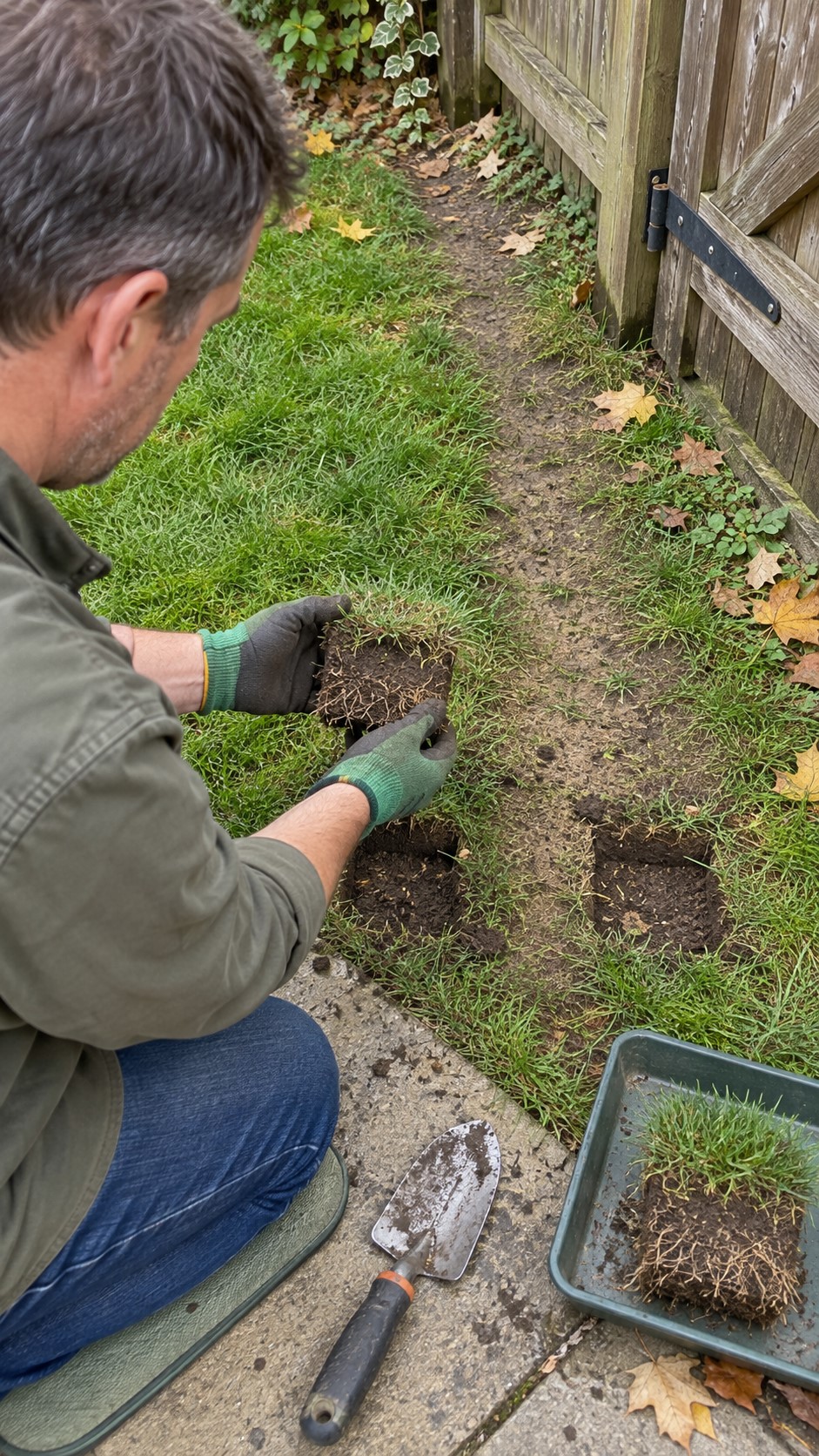
Walk the lawn before buying supplies. Look beside the gate, beneath trees and along the route everyone takes to the shed. Check places where puddles linger after rain. Lift a small wedge of turf in a weak patch and compare its roots and soil with a healthier spot, then replace both pieces. A lawn that keeps failing in deep shade may be better replaced with a suitable groundcover or a mulched bed.
A soil test helps you make decisions about acidity, phosphorus and potassium. Nitrogen needs also depend on the grass and what you’ve already applied during the year. Follow the laboratory’s sampling instructions, combining small samples from across a similar area and keeping unusual problem spots separate. Soil collected beside a fertilizer spill won’t give a fair picture of the rest of the yard. While you’re outside, measure the turf, subtracting beds and paving. You’ll need that area when working out seed or fertilizer quantities. A tape measure can save you an unnecessary purchase.
Plan Fall Lawn Aeration and Overseeding While Grass Is Growing
Relieve Compaction With Fall Lawn Aeration
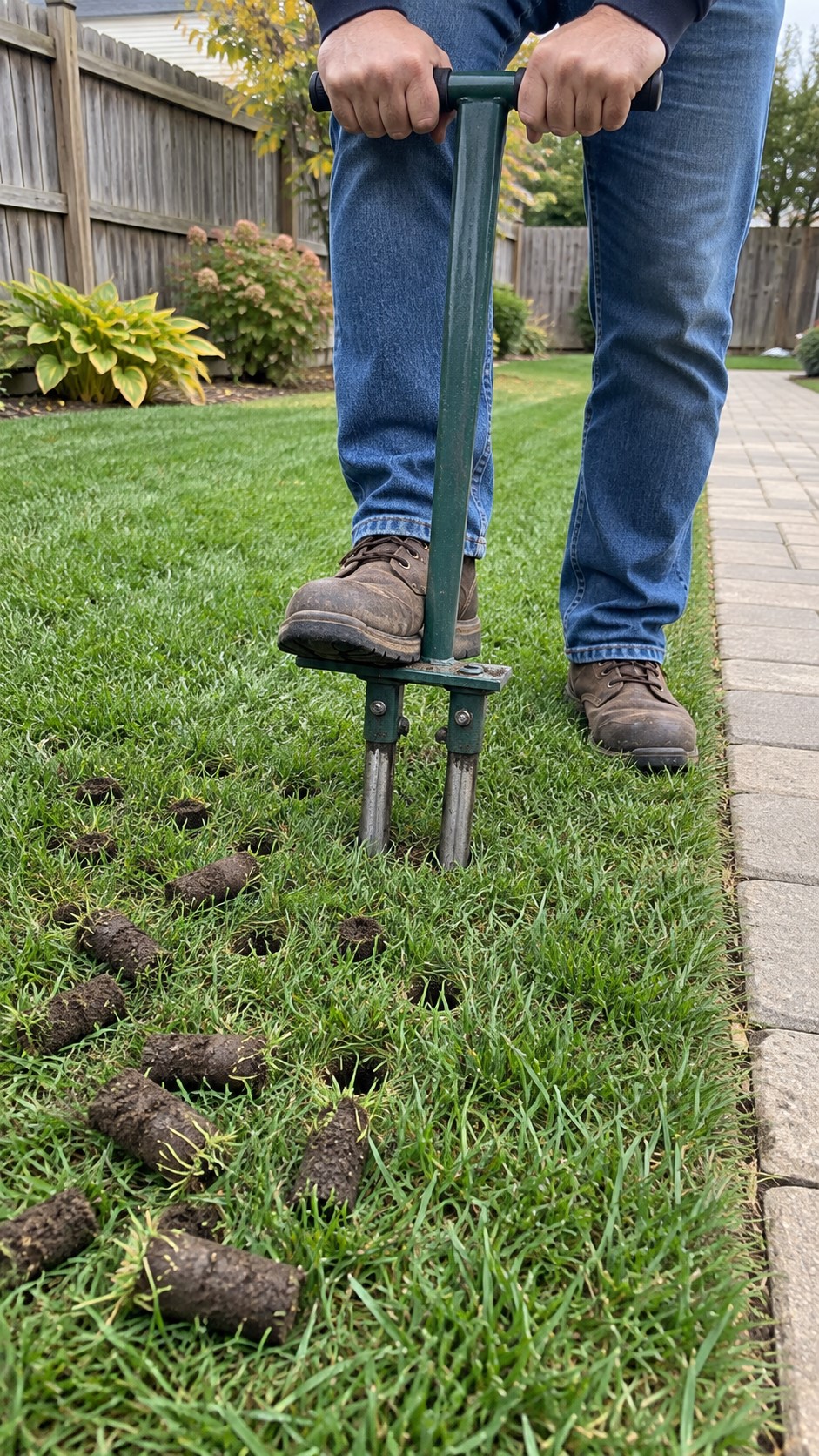
Repeated footsteps and mower traffic can press soil particles together, leaving less space for air and water. A hollow-tine aerator removes small plugs of soil to help relieve that compaction. It’s worth considering where roots are shallow and the ground stays hard along a busy route. Choose a period when the grass is growing and the soil is moist enough to release plugs without smearing. For cool-season turf, that often means late summer or early fall. Leave the removed cores on the surface to break down, and give the grass time to recover before returning to heavy use.
Aeration won’t fix a low spot fed by a downspout or remove buried rubble. Those problems need separate attention. Dethatching is another job again: it removes excessive accumulated stems and roots above the soil. Check what you’re dealing with before renting equipment. The PDF includes aeration diagrams and measurements, plus advice on assessing thatch before you add another job to the weekend.
Repair Thin Cool-Season Grass With Fall Lawn Overseeding
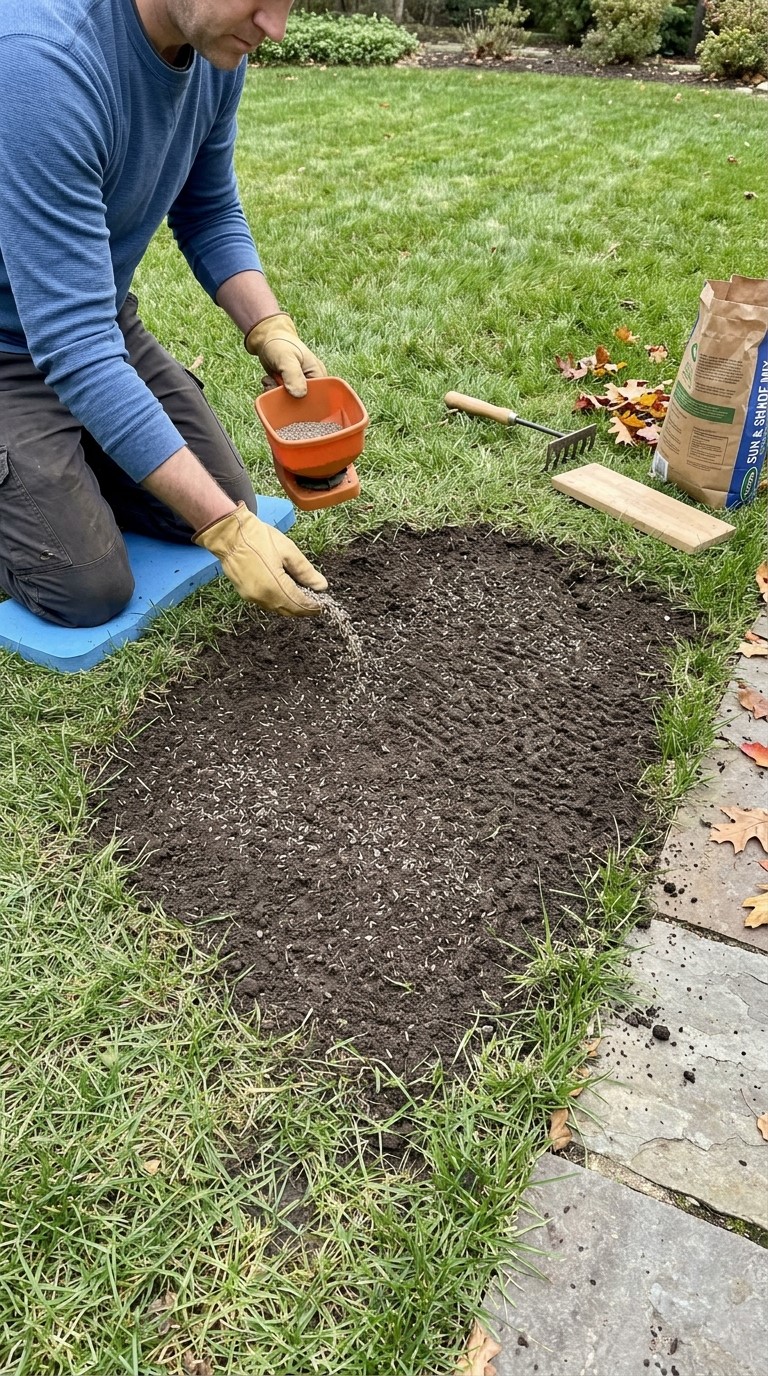
Once you’ve addressed the cause of thinning, choose seed suited to your existing lawn and conditions. Clear dead material from bare patches, loosen the surface and rake it level. Seed needs contact with soil to take up moisture. Scattering it over a cushion of old leaves is likely to waste much of the bag. On thin existing turf, prepare the area without tearing up healthy grass, and aerate first where compaction warrants it.
Use the seed label’s rate for the job you’re doing. Overseeding an existing lawn and sowing bare ground may call for different amounts. Press the seed into good contact with the prepared surface and water with a gentle spray. Check any recent weed-treatment labels before sowing, too. Many pre-emergent products interfere with grass seed establishment. If the remaining growing window is too short, record the repair for the next suitable season rather than rushing it.
Use Fall Lawn Fertilizer According to Grass Type and Soil Needs
Fall feeding can support a cool-season lawn’s recovery, but count earlier applications before adding another. Fine fescues usually need less nitrogen than bluegrass. A healthy lawn doesn’t need feeding simply because the neighbor has brought out a spreader. Use soil-test advice for phosphorus, potassium and pH adjustments. A bag labeled “winterizer” doesn’t prove that your soil needs extra nutrients, however appealing the promise on the packaging.
Warm-season lawns need a different approach as growth slows. Follow the regional cutoff for nitrogen instead of copying a cool-season fall program. NC State Extension’s Bermuda calendar1 ties autumn care to local conditions and expected frost, which shows why one feeding date won’t suit everyone. Wherever you garden, follow the product label and local application rules. Avoid spreading onto frozen or saturated soil, and postpone the job when heavy rain is forecast.
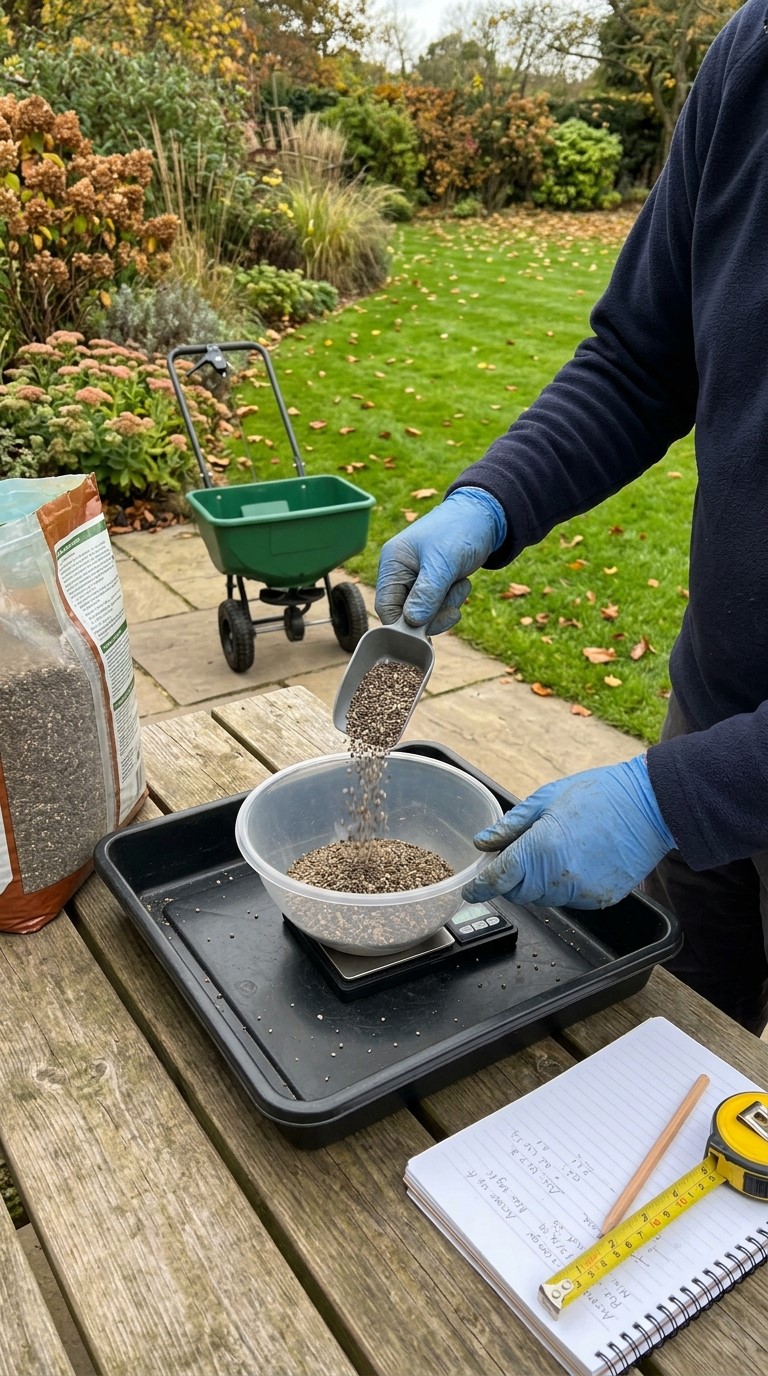
Measure before filling the spreader. The weight of fertilizer isn’t the same as the weight of nitrogen: a product containing 20 percent nitrogen supplies one pound of nitrogen in five pounds of product. That explains the arithmetic, not how much your lawn needs. The PDF includes a worked example and spreader setup diagram. Weigh the amount for your measured area, apply it evenly and sweep stray granules off paving back onto the turf.
Keep Fall Lawn Maintenance Manageable Through Leaf Season
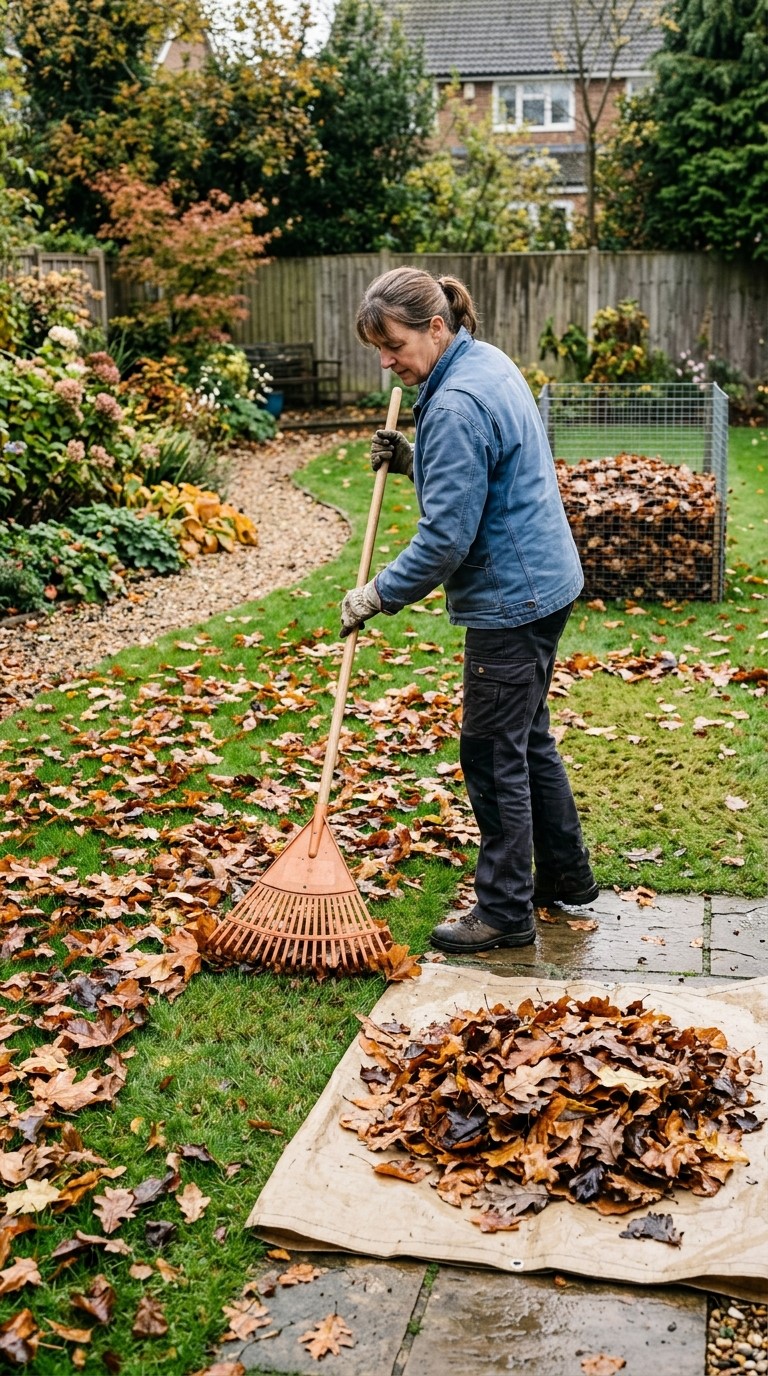
A light scattering of dry leaves can often be chopped with a suitable mower until the pieces settle between the grass blades. Afterward, you should still see grass across the area. If chopped leaves remain in clumps or form a blanket, collect the excess. Wet mats need lifting before they sit on the lawn for weeks. Several small clearups during heavy leaf fall are easier to manage than one sodden heap at the end.
Those leaves can stay useful elsewhere in the garden. Put suitable whole leaves into beds, start a leaf-mold pile or add shredded leaves to your compost mix. Keep them away from plant crowns and tree trunks. Around newly seeded patches, work with a light rake or gentle blower setting so you don’t pull out seedlings. Keep leaf piles beside the lawn rather than on it, and leave gutters and storm drains clear.
Set Your Fall Lawn Mowing Height for the Grass You Grow
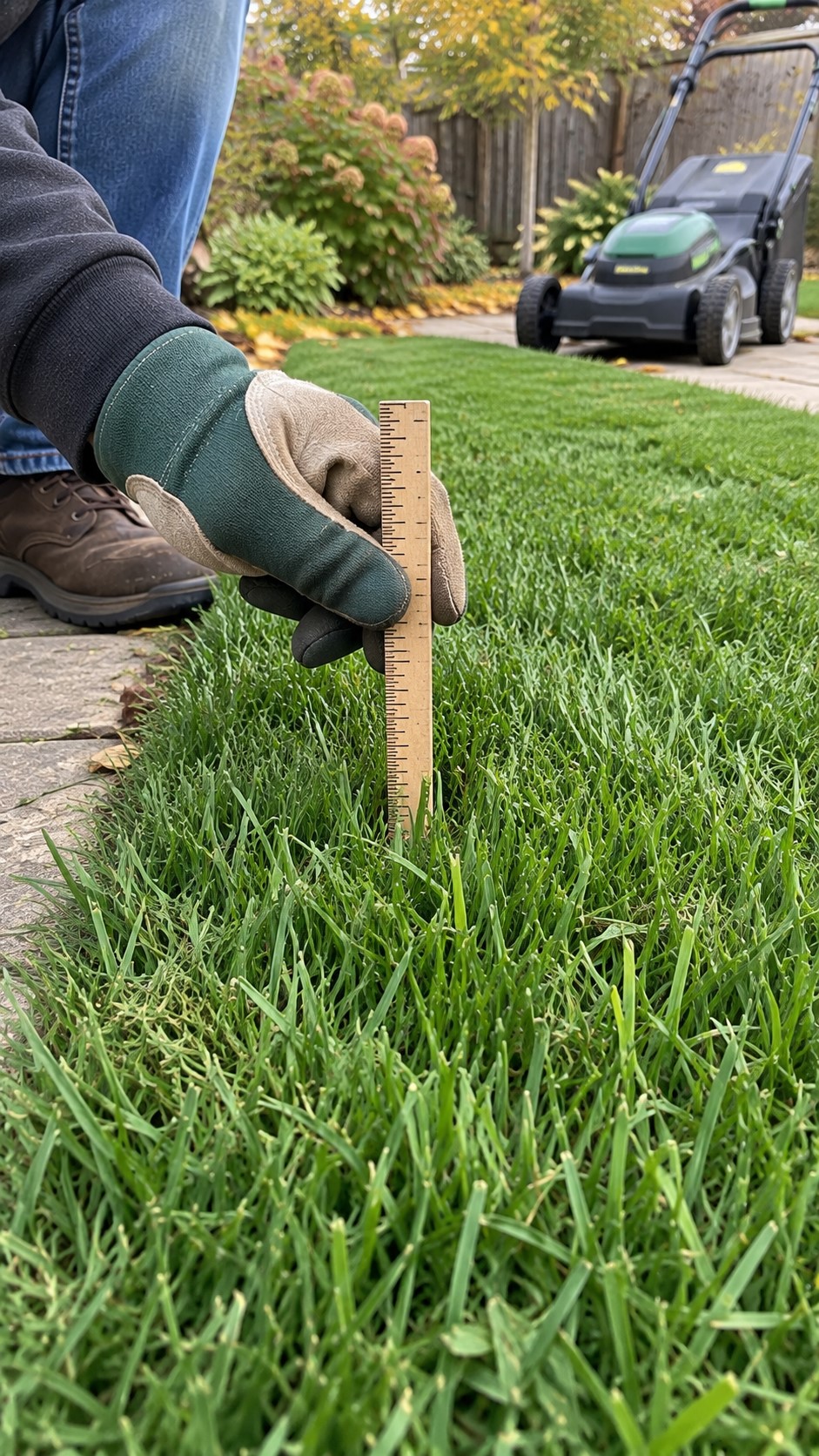
Keep mowing while the grass grows, allowing longer gaps between cuts as growth slows. There isn’t one correct autumn height for every lawn. Tall fescue commonly sits around 3 to 4 inches, while standard St. Augustine cultivars need a taller cut than many Bermuda lawns. Check the guide’s grass-specific table and measure the cut grass above the soil. The number beside your mower’s height lever may not tell you the actual height it leaves.
Remove no more than roughly one-third of the blade at a cut. If a 3-inch height suits your lawn, mow before it gets much above 4.5 inches. Avoid giving everything a close winter haircut. Where snow mold has been a problem, local advice may suggest a modest reduction within the grass’s normal range. Lower it over successive cuts if needed, use a sharp blade and wait until frost has thawed and soft ground has drained.
Adjust Fall Lawn Watering as Growth Slows
Fall Lawn Watering for Established Grass
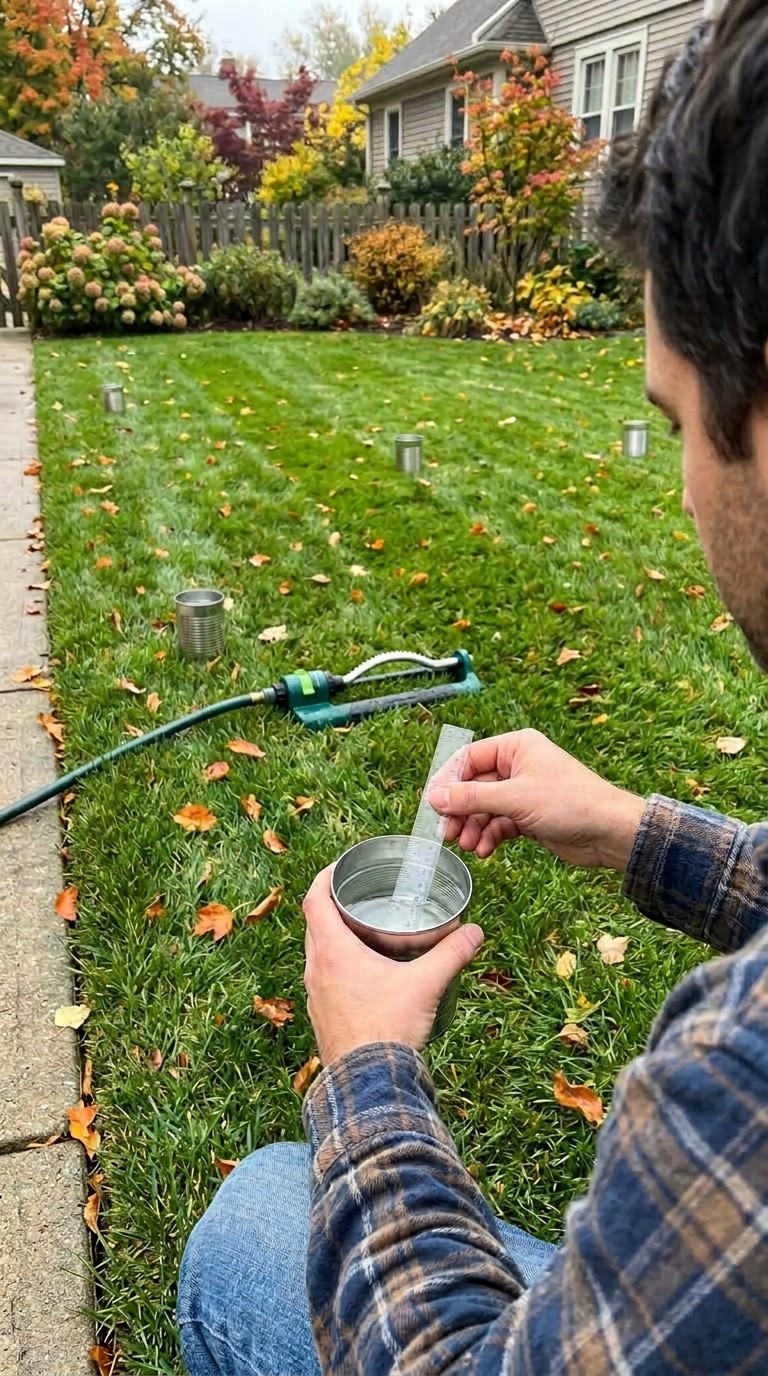
Check the soil before switching on sprinklers. Cooler weather often reduces demand, and rainfall may already be doing the job. When water is needed, aim to moisten the soil where roots are growing, then allow a suitable interval before watering again. A catch-can test shows how much your sprinkler delivers and whether some areas are being missed. The PDF explains the calculation. Even dormant turf may need occasional water during prolonged dryness if the ground is thawed.
Fall Lawn Watering After Overseeding
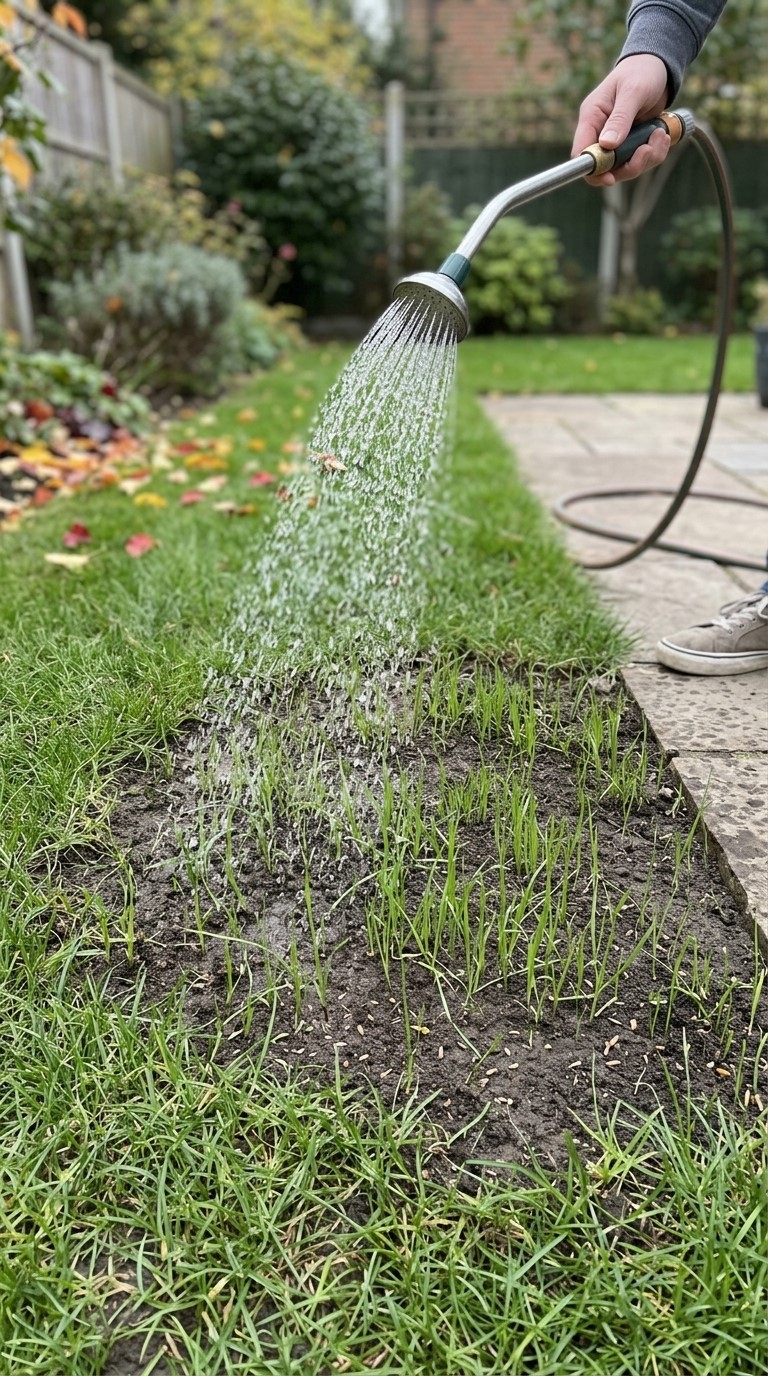
New seed needs closer attention than established grass. Keep the surface evenly damp while germination is underway, using a gentle spray that doesn’t create puddles or move seed. Check more often during drying weather rather than trusting a timer to suit every day. As seedlings root, lengthen watering sessions and reduce their frequency in stages. Watch the slower grasses in a mixture, since the first green shoots don’t mean every seed has germinated. Keep feet and mower wheels off the patch until the young plants are rooted well enough to stay in place.
Finish Your Fall Lawn Care Checklist Before Winter
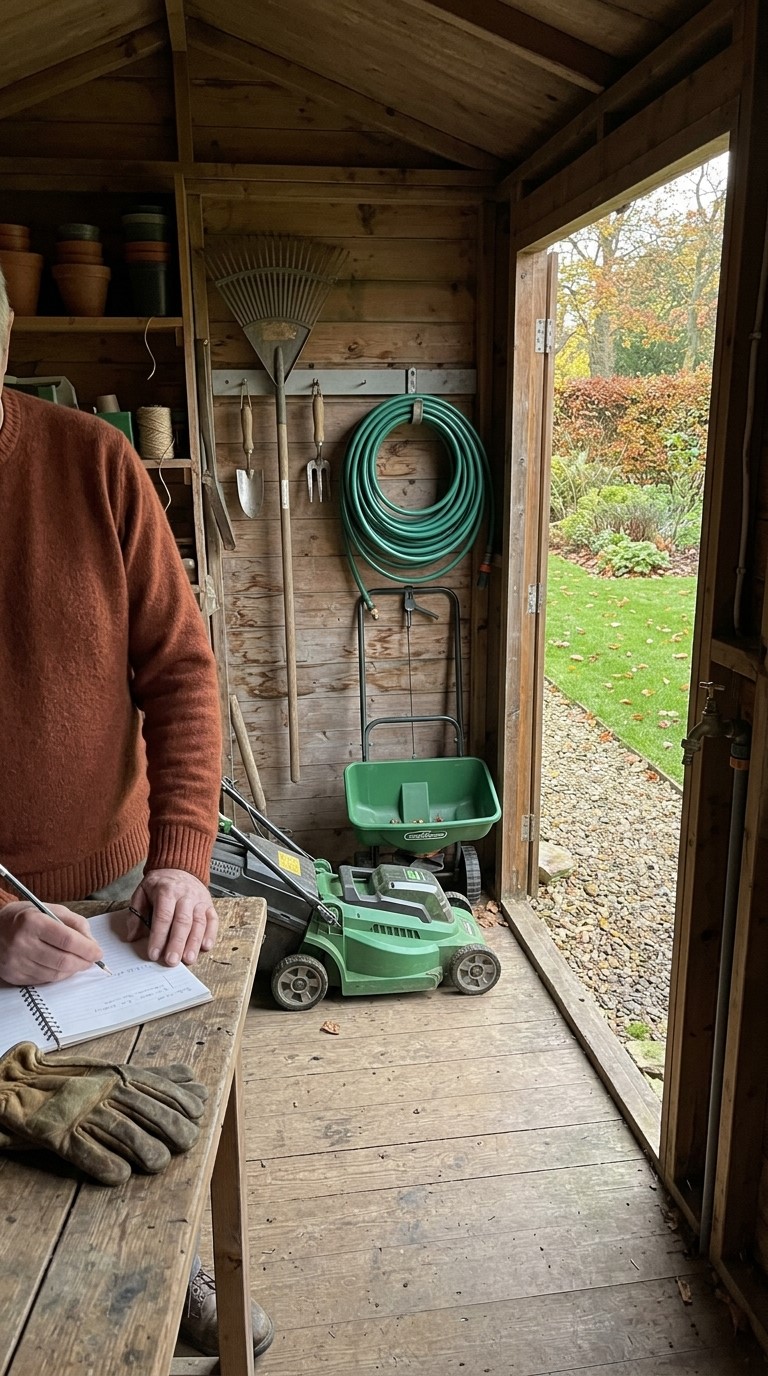
As growth slows, clear toys, furniture and temporary piles from the grass. Keep people off frosted or waterlogged turf where possible, and avoid creating a shortcut across a lawn that can’t repair wear. Photograph damaged patches and note whether they’re changing. Identify weeds before choosing a treatment, especially if you’ve seeded nearby. Expanding brown patches or loose turf need diagnosis before more fertilizer, seed or a pest product goes onto the area.
Clean the mower and spreader before storage, following the equipment manuals for servicing and battery care. Where freezes are expected, drain hoses and protect outdoor taps. Arrange irrigation winterization suited to your system. Keep deicing salt and shoveled snow piles away from the lawn where practical. Then write down the jobs you’ve deferred, particularly aeration or repairs on warm-season grass. A few dated notes will be more useful in spring than a half-remembered list.
Download the Fall Lawn Care Guide and Plan Your Next Job
Choose one useful task from your inspection and start there. It might be clearing a leaf mat, collecting a soil sample or checking sprinkler coverage around a dry patch. The downloadable 28-page Fall Lawn Care Guide provides detailed methods, technical diagrams and care plans for the main lawn grasses. Its separate cool-season and warm-season checklists help you keep the work suited to your lawn, while the measurement and watering sheets give you somewhere to record the details.
Keep those notes with the guide as the season changes. Record what you applied, when you seeded and which areas stayed wet or dry. Next spring, you’ll have something solid to compare with the lawn in front of you. Some patches will have recovered. Others may reveal a drainage problem or a worn route that needs a different approach. The work you do this fall should make those next decisions easier.
Download the Fall Lawn Care Guide
Notes:
1 NC State Extension’s Bermuda calendar: Lawn Maintenance Calendar
