North Carolina gardens are full of life, from tomatoes and zinnias to the creatures that hide beneath them. Most of those critters are harmless helpers, but a handful of snakes and spiders can deliver a bite that sends you to the doctor.
Knowing which ones to respect and which ones to leave in peace keeps you, your kids, and your pets safe. Here is a simple guide to spotting the venomous neighbors that might share your yard.
1. Copperhead
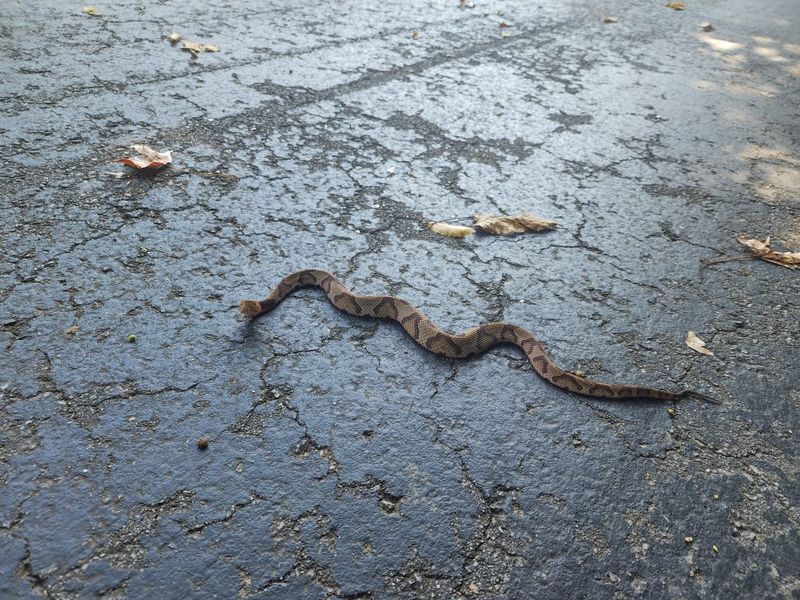
Ask any North Carolina gardener which snake they bump into most, and nine times out of ten the answer is the copperhead. It is the most common venomous snake in the state, and it loves the same mulch, leaf piles, and stone walls that you do.
The giveaway is the pattern. Copperheads wear dark brown bands shaped like an hourglass, or a Hershey’s Kiss when seen from the side, over a lighter tan or pinkish body.
The head is a plain coppery color with no markings, and it is wide and triangular compared to the neck.
Young copperheads have a bright yellow or greenish tail tip they wiggle to lure frogs. If you spot that little neon tail in your flower bed, back away slowly.
Bites are rarely deadly, but they are painful and need medical care, so wear gloves and boots when clearing debris.
2. Timber Rattlesnake
Picture a heavy-bodied snake stretched across a woodpile, its tail ending in a buzzing rattle. That is the timber rattlesnake, sometimes called the canebrake rattler in the eastern part of the state.
Look for dark, jagged V-shaped bands, often called chevrons, running across a gray, yellowish, or tan body. Many eastern individuals also have a rusty orange stripe down the back.
The tail is usually solid black right before the rattle, which is a quick clue even from a distance.
Timbers are calm by nature and tend to sit still rather than strike. Still, their venom is potent, so give them plenty of space.
They are a protected species of concern, so calling a wildlife removal expert is better than grabbing a shovel.
3. Eastern Diamondback Rattlesnake
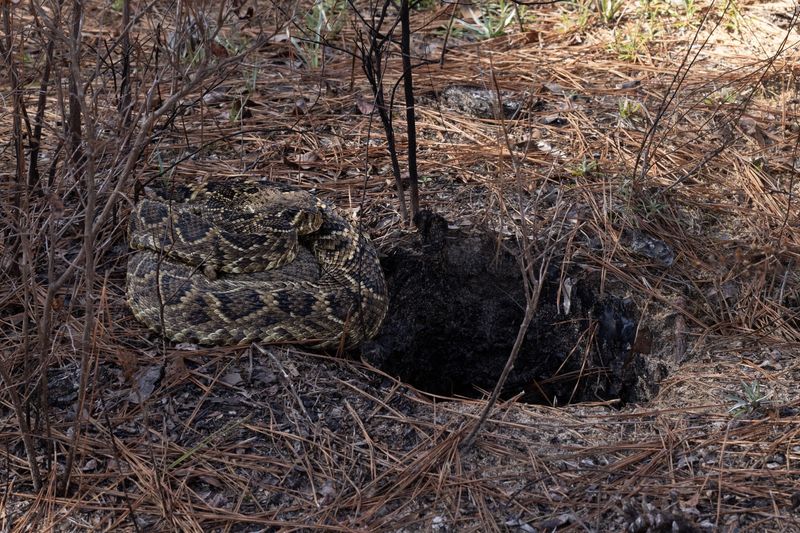
Rare, huge, and unforgettable. The eastern diamondback is the largest venomous snake in North America, and in North Carolina it hangs on only in a few sandy, piney spots in the southeastern corner.
Its name tells you exactly what to look for. Dark diamonds outlined in cream or yellow run down its back like a row of picture frames.
Two pale stripes slash across the face, framing a dark band through the eye.
Most gardeners will never see one, since the species is listed as endangered in the state. If you live near the coast and spot a thick snake with diamonds, stay far back and report the sighting to the North Carolina Wildlife Resources Commission.
Biologists genuinely want to know.
4. Pigmy Rattlesnake
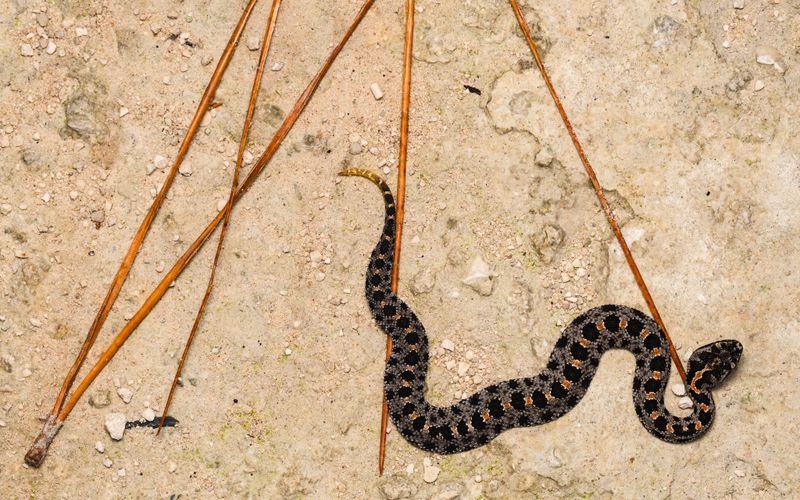
Tiny but feisty, the pigmy rattlesnake rarely grows longer than about 18 inches. Its rattle is so small it sounds more like a buzzing insect than a warning, which means many people never hear it at all.
The body is gray with rows of dark, rounded blotches along the back and sides. Many pigmies have a reddish or orange stripe running down the spine, especially in the Carolina population.
Up close you will see a broad head and a thin, short tail with that mini rattle.
Pigmies like pine straw, sandy soil, and wet edges in the southern and eastern counties. Their bite is rarely life threatening for adults, yet it still hurts badly.
Rake pine straw with a long tool rather than bare hands.
5. Cottonmouth
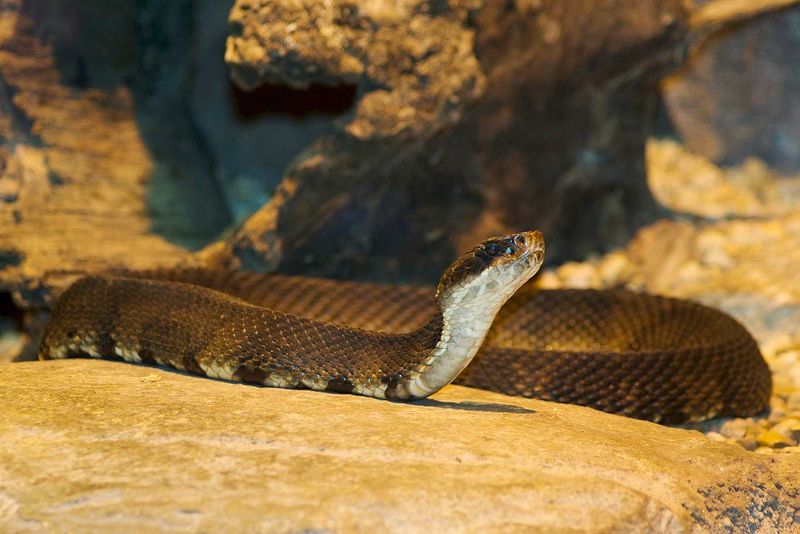
Here is a fun myth buster: not every snake in your garden pond is a cottonmouth. Harmless water snakes get blamed constantly, so learning the real thing matters.
Cottonmouths, also called water moccasins, are thick, dark olive or nearly black snakes with faint crossbands. When bothered, they often open their mouths wide to flash a bright white lining.
They also swim with their whole body floating high on the water, while water snakes swim with mostly their head showing.
Another clue is a dark stripe through the eye and a blocky head. Cottonmouths live mainly in the eastern half of the state near swamps, ditches, and ponds.
If your garden backs up to water, keep grass short at the edges and watch your step.
6. Eastern Coral Snake
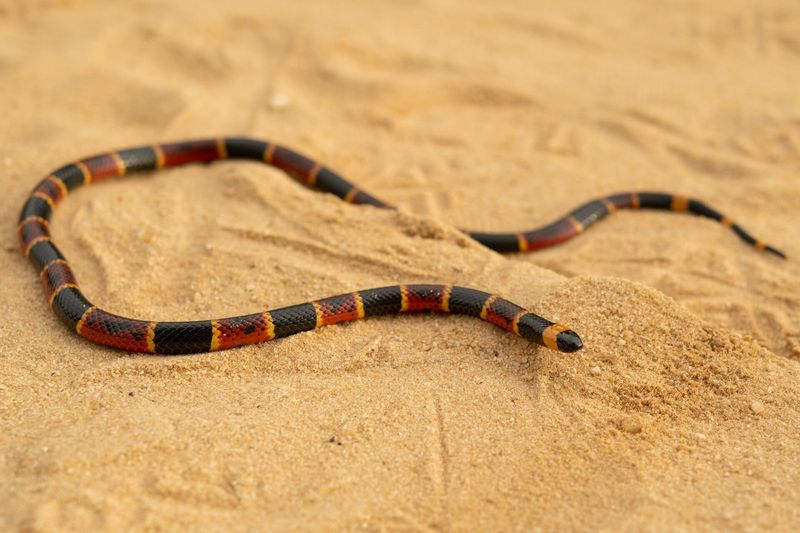
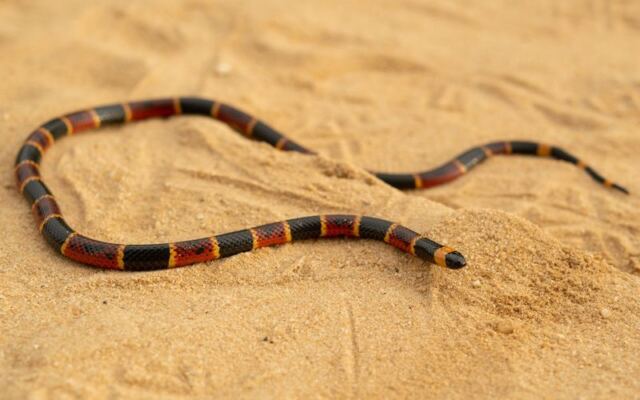
“Red touches yellow, kills a fellow. Red touches black, friend of Jack.” Plenty of Southern kids learned that rhyme, and it works well for the eastern coral snake in North Carolina.
This slender snake wears bright rings of red, yellow, and black, with the red and yellow bands touching. The snout is black, followed by a yellow band.
Harmless look-alikes such as scarlet kingsnakes have red touching black instead.
Coral snakes are very rare here, found only in a few sandy southeastern counties. They are shy, spend most of their time underground, and have small mouths.
Their venom acts on the nerves, though, so any bite needs emergency care right away.
7. Southern Black Widow
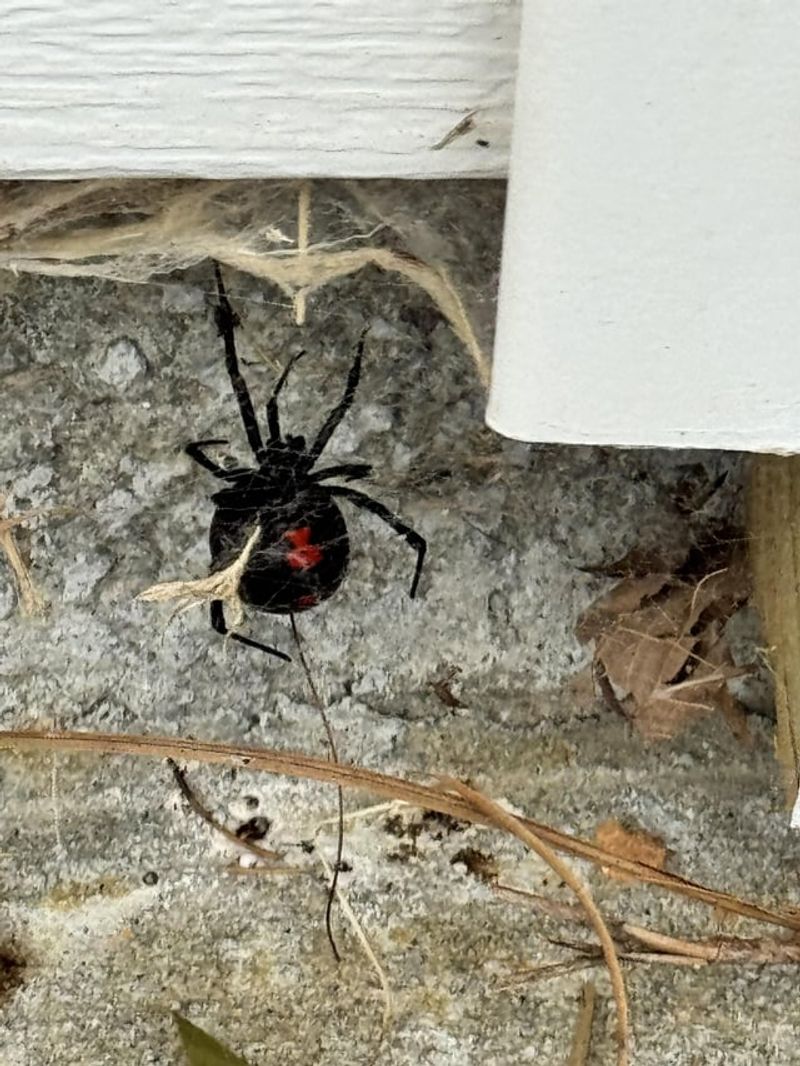
Flip over a flowerpot in July and you might meet the most famous spider in the South. The southern black widow is shiny, jet black, and about the size of a pencil eraser in body length.
The red hourglass on the belly is the classic mark. Southern widows also often have a small red spot near the back end on top.
Their webs look messy and tangled, usually tucked low under pots, woodpiles, water meters, and garden sheds.
Only the females are dangerous, and they would rather hide than bite. A bite can cause muscle cramps and pain, so see a doctor if it happens.
Always wear gloves when reaching into dark corners.
8. Northern Black Widow
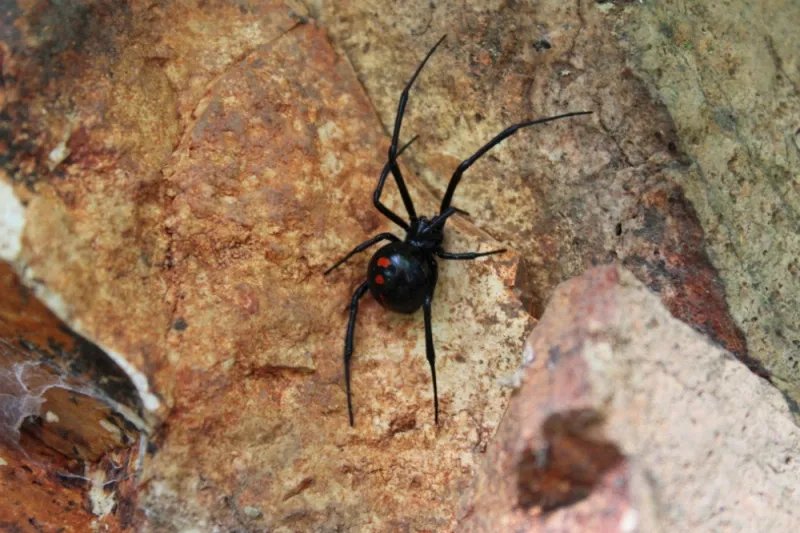
Mountain gardeners have a slightly different widow to watch for. The northern black widow shows up more in western North Carolina, especially in stone walls, stumps, and rocky garden edges.
Its hourglass is often split into two separate red marks instead of one connected shape. Many also have a row of red spots running down the top of the abdomen, sometimes edged in white.
That broken hourglass is the easiest way to tell it from its southern cousin.
Venom strength is similar between the two. Treat both with the same caution, shake out gloves before wearing them, and keep firewood away from your back door.
9. Brown Widow
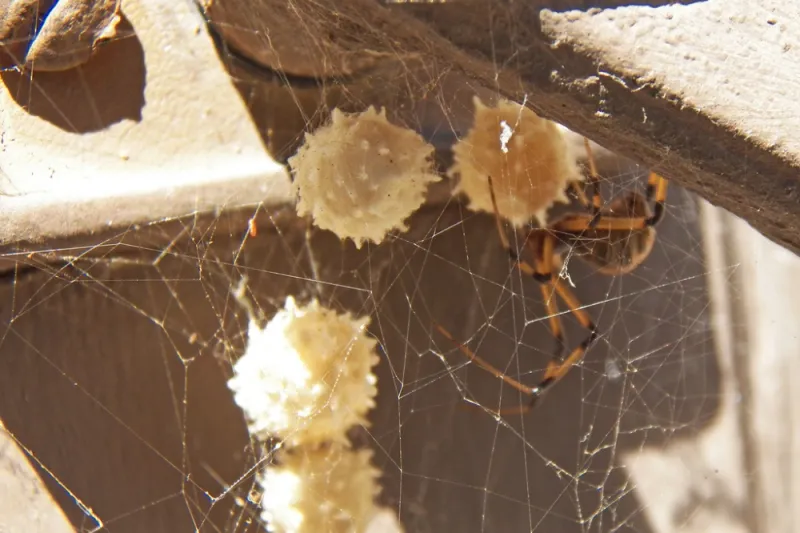
Newcomer alert. The brown widow arrived in the Southeast from elsewhere and has been spreading through North Carolina, especially in urban and coastal yards.
It looks like a faded version of a black widow, with tan to brown mottled colors and an orange hourglass underneath. The easiest clue is actually its egg sac.
Brown widow sacs are round with spiky bumps, a bit like a tiny mace, while black widow sacs are smooth.
Brown widows love patio furniture, mailboxes, and grill covers. Their venom is strong drop for drop, but they inject much less, so bites are usually milder.
Still, wipe out those hiding spots now and then.
10. Brown Recluse
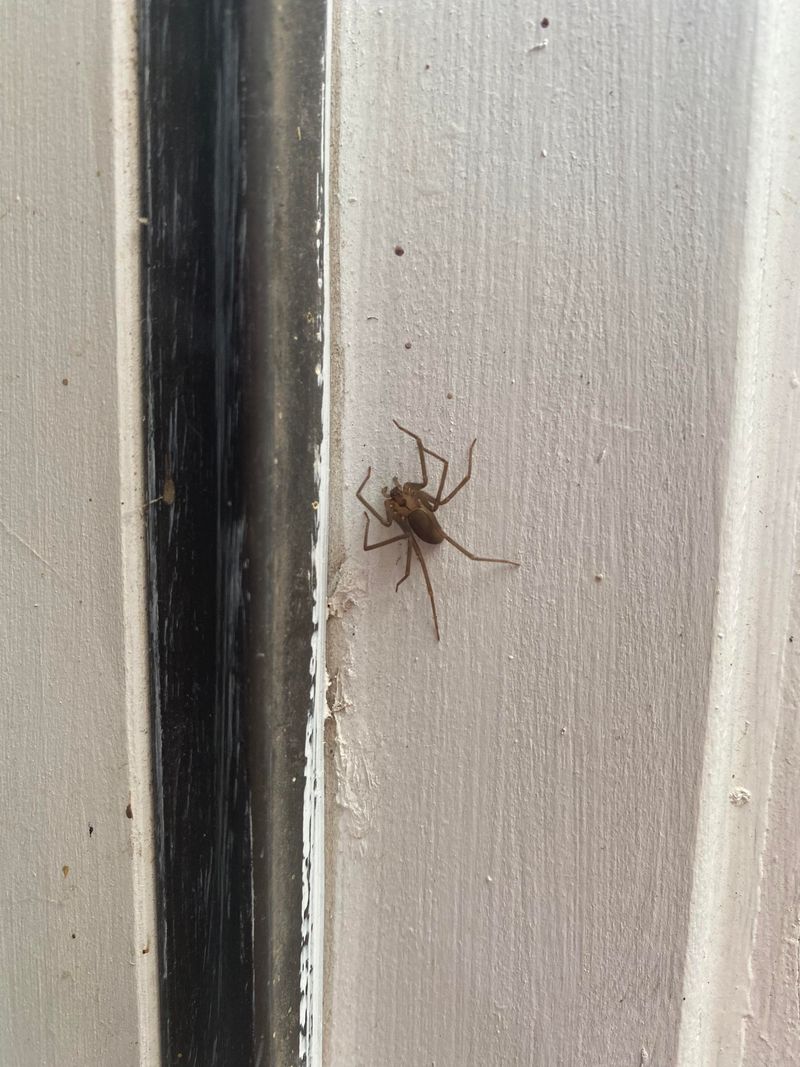
Plenty of brown spiders get called recluses, but the real one is uncommon in North Carolina. Most sightings turn out to be wolf spiders or grass spiders, which are harmless.
A true brown recluse is plain light brown with a darker violin shape on its front body, the neck of the violin pointing toward the rear. It has six eyes arranged in pairs instead of the usual eight, and its long legs have no stripes or spines.
If the spider has bands or fuzzy patterns, it is not a recluse.
When they do show up, it is usually inside sheds, garages, and stored boxes rather than open garden beds. Shake out stored gardening gear before use.
A bite can cause a slow-healing wound, so seek medical advice if one happens.
Quick takeaway for every gardener: gloves, boots, a flashlight, and a little patience go a long way toward peaceful coexistence with these wild neighbors.
Share this story