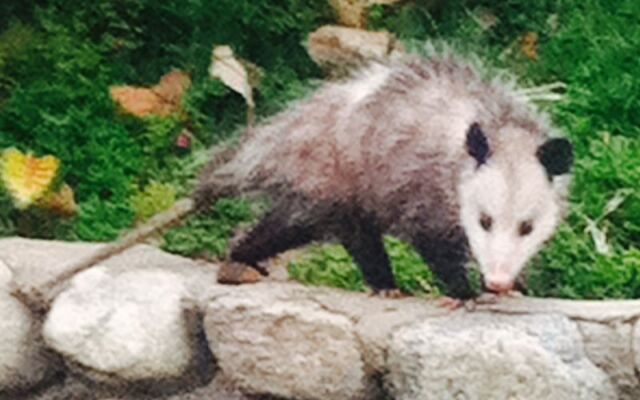
Opossums are drawn to Texas homes by two simple things: a sheltered spot to rest and food that is easy to find. Cold snaps can make a cozy den under a deck or in a woodpile more useful to them.
Knowing what attracts them helps you decide whether a sighting needs any action at all. Here is how to read the signs and respond safely.
Cold weather can make a den more important
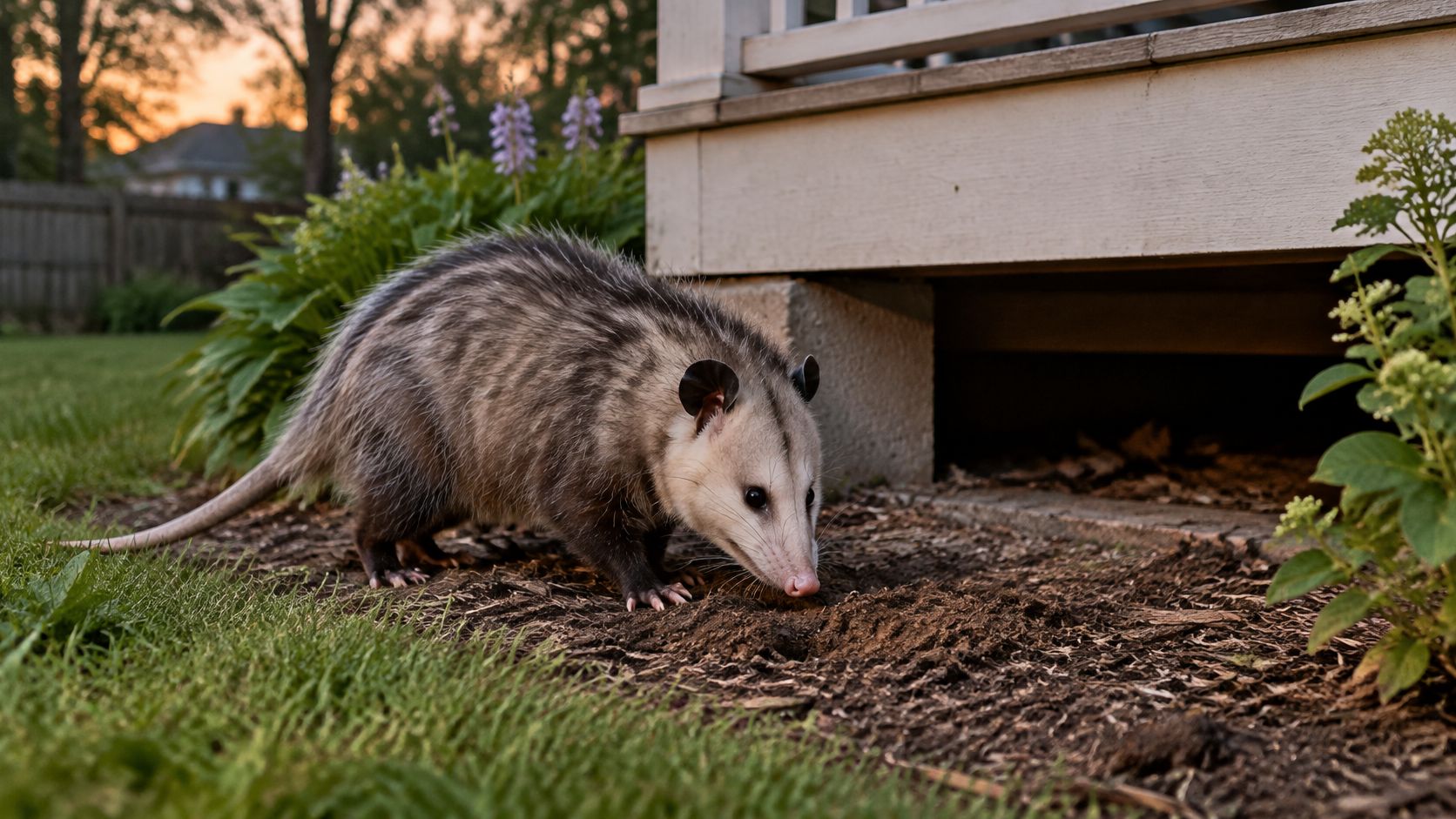
Opossums may use sheltered spaces near homes, and they may spend more time in a den during short periods of extreme cold. Texas Parks and Wildlife Department guidance notes that opossums shelter in places such as woodpiles, under buildings, and in attics.
A warm, dry, protected spot simply matters more when the temperature drops.
Opossums do not hibernate. Wildlife agency species information describes them as staying active through the year, though cold weather can mean less roaming and more time resting in a den.
So a winter opossum is not a sleeping animal looking for a place to hibernate.
The sources we reviewed do not show a general winter surge of opossums in Texas homes. Seeing one is not a sign of an invasion, and it is not an emergency.
Think of it as a situation to size up.
Start with two questions. Is there a sheltered spot nearby, like a gap under a porch, a brush pile, or a stack of firewood?
Is there easy food around, such as pet dishes or open trash? The answers usually explain why this particular animal showed up, and they point to what you can change without ever touching the animal.
Sheltered spaces around homes can serve as dens
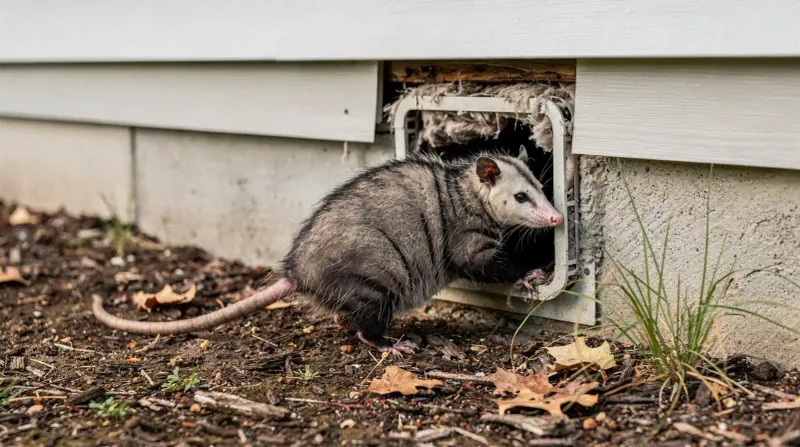
A den does not have to be fancy. TPWD lists woodpiles, spaces under buildings, and attics among the places opossums may shelter.
Each one offers cover from wind and rain and a bit of warmth.
Picture the usual spots around a Texas property. A gap beneath a deck, a pile of firewood stacked against a fence, a stand of thick brush, or a crawl space with a loose vent cover can all work.
Most of these are outdoors, which matters for how you read a sighting.
Spotting an opossum in the yard at night does not mean it has moved into your house. Many animals pass through, snack, and move on to a den somewhere else, perhaps a neighbor’s shed or a hollow tree.
The attic is one possible den, not the default one.
If you wonder where an animal might be staying, look from a distance. Check for scuffed dirt near a gap, shifted insulation at a vent, or droppings near a woodpile.
Do not poke sticks into openings, shine lights into a den, or crawl under a structure to check. Disturbing a den can frighten the animal and raise the chance of a defensive response.
Food left outside can attract opossums to a yard
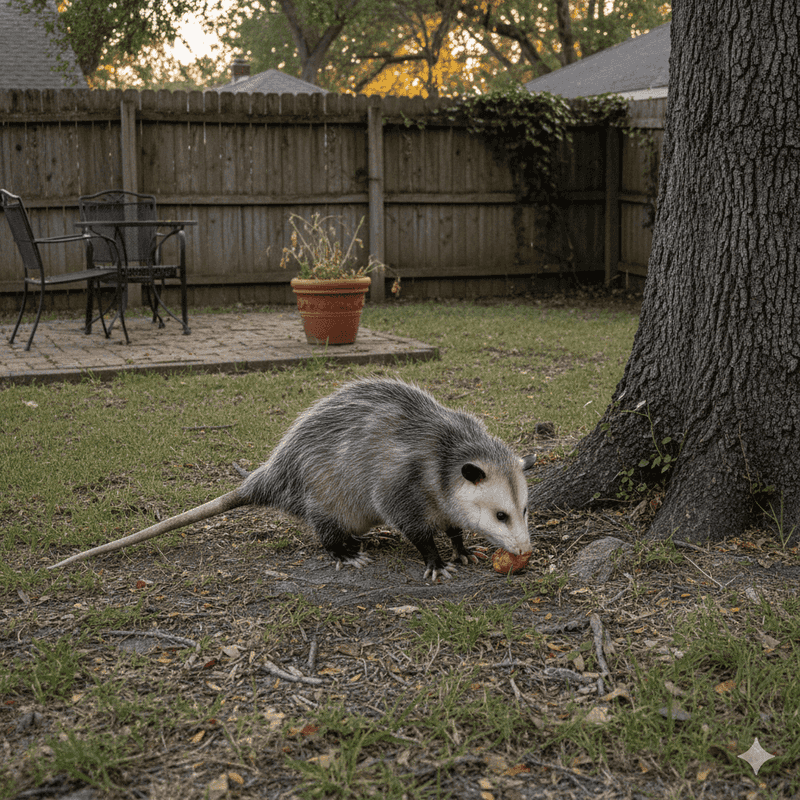
Dinner is often the reason an opossum stops by. Texas A&M AgriLife Extension lists pet food, fruit, pecans, birdseed, and garbage as food sources that can make opossums a nuisance around homes.
In many Texas yards, several of those are sitting out at once.
Food and shelter do different jobs. Food can pull an animal into your yard, while a sheltered space can give it a den site.
An open bag of dog food does not prove an opossum went into your attic, so treat the two problems separately.
The fixes are simple and cheap. Bring pet food indoors overnight, and wipe up crumbs from outdoor feeding spots.
Use trash cans with tight lids, and set bins out the morning of pickup rather than the night before.
Walk the yard once a week and pick up fallen fruit and pecans. Sweep up spilled birdseed under feeders, or switch to a tray that catches the mess.
These steps will not guarantee an empty yard, but they take away the easy meals that keep a visitor coming back.
A yard visitor is not necessarily inside the home
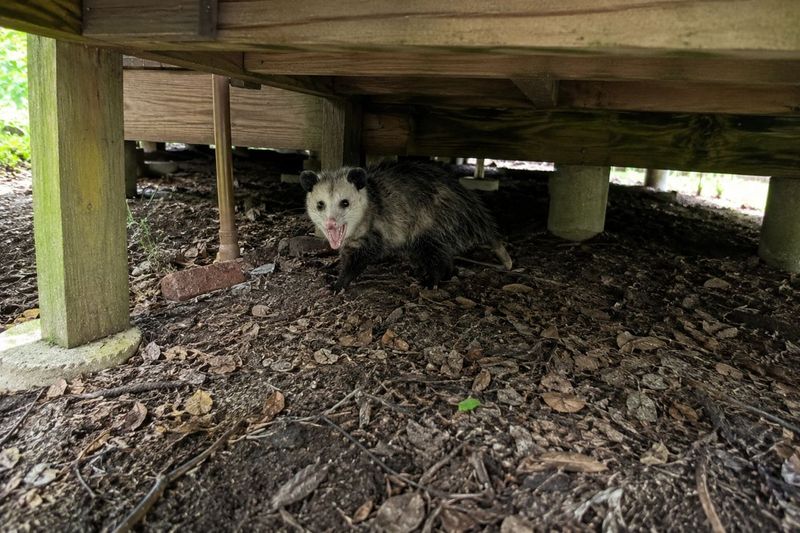
A quick glimpse of gray fur by the fence line tells you very little about where the animal sleeps. An opossum crossing a yard is ordinary behavior.
Evidence of a den is different, and it takes a closer, careful look.
Clues that an animal may be living under a porch, deck, or building include a worn path to a gap, fresh digging at an edge, or a musky smell near an opening. Noises at night in a wall or attic are another clue, though other animals can make them too.
TPWD’s species page is a good reference for the kinds of places opossums use.
Identify the location and the likely access point from a safe distance. Do not approach, block, or corner the animal.
A frightened opossum may hiss, drool, or play dead, and it may bite if pressed.
If you cannot tell whether an animal or its young are still inside, treat that as a reason to call for help, not as proof the space is empty. UC IPM guidance stresses caution before closing any opening.
A wildlife professional can assess the site safely.
Keep people and pets away from the animal
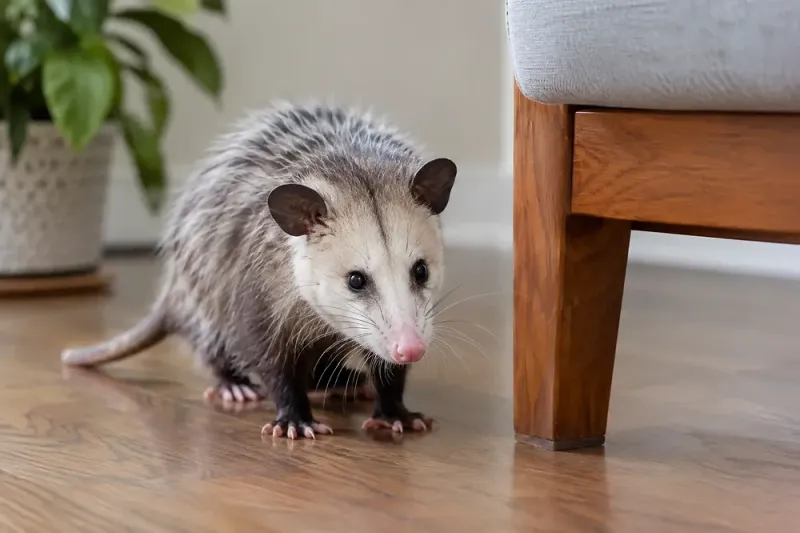
The safest plan is the plainest one. Keep people and pets away from the opossum, and give it room to leave on its own.
Do not feed it, handle it, corner it, or try to trap it yourself.
Bring dogs and cats inside while the animal is around, and keep children back. Opossums often look slow or confused in daylight, but that does not mean they are sick or safe to approach.
Most simply want to get away.
If someone is bitten or scratched, wash the wound promptly with soap and running water. Then contact a healthcare provider or your local public-health authority about next steps.
CDC wildlife guidance backs this kind of prompt cleaning and follow-up.
Rabies is uncommon in opossums, but not impossible. CDC rabies information says opossums hardly ever have the disease.
Texas health officials treat them as low-risk for bite-case handling, though the Texas DSHS bite guidance allows testing or quarantine if the local rabies control authority suspects rabies. Low risk is not no risk, so let a professional make that call.
Check that a den is empty before closing an opening
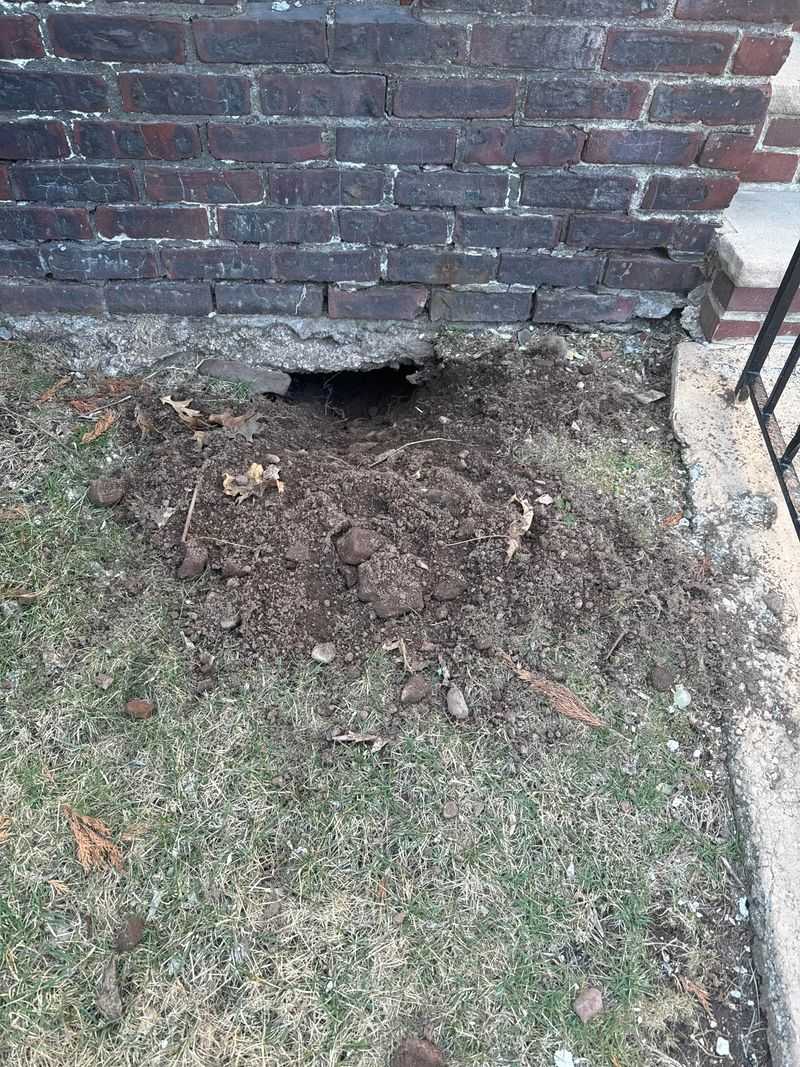
Sealing a hole feels like the obvious fix, but timing matters. If you close an opening while an opossum is still inside, it can become trapped.
Young that depend on their mother could be left behind without care.
For a space under a porch, deck, or building, UC IPM recommends confirming that the animal has left before blocking access. One method it describes is a flour tracking patch.
Spread a thin layer of flour at the entrance, then check it the next morning for footprints heading out.
Repeat the check for several nights. If the flour shows no new tracks going in or out, the space is more likely to be empty.
If tracks keep appearing, the animal is still using the spot, and you should wait.
Some situations call for help right away. Get local help if the animal is inside a structure, if you are unsure where it entered, or if young may be present.
You can contact a licensed wildlife professional, or ask TPWD where to turn. The TPWD hunting and wildlife FAQ directs nuisance-wildlife questions to the Texas Wildlife Services Program.
Once you are confident the den is clear, close the gap with sturdy material such as hardware cloth buried a few inches into the soil. Avoid flimsy patches that an animal can push through.
Check Texas rules before considering relocation
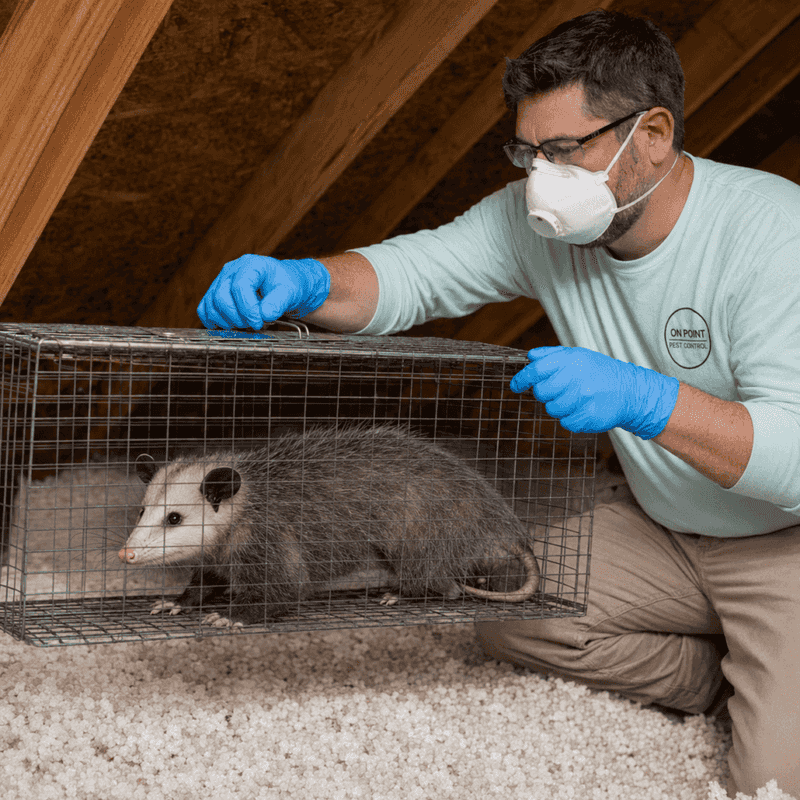
Trapping an opossum and dropping it off somewhere else sounds kind, but you cannot simply pick any spot. TPWD’s rule says nuisance fur-bearing animals may be captured and relocated only with department authorization and the release-property owner’s permission.
That means a field down the road is not an option unless the owner agrees and the department has signed off. Rules can also differ by city and county, so do not assume what applies in one place applies everywhere.
If you have nuisance-wildlife questions, TPWD points people to the Texas Wildlife Services Program. Staff can explain what is allowed and who can help in your area.
Be careful with advice written for other states. Many how-to articles describe trapping and release practices that may not match Texas requirements.
Use Texas guidance for anything involving capture or relocation, and keep out-of-state tips for general behavior information only.
The practical path is usually quieter than trapping. Remove the easy meals, as AgriLife Extension suggests, keep distance, and close openings only after checking the den is empty.
Call for help when you cannot tell where the animal is.
Most opossums are just passing through on the way to somewhere warmer, and with a little yard care they usually move along.
Share this story