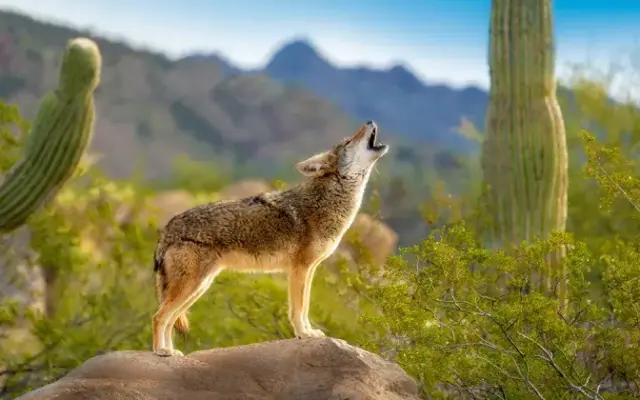
Coyotes howl after dark near Tennessee homes mostly because they are talking to each other across long distances. These calls likely help them stay in touch with family members and keep space between neighboring groups.
The sound can feel close and a little spooky, but it is ordinary wildlife communication. Here is what the howls can tell you, what they cannot, and how to keep your pets and property safe.
Coyotes use neighborhoods as well as wild areas
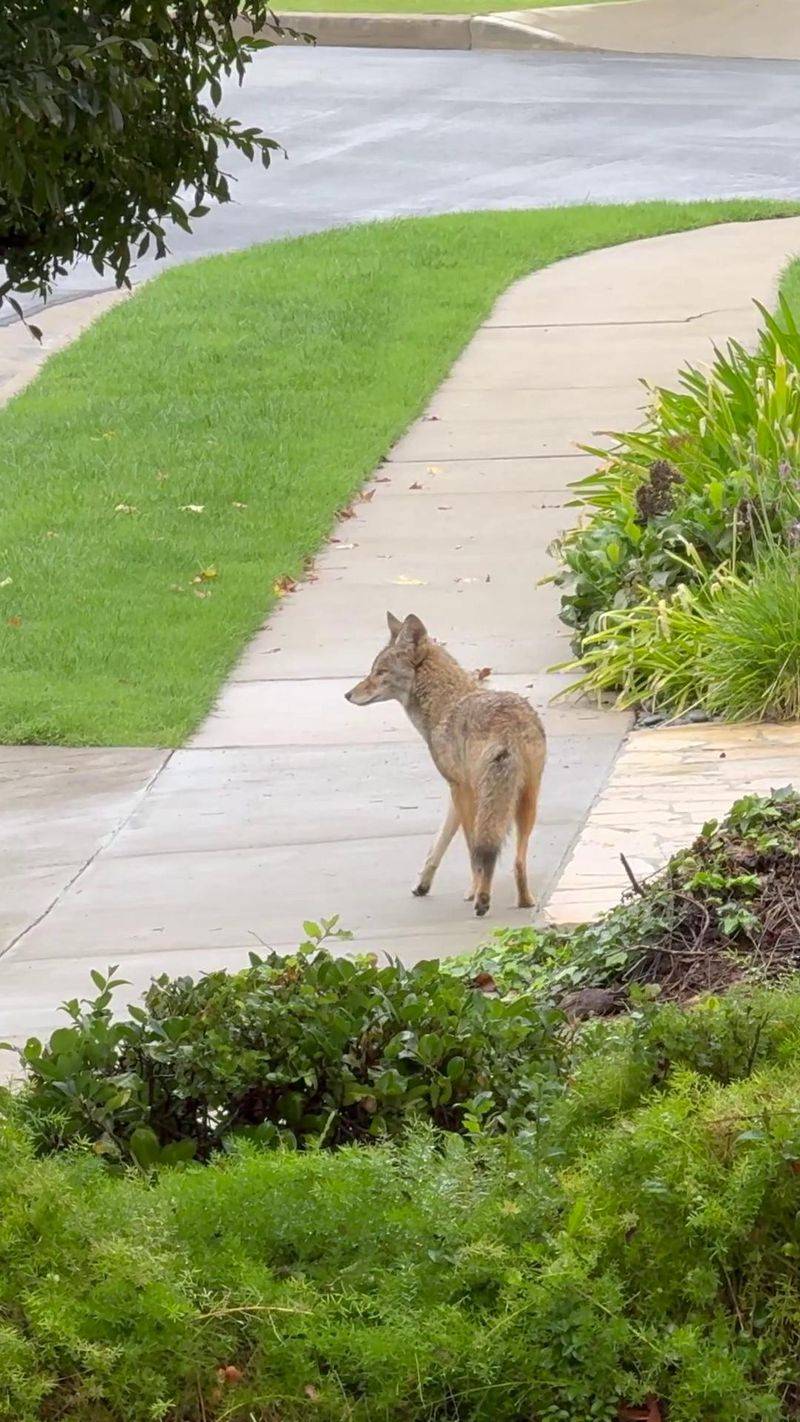
Coyotes are adaptable animals that live in many kinds of places, including woods, farmland, and developed areas. That means people in towns and suburbs across Tennessee may hear or see them from time to time.
Hearing one nearby does not mean something has gone wrong in your neighborhood.
The Tennessee Wildlife Resources Agency describes coyotes as chiefly nocturnal, but able to be active by day. So a coyote trotting across a field at noon is not automatically sick or aggressive.
Daytime activity can even rise during the winter to early spring breeding season.
Local guidance adds some detail for one part of the state. Nashville public health officials say neighborhood sightings are not uncommon in Middle Tennessee and that coyotes are most active at dusk and dawn.
That is a statement about the Nashville area, not a number that applies to every county in the state.
It helps to keep two questions apart. When coyotes are active is one question, and why they call out is another.
A coyote can be moving around at night for many reasons, and the next sections look at the calling itself.
Howls help coyotes communicate over distance
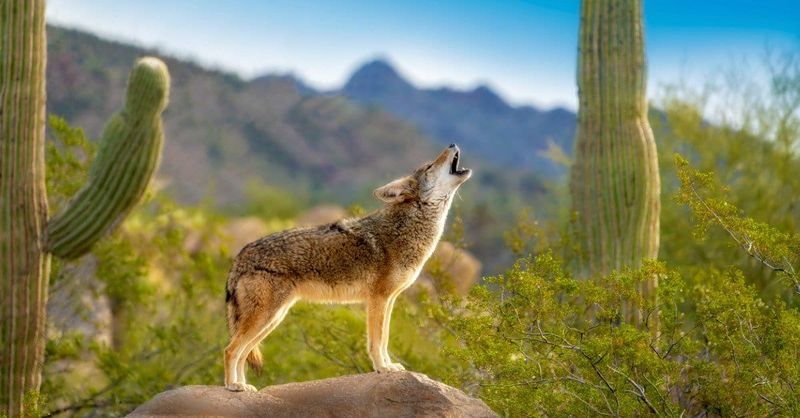
Coyotes make a range of sounds, including yips, barks, and howls. Tennessee’s wildlife agency notes that coyotes communicate with these calls.
Think of them as a way to stay in contact when animals are too far apart to see each other.
Researchers who studied howls across several wild canid species describe them as long-range communication tied to things like territory and keeping groups together. In plain terms, a howl may help family members find one another, and it may also let neighboring coyotes know who is around so groups can keep their distance.
These are likely functions, not a code that lets us translate each sound.
No one can listen to a single howl and say exactly what it means. The same kind of call can serve different purposes depending on who is nearby and what is going on.
So it is better to treat a howl as general coyote conversation than as a message with one fixed meaning.
Range matters too. Because these calls are built to carry, you can hear a coyote from your porch without one ever setting foot near your house.
The animal may be far across a field, a creek bottom, or the next ridge.
A chorus cannot tell you how many coyotes are nearby
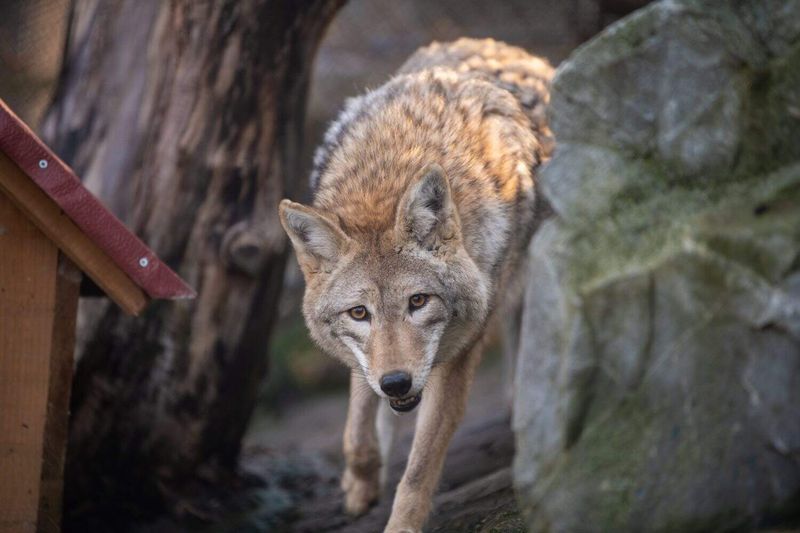
A burst of yips and howls can sound like a whole army. Your ears are likely to fool you, though.
In a study by Brewster and colleagues, 427 people listened to recordings of one to four coyotes, and on average they guessed nearly twice as many animals as were actually there.
That result is a good reason to stay calm when the noise gets loud. A few coyotes, or even a single one, can sound like a crowd.
Calls overlap, bounce off trees and buildings, and trail off in ways that make counting almost impossible.
Group size also varies. TWRA describes a typical coyote group as a mating pair and their offspring, and coyotes can hunt alone as well.
A chorus is not proof of a large pack, and it is not proof that a group is close to your home.
If you want to know what is really around, a trail camera or a daylight sighting tells you more than your ears can. Otherwise, you can simply enjoy the sound for what it is, or shrug it off and go back to sleep.
A howl does not pinpoint a coyote or explain its exact purpose
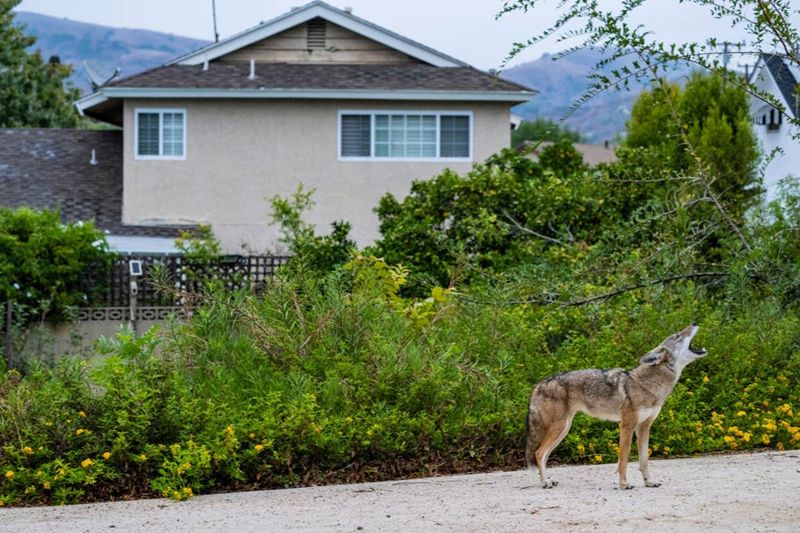
There is a difference between where you hear a howl and where the coyote is. Phrases like howling around homes describe what a listener experiences, not the animal’s location.
Since these calls are built for long-distance communication, a coyote that sounds close may be well away from your yard. A howl also does not show that coyotes are denning near you.
Many people assume darkness or a nearby house sets off the calling. Nothing we have shows that nightfall or a house triggers howling.
Coyotes are mostly active after dark, so we simply hear them more at night, when the world is quiet and sound travels.
It is tempting to assign a story to each call. A howl is not a reliable sign of a hunt, a kill, an attack, mating, pups, or a reaction to the moon.
One study found that long-distance coyote calls are a subject of ongoing research, and meaning depends on context that we cannot hear from inside the house.
Season can shape activity, since TWRA says breeding takes place in winter to early spring. Even so, you cannot assume a particular howl in that period means breeding.
The safest reading is simple: a coyote is calling somewhere, and that alone is no cause for alarm.
Limit food sources that can draw coyotes to forage

Coyotes are opportunists, so easy meals can encourage them to forage or pass through near houses. Cutting off those meals is one of the most useful things a household can do.
Keep in mind that this is about visits and foraging, not howling. Nothing shows that garbage or pet food makes coyotes call out.
The Tennessee agency and Nashville officials both recommend similar habits. TWRA guidance points to securing trash and bringing pet food inside, and Nashville guidance also says to clear away leftovers and never feed coyotes.
A few easy habits cover most of it:
Use a trash can with a tight lid, or store it in a garage until pickup day. Feed pets indoors, or pick up bowls as soon as they finish.
Clean up fallen fruit, scraps, and grill drippings, and never toss food out for wildlife.
Birdseed deserves a mention as well. Spilled seed draws mice, squirrels, and other small animals, and TWRA notes that these are animals coyotes prey on.
If you keep feeders, sweep up under them or bring them in at night. Nashville’s wildlife guidance backs the broader idea of removing food that invites wildlife to your yard.
Protect pets and know what to do if a coyote approaches
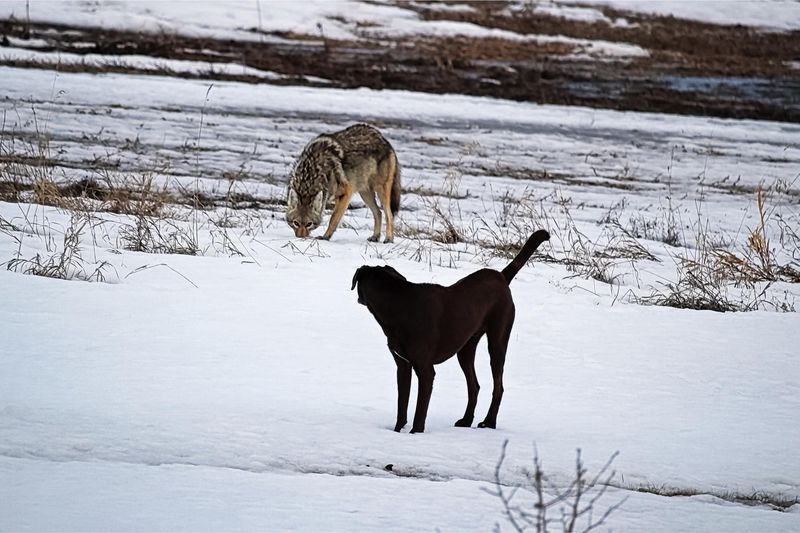
Pet safety is about lowering the odds of an encounter, especially for small animals. Supervise pets outdoors, keep them leashed or in a secure enclosure, and bring them inside at night, as both TWRA and Nashville’s guidance suggest.
These steps cut predation risk. They do not mean a coyote you heard howling is after your pet.
Never approach, corner, or try to handle a coyote. If one comes toward you, Nashville’s guidance recommends making yourself look big and making loud noises to scare it away.
Wave your arms, shout, and keep your distance. If a coyote acts boldly or threateningly, contact your local wildlife or animal control agency for guidance.
A bite or scratch is a different matter. Wash the wound with soap and water, then promptly call a health professional or your public-health department.
CDC guidance explains when to seek care for possible rabies exposure, and the people you call can judge the risk. You do not need to work that out yourself.
The CDC’s wildlife page also reminds people to enjoy wild animals from a distance. A howl on its own calls for none of this.
Trapping or removal is not the answer to a sound.
A coyote’s song is just a neighbor you rarely meet, talking across the dark.
Share this story