Pull a shoot of tree-of-heaven out of your yard, and it can seem to pop right back up before you finish the next chore. That is vivid language, not a measured speed, but it matches what many North Carolina neighbors see.
The tree spreads by seed and by shoots that grow from its roots, so some sprouts are much tougher than they look. Knowing which kind you have can save you a lot of hard work.
Tree-of-heaven spreads by seed and roots
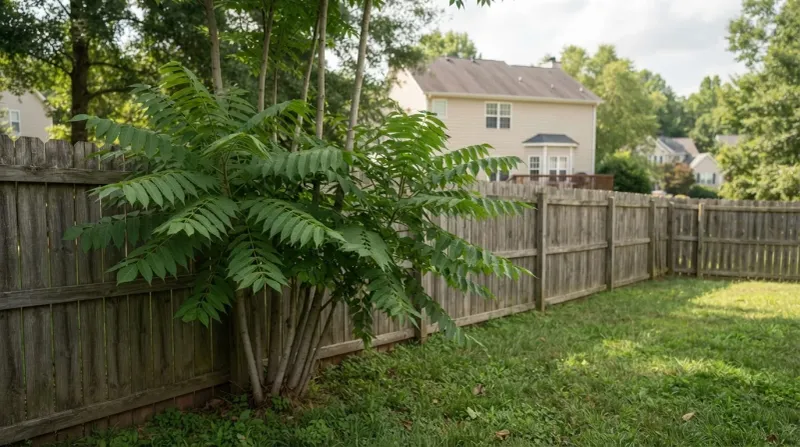
Tree-of-heaven (Ailanthus altissima) is the most likely culprit when odd, fast-growing shoots keep appearing along fences, driveways, and neglected corners. It is a nonnative invasive tree that has been documented across North Carolina, as described in NC State Extension control guidelines.
Not every compound-leaved sprout is this species, so identification comes first.
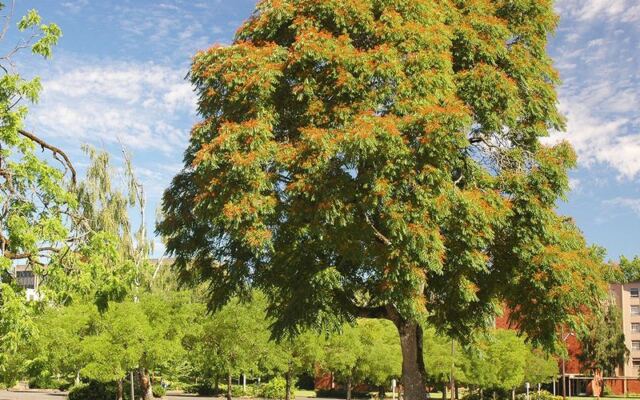
The plant gets around in two ways. Mature female trees produce many winged seeds, and the wind carries them into yards, ditches, and vacant lots.
Each seed that lands in a good spot can become a true seedling with its own small root.
The second way is trickier. Established trees send out lateral roots, and those roots can push up shoots called root suckers, as noted by Madison County Cooperative Extension.
A sucker may look like a lone seedling, but it is attached to a larger root system that already holds stored energy.
That is why the headline’s comparison feels true. Calling it faster than you can pull is a figure of speech, not a growth or regrowth rate anyone has timed.
What matters is that a shoot hooked to an established root can be replaced by more shoots, while a young seedling has only its own small root. Buncombe County Extension also stresses that this difference shapes what control options make sense.
Keep that seedling-versus-sucker split in mind through the rest of this guide, because every later choice depends on it.
Make sure the shoot is tree-of-heaven
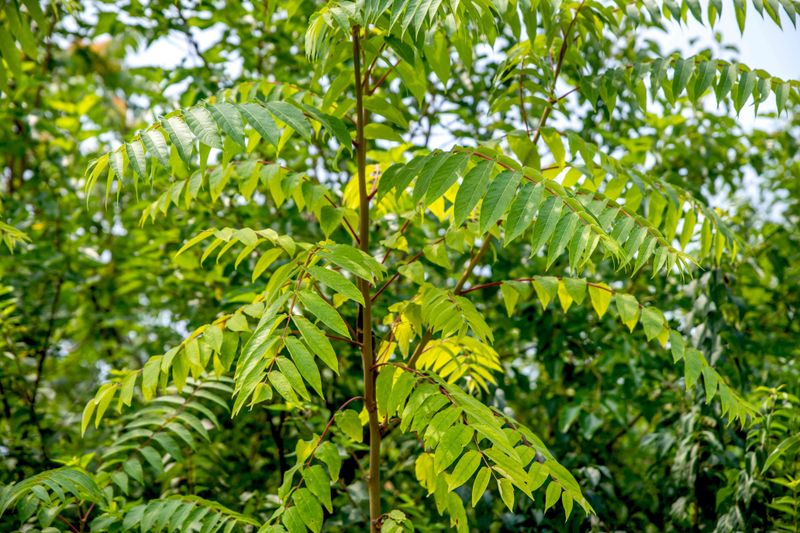
Before pulling or cutting anything, take a close look at the leaves. Tree-of-heaven has large compound leaves, made of many leaflets along a central stalk.
Near the base of each leaflet you should see one or a few small notches or teeth, each tipped with a gland, a detail described in the NC State Plant Toolbox entry for Ailanthus altissima.
Mature female trees also carry clusters of papery, winged fruit that hang on late into the season. If a nearby tree has those clusters, that is a helpful clue about where your shoots came from.
Several native plants can fool you. Black walnut and sumac also have compound leaves, and Penn State Extension’s look-alike guide shows how easily they get mixed up.
Pulling out a native sapling by mistake helps no one.
Do not decide from a vague resemblance alone. Smell is not a reliable test either, since a single sniff can mislead you.
Compare several features together: the leaflet bases, the leaf arrangement, the fruit, and the overall look of the plant.
If you are unsure, take clear photos of the leaves, stem, and any nearby mature tree. Then ask your county Cooperative Extension office to confirm the identification.
Once you know it is tree-of-heaven, the next question is whether you are looking at a true seedling or a shoot tied to a bigger root.
When hand-pulling makes sense
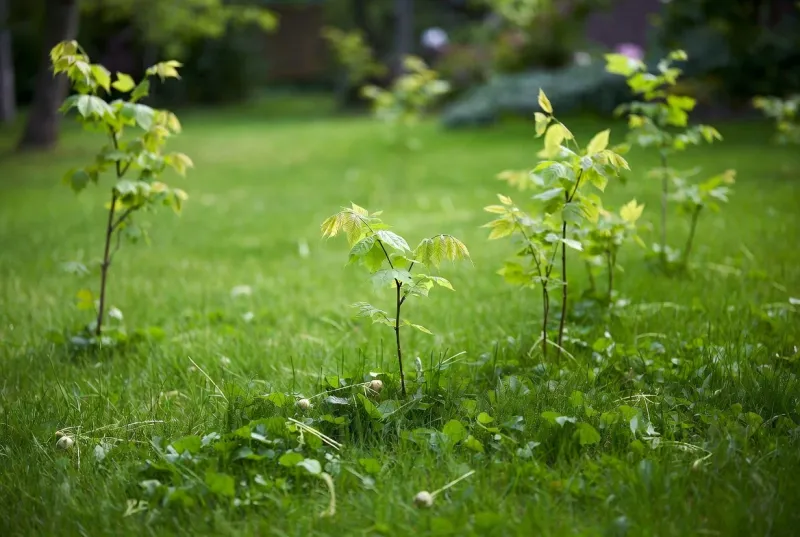
Hand-pulling works best on young, true seedlings. Wait for a day when the soil is moist, such as after rain, so the root slides out more easily.
Grip low on the stem and pull steadily, aiming to bring out the entire root.
Leftover root pieces matter. A fragment left in the ground can regrow, which is part of why people feel the plant returns so quickly.
North Carolina Cooperative Extension gives about ½ inch in diameter as a practical ceiling for hand-pulling, according to Madison County Extension. Anything thicker is likely to snap or resist.
Check what you pulled. A seedling usually comes up with a small root of its own.
If your tug brings up a long, horizontal root that keeps going underground, you have a sucker connected to a larger system, not a seedling.
Established root suckers are generally poor candidates for pulling. They can be hard to remove completely, and the stem often breaks off above the root, leaving the source intact.
That does not make pulling impossible in every case, only unreliable. Buncombe County Extension and Penn State Extension both note that seedlings can be mistaken for suckers, so look closely.
The U.S. Forest Service review also describes how damaged roots can send up new sprouts.
Wear gloves, and plan to recheck the spot after pulling.
Cutting alone can lead to more sprouts
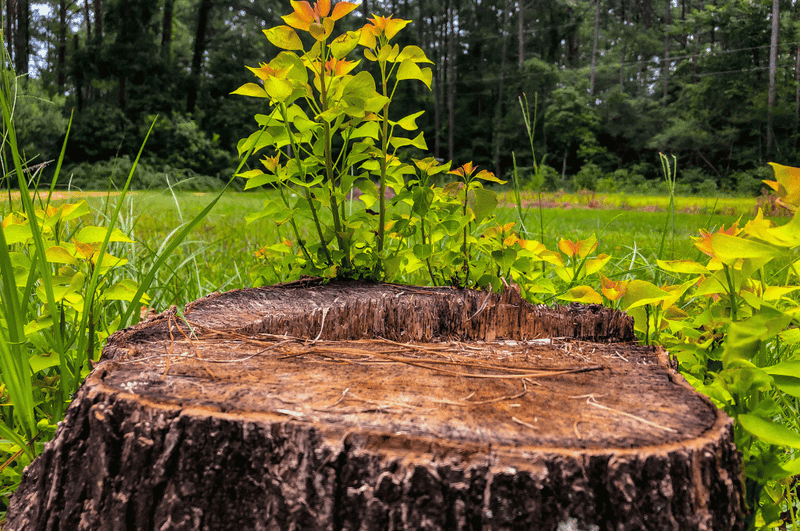
A chainsaw or mower can make a tree-of-heaven vanish from sight in an afternoon. The root system underneath is another story.
Cutting alone does not reliably kill it, and it can encourage new sprouts from the stump and from the roots, as laid out in NC State Extension guidance.
Repeated mowing of shoots is similar. Each mowing removes the top growth, but the roots can keep pushing up replacements.
A tidy lawn can hide a root network that is still alive.
The U.S. Forest Service describes how some sites needed at least five years of follow-up mechanical treatment.
That figure is an example from certain sites, not a promise for yours. It shows that a quick cut is not the same as control.
It also helps to separate two ideas. Cutting alone means removing the tree and walking away.
A cut followed by a separately planned stump treatment is a different approach, and experts do not agree on how well it works. That debate is the subject of the next section.
If you do cut a tree, expect sprouts and plan to deal with them. Seeing new growth after a cut is common and does not mean you did something wrong.
Advice on stump treatments differs
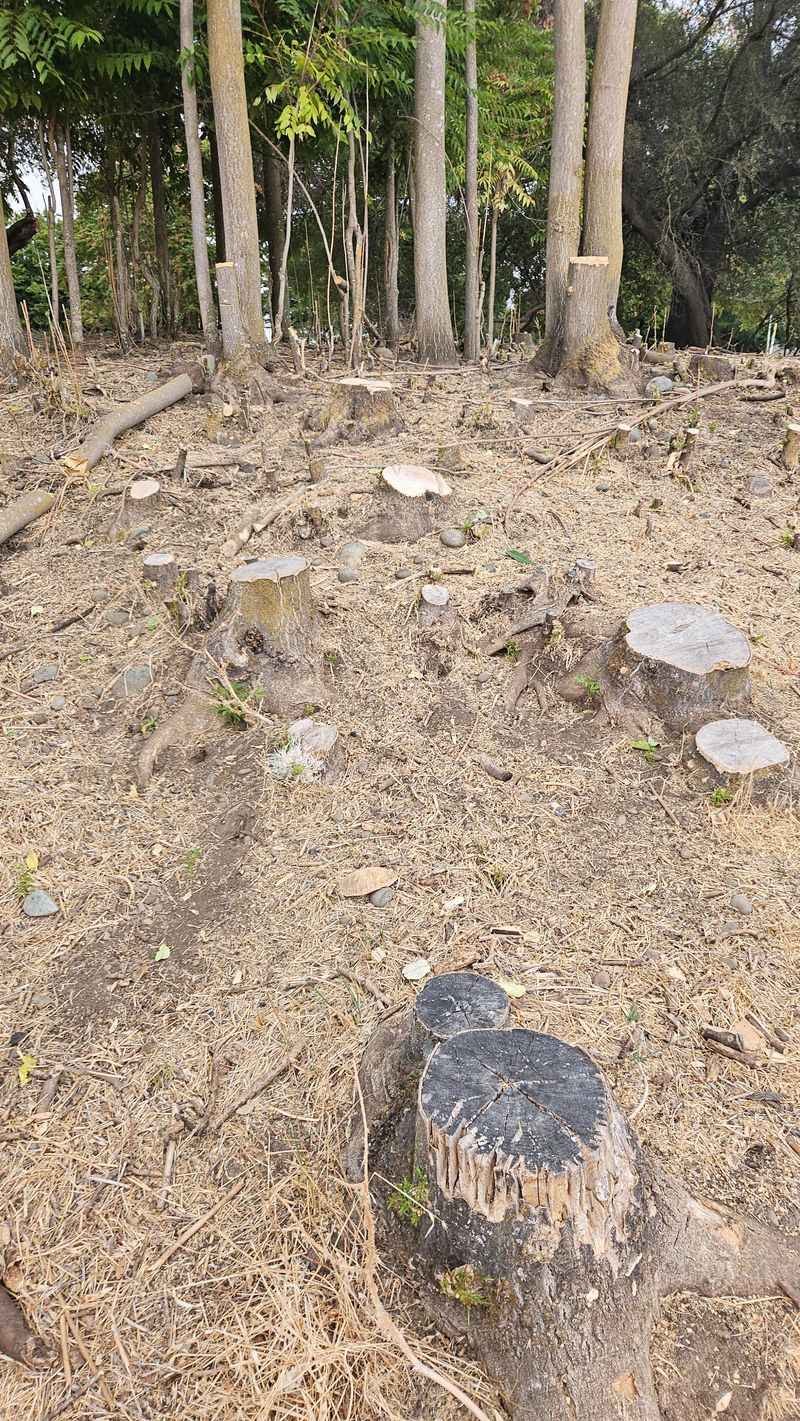
Ask several experts about herbicide on a cut stump and you may hear different answers. NC State’s weed-science guidance advises against cut-stem treatments for tree-of-heaven because they can stimulate root sprouts, as stated in its control guidelines.
Penn State Extension says cut-stump applications do not effectively control the roots.
Other North Carolina sources see it differently. A county article from Madison County Cooperative Extension recommends cut-stump herbicide in specified situations.
The NCDOT invasive plant report also describes cut-stump treatment as effective in certain cases.
So the honest summary is that nobody can say it always works or never works. Results may depend on the site, the timing, the product, and how the work is done.
Treating a stump on purpose is also not the same as cutting and leaving it.
This article will not give a mixing recipe, because products and permitted uses vary. If you have an established tree, resist the urge to improvise.
Contact your county Cooperative Extension office and ask for guidance on the specific method for your situation.
A short call can help you avoid a costly mistake, such as cutting a large tree and triggering a crop of root sprouts across your yard.
Follow the pesticide label and protect the site

If you decide to use an herbicide, the product label is your rulebook. The EPA explains that labels are legally enforceable, so users must follow the directions on the specific product, as described in its introduction to pesticide labels.
Not every product is allowed for every use or every site.
Read the label for how to apply the product, what protective equipment to wear, which weather conditions to avoid, and what site restrictions apply. Wind and rain can matter a great deal.
Labels also say where a product should not be used.
Keep treatment to the intended area. The EPA’s pesticide drift page advises preventing drift and runoff, including into drains and surface water.
Neighborhood yards often sit near storm drains, creeks, and neighbors’ gardens.
Plant sap deserves ordinary caution too. Penn State Extension reports that tree-of-heaven contact has caused skin irritation in some people, and it advises protective clothing and gloves for extensive contact.
It also advises avoiding sap contact with broken skin, and it mentions rare reports of heart inflammation linked to sap exposure through broken skin.
Those rare reports are not a routine outcome. They are a reason to wear gloves and long sleeves, cover cuts, and wash up afterward.
Check for new growth after treatment
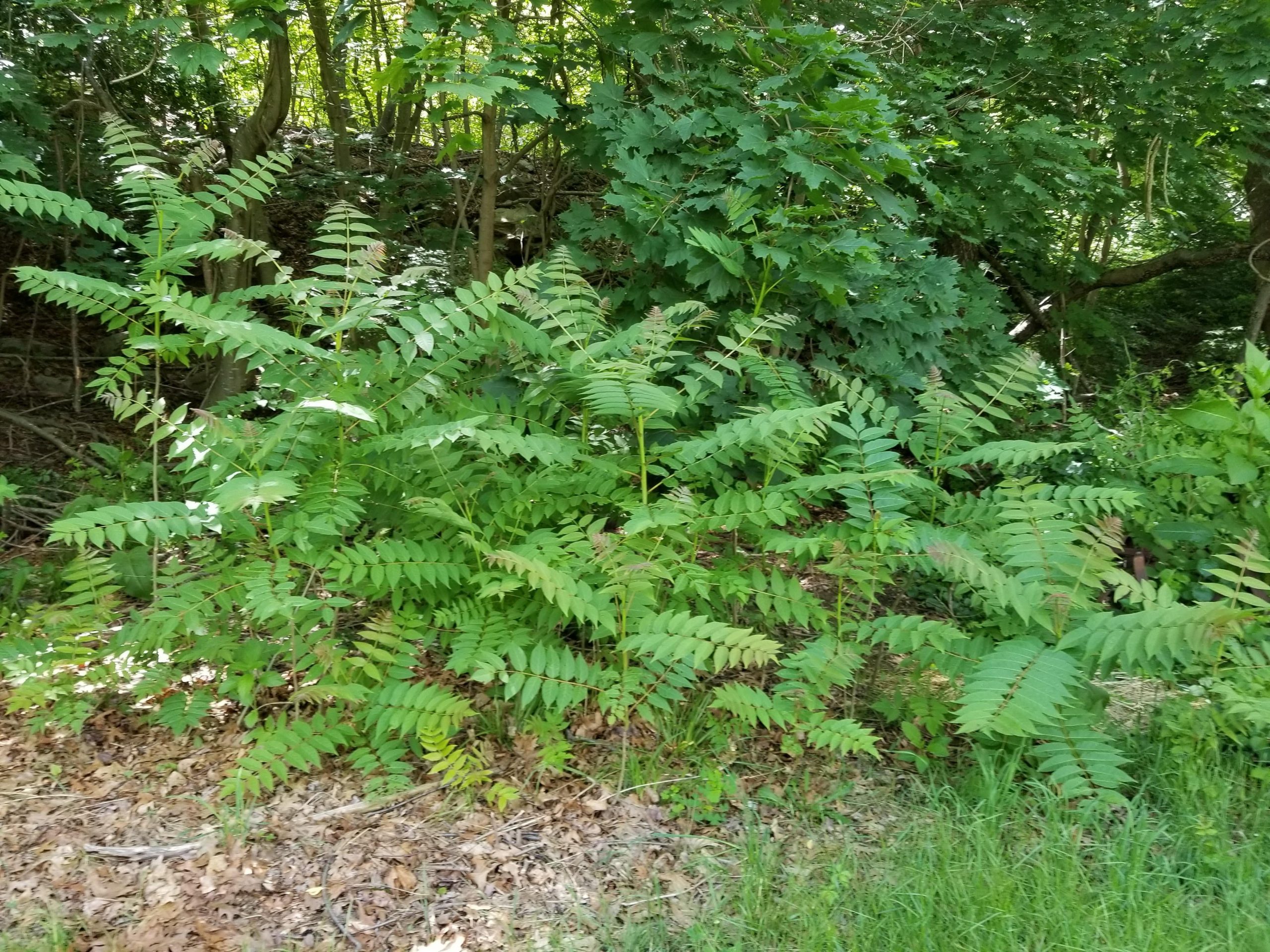
Treating a tree-of-heaven once rarely closes the book. Established infestations can take several years to bring under control, and one treatment may not finish the job, as NC State Extension warns.
Think of the first treatment as the start of a longer plan.
Walk the site and look for two kinds of new growth. Small seedlings may come from seeds already in the soil or blown in from nearby trees.
Root sprouts may pop up some distance from the original stump, since the roots spread sideways.
The U.S. Forest Service recommends checking treated sites once or twice a year, and continuing to monitor even after the plant appears to be controlled.
That is a useful starting point, but no single schedule fits every yard. A shady corner may behave differently from a sunny fence line.
Photos help. Take a picture of the area after treatment and compare it with later visits.
If new shoots show up, identify them again, decide whether they are seedlings or suckers, and match your response to the growth.
Retreatment is a normal part of managing this plant. Stay patient and keep notes on what you tried.
Match the response to the growth
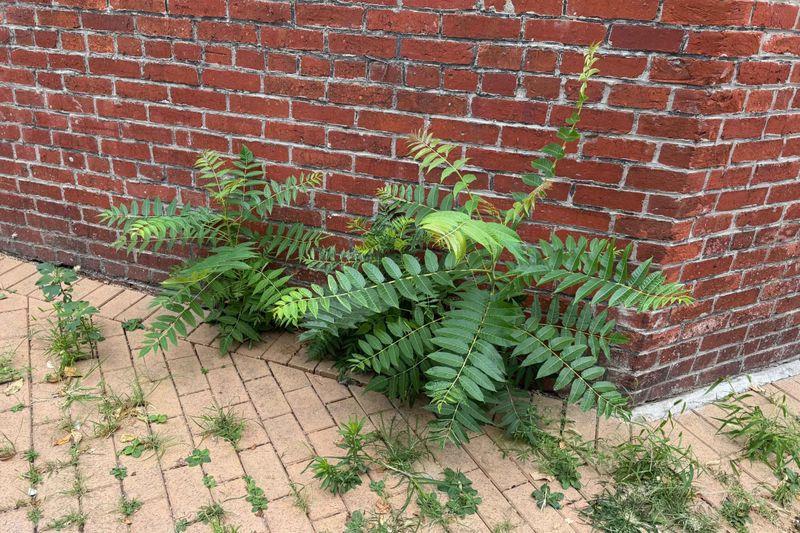
Start by confirming you have tree-of-heaven. Pull a young seedling when the whole root can come out, ideally in moist soil.
Treat an established root sucker as a poor candidate for complete hand removal, as Buncombe County Extension suggests.
Cutting alone is not reliable control, advice on stump treatments differs, and follow-up visits matter, according to NC State and the Forest Service.
The tree may outpace a quick tug, but a careful look and a steady plan can still keep up with it.
Share this story