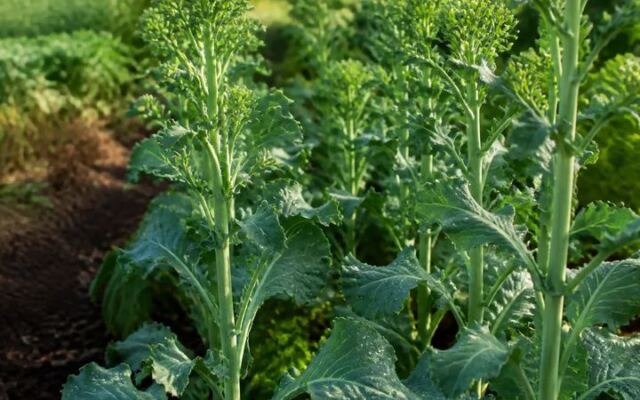
One day your kale looks like every other winter morning, and the next a tall stalk is shooting up from the middle. Many gardeners assume the weather just turned hot.
The real story is a little different, and it changes what you should do next. Here is how to read that stalk and decide whether to eat it, cut it, or leave it.
A tall stalk signals bolting, not spring heat
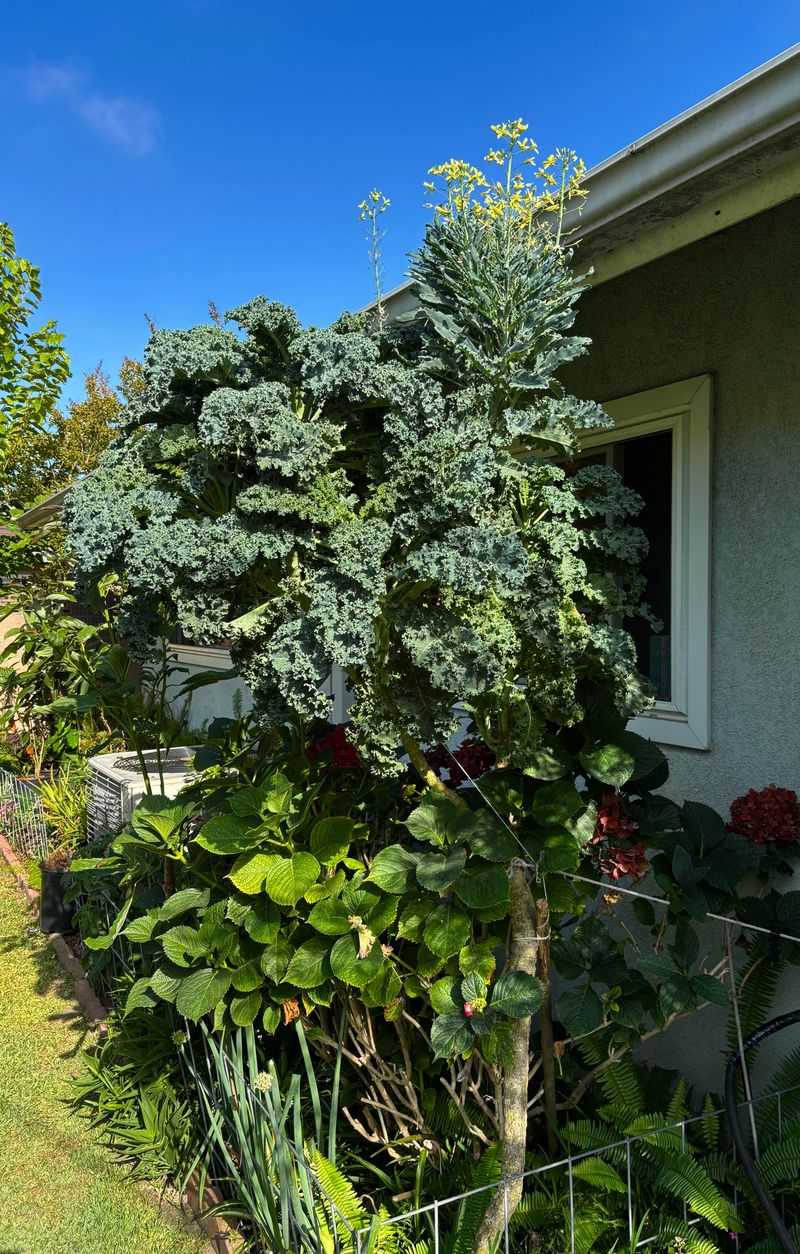
Kale that has spent the winter in your garden can suddenly send up a tall, central stalk topped with buds. Gardeners call this bolting.
The plant is shifting from making leaves to making flowers and seed, which is the natural next step in its life.
It is easy to read that stalk like a thermometer and assume warm weather has finally arrived. It does not work that way.
NC State Extension notes that kale commonly bolts in late winter or spring, so the stalk often shows up around the time days are changing, but timing alone does not tell you how warm it is outside.
Cold can play a part too. UC IPM explains that in cole crops such as kale, cabbage, and broccoli, a stretch of cool weather can start flower-stalk formation.
Warmer days may then help the stalk grow and become obvious.
So a better question than whether it is spring yet is what you want from this plant now. You might want a last round of leaves, a stalk to cook, an empty bed for tomatoes, or flowers for the bees.
Each goal points to a different choice, and the next sections walk through them one at a time.
Spotting the stalk early gives you the most options. Look at the center of the plant every week or so as winter fades, and you will rarely be surprised.
Cold and plant stage can shape when kale bolts
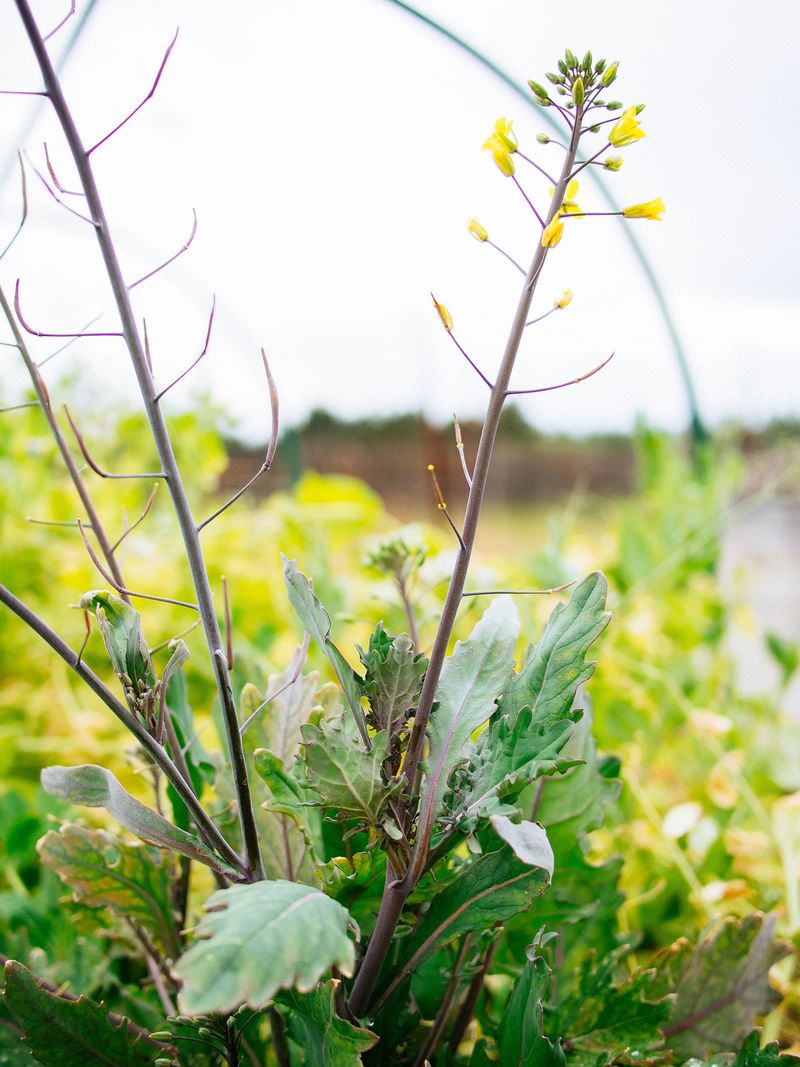
Bolting in late winter or spring surprises people because the cold seems like it should have held the plant back. In cole crops, though, a stretch of cool weather can be exactly what pushes the plant toward flowering.
UC IPM says prolonged cold, below 50°F, can stimulate flower-stalk initiation in spring-planted cole crops.
Production guidance gives a sense of the numbers. Maryland’s vegetable recommendations list 35 to 50°F for 10 or more continuous days as a possible trigger for cabbage, collards, and kale.
Treat that as a reference for commercial growers, not a rule your backyard kale must follow. Varieties respond differently, and one plant may bolt while its neighbor holds on.
Plant stage matters as well. A young transplant often needs to reach a certain size before it can respond to cold, while an older plant that came through the winter is already primed.
That is one reason overwintered kale is a common candidate for a spring stalk.
Prior weather adds another layer. A winter with long cool spells followed by a warm week can look very different from a steady, mild one.
University of Maryland Extension also points out that the causes of bolting differ among vegetables, so what you learned from lettuce or spinach will not map perfectly onto kale.
In practice, keep a loose eye on how your winter went, but do not expect to predict the exact week a stalk will appear.
Check the plant before deciding what to eat
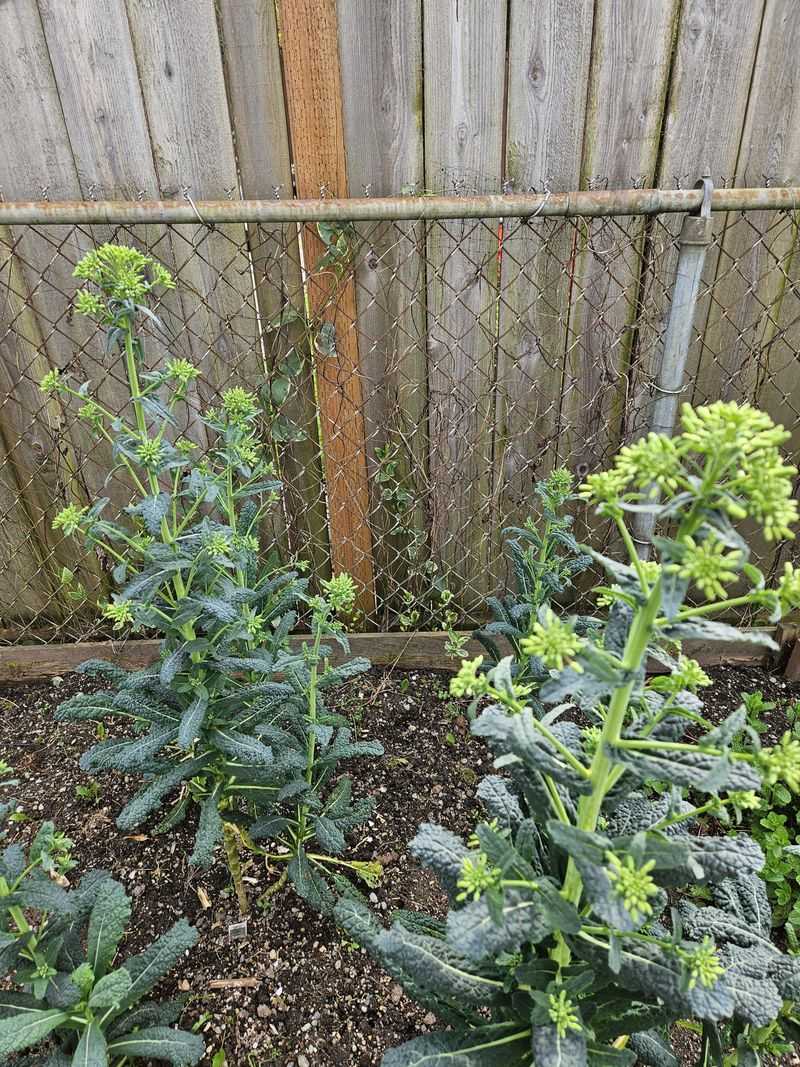
A bolted plant is not automatically a ruined one. Edibility and eating quality are two separate questions.
Kale parts can stay safe to eat while the flavor and texture shift, and an expert response on Ask Extension confirms that kale flowers are edible too.
The best method is to inspect and taste. Snap a piece of the stalk and see if it breaks cleanly or feels tough and stringy.
Pinch off a few flower buds and nibble one, then try a leaf from the top and one from lower on the plant.
Leaves can taste sharper at times, but bolting is not the only reason. University of Minnesota Extension says heat or water stress can make kale leaves pungent or bitter.
A bolting plant growing in cool, evenly watered soil may still taste fine, while a dry, hot-spell plant may not.
Look at the leaves themselves. Small to medium leaves with good color are usually the best bet, and big, leathery ones may be better chopped fine or sent to the compost.
Wash everything well, as you would any garden greens, and toss out anything yellowed, slimy, or chewed up. If a part tastes good to you, it is worth using.
If it does not, you have lost nothing by trying a nibble first.
Cut the stalk for harvest or bed cleanup
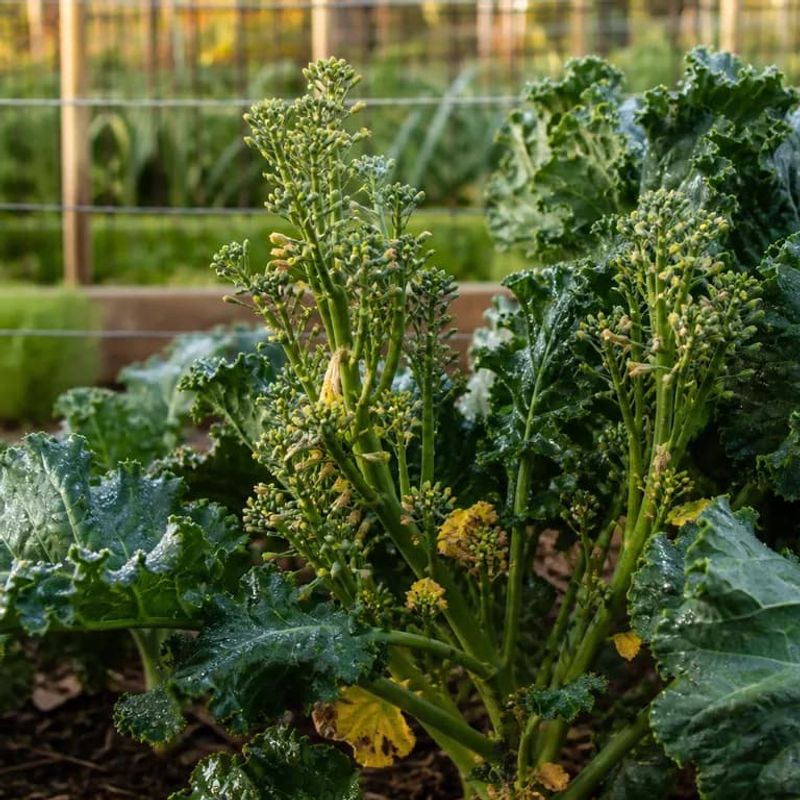
If the stalk is still tender, cutting it gives you something to cook. Slice it off at the base or a few inches below the buds, then use the top section like a broccoli-style shoot.
Tender flower buds and stems from kale can go into stir-fries, soups, or a quick saute with garlic.
While you have the snips out, harvest leaves too. NC State Extension recommends picking mature leaves from the bottom while they are large but still tender, and taking outer leaves to keep a plant producing.
Sample a leaf first, since the flowering stage can change how they feel and taste, and an expert response on Ask Extension says tender stalks can be cut and used.
Cutting also suits gardeners who simply need the space. If you want to plant tomatoes, peppers, or beans in that spot, removing the whole plant after a final harvest is a perfectly good move.
Pull it, chop it up, and add it to the compost pile.
Do not count on the cut to change the plant’s plans. Removing the stalk does not reliably stop the flowering transition, and it does not guarantee a new season of leafy growth.
Some plants may push side shoots, and others may not.
Let the plant’s condition and your goal make the decision. A tender stalk and good leaves mean a meal.
A tough, crowded plant in a bed you need means cleanup.
Leave some plants to flower for early bees
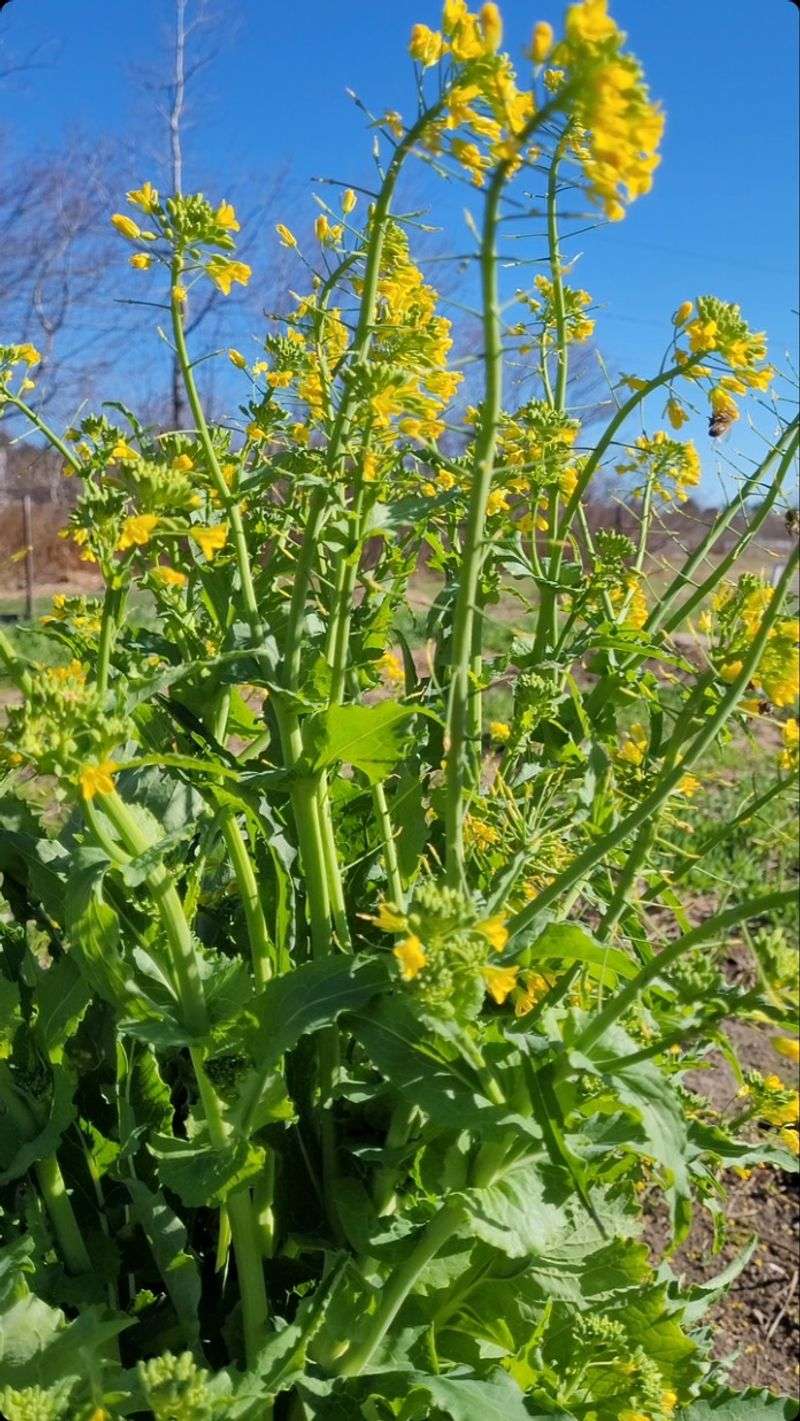
Sometimes the easiest choice is to do nothing. If the bed is not needed yet, you can let a plant or two keep flowering.
NC State’s plant toolbox notes that kale flowers can support early bees, which matters in the weeks when few other blooms are open.
Picture a row of yellow flowers swaying above the bed on a mild afternoon. Small native bees and honeybees will often visit them for nectar and pollen.
You do not need to leave every plant, and one or two in a corner can be plenty.
This option stands apart from harvesting. A plant you leave alone is not providing a steady supply of tender leaves, so keep a separate plant or two for the kitchen if you still want greens.
You can also take a few tender flower buds from the plant for dinner and leave the rest to open.
Leaving plants in place is entirely optional. If you need the space, dislike the look, or want to cut the stalk for the table, those are all fine reasons to skip it.
The flowers are a bonus for pollinators, not a duty.
When you do decide the bed is needed, pull the plant, and enjoy knowing the bees had a head start.
Plan future kale crops around local planting windows
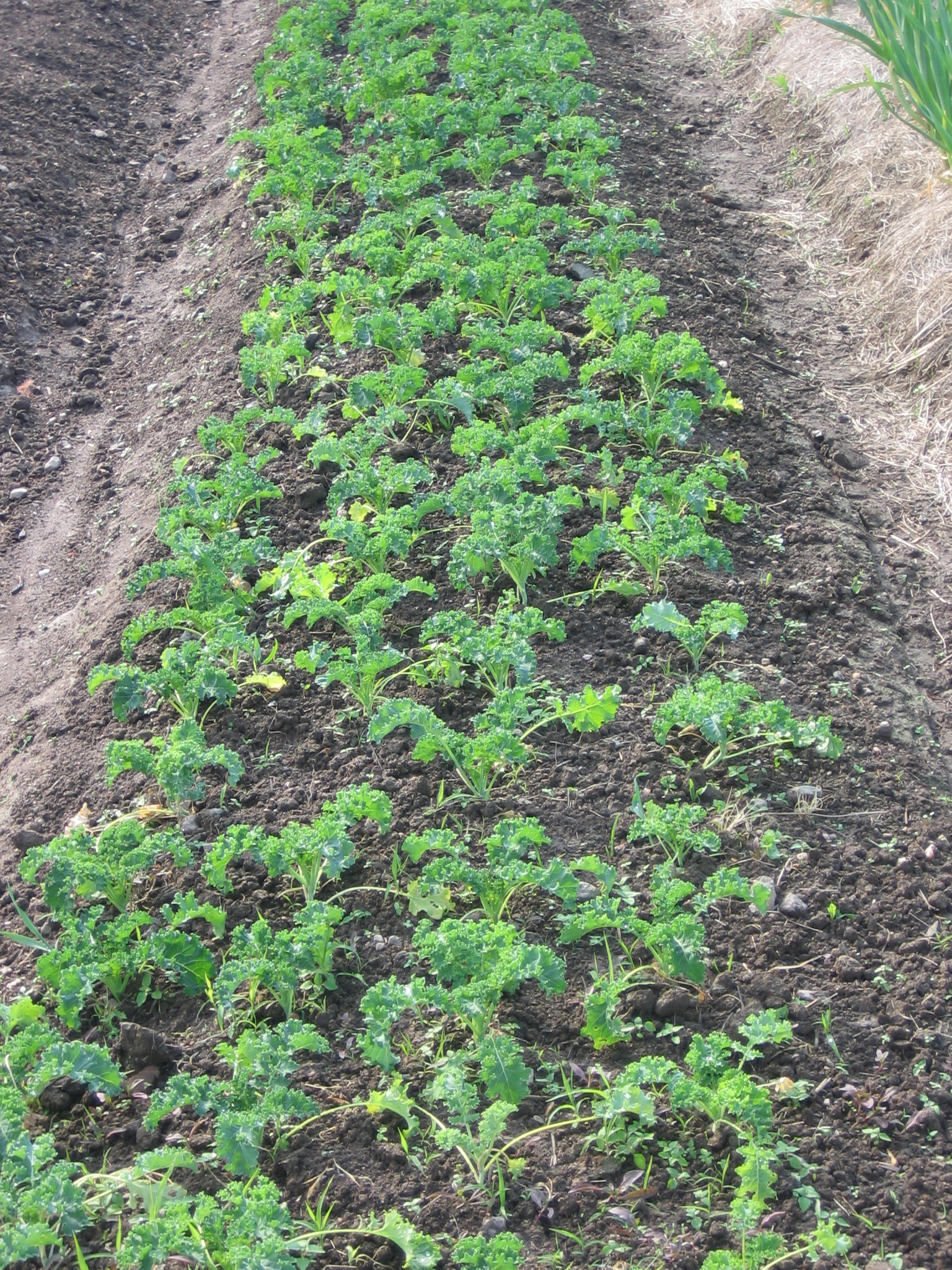
Kale is a cool-season crop, and NC State Extension describes early spring and fall as the seasons when it grows best. Those are the windows to aim for when you plan your next plantings, and a fall crop is often the one that carries into winter.
North Carolina stretches from the mountains to the coast, so the right dates are not the same everywhere. A gardener near the Outer Banks will not plant on the schedule of someone in Asheville.
The NC State Extension Gardener Handbook covers vegetable gardening across the state, and your county Extension office can help you match dates to your own area.
Variety is the second piece. Look for kale varieties described as suited to the season you are planting in, and read seed packets or catalog notes for guidance on cold tolerance and maturity.
Trying two or three types in a small trial bed can show you what works in your yard.
Neither a date nor a variety will prevent bolting. Weather varies from year to year, and even a well-timed planting can send up a stalk.
What good planning does is give you a better chance at a long harvest of tender leaves before the plant moves on.
Jot down planting dates and the week your stalks appear, and next year’s calendar will practically write itself.
Share this story