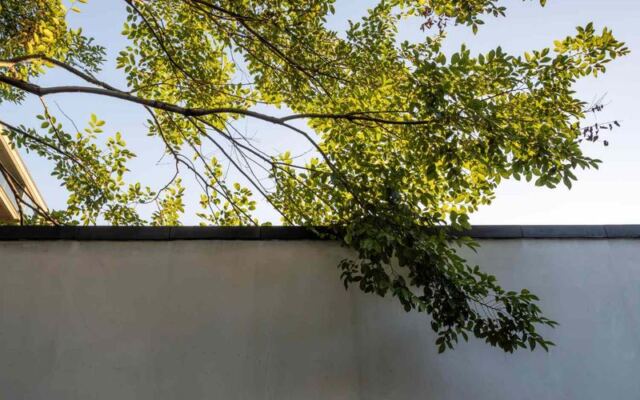
If a neighbor’s branches hang over your yard, North Carolina guidance generally lets you trim them, but only back to the property line. You have to stay on your own land while you do it.
Where that line sits, how you cut, and what is overhead all matter more than most people expect. A few quick checks can save you from a costly argument.
The property line—not the trunk—sets the ordinary limit
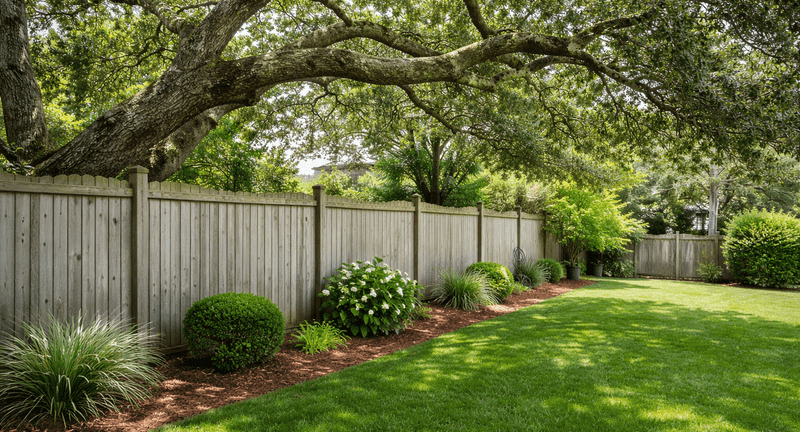
Here is the usable answer. North Carolina legal guidance generally supports an adjoining owner trimming branches that reach over their property, but only back to the boundary and without stepping onto the neighbor’s land.
The North Carolina Pro Bono Resource Center says an owner may trim up to the line, should not trespass, and should avoid cutting in a way that kills the tree.
A North Carolina real estate law firm gives the same practical advice in its article on trees. That is the foundation for everything else in this guide.
It helps to know what kind of rule this is. It comes from legal guidance and common practice.
It does not come from a specific North Carolina statute that expressly grants a general right to prune. I also did not find a published appellate decision that squarely settles the ordinary healthy-branch situation.
So the word generally matters here.
The line works in both directions. You may deal with what crosses onto your land, but you may not cut to the trunk.
You may not walk into the neighbor’s yard to get a better angle. The guidance also says you cannot make the neighbor do routine trimming for you.
If the branches bother you, the work and the cost are usually yours.
The sections below walk through the steps in order. First comes confirming the boundary.
Then come protecting the tree, checking local restrictions, and knowing when the job is too risky to handle yourself.
Is that really your boundary?
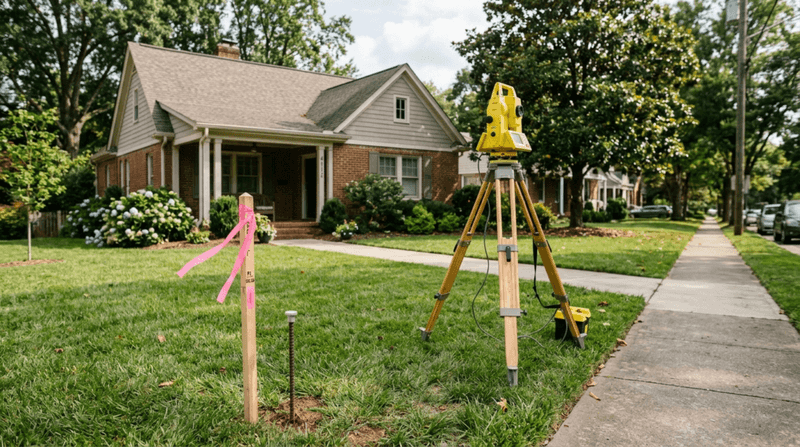
Before any saw comes out, make sure you know where your land actually ends. A fence is not necessarily the legal boundary.
Fences get built a few feet inside a line, or sometimes past it, and nobody notices for years.
If the line is unclear, look at your deed and any recorded plat. A licensed surveyor can mark the line with certainty.
If the boundary or the ownership of the tree is disputed, pause and get a survey or legal advice before cutting anything.
The stakes are real because North Carolina statutes cover certain unauthorized damage on someone else’s land. G.S. 1-539.1 deals with injuring, cutting, or removing a valuable tree after entering another person’s land without consent.
Article 22 of Chapter 14, including G.S. 14-127, addresses willful damage to trees and other property by someone not on his own lands.
Both laws have specific elements. Neither automatically imposes triple damages for any pruning that harms a tree.
Still, a cut made on the wrong side of the line is the kind of mistake that can turn a small annoyance into a legal problem.
A practical example: if the trunk sits right on the line, it may belong to both owners. Then neither of you should cut heavily without talking first.
Prune without harming the tree
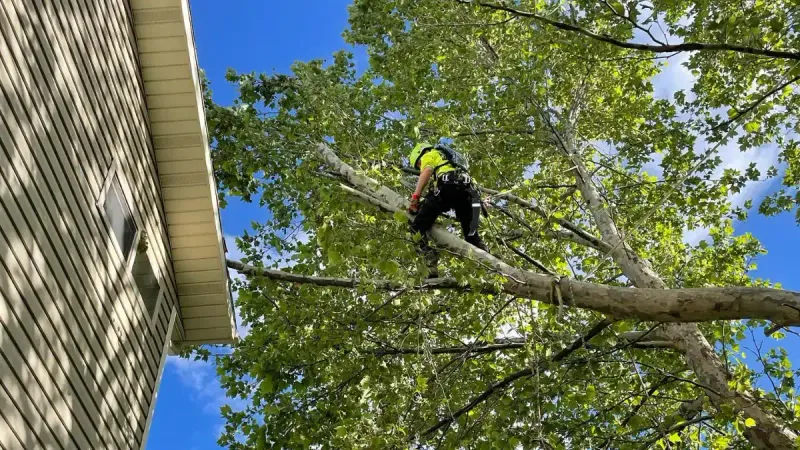
Staying on your side of the line does not make every cut a good one. The Pro Bono Resource Center warns against trimming in a way that kills the tree.
The statute it points to, G.S. 14-128, sits in the same part of the law that deals with injury to trees by a person not on their own land. It does not spell out a general right to prune.
Think of the tree as something a neighbor values, even if it annoys you. Sloppy cuts can hurt it badly and start a dispute.
NC State Extension’s pruning guidance describes proper cuts at the branch collar, the slightly swollen area where a branch joins a larger limb. Bad cuts can increase the risk of decay or disease.
Flush cuts and ragged stubs are common mistakes.
One more caution is worth noting. If a branch is thick and the cut would remove a large share of the tree’s crown, the risk of harm goes up fast.
Cutting back to the line may mean leaving a stub or an awkward shape that cannot be fixed.
For large or uncertain cuts, bring in a certified arborist. Hiring one does not create a legal safe harbor, and no single technique does either.
It does improve the odds that the tree survives and that the cut is clean.
Local rules can affect the work

A branch crossing your line does not wipe out every other rule. Some properties come with extra limits that have nothing to do with who owns the branch.
Checking them first is cheaper than undoing a mistake.
NC State Extension, in its citizen guide to trees in the community, points to local rules, easements, covenants, and HOA requirements as possible limits on pruning or removal. These do not apply the same way to every property.
A rural lot outside city limits may face very little, while a neighborhood with recorded covenants may face a lot.
Start with your city or county. Some places have tree ordinances that cover certain trees, such as those in protected buffers.
Then read your deed and any HOA documents. An easement for a utility or drainage can also change what you may do near a line.
If the tree stands in a shared area or near a road, the property may not belong to your neighbor at all. That changes who you should talk to.
A quick phone call to local planning staff or your HOA manager is often enough. Ask in writing when you can, so you have a record of the answer.
When should you call a professional?
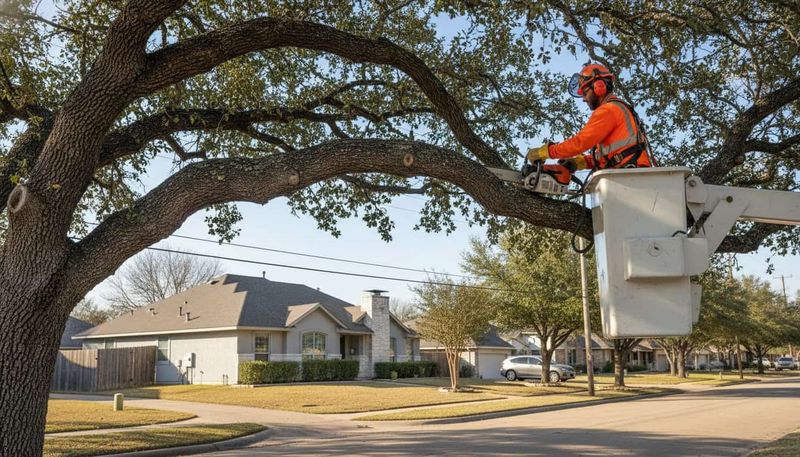
Trimming a low, light branch from the ground is one thing. Big limbs, ladder work, and anything near wires are another.
Those jobs can cause serious injury, and they are where most do-it-yourself plans go wrong.
Power lines deserve special respect. North Carolina’s high-voltage-line law, G.S. 95-229.7, sets clearance requirements for people, tools, and equipment near high-voltage lines.
Those are legal clearances, and they are a separate matter from the practical advice below.
NC State Extension advises contacting the electric utility when work is within 10 feet of lines or poles. That is safety guidance, not a restatement of the statute’s clearance rules.
Do not try to learn the exact numbers and then work just outside them. Call the utility instead.
For large limbs or cuts you are unsure about, hire a certified arborist. NC State Extension’s pruning advice recommends professional help for large-tree pruning.
Warning signs that a job is too big include limbs thicker than your arm, branches over your roof, and anything you can only reach by climbing. If you feel the need to lean a ladder against the tree, stop and make a call.
A known dangerous tree is different
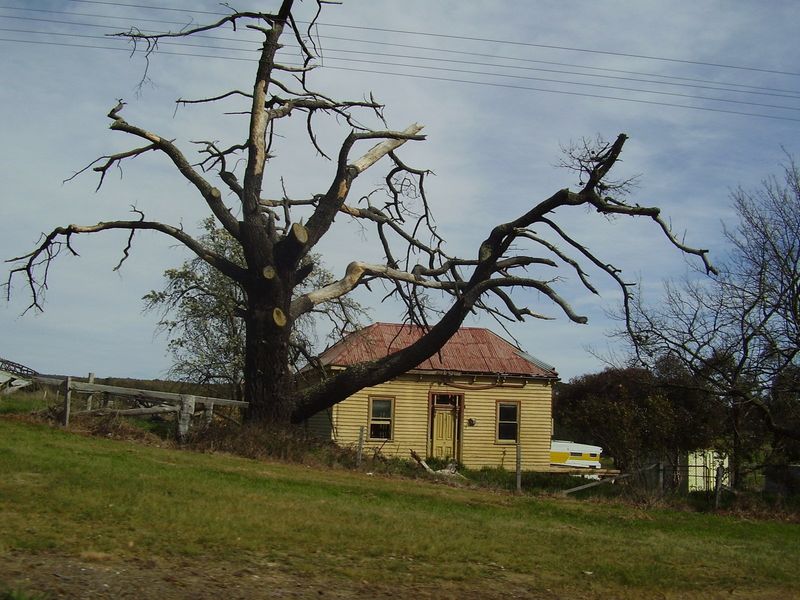
Ordinary overhang is a nuisance. A tree that is clearly rotting and likely to fall is a hazard.
The law treats those situations differently, and the difference matters if you are worried about a neighbor’s tree.
In Rowe v. McGee, the North Carolina Court of Appeals looked at a visibly decayed tree that the owner knew was likely to fall.
The court held that the owner had a duty to eliminate the danger. The case is about a known hazard.
It does not create a general duty to prune healthy branches that merely cross a boundary.
NC State Extension’s account of tree-fall liability explains that responsibility turns on negligence and foreseeability. A key question is whether the tree was dead, visibly dying, or otherwise a foreseeable risk.
Owning the tree is not enough by itself, and a fall does not guarantee liability.
In practice, clues of danger include dead branches, fungus at the base, a hollow trunk, or a sudden lean. If you see them, document the problem with dated photos and tell the owner in writing.
A certified arborist can assess the tree.
Remember the other side of the rule too. The Pro Bono guide says you cannot require a neighbor to do routine trimming.
A healthy tree with a few branches over your fence does not put the owner under an obligation to cut.
When in doubt, stop before you cut
Work through it in order. Confirm the boundary, and stay on your own land.
Check local rules, easements, and HOA requirements.
Talking to your neighbor first is a smart way to cut down on conflict, though it is not a legal requirement. If ownership, tree health, or safety is unclear, pause and call a professional.
A branch can grow back, but a bad cut or a bad argument is much harder to undo.
Share this story