Get the latest garden guides in your inbox →
Gardening Latest
  • General Gardening
  • Lawn Care
  • Plant Care
  • Composting
  • Soil Health
  • Backyard
  • Garden Muse Magazine
  • General Gardening
  • Lawn Care
  • Plant Care
  • Composting
  • Soil Health
  • Backyard
  • Garden Muse Magazine
  • News
  • Gardening Calendar
  • Garden Structures
  • Vegetable Garden
  • Vertical Garden
  • Raised Beds
  • Hydroponics
  • General Equipment
  • Community Gardens
Garden Themes
  • Spiritual Garden
  • Hydroseeding
  • Seeding and Laying Sod
  • Artificial Grass
  • Lawn Care Equipment
  • Plants
  • Trees
  • Planting Tools
  • Composting Basics
  • Fertilizer
  • Alternative Growing Mediums
  • Front Yard
  • Backyard Activities
  • Landscaping
Gardening Latest

Explore by state

Which state is your garden in?

Currently viewing Louisiana

All states

Northeast

  • Connecticut —
  • Delaware 19
  • Maine —
  • Maryland 5
  • Massachusetts 21
  • New Hampshire —
  • New Jersey 5
  • New York 14
  • Pennsylvania 14
  • Rhode Island —
  • Vermont —

Southeast

  • Alabama 4
  • Arkansas —
  • Florida 5
  • Georgia 5
  • Kentucky 19
  • Louisiana 4
  • Mississippi —
  • North Carolina 3
  • South Carolina 18
  • Tennessee 1
  • Virginia 4
  • West Virginia —

Midwest

  • Illinois 4
  • Indiana 6
  • Iowa 18
  • Kansas —
  • Michigan 5
  • Minnesota 4
  • Missouri 3
  • Nebraska —
  • North Dakota —
  • Ohio 5
  • South Dakota —
  • Wisconsin 19

Southwest

  • Arizona 4
  • Colorado —
  • Nevada —
  • New Mexico —
  • Oklahoma —
  • Texas 3
  • Utah —

West

  • Alaska —
  • California 4
  • Hawaii —
  • Idaho —
  • Montana —
  • Oregon —
  • Washington —
  • Wyoming —

No state matches that search.

Site menu

Gardening Latest
  • General Gardening
    • News
    • Gardening Calendar
    • Garden Structures
    • Vegetable Garden
    • Vertical Garden
    • Raised Beds
    • Hydroponics
    • General Equipment
    • Community Gardens
    Garden Themes
    • Spiritual Garden
  • Lawn Care
    • Hydroseeding
    • Seeding and Laying Sod
    • Artificial Grass
    • Lawn Care Equipment
  • Plant Care
    • Plants
    • Trees
    • Planting Tools
  • Composting
    • Composting Basics
  • Soil Health
    • Fertilizer
    • Alternative Growing Mediums
  • Backyard
    • Front Yard
    • Backyard Activities
    • Landscaping
  • Garden Muse Magazine

Explore

  • About GardeningLatest.com
  • Contact Us

Get the latest from the garden

New guides on lawn care, plants and backyard projects, sent when they go up.

Subscribe →

Follow

  • Facebook
  • X
  • Pinterest
  • YouTube
Louisiana Gardening

Is Something Odd Growing Beneath Your Louisiana Pecan Tree? What It Could Be

You walk out to your pecan tree and spot something strange poking up from the ground.

CB

By Celeste Boudreaux

November 22, 2026 · 5 min read

Is Something Odd Growing Beneath Your Louisiana Pecan Tree? What It Could Be

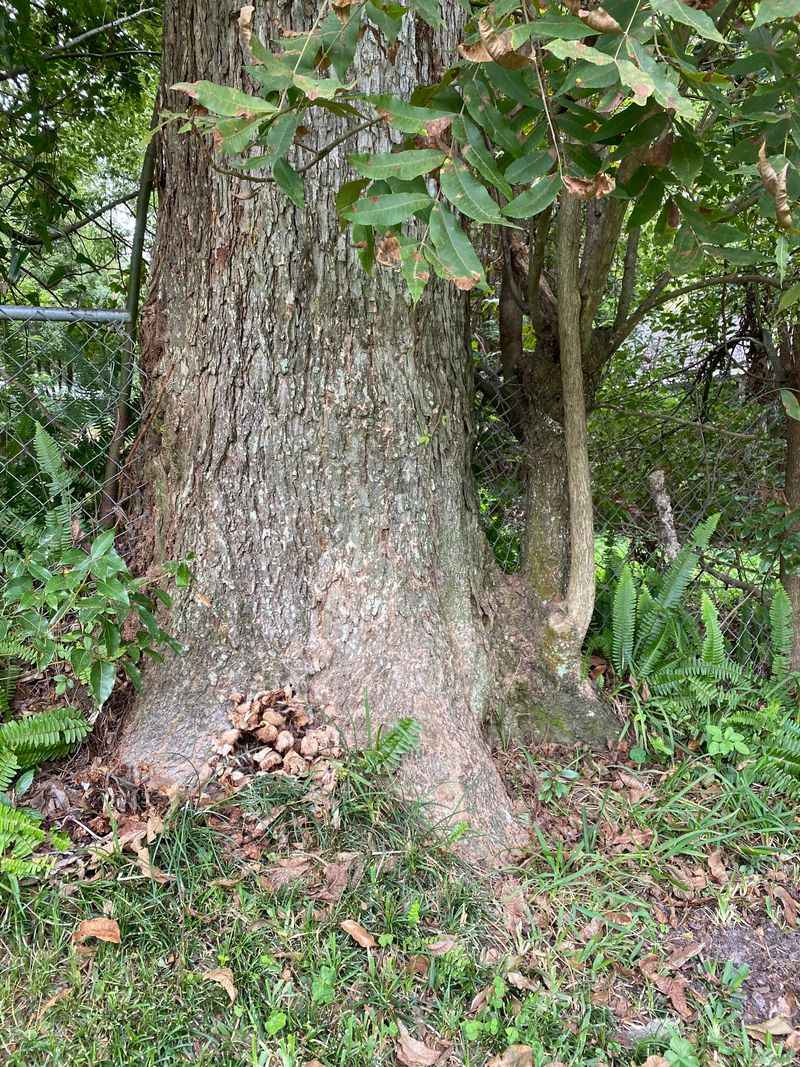
You walk out to your pecan tree and spot something strange poking up from the ground. Maybe it is a mushroom, maybe something lumpier, and you wonder if the tree is in trouble.

Pecan trees do have fungal partners, but plenty of other fungi turn up in yards too. Here is how to sort out what you might be looking at and what to do next.

At a glance

Where
Louisiana Gardening
Hardiness zone
9 20 to 30°F
Read
5 minutes
Published
November 22, 2026

A growth beneath a pecan is not an identification
A growth beneath a pecan is not an identification
© Reddit

Plenty of people notice odd growths under their pecan trees, but nobody has shown a photo, a sample, or a detailed description of one particular growth that keeps returning in Louisiana. So the idea of a single recurring mystery plant or fungus is unconfirmed.

Being under a pecan tells you where something is growing, not what it is.

Louisiana yards are warm, damp, and full of organic material, which makes them friendly to many kinds of fungi. As LSU AgCenter notes in its look at odd mushrooms, fungi can take surprising shapes, and appearance alone can fool you.

One real candidate for a pecan-linked fungus is the pecan truffle, which UF/IFAS describes as living with pecan roots. But a visible growth is not automatically a truffle, and it could be something else entirely.

Two questions guide the rest of this article. First, what might the growth be?

Second, does where it sits say anything about the health of the tree? Without a specimen in hand, the honest answer is a set of possibilities and clues, not a verdict.

The pecan truffle grows out of sight
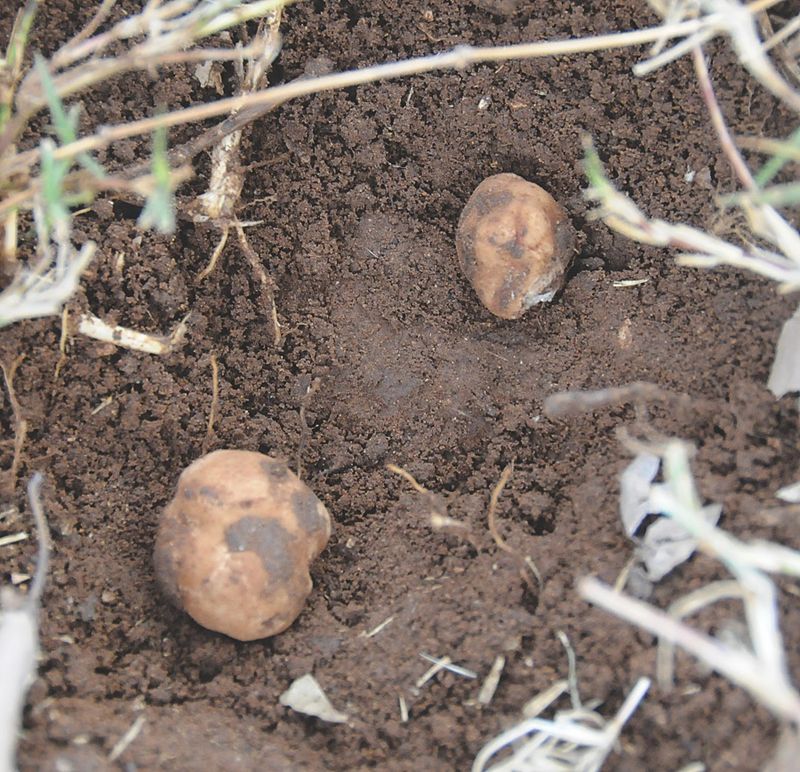
The pecan truffle grows out of sight
© Pecan South

Hidden below the soil, a fungus called Tuber lyonii, the pecan truffle, may be quietly at work. According to UF/IFAS, it is native to eastern North America and forms its fruiting bodies underground, not on top of the lawn.

It also partners with the roots of pecans and some other trees.

Mushrooms or shelf-like conks coming out of the trunk or a major limb are another.

That partnership is called mycorrhizal, meaning both sides gain something. The fungus is described as a root partner, not a disease of the tree.

That benefit applies to this identified fungus only, and it should not be assumed for every fungus found near a pecan.

Be careful with look-alikes. UF/IFAS notes that other truffle-like fungi live in pecan orchards, and telling them apart takes several clues, including the inside of the fruiting body and its microscopic spores.

A backyard guess will not settle it.

Moisture matters for fruiting. In Florida and Georgia, UF/IFAS reports that fruiting typically starts in late July, peaks in August and September, and can continue if the soil stays moist.

That is regional timing, not a confirmed Louisiana calendar, so treat it as a rough hint only.

Why lawn mushrooms appear after wet weather
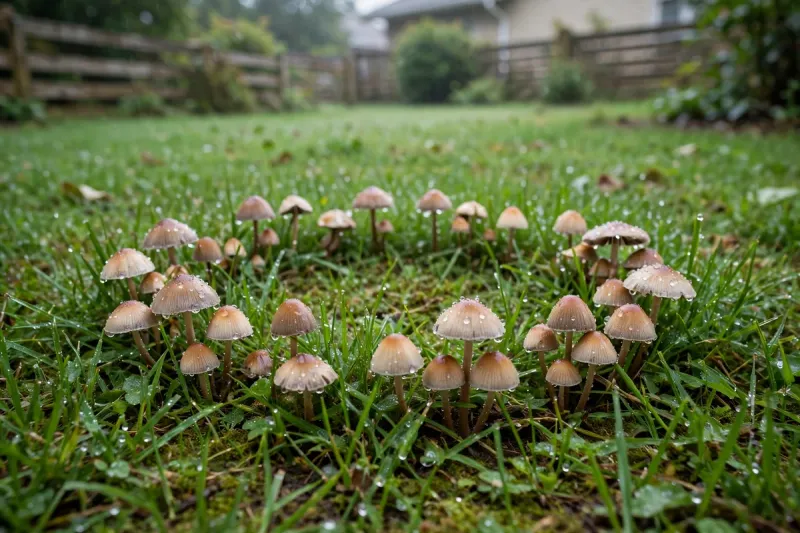
Why lawn mushrooms appear after wet weather
© YardSolver

After a string of soggy, steamy days, mushrooms can pop up almost overnight. Most of the ones in lawns are decomposers, fungi that feed on dead material.

LSU AgCenter explains that they live on things like buried roots, old stumps, wood chips, and leaf litter.

The mushroom you see is just the fruiting body, a bit like an apple on a tree. The main fungus is a web of threads already living in the soil.

Warm, humid, rainy weather simply nudges it to produce the visible part.

That matters near a pecan. A mushroom in the grass close to the trunk may be feeding on an old buried root or a long-gone stump, even while the living tree is perfectly fine.

As University of Maryland Extension points out, being near a tree does not prove the tree is diseased.

So a ring of mushrooms after a storm is not a reason to panic. Think of it as a sign that the soil holds some decaying organic matter, which is perfectly ordinary in a yard.

Growth on the tree deserves closer attention
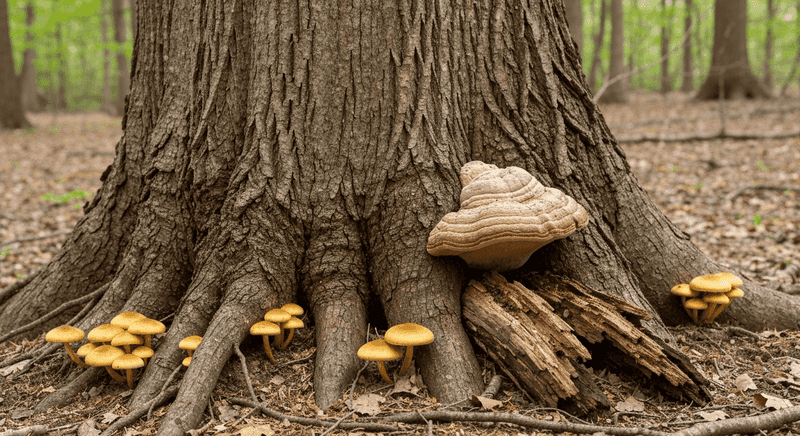
Growth on the tree deserves closer attention
© Tree Identifier

Where a fungus grows makes a big difference. Mushrooms in the surrounding lawn are one thing.

Mushrooms or shelf-like conks coming out of the trunk or a major limb are another.

According to LSU AgCenter’s pecan tree guide, growth like this can point to wood decay inside the tree, which can weaken its structure. Fungi that emerge from the trunk, major limbs, or surface roots are more likely to be tied to decay than ones in the nearby grass, a distinction also covered by University of Maryland Extension.

Still, nobody can diagnose a tree from a photo or a description alone. Rot can be small or extensive, and only a trained eye can judge how serious it is.

If you see growth on the tree itself, call a certified arborist for an assessment. Make that call sooner if the pecan stands close to your house, a play area, parked cars, or a driveway, since a failing limb could cause real damage.

Raking can tidy the lawn without removing the fungus
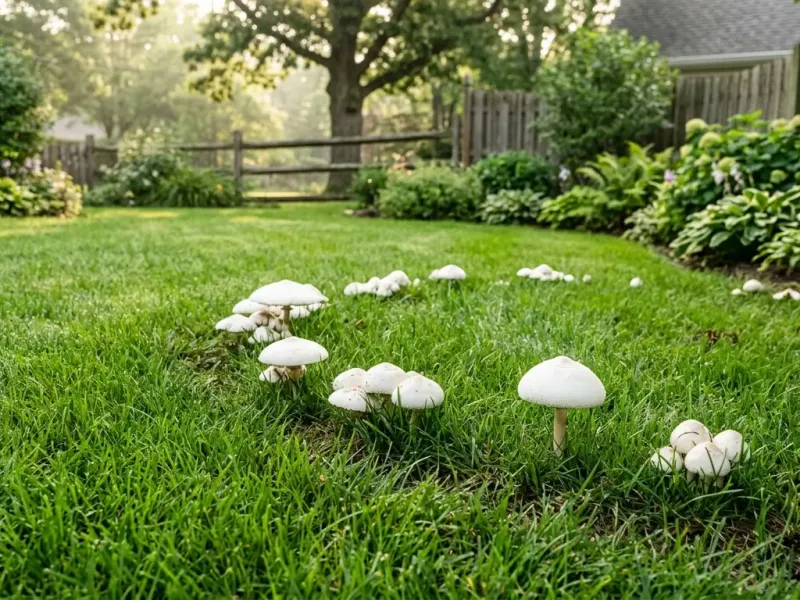
Raking can tidy the lawn without removing the fungus
© Aiper

If lawn mushrooms bother you, the fix is simple. Rake them up or mow over them, and the lawn looks neat again.

LSU AgCenter treats these as practical options for ordinary lawn mushrooms.

Keep expectations realistic, though. Raking removes only the visible fruiting bodies.

The underground fungus stays put and may send up more mushrooms the next time the weather turns warm and wet.

Broad fungicide spraying is generally unnecessary for ordinary lawn mushrooms, so it should not be your default move. Mulch and wood debris feed decomposer fungi, a point that comes up in Oregon State University Extension’s mulching guide, so a thinner layer of organic material may mean fewer mushrooms.

Keep this advice for the lawn only. Fungi coming out of the tree itself belong in the arborist conversation, not the rake-and-mow routine.

Never eat a wild mushroom by guesswork

Never eat a wild mushroom by guesswork
© OHSU News

Whether a mushroom is harmless to a pecan tree tells you nothing about whether it is safe on a dinner plate. Plant impact and human toxicity are separate questions.

Where a mushroom grows, or how it seems to affect a tree, cannot tell you whether it is edible.

Photos and informal guesses are not good enough either. Poison Control warns that poisonous look-alikes exist and that cooking does not reliably make a poisonous mushroom safe.

Have an expert identify any wild mushroom before anyone eats it.

If a person has eaten a mushroom that is unknown, call Poison Control at 1-800-222-1222 right away.

A yard full of mysteries is more fun when you look, photograph, and leave the tasting to the experts.

Share this story

CB

Written by

Celeste Boudreaux

More from Celeste Boudreaux →

About Gardening Latest

Gardening Latest provides in-depth guides to maintaining and enhancing your garden and backyard. Learn how to make the most of the space you have and create a beautiful garden.

More about us →

Latest stories

  • Minnesota GardeningWhat Those Tracks Crisscrossing Your Snowy Minnesota Yard Are Telling You About Nighttime Visitors

    What Those Tracks Crisscrossing Your Snowy Minnesota Yard Are Telling You About Nighttime Visitors

    4 min ago
  • Illinois GardeningThose Dark Purple Berries Hanging on Pink Stems Along Illinois Fence Lines Are Poison for Your Dog

    Those Dark Purple Berries Hanging on Pink Stems Along Illinois Fence Lines Are Poison for Your Dog

    10 min ago
  • Louisiana GardeningSomething Digs Through Louisiana Lawns Every Night, And By Morning You See The Damage

    Something Digs Through Louisiana Lawns Every Night, And By Morning You See The Damage

    16 min ago
  • Delaware GardeningStung by a Saddleback Caterpillar While Weeding in Delaware? Do These Things Right Away

    Stung by a Saddleback Caterpillar While Weeding in Delaware? Do These Things Right Away

    22 min ago
  • South Carolina GardeningThat Spider in Your South Carolina Closet Is Probably Not a Brown Recluse, Here’s What It Really Is

    That Spider in Your South Carolina Closet Is Probably Not a Brown Recluse, Here’s What It Really Is

    30 min ago

Gardening by state

Stories for your state, and the hardiness zone most of it gardens in.

Keep exploring

Read next

All Louisiana Gardening →
Louisiana GardeningSomething Digs Through Louisiana Lawns Every Night, And By Morning You See The Damage
Louisiana Gardening

Something Digs Through Louisiana Lawns Every Night, And By Morning You See The Damage

16 min ago
Louisiana GardeningThose Little Mud Chimneys in Your Louisiana Yard May Be Crawfish Burrows
Louisiana Gardening

Those Little Mud Chimneys in Your Louisiana Yard May Be Crawfish Burrows

Nov 15
Louisiana GardeningThese Venomous Neighbors Share Louisiana Yards, And Here’s Where Each One Hides
Louisiana Gardening

These Venomous Neighbors Share Louisiana Yards, And Here’s Where Each One Hides

Nov 15

More from Louisiana Gardening

  • Spot a Bobcat Slipping Along Your Kentucky Fence Line This Winter? Here’s What It Wants

    36 min ago
  • The Florida Yard Cleanup That Keeps Black Racers From Hanging Around Your Back Door

    42 min ago
Back to top

Leave a response Cancel

Your email address stays private. Required fields are marked with an asterisk.

Gardening Latest

In-depth guides to maintaining and enhancing your garden and backyard: how to make the most of the space you have, and how to make it beautiful.

  • Facebook
  • X
  • Pinterest
  • YouTube

We may earn a portion of sales from products or services that are purchased through our site as part of our affiliate partnerships with retailers.

Explore

  • About GardeningLatest.com
  • Contact Us
  • Terms and Conditions
  • Privacy
  • Editorial Note:
  • FTC Disclosure

Newsletter

New garden guides and seasonal tips, straight to your inbox.

We’ll email you a link to confirm. Unsubscribe any time.

Almost there! Check your inbox and tap the link to confirm.

© 2026 Gardening Latest. All rights reserved.

Back to top