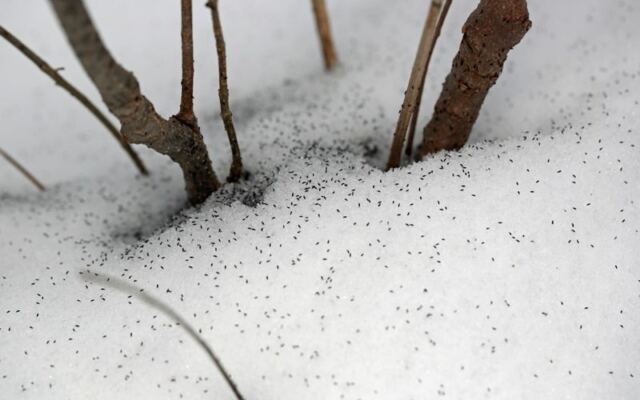
Those tiny black specks hopping across your Wisconsin snowbank are most likely snow fleas, and they are harmless to you, your pets, and your house. They are really springtails, small creatures that wake up on mild winter days and sometimes gather in surprising numbers.
Once you know what you are looking at, the peppery sprinkle on the snow turns from a mystery into a neat bit of winter nature. Here is what they are, why they show up, and what to do about them.
Those hopping specks are likely springtails
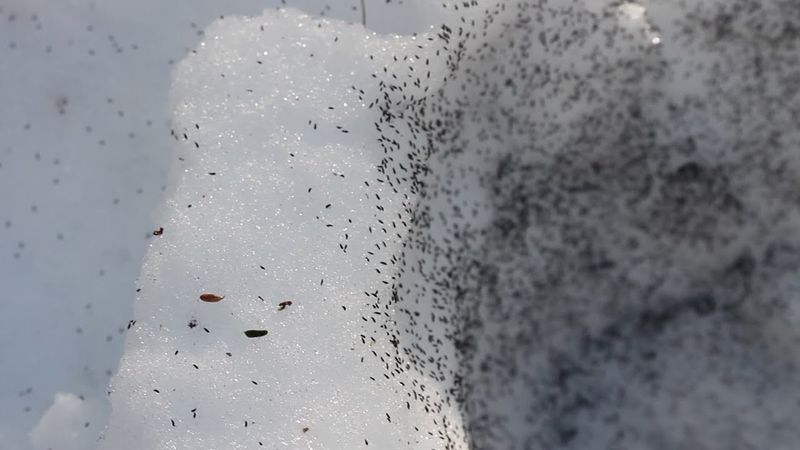
Picture a sprinkle of ground black pepper on a snowbank, except the pepper moves. If those specks are hopping, they are most likely snow-active springtails, often called snow fleas.
Dark-bodied springtails seen in late winter are exactly what Wisconsin Extension describes as snow fleas, and they can show up in visible numbers.
The name is a bit of a trick. Snow fleas are not true fleas, and the word only reflects the way they spring through the air.
Their jumping looks flea-like, but they are a completely different kind of creature, and Minnesota Extension describes the snow flea as a winter-active springtail seen on snow.
One caution is worth keeping in mind. Seeing black specks on snow tells you the general group, but it cannot tell you the exact species.
Many kinds of springtails exist, and naming one for certain takes a closer look than the naked eye can give.
Here is the reassuring part. Springtails do not bite or sting people, so you can walk past that swarming snowbank, shovel beside it, or let your dog sniff around without worry.
They are simply tiny residents of the soil that happen to be easy to spot against white snow.
If you have ever knelt down for a closer look, you may have noticed the specks seem to pop up and vanish. That quick, twitchy motion is how most people first realize they are not just dirt or bits of bark.
The next sections explain why they appear and how they make those jumps.
Why they show up on snow
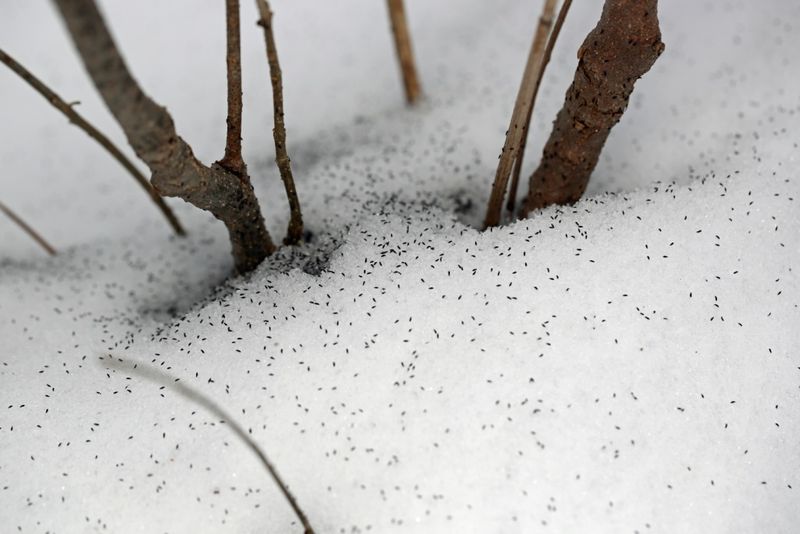
Winter is not as lifeless as it looks. Springtails live in the soil and leaf litter beneath the snow, and on some days they climb up to the surface where we can see them.
The best viewing tends to come when the weather turns mild and the snow starts to soften.
South Dakota State University Extension notes that springtails appear on melting snow on warm, sunny days. That matches what many Wisconsin gardeners notice.
A bright afternoon after a cold spell can suddenly dot a snowbank with moving specks.
A scientific review of snow-dwelling springtails adds some detail. It reports that activity on snow peaks during mild weather and partial melting.
In other words, a thaw seems to matter as much as the sunshine.
That is why it helps to think of sunny days as a clue rather than a rule. Warm, sunny weather often goes along with a gathering, but sunlight alone does not explain every swarm.
Melting snow, damp ground, and gentle temperatures all seem to play a part.
So if you see them in January, February, or during a late-winter thaw, that fits the pattern. Check the weather and the snow: soft, wet, partly melted snow near trees or foundations is a favorite stage for the show.
How a springtail makes its jump
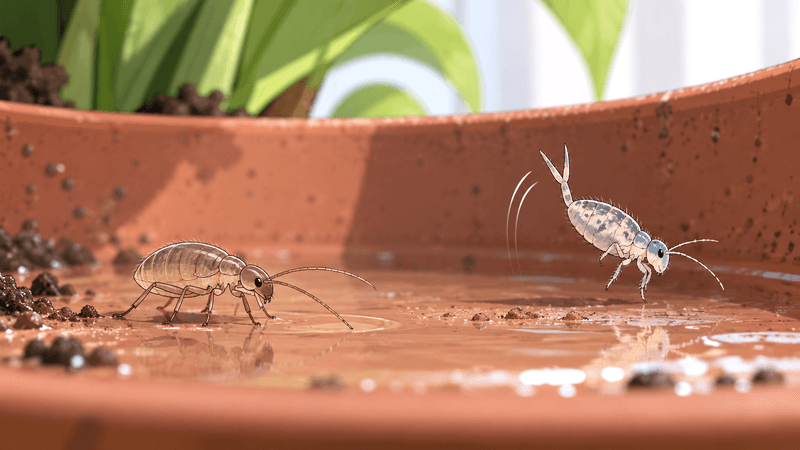
Springtails are tiny, wingless animals in a group called Collembola. They are not true fleas, and technically they are not insects either.
Still, they are six-legged relatives that look a lot like small bugs to the average gardener.
Their jumping trick comes from a forked structure called a furcula. As described by Wisconsin Extension, many springtails jump with it.
The furcula stays tucked under the body like a spring-loaded latch, then snaps down against the surface to flick the animal into the air.
Most springtails spend their lives in damp places such as soil, leaf litter, mulch, and decaying wood. Minnesota Extension lists their foods as fungi, algae, pollen, and decaying organic matter.
That menu explains why they cluster where things are moist and slowly rotting.
All that nibbling gives them a modest job in the soil community. Colorado State University Extension says they help break down organic matter, and a peer-reviewed study of springtail communities links them to decomposition and nutrient cycling.
Keep that in proportion, though. Springtails are a small part of a big underground crew, and a gathering on one snowbank will not noticeably transform your garden.
They are simply a sign that a living soil community is waiting under the snow.
Harmless to people, with one plant-related exception
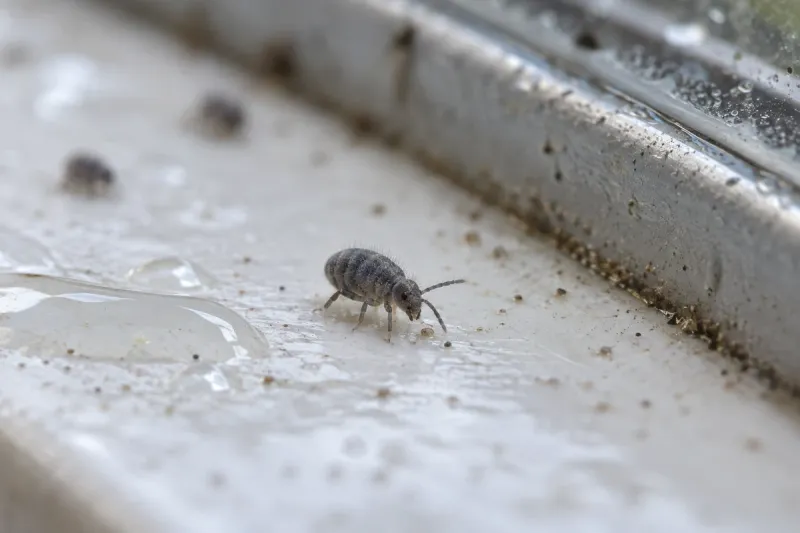
For people and pets, the word harmless fits well. Extension sources agree that springtails do not bite or sting, and they do not damage household property.
They will not chew on your furniture, your walls, or your woodwork.
Plants are the one place where the story needs a small footnote. Some species can feed on tender living plant tissue, and University of California IPM notes that seedlings may sometimes be injured.
That is mostly a concern for young plants in damp conditions, like trays of starts.
Minnesota Extension says leaf-feeding damage is typically minimal. Reported harm is generally minor or depends on particular growing conditions, so this is not a story of crops wiped out by tiny hoppers.
Here is how to keep it in perspective. A swarm on a frozen snowbank is not touching anything you are growing, because your garden is dormant and the snow-dwellers are outside in the cold.
The seedling exception matters later, when you start plants in the spring.
If you do notice nibbled seedlings, look at the moisture first. Soil that stays soggy is the kind of place springtails thrive, and letting the surface dry a bit between waterings often makes the trays less inviting.
What to do if they gather near your home
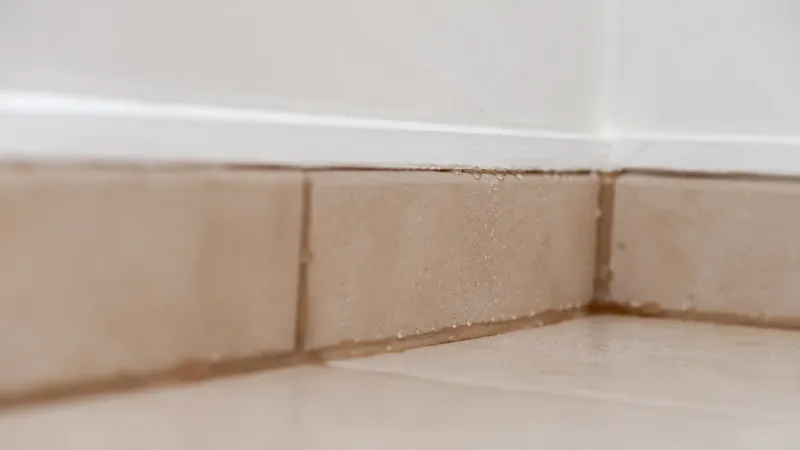
Most of the time, the best plan is to do nothing. Wisconsin Extension says large outdoor populations are temporary.
A crowd by the foundation is not proof that your house is infested, and it usually fades as the weather changes.
If the specks bother you on a sidewalk or near a doorway, sweep them away with a broom or pick them up with a vacuum. No special gear or treatment is needed.
A few minutes of cleanup solves the problem for the day.
Indoors is a different story. Springtails that keep showing up inside can point to extra moisture.
Start by reducing dampness, then check for leaks and drainage problems, and seal likely entry gaps around doors, windows, and the foundation.
Pesticides are not the first answer. Minnesota Extension says they are generally ineffective or unwarranted for springtails.
A foundation spray should not be your default fix, and UC IPM warns that sprays often give only temporary relief and can wash into storm drains.
As a quick diagnostic clue, think about where you see them. Hopping specks on outdoor snow are normal winter business.
Specks near a damp basement corner or a leaky window point to a moisture problem worth fixing.
Let the outdoor gathering pass
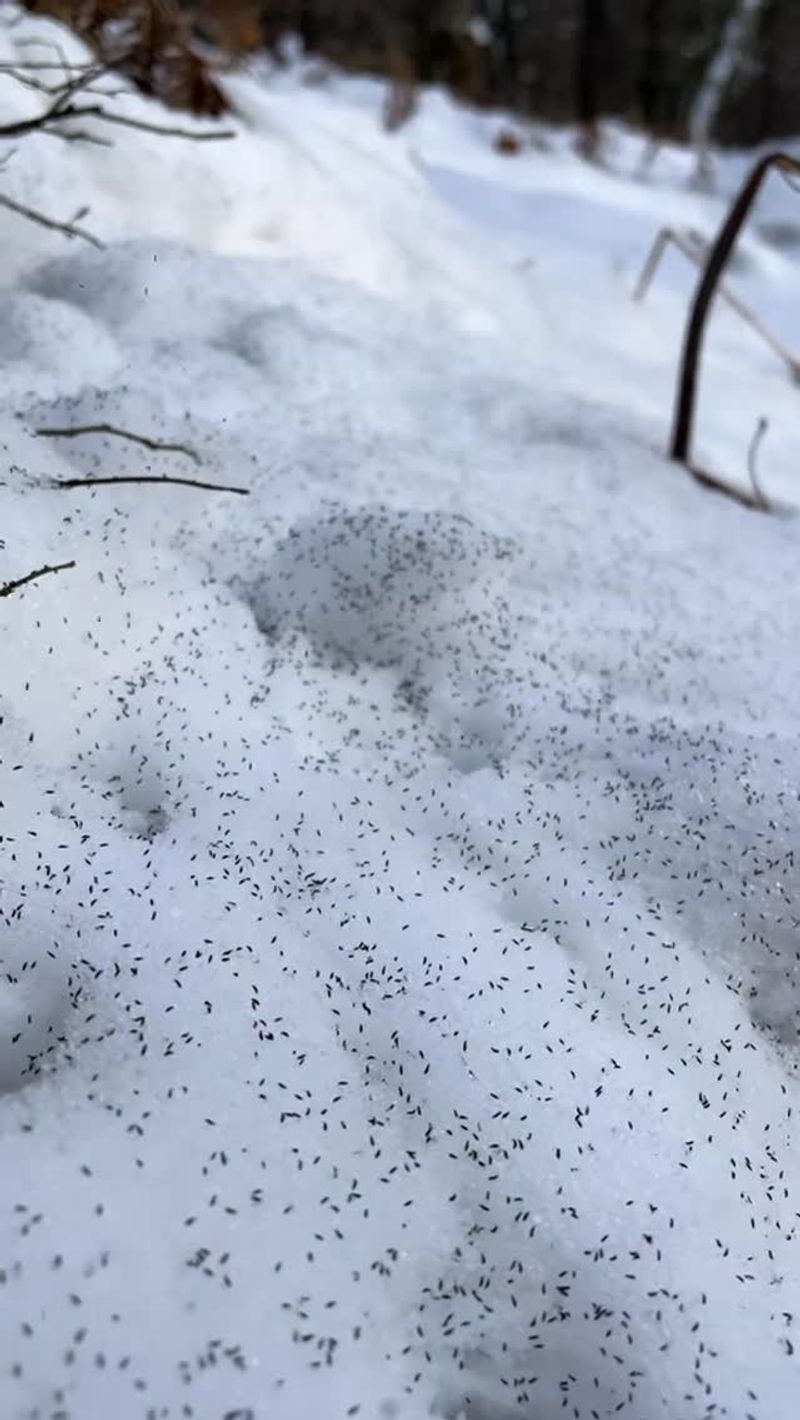
Likely springtails on a snowbank are simply part of the winter landscape, and an ordinary outdoor gathering does not call for treatment. Leave them to their thaw-day outing, and they will fade away on their own, as Wisconsin Extension describes.
Save your attention for the specks that keep turning up indoors, since those are the ones worth tracking down. Think of the snowbank hoppers as a small sign that life goes on beneath the snow.
Share this story