A very large, dark moth on your front door may well be a black witch moth, and if it is, the adult poses no danger to you. The species has been recorded in Tennessee, though a quick look at size and color cannot settle the question.
Its spooky reputation comes from old stories, not from anything the moth does. Here is how to size up your visitor calmly and decide what to do next.
Could it be a black witch moth?
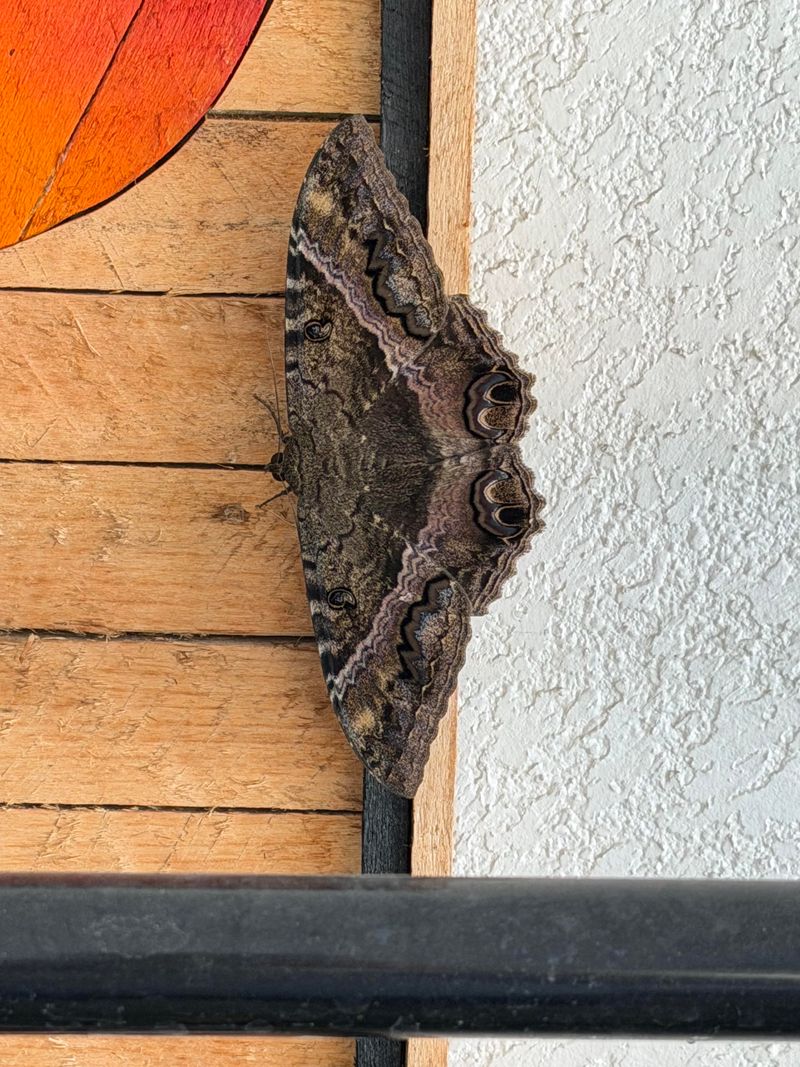
Yes, it could be. The black witch moth (Ascalapha odorata) has been recorded in Tennessee, and it is one of the biggest moths a person is likely to meet on a porch.
Still, a quick glance cannot confirm it, so treat your guess as a starting point.
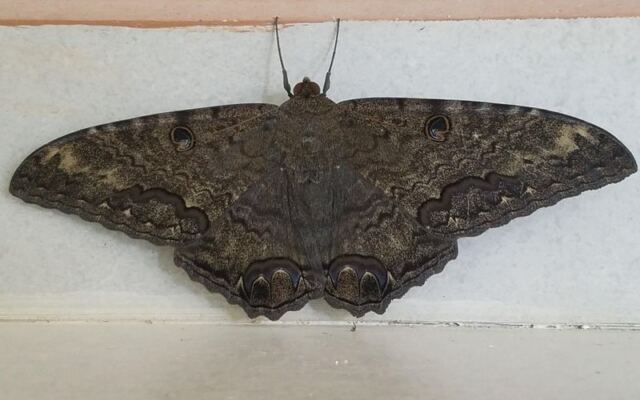
Despite the name, this moth is not truly jet black. A University of Colorado museum account describes it as dark or dusty brown, with long forewings and comma-shaped marks.
Females have a pale band across the wings, which can be a helpful clue. In flight the moth can look bat-like, which startles many people.
Those features are clues, not proof, especially if you only had a brief or blurry view. Size, color, and resting place do not confirm a species on their own, and a dark moth that seems huge in dim porch light can fool the eye.
What the Tennessee records tell us is limited. The Moth Photographers Group Tennessee page shows the species has been recorded in the state.
It does not tell you that the moth on your door is one.
The best tool you have is a clear photo that shows the wing pattern. That picture is far more useful than any guess about size or shade.
Why a black witch can appear in Tennessee
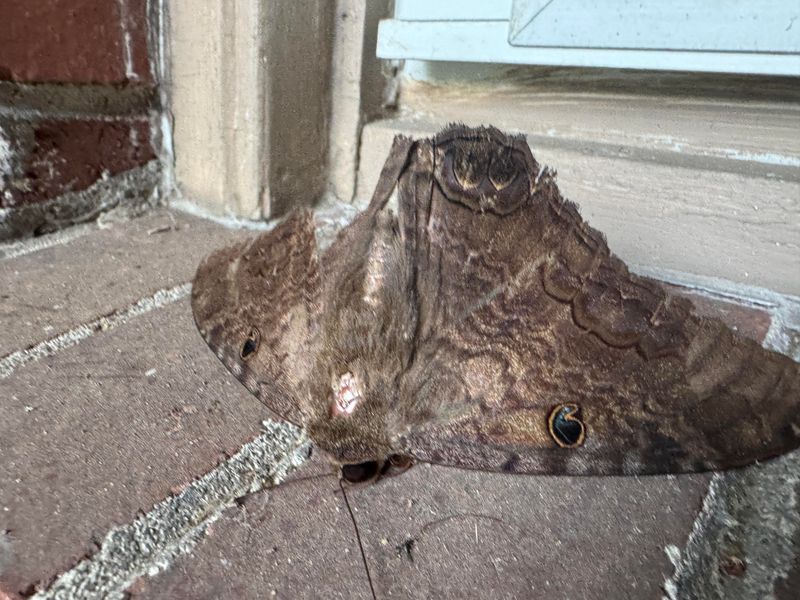
Black witch moths do not stay put. They are nocturnal moths that migrate north from the American tropics, which is why a tropical species can turn up far from the places most people picture it.
Sources describe this northward movement as running from roughly June into fall. The University of Colorado museum notes the northward pattern, and an Ask Extension expert response describes it too.
Timing can vary, so a moth in July and one in October are both within the realm of possibility.
That travel habit makes a Tennessee sighting plausible. A traveler heading north could end up in a Tennessee yard, and your door or porch could simply be where it paused.
Plausible is the key word, though. Knowing the species migrates does not tell you where one particular moth came from or what route it took.
A moth that looks dark and enormous could be a different species altogether.
Likewise, there is no basis here for claims about how common these moths are in your county or how busy a certain year has been. The safest takeaway is simple: migration makes a black witch a reasonable candidate, and your photo can help decide whether it is the right one.
A porch light explains the setting, not the species
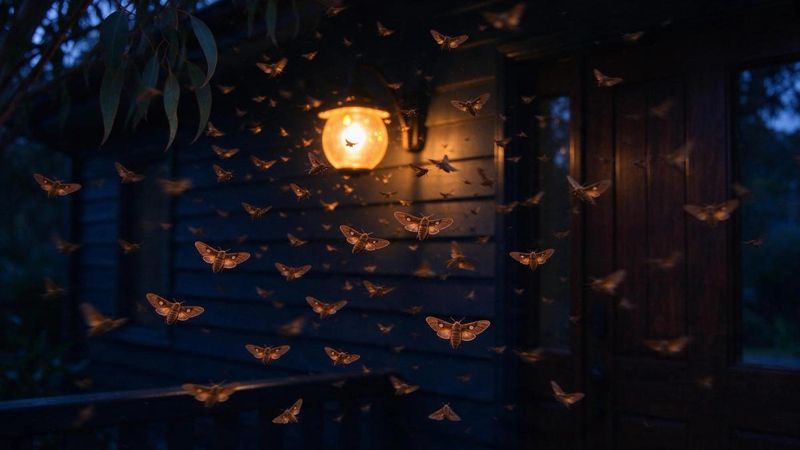
Moths and porch lights go together in most people’s memories, so finding a big one by your door feels natural. Texas Parks and Wildlife reports black witch moths at lights, and also resting under house eaves or on walls during the day.
They have been seen at tree sap and rotting fruit as well.
So a moth on a door or wall near a light fits the pattern. Even so, that spot does not tell you the species, because plenty of other insects rest in the same places.
Why do insects gather around lights at all? The old idea that they simply mistake a bulb for the Moon is too tidy to treat as settled.
A 2024 field-and-lab study in Nature Communications found that nearby artificial lights can disrupt insects’ orientation and flight.
That finding is about insects in general. It does not pin down exactly what happens when a black witch moth settles near a Tennessee home, so nobody can say why your particular visitor chose your porch.
What you can say is that the light helps explain how you noticed the moth. It does not help you name it.
For that, look at the wings.
Leave a resting adult undisturbed
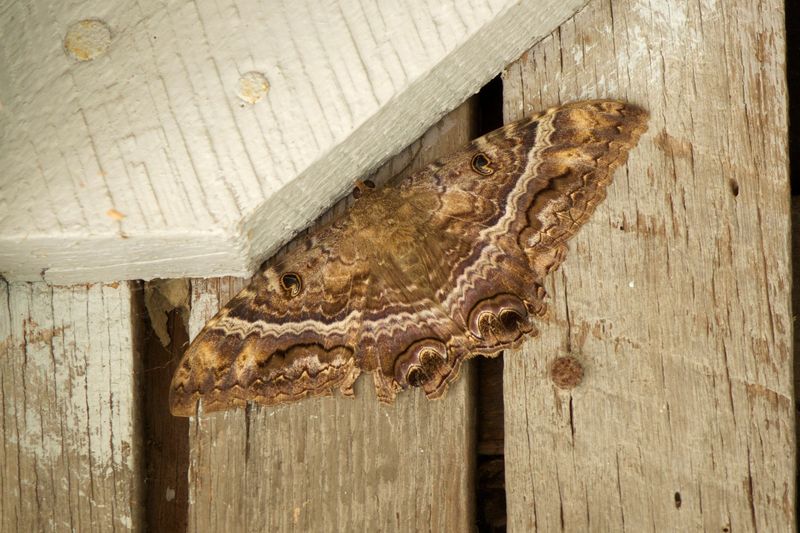
If the moth is an adult black witch, you have nothing to fear. Texas Parks and Wildlife reports that the adult is harmless to people.
Rather than shooing it away, you can simply let it rest.
Daytime is when many moths sit still, and a calm one will often move on after dusk. Giving it space costs you nothing, and it keeps the moth from getting hurt.
When you are unsure what you are looking at, take a picture instead of reaching out. Stand back, use your phone, and try to capture the wings in good light.
Handling an unknown moth adds risk for no benefit.
That advice matters because the harmless label is narrow. It covers the adult black witch moth, not every moth and not every stage of life.
The Missouri Department of Conservation points out that some caterpillars in other moth groups have irritating or stinging hairs.
So the rule is easy to remember. Admire from a distance, photograph if you want an answer, and keep your hands to yourself.
Its strange reputation comes from folklore
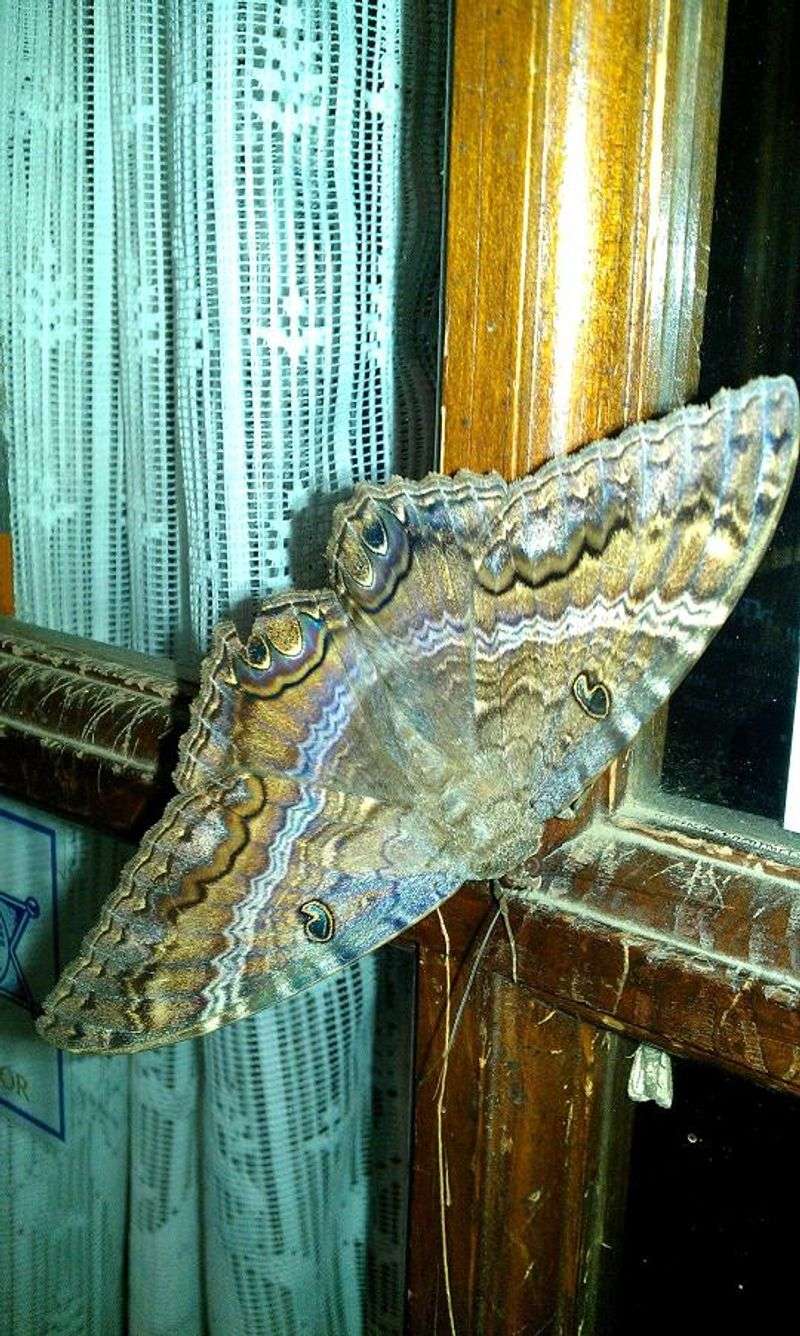
Few insects carry as much baggage as this one. Stories about the black witch moth have been collected in several places, and they do not all agree.
The University of Colorado museum describes death-omen beliefs in parts of Mexico. Texas Parks and Wildlife records a death-related belief too, along with a contrasting superstition that the moth can bring a lottery win.
You can read the Texas account in its public release on the species.
Notice that these are tied to particular communities. They are not one universal tradition, and nobody should present them as the way everyone views the moth.
The sources document folklore. They do not show that the moth predicts or causes death, illness, luck, or lottery wins.
A moth that lands on your door is not sending a message about your future.
Stories like these likely stick because of the animal’s looks: big, dark, and a little eerie when it flutters out of the night. Appearance can spark a story, but it is not an omen.
What you have in front of you is an insect, and a harmless one if it turns out to be an adult black witch.
Use a photo to check your guess
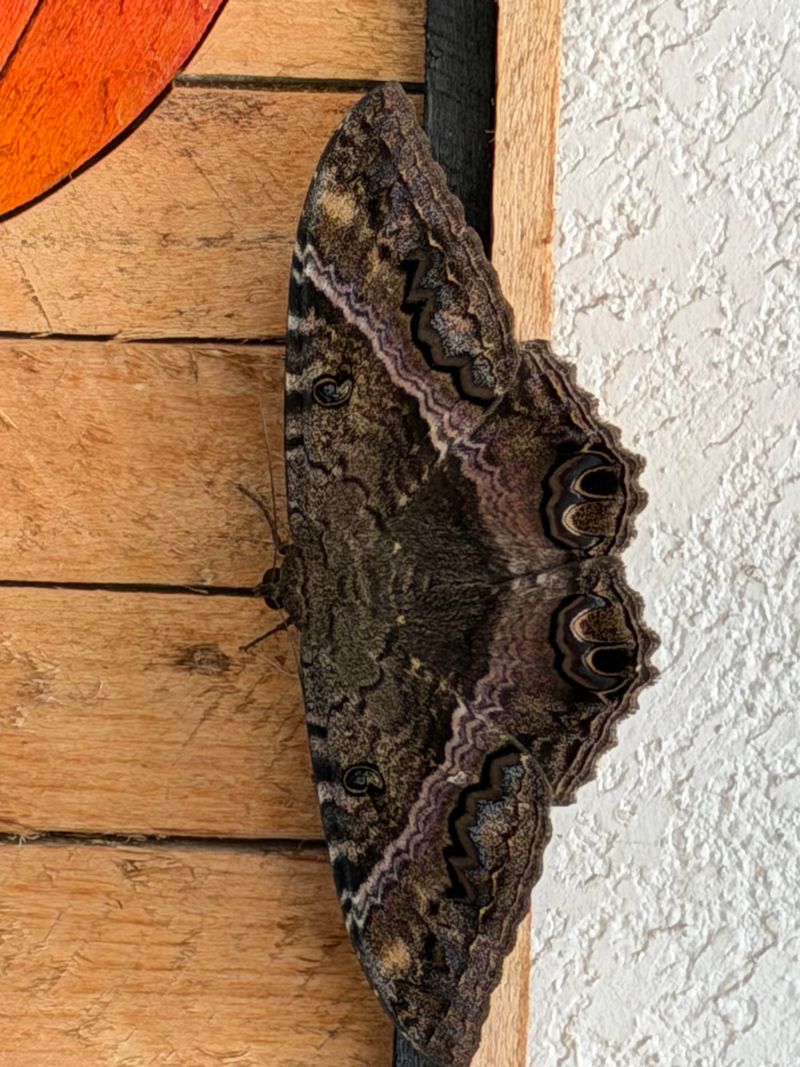
A black witch moth is possible in Tennessee, and the state records back that up. A moth by your door does not prove it, though.
Leave a resting moth alone, and snap a clear photo with the wings visible, since its markings are the best clue. The adult is harmless to people, according to Texas Parks and Wildlife, and old stories do not turn it into a predictor of events.
Sometimes the most interesting guest is the one that quietly shows up and leaves by morning.
Share this story