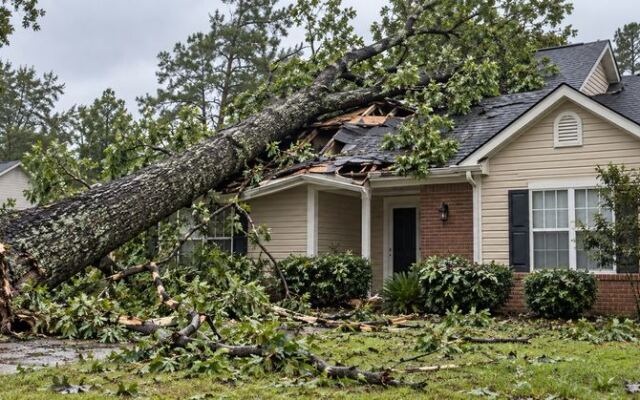
When a neighbor’s tree lands in your North Carolina yard, the neighbor does not automatically have to pay, even though the tree came from their property. Who pays depends on two separate questions: who handles cleanup and whether anyone was careless.
Your insurance policy, the tree’s condition, and what the owner knew all play a part. Knowing how these pieces fit together can save you money and stress.
The tree’s owner does not automatically owe you
Here is the plain answer: in North Carolina, a tree coming from your neighbor’s property does not by itself make the neighbor pay. The state follows a negligence standard for tree-fall damage, as explained by NC State Extension.
There is no blanket rule that says it is your tree, so you pay.
Negligence means someone failed to act with reasonable care. For a tree owner, that usually asks whether they knew, or should have known, that the tree posed a foreseeable danger and then did nothing about it.
Ownership of the tree and the land it grew on is only one piece of that picture.
It helps to split the problem into two parts. One part is practical: who clears the tree off your lawn, and who pays for that work.
The other part is legal: whether anyone is responsible for damage the tree caused. The answers to those two questions can be very different.
For example, a tree that falls in a storm and only blocks part of your yard may leave you with a cleanup bill and no legal claim at all. A tree that crushes a shed after the neighbor ignored a rotting trunk for years raises a different question.
Facts, photos, and timing will carry far more weight than where the roots were planted.
Because every situation differs, treat anything you read online, including this article, as general information rather than legal advice. If a large amount of money is at stake, a local attorney can look at your specific facts.
What did the owner know before the storm?
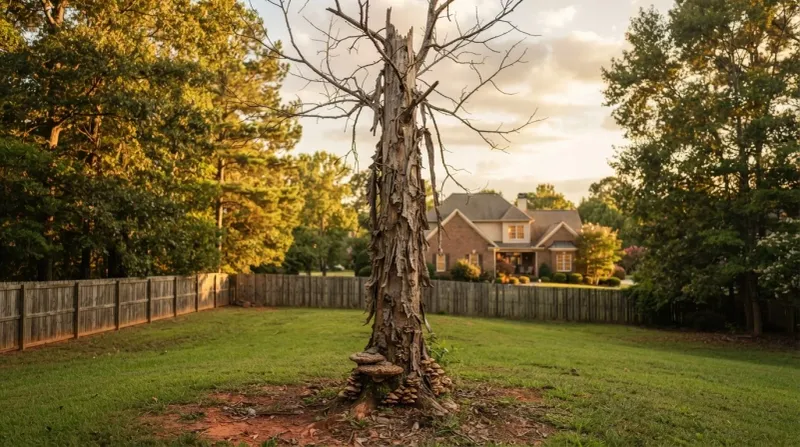
A tree’s condition before the storm often matters more than the storm itself. Was it dead, visibly dying, leaning, or rotting?
Facts like these can show that a danger was foreseeable, but they do not guarantee any particular legal outcome, and a dead or leaning tree is not automatic proof that the owner is liable.
What the owner knew also counts. If you had warned your neighbor about a cracked trunk, or the problem was plain for anyone to see, that may bear on whether they should have acted.
North Carolina’s appellate decision in Rowe v. McGee, discussed by NC State Extension, shows that a neighbor’s prior awareness and the parties’ actions can matter.
It does not mean liability follows every time a tree falls.
Storms add another layer. A storm or act of God is not necessarily a complete defense if negligence contributed to the damage.
A tree that was already weak and foreseeably dangerous may still raise questions even when high winds finished the job.
On the other hand, a healthy tree brought down by strong winds generally does not, by itself, establish the neighbor’s liability, according to the North Carolina Disaster Assistance Manual. Sometimes a storm is simply a storm, and nobody was careless.
A useful test is to ask what a reasonable person would have done with the information available. If the tree looked fine for years and fell in a severe gust, the answer may be nothing.
If it was obviously failing, the answer may be different.
Yard-only cleanup is a separate coverage question
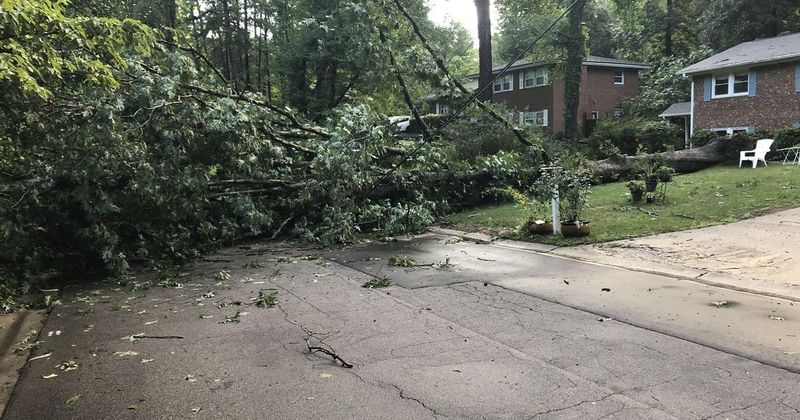
Getting a tree off your lawn is a different problem from deciding who caused the damage. The North Carolina Department of Insurance says most companies limit tree-removal coverage to trees that damage a structure, and they generally do not pay to remove a tree that is merely lying in the yard, according to its storm claims guidance.
So if the tree hit nothing but grass, expect that your homeowners policy may not help with cleanup. Do not assume your policy will pay to clear it.
Some policies treat removal differently, so reading yours is the only way to know.
You may see a $500 figure mentioned. The NC Department of Insurance FAQ refers to a $500 removal limit when a tree damages a structure or blocks a driveway.
That number is a reference for qualifying circumstances in those materials. It is not a guaranteed payment or a universal limit, and your own policy wording and deductible control what you actually receive.
Practical steps are simple. Pull out your policy and look for sections on debris removal, trees, and additional coverages.
Then call your agent or insurer and ask directly how a yard-only tree would be handled.
If coverage does not apply, you may need to pay for removal yourself or talk with your neighbor about sharing the work. Getting written quotes from licensed, insured tree companies gives you a clear number to discuss.
Structure damage usually starts with your own insurer
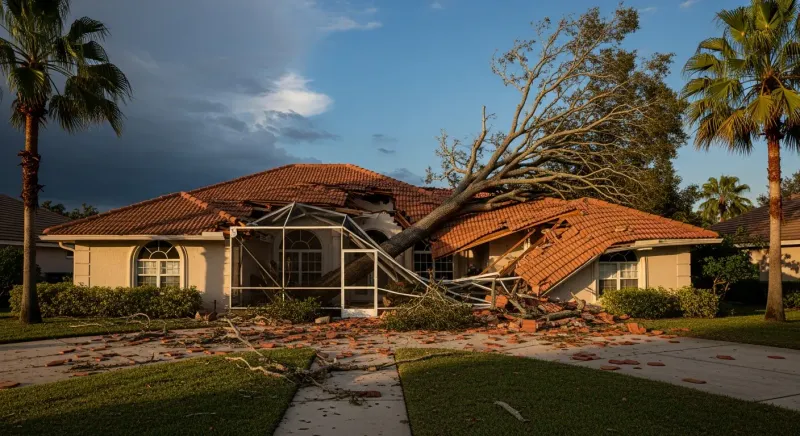
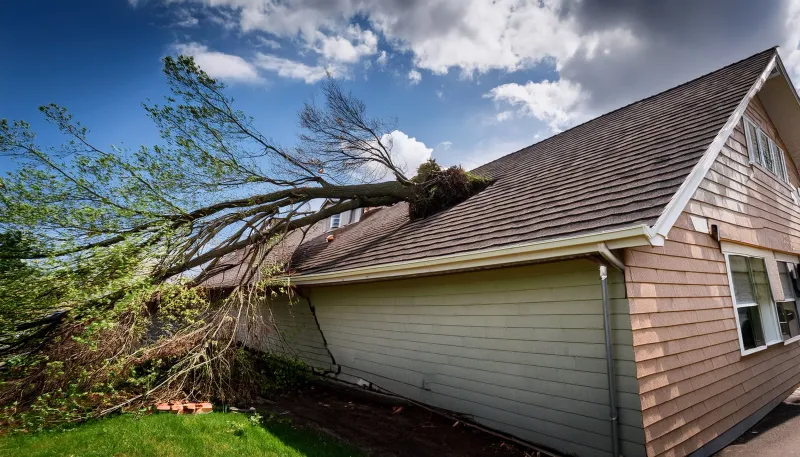
If the tree hits your house, garage, shed, or another structure, your first call usually goes to your own insurance company. The NC Department of Insurance says your homeowners policy generally covers damage when a tree falls on your home or another structure.
That coverage applies only when the damage is covered under your policy, and it is subject to the policy’s terms and deductible.
Nothing here is automatic. Your policy may exclude certain structures, require specific steps, or carry a deductible larger than a small repair bill.
Reading it before you call helps you ask better questions.
Why start with your own insurer instead of your neighbor? The North Carolina Disaster Assistance Manual notes it may be more practical to claim through your own insurer and let it pursue any claim against the neighbor if appropriate.
That route can be faster than arguing over fault while your roof sits open to the weather.
The neighbor’s insurer does not automatically pay either. Whether that coverage applies depends on the facts, including negligence, and on the neighbor’s own policy.
Recovery from the neighbor is possible in some cases, but it is never guaranteed.
When you call, report the loss promptly, ask what documents are needed, and find out whether temporary repairs such as a tarp are expected. Keep receipts for anything you spend to prevent further damage.
Keep people safe and preserve the facts

Safety comes before paperwork. Treat any downed wire as energized, stay away, and contact the utility, as advised in ReadyNC utility safety guidance.
Do not touch or cut a tree or debris tangled with power lines.
Tree work near wires is dangerous. According to the NC Department of Labor, work within 10 feet of a power line must be done by trained, experienced line-clearance tree trimmers.
Also keep clear of unstable, suspended, or lodged trees, since they can shift without warning, and leave chainsaw work on them to professionals.
Once everyone is safe, start documenting. Take wide and close photos of the tree, the stump or root area if you can see it safely, and every bit of damage to your property.
Add the date and time, and note the weather.
Keep related records too, such as repair estimates, receipts, and insurer messages. Save earlier texts, emails, or letters in which anyone mentioned a dangerous tree.
As NC State Extension explains, a neighbor’s prior awareness can matter, so those messages may be relevant evidence. They are not proof of liability on their own.
Do not move the tree more than needed for safety before photographing it, and ask your insurer before discarding damaged items. If you ever consider trimming branches from a standing tree, take care not to damage or kill it, and check whether local rules apply.
Use the damage and evidence to decide what comes next
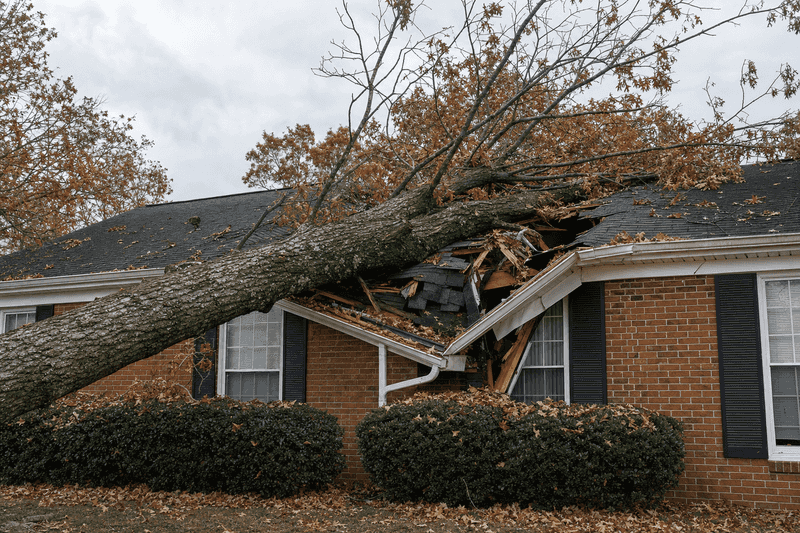
Start by sorting your situation. If the tree only lies in your yard, check your policy and plan on paying for removal if coverage does not apply, as the NC Department of Insurance materials suggest is common.
If it damaged a structure, call your insurer.
Then weigh the evidence. Photos, records, and earlier warnings help show whether the danger was foreseeable and whether your neighbor knew.
The Disaster Assistance Manual and NC State Extension both point toward negligence rather than ownership.
Where the facts are unclear, a talk with your neighbor or a local attorney can help. A tree’s origin and a storm’s strength are only starting points.
What the owner knew and did is what usually decides the rest.
Share this story