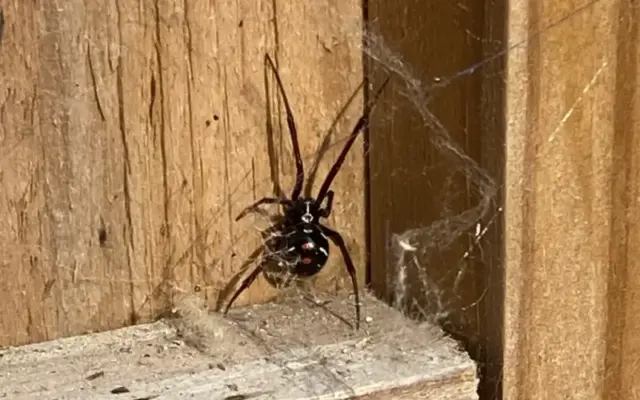
Tennessee black widows can turn up in woodpiles, so it pays to check before you grab a log. A spider tucked between logs is easy to miss, and a gloved, careful hand is a smart habit when you stack or carry firewood.
The story is a bit more nuanced than the headline suggests, and knowing the details helps you plan sensible precautions. Here is what the sources say, and what simple steps help.
Firewood piles can shelter Tennessee black widows
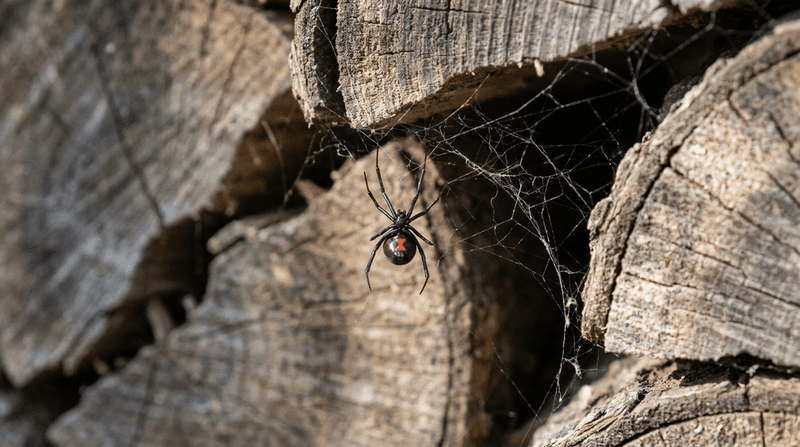
Black widows are a real part of Tennessee’s spider population. Tennessee Poison Center reports that both northern and southern black widows live in the state, and the southern black widow is the more common of the two.
The same source lists several places these spiders may hide. Firewood piles are on that list, along with boards, debris, sheds, and crawl spaces.
In other words, a woodpile is one possible home among many, not the only one.
That matters because of how people use firewood. Lifting a log means reaching into the dark, tight spaces where a spider might be resting.
A hand that pulls a log free could disturb a spider that was sitting quietly behind it.
None of this means every pile holds a black widow. Most stacks of wood have no widow in them at all, and plenty of other spiders and insects use the same gaps.
The point is simply that the possibility is real enough to build a small habit around.
Think of it like checking a shoe before sliding your foot in. It takes a second, costs nothing, and removes the surprise.
Homeowners who stack, carry, or burn wood can treat that quick look as part of the job, the same way they would watch for splinters or sharp bark.
The rest of this article covers how to size up what you find, protect your hands, handle logs before they come indoors, and respond if you think you were bitten.
What cold-weather evidence does and does not show
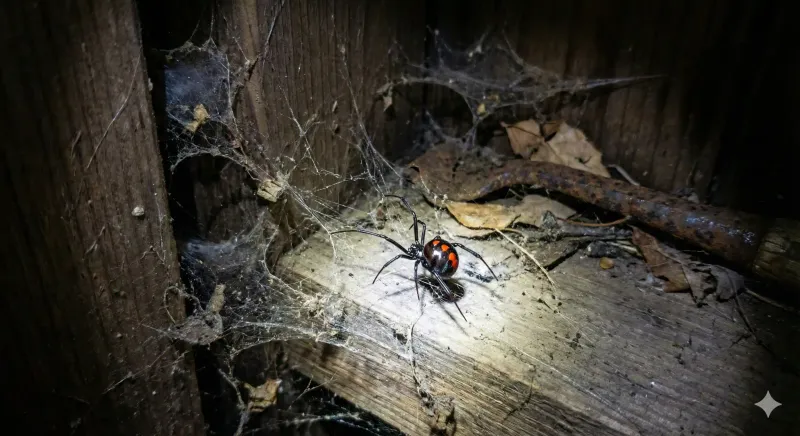
The headline suggests black widows move into woodpiles when the temperature drops. That part is not firmly established for Tennessee.
Tennessee Poison Center names firewood piles as a possible hiding place, but it does not say the spiders shift into them when it gets cold.
There is a cold-weather account from somewhere else. Colorado State University Extension says western black widows survive winter and look for cover as the weather cools.
That describes a western species, so it cannot be treated as proof of what Tennessee spiders do.
Bite reports add another piece. A review of poison-center exposure data from 2012 to 2022 found that reports were more frequent in summer and in warm-weather states.
Those records do not count every bite, and they do not prove that winter encounters never happen. They simply suggest that handling firewood in winter is not a uniquely risky chore.
So a fair reading is this: woodpiles can shelter black widows in Tennessee, and cold weather may push some widows toward cover. A tidy, proven seasonal pattern for Tennessee is missing.
That is no reason to skip caution. It is a reason to stay careful year-round instead of only after the first frost.
A widow’s markings are clues, not a guarantee

Spotting a dark spider among the logs does not mean you have found a black widow. Plenty of harmless spiders are dark, and color alone tells you very little.
Where the spider is sitting does not settle it either.
The best-known clue is the red hourglass shape on the underside of an adult female’s rounded body. Poison Control describes the hourglass as a useful marker, but markings can vary, especially in immature spiders.
A young widow may look quite different from the classic picture.
The Tennessee Poison Center also notes that two kinds of black widow live in the state, which is another reason looks can differ a bit. You can read more in its bites and stings guide.
So treat what you see as a clue, not a verdict. A shiny black body with a red mark on the belly points toward a widow.
A brownish or patterned spider probably points somewhere else, though it is still wise to leave it alone.
Never pick up a spider to check its belly. Moving it closer to your hands is exactly the risk you are trying to avoid.
If you need to know what it is, take a clear photo from a safe distance, or give the log a gentle tap away from your body and watch what comes out.
When in doubt, act as though it could be a widow. Use gloves, a tool, or a stick, and keep your skin out of reach.
Check before reaching, and protect your hands
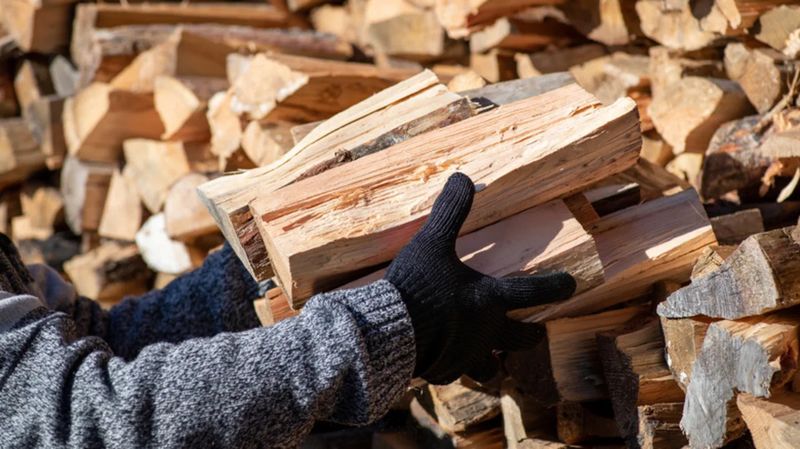
Most of the protection here comes from two quick habits: wear gloves, and look first. An EPA school pest management chapter hosted by Tennessee’s School IPM program recommends gloves and long sleeves around woodpiles.
It also cautions against putting your hands into dark crevices without looking.
Sturdy leather work gloves do double duty. They guard against splinters and rough bark, and they put a layer between your skin and anything hiding in a gap.
Long sleeves help cover your wrists, where a loose cuff can leave a gap.
Looking first can be simple. Glance at the face of the log you plan to grab, then at the space behind and beneath it.
A flashlight helps on dim mornings or in a shed corner.
Pull logs from the side and top of a stack when you can, rather than reaching deep into a dark hole. If a gap looks tangled with webbing, a stick or a pair of tongs lets you clear it from a distance.
Take extra care with logs that have been sitting undisturbed for a while, or ones near the ground where it stays darker and calmer.
These steps lower your chances of a surprise, but they do not guarantee a bite-free task. A spider can still hide where you cannot see, so go slowly and keep your movements steady.
Inspect logs before bringing them inside
Firewood can bring more than warmth into the house. Pests of many kinds ride in on logs, and warm indoor air can wake up anything that was resting in the bark.
That makes the doorway a good place for a final check.
Guidance from UF/IFAS Extension offers a few general firewood precautions. Inspect logs before carrying them inside, bring in only the amount you will burn soon, and keep the main pile off the ground and away from buildings.
In practice, that might mean turning each log over on the porch and giving it a quick tap. Shake loose bark or debris outdoors, not on the living room rug.
A small indoor stack that you use within a day or two leaves less time for anything to crawl out.
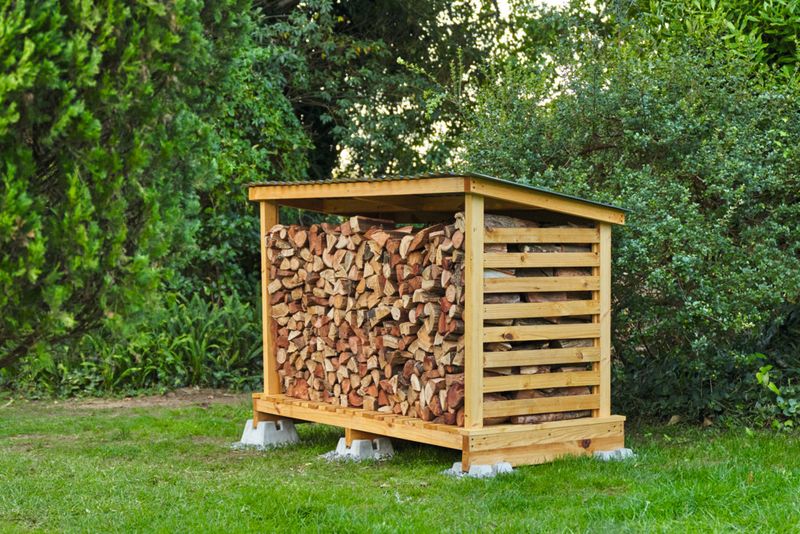
For the outdoor pile, a rack, pallet, or a few boards can lift the wood off damp soil. Leaving some space between the pile and your siding or wall also keeps pests from having an easy path to the house.
These are everyday pest-control habits. They are not proven ways to remove black widows or to make a pile spider-free, and a clean-looking log can still hide something small.
Treat them as a layer of common sense. Together with gloves and a careful look, they make carrying firewood feel more routine and less like a gamble.
A suspected bite calls for case-specific advice

If you think a spider bit you while you handled wood, start with the basics. Wash the area with soap and water, then call Poison Control at 1-800-222-1222.
The call is free, and a specialist can give advice that fits your situation.
Advice has to be personal because bites differ. According to Poison Control, possible symptoms include pain that spreads and muscle cramps.
Some people have mild effects, and others feel worse, so no single outcome applies to everyone.
Poison Control also says an emergency department visit is appropriate when pain is not controlled by oral medication. That is a guide for those particular situations, not a rule for every suspected bite.
Keep in mind that you may not have seen the spider. A mark on the skin might be from something else entirely, and only a professional can help sort out what makes sense for you.
Try not to diagnose yourself from a photo or a rumor.
The same source notes that severe outcomes are uncommon in its reviewed exposure records. Those are poison-center records, not a count of every confirmed bite, so they should be read as reassurance rather than a promise.
If you are unsure, call. Children, older adults, and people with health conditions are good reasons to reach out sooner.
Tell the specialist what you were doing, what you felt, and how long ago it happened.
Use sensible precautions without assuming the worst
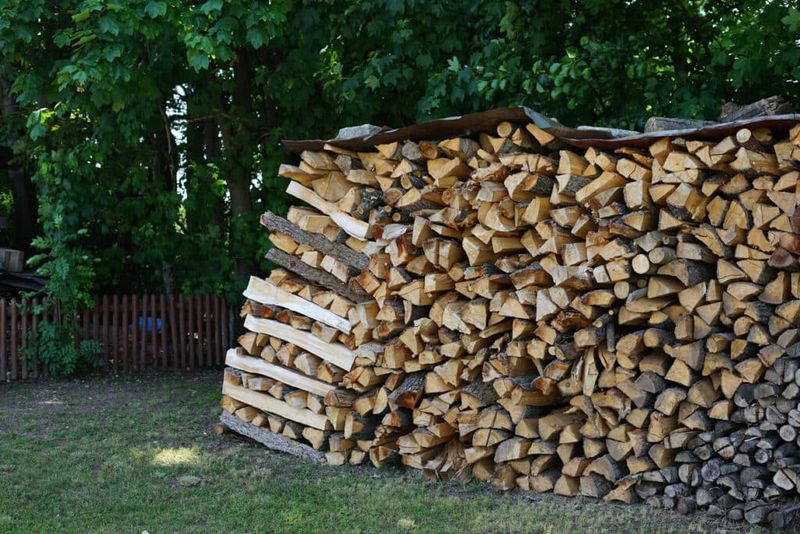
Black widows can use woodpiles in Tennessee, according to Tennessee Poison Center, but no source here shows a cold-season shift into them. A look before reaching, a pair of gloves, and a log check are sensible ways to cut the odds of trouble.
A woodpile is just a pile of wood. A few seconds of attention are usually all it asks.
Share this story